Upwelling periodically disturbs the ecological assembly of microbial communities in Lake Ontario
Augustus Pendleton, Mathew Wells, Marian L Schmidt

TL;DR
Wind-driven upwelling in Lake Ontario disrupts microbial communities, creating new coastal ecosystems with unique functions like methane oxidation.
Contribution
First evidence that Kelvin wave-driven upwelling restructures microbial communities in Lake Ontario.
Findings
Kelvin wave-driven upwelling displaces rare taxa into surface waters, creating novel coastal communities.
Upwelling events occur every 10–12 days during stratified seasons, affecting at least one coastal segment at any time.
Novel communities are enriched in methane oxidation and sulfur metabolism genes, absent elsewhere in the lake.
Abstract
The Laurentian Great Lakes hold 21% of the world’s surface freshwater and supply drinking water to nearly 40 million people. We provide the first evidence that wind-driven upwelling restructures microbial communities in Lake Ontario, with its effects sustained and redistributed by an internal Kelvin wave propagating along the shoreline. We combine 16S rRNA metabarcoding, absolute abundance quantification via flow cytometry, and hydrodynamic profiling to link physical processes to community composition. While thermal stratification organizes microbial communities by depth and season, this vertical structure arises from contrasting mechanisms: homogenizing selection in surface waters and dispersal limitation and drift in the hypolimnion. Kelvin wave–driven upwelling disrupts this scaffold, displacing rare taxa into the surface and creating novel coastal communities predicted to be…
Genes, proteins, chemicals, diseases, species, mutations and cell lines named across the full text — each resolved to its canonical identifier and authoritative record.
Click any figure to enlarge with its caption.
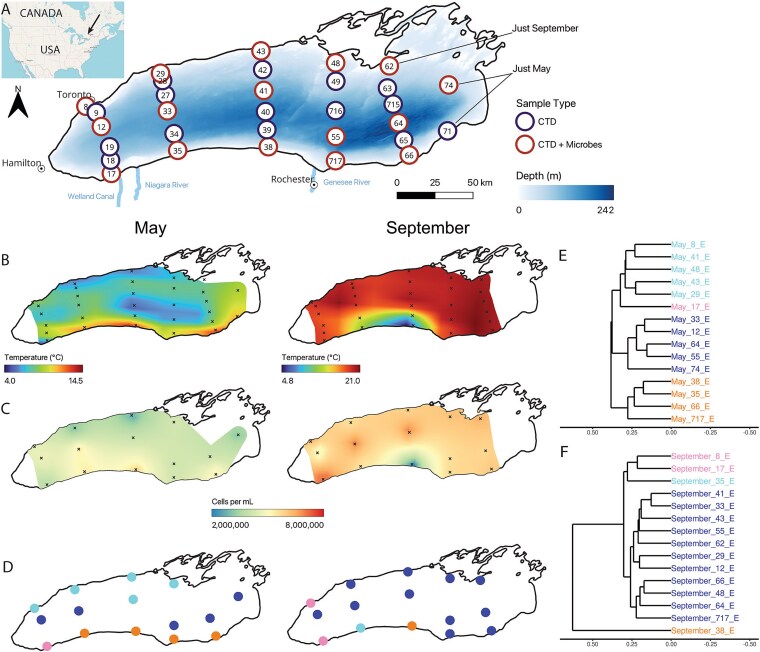 Figure 1
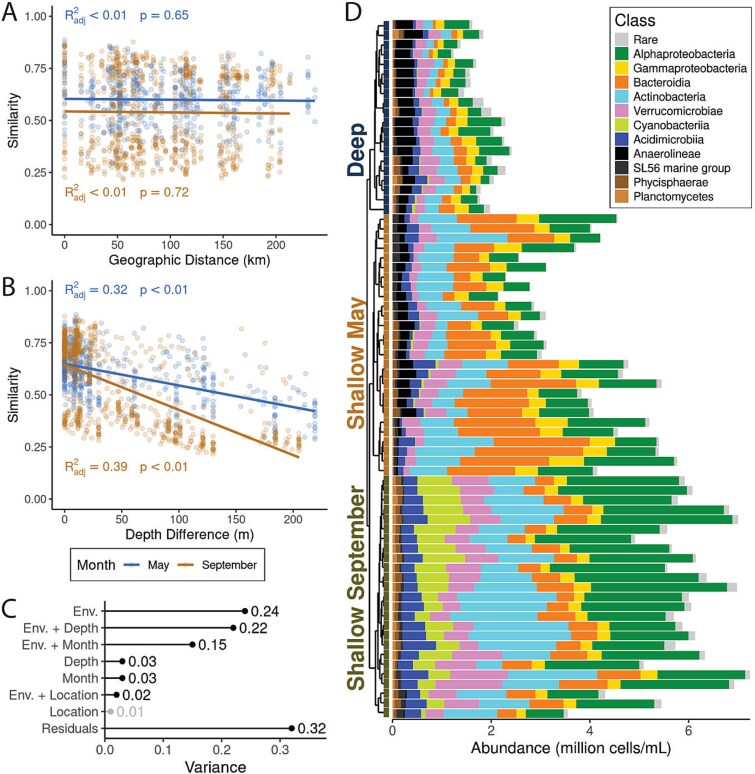 Figure 2
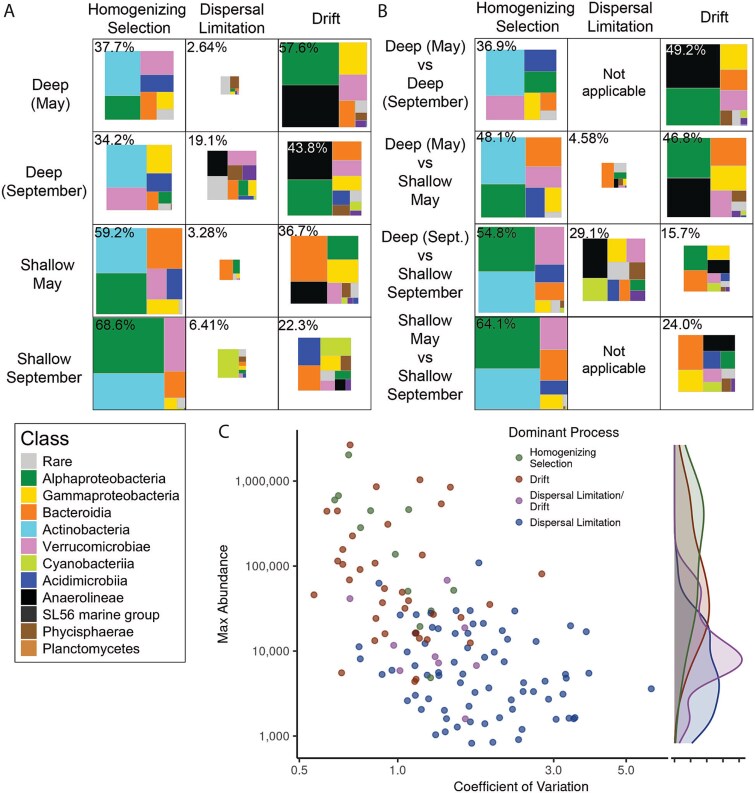 Figure 3
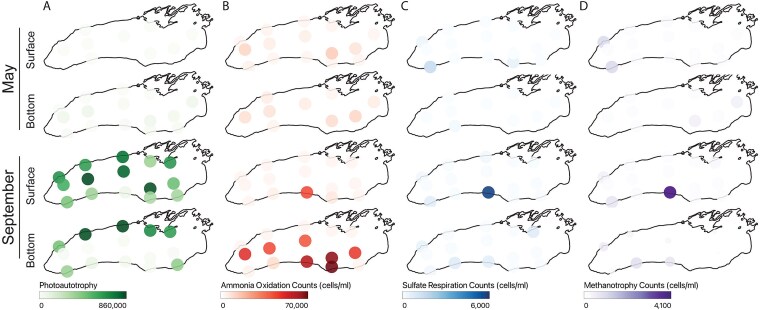 Figure 4
Peer Reviews
No public reviews on file for this paper yet. If you reviewed it on a platform where reviews are public (OpenReview, ICLR, NeurIPS, ICML), you can paste yours below so the community can read it here.
Videos
No videos yet. Explain this paper in a talk, walkthrough, or lecture? Add one.
Taxonomy
TopicsMicrobial Community Ecology and Physiology · Marine and coastal ecosystems · Aquatic Ecosystems and Phytoplankton Dynamics