Mapping the intellectual landscape and emerging trends of retinitis pigmentosa research
Li Xiao, Li-Xuan Tang, Min Ai, Yi-Jing Yang, Ying Deng, Jing Lu, Ya-Sha Zhou, Jing Xiong, Qinghua Peng

TL;DR
This paper maps the development of retinitis pigmentosa research, showing a shift from understanding disease mechanisms to developing new treatments, especially gene therapy.
Contribution
The study provides a comprehensive bibliometric analysis of RP research trends, identifying emerging therapeutic directions and interdisciplinary influences.
Findings
RP research has evolved through four stages, with recent focus on therapeutic innovation.
Gene therapy and oxidative stress are rapidly growing research areas in RP.
Interdisciplinary approaches like AI diagnostics and nanomedicine are driving progress in RP research.
Abstract
To visualize the intellectual landscape of retinitis pigmentosa (RP) research, outline recent advances, identify emerging trends, and offer insights into future directions. A bibliometric analysis was conducted on RP-related publications retrieved from the Web of Science and PubMed databases (retrieved on 12 December 2024) using CiteSpace and VOSviewer. The analysis focused on visualizing key dimensions, including annual publication volume, highly cited publications, and keyword distribution. Analysis of 8,121 publications identified four main evolutionary stages: early epidemiological characterization, foundational genetic research, a transition toward clinical trials, and recent therapeutic innovation. Initial studies focused on disease mechanisms, whereas current research is largely oriented toward treatment. The field has become increasingly interdisciplinary, with close links…
Genes, proteins, chemicals, diseases, species, mutations and cell lines named across the full text — each resolved to its canonical identifier and authoritative record.
Click any figure to enlarge with its caption.
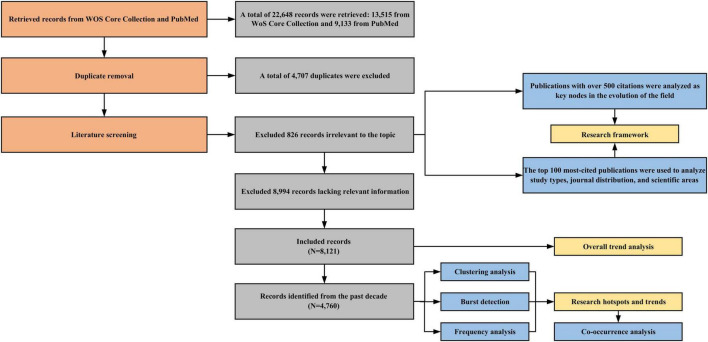 FIGURE 1
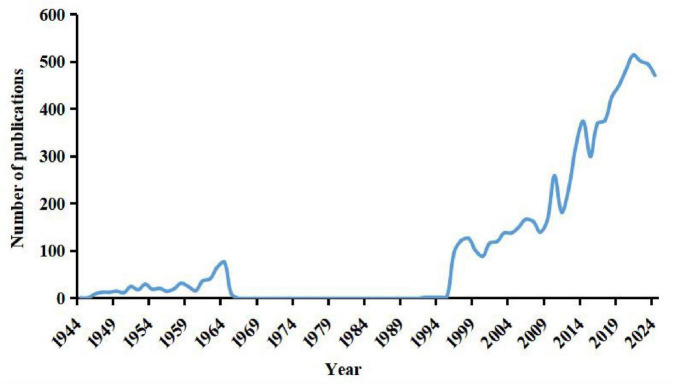 FIGURE 2
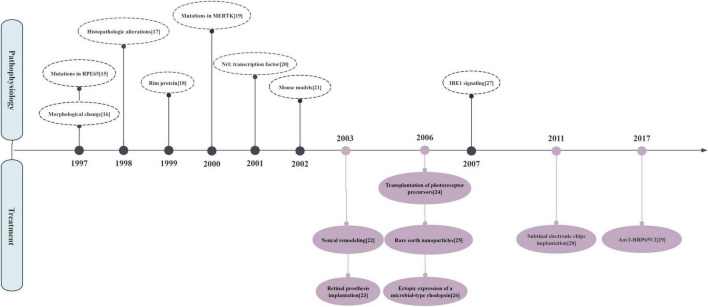 FIGURE 3
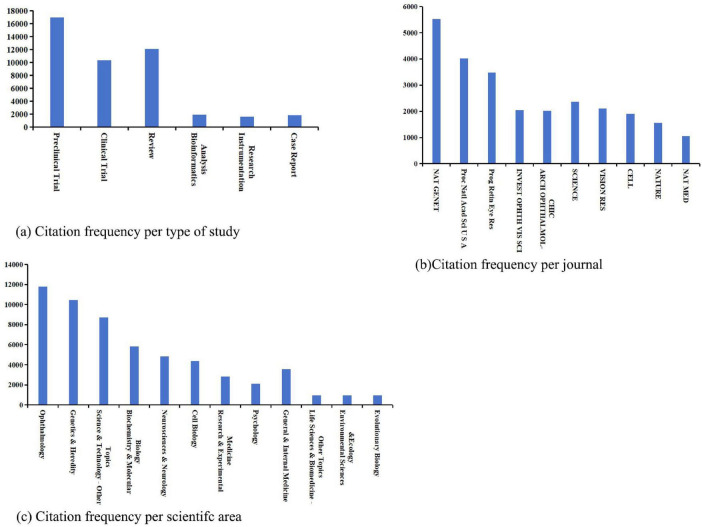 FIGURE 4
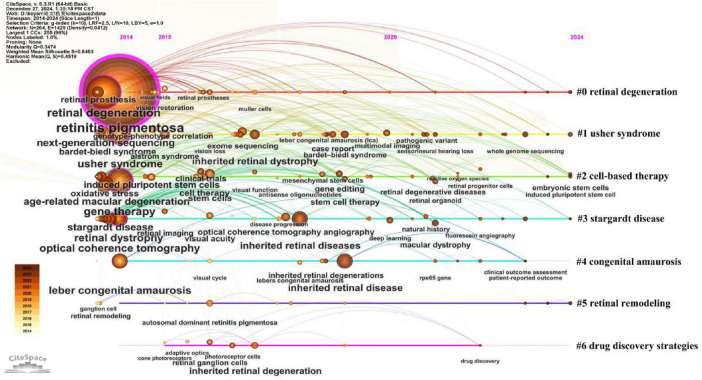 FIGURE 5
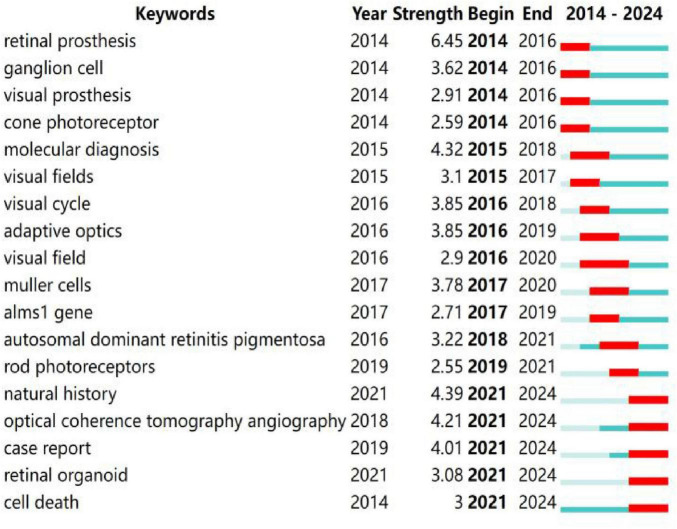 FIGURE 6
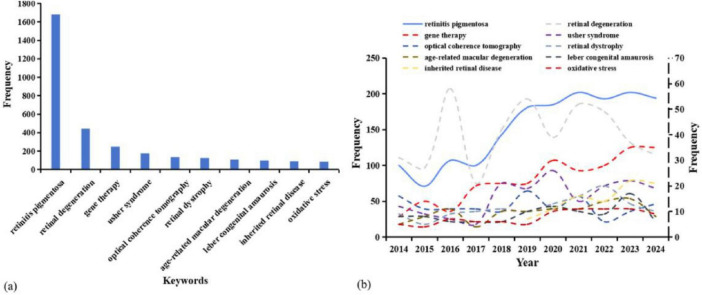 FIGURE 7
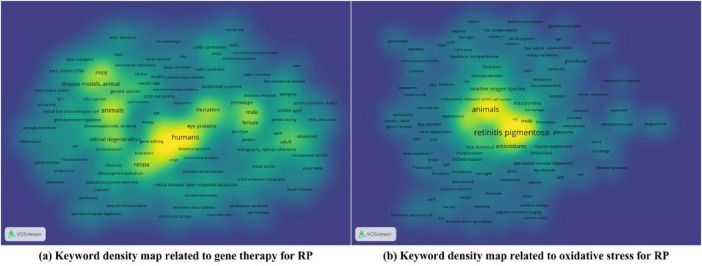 FIGURE 8
Peer Reviews
No public reviews on file for this paper yet. If you reviewed it on a platform where reviews are public (OpenReview, ICLR, NeurIPS, ICML), you can paste yours below so the community can read it here.
Videos
No videos yet. Explain this paper in a talk, walkthrough, or lecture? Add one.
Taxonomy
TopicsRetinal Development and Disorders · Neuroscience and Neural Engineering · Ocular Disorders and Treatments
Introduction
1
Retinitis pigmentosa (RP) is a genetically diverse retinopathy characterized by progressive degeneration of photoreceptor cells and atrophy of the retinal pigment epithelium, ultimately leading to bilateral blindness. This genetic heterogeneity poses significant challenges in RP research, making it difficult to develop universal treatments and highlighting the necessity for personalized therapies tailored to individual genetic profiles. The global prevalence of RP worldwide ranges between 1 in 7,000 and 1 in 3,000 individuals, making it one of the leading causes of irreversible blindness (1). RP significantly affects individuals’ lives and work, posing a substantial economic burden on families and society; however, despite ongoing advancements in medical research, critical knowledge gaps persist regarding its exact pathogenesis and the translational potential of emerging therapies. While genetic and molecular studies have expanded our understanding, systematic evaluations of research trends, particularly in treatment strategies and interdisciplinary approaches, remain underexplored. In light of these challenges, visualizing recent advancements and emerging research trends in RP becomes imperative. This approach can identify research priorities, foster collaborative networks, and accelerate the development of new treatments.
As a literature-driven research method, bibliometric analysis allows for the visualization of key research hotspots, emerging trends, and potential directions in a field of study. This method has been widely adopted across academic and practical domains (2–4), facilitating scientific innovation and the advancement of various disciplines. Bibliometric analysis can decode a field’s intellectual structure by tracking citation networks and co-authorship patterns, highlight understudied areas, and assess translational bottlenecks between preclinical and clinical research. For example, this approach has been instrumental in mapping advancements in neurodegenerative diseases and cardiovascular disease, clarifying evolving therapeutic paradigms and collaborative networks (5, 6). By analyzing key metrics such as publication output and citation count, bibliometric analysis objectively evaluates the academic contributions of researchers and institutions (7). It also supports the formulation of science and technology policies (8), offering data-driven insights for strategic decision-making. Additionally, in the context of discipline development, bibliometric analysis helps to identify research priorities, assess the level of academic progress, and guide resource allocation and talent cultivation (9). Moreover, it serves as a valuable tool in technology consulting by offering enterprises insights into the latest technological advancements and market trends, enhancing their innovation capacity (10).
While traditional narrative reviews are valuable, they can be inherently subjective and may not fully capture the complex and dynamic evolution of a scientific field. In contrast, bibliometric analysis offers an objective, quantitative, and macro-level perspective. It is particularly effective at revealing hidden patterns, assessing the influence of research themes, and identifying emerging frontiers that may be missed in conventional reviews. Tools such as CiteSpace (11) and VOSviewer (12) play an important role in this process. They use advanced algorithms, including co-occurrence analysis to map intellectual structures and burst detection to uncover early signals of new trends. This computational approach relies on specific metrics, such as node centrality, density, and betweenness, to evaluate the influence of research topics and the relationships among them. Importantly, this methodological framework goes beyond the basic keyword retrieval functions of search engines like PubMed. Although PubMed is highly effective for locating relevant studies through MeSH terms and title or abstract screening, it does not have the algorithmic capacity to explain the underlying knowledge structure of a field or how it changes over time. Bibliometric analysis therefore complements traditional retrieval methods by uncovering structural patterns, collaborative networks, and evolutionary pathways that simple search results cannot show.
In this study, we conducted a comprehensive bibliometric analysis of RP research using a combination of CiteSpace, VOSviewer, NoteExpress, and Excel, tools suited for network visualization and citation analysis. By examining factors such as publication volume, highly cited publications, and keyword distribution, we aim to provide a systematic overview of the research landscape and emerging trends in RP. This analysis is expected to provide valuable reference points for future academic investigations, contributing to ongoing progress and innovation in this field.
Methods
2
This study employed a bibliometric analysis to map the intellectual landscape and evolving trends in RP research. The analysis was conducted on all eligible scientific publications on RP retrieved from the target database. Using the software CiteSpace and VOSviewer, we examined key bibliometric indicators, including publication volume and temporal trends (productivity), citation counts (impact), as well as keyword co-occurrence networks, burst detection and high-frequency keyword analysis (conceptual structure and emerging trends). The study design is a retrospective, observational, and descriptive analysis of the existing literature corpus.
Data collection
2.1
To enhance the representativeness and accessibility of the data, we systematically searched the Web of Science (WoS) Core Collection and PubMed. All data were retrieved from these databases on 12 December 2024. The search strategy for WoS was as follows: TS = (“retinitis pigmentosa” OR “pigmentary retinopathy” OR “retinal pigment degeneration”). For PubMed, the search strategy was as follows: (“retinitis pigmentosa” [MeSH Major Topic]). No restrictions were placed on publication date, language, or document type.
Eligibility criteria
2.2
Studies were included if they focused on RP, covering one or more aspects of clinical diagnosis, treatment, prevention, basic experimental and biological studies. The following exclusion criteria were applied: (1) duplicate records; (2) publications unrelated to RP; and (3) records lacking essential information such as author, keywords, year of publication, which are critical for analysis.
Data analysis
2.3
All retrieved data were downloaded and imported into NoteExpress 4.1.0 for duplicate removal. Two independent medical researchers screened the studies based on the predefined eligibility criteria. Any discrepancies were resolved through discussion, and if necessary, a third-party ophthalmologist provided a final decision. After screening, 8,121 studies were included. The literature selection process is illustrated in Figure 1. The final dataset was exported to Excel to analyze publication volume and the characteristics of highly cited publications, including study type, journal distribution, and scientific area. To conduct a systematic analysis of the conceptual structure and emerging trends, CiteSpace 6.3.R1 and VOSviewer 1.6.20 were used. These tools were selected for their advanced capabilities in network visualization and citation analysis, which are essential for deconstructing complex bibliographic relationships beyond the sorting functions of standard search engines.
Flow diagram of the study selection process.
Specifically, cluster analysis was used to group related keywords, which helped identify major research hotspots and the evolutionary paths of different sub-fields. The specific parameters set in CiteSpace were as follows: Timespan 2014–2024 with Slice Length set to 1; Selection Criteria g-index (k = 10), LRF = 2.5, L/N = 10, LBY = 5, and e = 1.0; Network N = 264 and E = 1,429 with a Density of 0.0412; Largest 1 CCs 255 (96%); Nodes Labeled 1.0%; Pruning none; Modularity Q = 0.3474; Weighted Mean Silhouette S = 0.6463; and Harmonic Mean (Q, S) = 0.4519. At the same time, burst detection was applied to track keywords showing sharp increases in citation frequency. This measure is important for identifying emerging frontiers and capturing early signals of new scientific directions before they become widely recognized. In addition, co-occurrence analysis was performed to generate density maps that visualize the relationships between gene therapy and oxidative stress. Together, these methods move beyond simple descriptive statistics and help clarify the evolutionary trajectory and potential mechanistic links within the RP research landscape.
Results
3
Development trend analysis
3.1
Publication volume is a fundamental indicator of research productivity (13). The development trends in RP research were analyzed by examining annual publication volumes (Figure 2). As shown in Figure 2, the number of publications on RP has steadily increased over time, reflecting growing interest in this field. According to publication volume, the evolution of RP research can be divided into four distinct phases: (1) Initial stage (1944–1964): This period marked the early exploration of RP, with limited publications available. (2) Slow exploration stage (1965–1995): Research activity increased gradually, with most publications consisting of case reports. Due to insufficient data, these publications were largely excluded from keyword analysis. (3) Steady growth stage (1996–2013): Research in this phase reached momentum, leading to a more structured development of the field. (4) Rapid development stage (2014–present): Since 2014, RP research has significantly expanded, driven by advancements in biomedical technology and therapeutic approaches.
Annual number of publications on annual number of publications on retinitis pigmentosa.
Highly cited publication analysis
3.2
Citation count is a key indicator of a study’s impact and contributions to the academic community (14). It functions as a quantitative reference for scientific significance and reflects the extent to which a study shapes later research. We confirmed that highly cited studies carry strong scientific value through direct content analysis. Such literature helps pinpoint milestones and shifts in research focus within RP studies. Figure 3 highlights publications with more than 500 citations, revealing a transition in research focus from pathogenesis in earlier studies to treatment approaches in recent years (15–29).
Evolution diagram of important retinitis pigmentosa themes (15–29).
A detailed analysis of the top 100 most-cited articles was conducted based on research types, journals, and scientific fields (Figure 4). This analysis aimed to identify dominant study types, influential journals, and trends in interdisciplinary collaboration. The primary research areas in this field include preclinical studies, such as cellular and animal experiments, and clinical trials, focusing on therapeutic interventions. Among academic journals, Nature Genetics (NAT GENET) has published a substantial number of high-impact publications on RP. Research in this field spans multiple scientific disciplines, reflecting its broad and interdisciplinary nature, with emerging synergies between genetics, bioengineering (e.g., retinal prosthetics), nanomedicine (e.g., drug delivery systems), and artificial intelligence-based diagnostics driving recent advancements. This interdisciplinary convergence has accelerated the development of innovative therapeutic strategies, such as CRISPR-based gene editing and stem cell therapies, while enabling high-throughput screening of potential drug candidates through computational approaches.
Bar charts illustrating the citation landscape of retinitis pigmentosa research across (a) study types, (b) journals, and (c) scientific areas, showing the top-ranked entries for each category.
Research hotspots and trend analysis
3.3
To identify emerging research hotspots and trends in RP, we conducted an in-depth keyword analysis of literature published over the past decade. This included clustering analysis, burst detection, and tracking high-frequency keyword trends. The clustering analysis results, displayed in a timeline view (Figure 5), illustrate the major research clusters and their evolution over time. RP research is broadly categorized into two primary areas: disease understanding (shown as clusters #0 retinal degeneration, #1 usher syndrome, #3 stargardt disease, #4 congenital amaurosis) and treatment approaches (shown as clusters #2 cell-based therapy, #5 retinal remodeling, #6 drug discovery strategies). The emergence of these clusters is closely tied to the dominant technologies of each research stage. Clusters #0 retinal degeneration and #1 usher syndrome reflect the Genomic Era, driven by the introduction of Next-Generation Sequencing, which required more precise disease classification. In contrast, cluster #2 cell-based therapy and cluster #5 retinal remodeling reflect the Regenerative Era, supported by advances in stem cell research and bioengineering that address the limits of gene-focused strategies in late-stage disease. This pattern shows that research clusters tend to form around the tools available at each stage of field development.
Timeline visualization of co-occurrence keyword analysis.
Burst detection identifies emerging topics with rapidly increasing research activity (11, 30). Figure 6 highlights keywords with strong bursts continuing through 2024, including “natural history,” “optical coherence tomography angiography (OCTA),” “case report,” “retinal organoid” and “cell death.” The rise of these keywords is driven by clear practical needs. The strong burst of OCTA reflects demand from clinical trials for sensitive and non-invasive biomarkers that can measure retinal capillary loss in real time, which goes beyond what traditional fundus photography can provide. Likewise, the growing focus on “retinal organoid” research stems from the need to move past the limits of animal models. Induced pluripotent stem cell technology now supports human-specific drug screening and aligns with the broader shift toward personalized treatment and functional recovery.
Top 18 keywords with the strongest citation bursts.
Figure 7 displays the top 10 most frequently occurring keywords, along with trends in their usage over time. The analysis reveals that “gene therapy” and “oxidative stress” are not only hot topics in RP research but also exhibit an upward trend, highlighting their growing significance in the field. To explore how these themes are connected, we conducted a keyword co-occurrence density analysis centered on “gene therapy” and “oxidative stress” in Figures 8a, b. The density map for “gene therapy” in Figure 8a shows strong co-occurrence with terms such as “animals”, “humans”, “clinical trials”, as well as “antioxidants” and “oxidative stress”. This pattern suggests that research extends beyond basic concepts and covers the full path from experimental models to clinical use. The strong association between “gene therapy” and “antioxidants” points to a growing interest in supportive treatment strategies. It suggests a growing recognition in the field that the long-term efficacy of therapy relies not only on restoring wild-type gene function but also on modulating the disease microenvironment, specifically by targeting oxidative stress, to achieve disease modification (31). At the same time, the density map for “oxidative stress” in Figure 8b shows close links with “antioxidants”, “ferroptosis”, “inflammation”, and “gene deletion”. In this map, “ferroptosis” and “inflammation” appear alongside “oxidative stress” and “antioxidants”, forming a clear disease and treatment-related subnetwork. From a mechanistic perspective, genetic defects lead to metabolic imbalance and accumulation of reactive oxygen species. This triggers oxidative stress, ferroptosis, and subsequent inflammation through innate immune responses. This interconnected process highlights the need to target oxidative stress, ferroptosis, and inflammation together when designing combination therapies for RP. The frequent appearance of “gene deletion” also reflects the continued reliance on genetic models to confirm these specific molecular targets.
Analysis chart of high-frequency keywords (a) frequency sorting, (b) annual frequency trend.
Density map of high-frequency keywords related to (a) gene therapy, (b) oxidative stress in the field of retinitis pigmentosa (RP).
Discussion
4
Through a comprehensive bibliometric analysis that integrates publication volume trends, highly cited publication analysis, keyword timeline mapping, burst detection, and keyword co-occurrence density visualization, this study outlines the macro-level knowledge landscape of RP research. The findings point to a clear structural transition from fragmented description toward integrated intervention. This evolution can be summarized through three closely connected themes.
Evolution of research drivers and paradigms
4.1
Bibliometric evidence shows that the main driving force of RP research has shifted from early phenomenological observation to intervention-driven innovation. This transition is supported by annual publication trends and changes in the focus of highly cited studies. The shift has been shaped by a combined technology and policy environment. On the technology side, major advances such as CRISPR/Cas9 and adeno-associated virus vectors have played a central role. On the policy side, regulatory milestones, including the approval of Luxturna, have further accelerated progress. The increasing maturity and precision of CRISPR/Cas9 have made it routine to build high-fidelity disease models and perform targeted gene editing, which has greatly shortened the path from basic discovery to preclinical research (32, 33). At the same time, ongoing improvements in the safety, delivery efficiency, and immunogenicity of adeno-associated virus vectors have supported the clinical translation of gene-based therapies (34). In parallel, regulatory events such as the FDA approval of voretigene neparvovec in 2017 opened dedicated review pathways for orphan drugs and gene therapies. This reduced barriers to market entry and encouraged closer collaboration among academic researchers, industry partners, and clinicians (35). As a result, the rapid growth of RP research reflects not just rising academic interest, but a convergence of technical readiness, supportive regulation, and focused investment.
Consistent with this trend, our analysis of journals, research types, and disciplinary backgrounds within highly cited publications suggests that RP research is moving toward a more integrated scientific structure. Interdisciplinary collaboration in this field is no longer a simple layering of different disciplines. Instead, it has developed into a convergent research model that is strongly oriented toward clinical problems. For example, the development of retinal prostheses requires the combined input of microelectronic engineering, neuroscience, materials science, and surgical practice. Overall, the RP research landscape has evolved into a diverse, collaborative, and solution-focused innovation environment. The time-based patterns seen in highly cited publications and keyword clusters also point to a deeper paradigm change. Earlier work followed a reductionist logic centered on single genes or pathways. More recent studies emphasize integrative strategies aimed at systemic disease repair. Early milestone discoveries, such as RPE65 (15) and MERTK (19)] established the genetic foundation of RP but largely remained descriptive in nature. In contrast, recent years have seen a clear shift toward intervention, reflected by clustered advances in cell transplantation and retinal prosthetics. This change is closely linked to the highly heterogeneous nature of RP, where no single target or therapy can address all patient groups. As a result, there is growing agreement that effective management requires a multi-dimensional intervention strategy that combines genetic repair, cellular stress modulation, and functional replacement. This also explains the increasing influence of bioengineering, materials science, and data science in the field.
This paradigm shift has also reshaped research methods and ways of thinking. Earlier studies mainly focused on individual genes and their roles in RP pathogenesis. Current research places more weight on interactions among multiple genes and on the complex regulatory networks involved in disease progression. For instance, omics techniques—such as proteomics and metabolomics—provide insights into alterations at specific molecular levels in RP (36, 37). These approaches collectively contribute to a more comprehensive understanding of the molecular mechanisms underlying the disease. In addition, progress in systems biology has introduced new perspectives by treating the retina as a complex biological system. From this viewpoint, disease onset and progression are explored through interactions between the system and its environment. These integrative strategies help identify promising therapeutic targets and support the development of more effective treatment options.
Emerging frontiers and key tools
4.2
Burst detection analysis effectively identifies rapidly expanding research frontiers that address key bottlenecks in the field. The results indicate that “optical coherence tomography angiography” and “retinal organoids” have emerged as the fastest-growing research tools in recent years. Their increasing use directly reflects two major challenges in current RP research and clinical practice. One is the lack of methods for dynamic disease monitoring, and the other is the shortage of physiologically relevant experimental models. OCTA enables non-invasive and quantitative evaluation of the retinal microvascular network, allowing researchers to visually track vascular degeneration and hemodynamic changes during disease progression in vivo (38, 39). This capability provides valuable intermediate biomarkers for use in clinical trials. Retinal organoid technology, on the other hand, generates three-dimensional and multicellular retina-like tissues from induced pluripotent stem cells. This approach largely overcomes the limitations of traditional animal models related to species differences and genetic background variability (40, 41). As a result, retinal organoids have become a practical platform for personalized drug screening and studies of disease mechanisms. The growing adoption of these two tools suggests that RP research is entering a new stage characterized by high-resolution dynamic observation and human-relevant precision modeling.
In addition to OCTA and retinal organoids, several other emerging technologies are also beginning to shape RP research. Artificial intelligence shows strong potential in improving RP diagnosis (42). By training artificial intelligence models on large collections of clinical images and patient data, researchers can achieve automated identification and grading of RP phenotypes, which improves both accuracy and efficiency. Artificial intelligence can also support predictions of disease progression and treatment response, laying the groundwork for more personalized therapeutic planning. Nanomedicine represents another important development. Nanoparticles can act as drug carriers that deliver therapeutic agents to the retina with improved precision and efficiency, increasing bioavailability while reducing unwanted side effects (43). At the same time, nanosensor technology is being actively developed for the detection of ocular and systemic biomarkers. For instance, it has already been employed to visualize metabolic dynamics in retinal cells (44). This capability demonstrates the potential for adapting similar approaches to target RP-specific biomarkers in the future.
Translational bottlenecks and a synergistic framework
4.3
Despite strong research activity, RP studies still face several interconnected translational challenges. These include marked genetic and phenotypic heterogeneity, insufficient systems for monitoring disease progression and treatment efficacy, narrow therapeutic time windows, and concerns related to the efficiency and safety of delivery systems (45–49). Importantly, the bibliometric results of this study provide an integrated perspective that may help address these complex issues. Our analysis shows that “gene therapy” and “oxidative stress” are not only frequently occurring keywords but are also closely linked in both the timeline and density analyses. This pattern points to a synergistic therapeutic framework that goes beyond single-modality approaches. Genetic interventions aimed at correcting underlying defects can be viewed as hardware repair, while antioxidant or anti-inflammatory strategies help remodel the pathological microenvironment and act as software optimization. From a biological standpoint, even when a genetic defect is corrected, the retinal microenvironment often remains under chronic oxidative stress and inflammation, which can still impair photoreceptor survival and function (50, 51). Taken together, a framework that integrates genetic correction with microenvironment stabilization holds promise for improving therapeutic outcomes in RP.
Further research into the mechanisms linking gene therapy and cellular stress modulation is essential for developing more effective treatments. It is particularly important to clarify how oxidative stress influences the success of gene therapy and to determine the optimal choice, timing, and dosage of antioxidant interventions to achieve the best combined effect. Understanding these synergistic interactions offers a practical way to address several major translational challenges. First, oxidative stress represents a shared downstream pathway across many genetic subtypes of RP. Targeting this pathway with adjunctive therapies such as antioxidants or anti-inflammatory agents may help overcome genotype-specific limitations and provide broad protective benefits for patients with different mutations. Second, for patients in late stages of disease who have already experienced substantial photoreceptor loss, genetic correction alone often has a limited impact. Combining it with neuroprotective or microenvironment-modulating approaches may help preserve remaining cells and slow disease progression, thereby extending therapeutic benefit to a wider patient population. Third, adding antioxidant strategies may reduce local inflammatory responses triggered by gene therapy vectors and improve the cellular environment. This could enhance the survival and functional stability of treated cells and improve overall safety. This synergistic framework represents not only a novel treatment concept but also a structured way to manage the complexity of RP. Future studies should focus on defining the molecular basis of this synergy and identifying optimal combination strategies, including drug selection, timing, and dosage balance. Well-designed clinical trials will be needed to confirm whether this approach can overcome the limits of current single treatments and support a shift from isolated advances toward broader and more sustained benefits in RP care.
Research limitations and prospects
5
Although bibliometric analysis has successfully identified research hotspots and trends in RP, several challenges and limitations remain. These include data inconsistencies across various databases, variations in research methodologies employed by different studies, and difficulties in comparing findings from studies with disparate focus areas, all of which can hinder the accuracy and generalizability of the analysis. Furthermore, the analysis is constrained by data coverage and timeliness. Since the analysis primarily relies on peer-reviewed literature, preprints and ongoing trials are often not represented, potentially obscuring emerging trends. Additionally, due to the rapid pace of the field, a significant time lag exists between scientific advances and their incorporation into datasets, meaning the analysis may not capture the very latest shifts in research direction.
Looking forward, future bibliometric analyses in this field should aim to reduce these limitations by drawing on a wider range of data sources, including preprint servers, conference abstracts, patents, and clinical trial registries. Bringing together these near real-time data streams can help reduce publication delays and better capture recent advances, such as newly launched gene therapy trials, before they appear in traditional journals. Furthermore, adopting standardized data extraction protocols and more advanced natural language processing methods will be important for addressing data inconsistencies and improving the reliability of comparisons across databases. By moving toward a more flexible and inclusive analytical framework, future studies can offer researchers and clinicians timely and detailed insights into the continuously evolving landscape of RP research.
Conclusion and implications
6
In summary, this study uses a bibliometric perspective to outline the dynamic development of RP research. The field is rapidly shifting from a traditional focus on genetic discovery to a more forward-looking direction driven by technological advances, strong multidisciplinary integration, and an emphasis on systemic intervention strategies. Beyond confirming the key role of gene therapy, the analysis highlights the growing importance of a synergistic approach that combines cellular stress modulation, such as oxidative stress control, with genetic repair. This emerging paradigm represents a new research frontier and a possible turning point for future breakthroughs. These findings have practical implications for funding agencies when defining priority areas, for research teams when choosing cross-disciplinary collaborations, and for clinicians when designing next-generation combination therapies. RP research is likely to continue progressing under the combined principles of precision correction and systemic support, moving steadily toward a more effective and personalized era of treatment.
The reference list from the paper itself. Each links out to its DOI / PubMed record.
- 1Liu W Liu S Li P Yao K. Retinitis pigmentosa: progress in molecular pathology and biotherapeutical strategies. Int J Mol Sci. (2022) 23:4883. 10.3390/ijms 23094883 35563274 PMC 9101511 · doi ↗ · pubmed ↗
- 2Chen Y Lin M Zhuang D. Wastewater treatment and emerging contaminants: bibliometric analysis. Chemosphere. (2022) 297:133932. 10.1016/j.chemosphere.2022.133932 35149018 · doi ↗ · pubmed ↗
- 3Huang Y Gong D Dang K Zhu L Guo J Yang W The applications of anterior segment optical coherence tomography in glaucoma: a 20-year bibliometric analysis. Peer J. (2024) 12:e 18611. 10.7717/peerj.18611 39619196 PMC 11608565 · doi ↗ · pubmed ↗
- 4Vought V Vought R Herzog A Mothy D Shukla J Crane AB Evaluating research activity and NIH-Funding among academic ophthalmologists using relative citation ratio. Semin Ophthalmol. (2025) 40:39–43. 10.1080/08820538.2024.2391838 39149972 · doi ↗ · pubmed ↗
- 5Zhu J Liang Q He S Wang C Lin X Wu D Research trends and hotspots of neurodegenerative diseases employing network pharmacology: a bibliometric analysis. Front Pharmacol. (2023) 13:1109400. 10.3389/fphar.2022.1109400 36712694 PMC 9878685 · doi ↗ · pubmed ↗
- 6Mao Y Zhao K Chen N Fu Q Zhou Y Kong C A 2-decade bibliometric analysis of epigenetics of cardiovascular disease: from past to present. Clin Epigenet. (2023) 15:184. 10.1186/s 13148-023-01603-9 38007493 PMC 10676610 · doi ↗ · pubmed ↗
- 7Ioannidis JPA Baas J Klavans R Boyack KW. A standardized citation metrics author database annotated for scientific field. P Lo S Biol. (2019) 17:e 3000384. 10.1371/journal.pbio.3000384 31404057 PMC 6699798 · doi ↗ · pubmed ↗
- 8Rodrigues M Antunes JA Miguéis V. Aligning priorities: A Comparative analysis of scientific and policy perspectives on municipal solid waste management. Waste Manag. (2024) 193:70–83. 10.1016/j.wasman.2024.11.031 39642404 · doi ↗ · pubmed ↗