Revolutionizing Sun Protection: Emerging Nanotechnologies Shaping the Future of Sunscreens
Millena de S. Afonso, Pamella M. de Souza, Adriany L. dos Santos, Flávia A. do Carmo, Zaida M. F. de Freitas

TL;DR
This paper reviews how nanotechnology is being used to improve sunscreen effectiveness and safety, highlighting the need for further safety research.
Contribution
The paper provides a comprehensive review and categorization of nanotechnology applications in sunscreen development.
Findings
Nanotechnology improves sunscreen formulation performance and UV filter efficacy.
Further safety studies are needed to prevent potential systemic absorption risks.
Nano-based delivery systems are increasingly adopted in sunscreen development.
Abstract
Sun protection has become a significant public health issue in recent decades due to the high incidence of skin diseases related to excessive exposure to ultraviolet (UV) rays. The use of nanosystems in sunscreens represents a promising innovation in the pharmaceutical and cosmetic fields. This paper aims to map and characterize studies on the use of nanotechnology in sunscreens. This account identifies, categorizes, and describes the effectiveness and safety of these interventions. Searches were conducted in MEDLINE (via PubMed), Embase, Lilacs (BVS), Scopus, Web of Science, and Google Scholar. Fifty-four studies that described or evaluated the development of formulations associated with nanotechnology were included. The results suggest that nanotechnology can significantly enhance pharmaceutical sunscreen formulations by improving both the formulation performance and UV filter…
Genes, proteins, chemicals, diseases, species, mutations and cell lines named across the full text — each resolved to its canonical identifier and authoritative record.
Click any figure to enlarge with its caption.
 1
1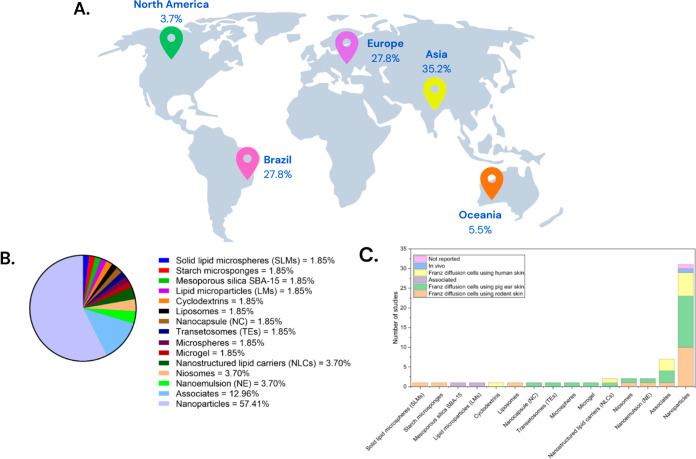 2
2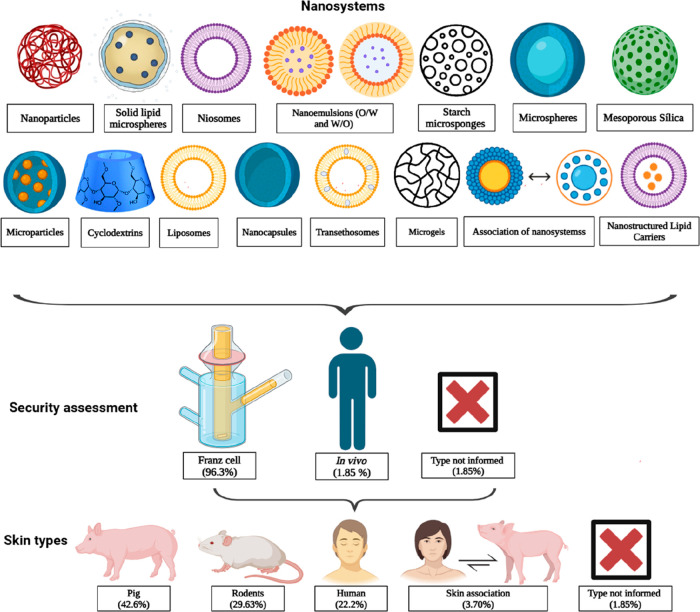 3
3| author/year | title | study design | country | study design (methodology used) | nanosystem used |
|---|---|---|---|---|---|
| Wissing, S. A.; Muller, R. H.; 2002 | Solid
Lipid Nanoparticles
as Carrier for Sunscreens: | primaryexperimental research | Germany | comparison of two different formulations (solid lipid nanoparticle (SLN) and conventional emulsion) as carrier systems for oxybenzone (OXY) sunscreen | SLN |
| Yener, G.; Incegül, T.; Yener, N.; 2003 | Importance of Using Solid Lipid Microspheres as Carriers for UV Filters on the Example Octyl Methoxycinnamate | primaryexperimental research | Turkey | an attempt was made to prepare SLM for OMS; OMC was tested as a simple absorbent in microspheres, placed in various vehicles, and investigated and compared concerning OMC release, skin penetration, and photostability | SLM |
| Jiménez, M. M.; Pelletier, J.; Bobin, M. F.; Martini, M. C.; 2004 | Influence of Encapsulation
on the | primaryexperimental research | Spain | to investigate the influence
of octyl methoxycinnamate poly(ε-caprolactone) nanocapsules (NC) on the | NC |
| Luppi, B.; Cerchiara, T.; Bigucci, F.; Basile, R.; Zecchi, V.; 2004 | Polymeric Nanoparticles Composed of Fatty Acids and Polyvinyl Alcohol for topical Application of Sunscreens | primaryexperimental research | Italy | modify polyvinyl alcohol 10,000 (PVA) hydrophobically with fatty acids (FAs) to obtain PVA-FA derivatives for the preparation of lipophilic polymeric nanoparticles capable of preventing the movement of benzophenone-3 (BZP) toward the skin | polymeric nanoparticles |
| Alvarez-Roman, R.; Naik, A.; Kalia, Y. N.; Guy, R. H.; Fessi, H.; 2004 | Enhancement of Topical Delivery from Biodegradable Nanoparticles | primaryexperimental research | France | to determine whether and how encapsulation of lipophilic compounds (such as the sunscreen OMC; Parsol MCX) in polymeric nanoparticles can improve topical application to the skin | polymeric nanoparticles |
| Simeoni, S.; Scalia, S.; Tursilli, R.; Benson, H.; 2006 | Influence of Cyclodextrin
Complexation on the | primaryexperimental research | Italy | to investigate the influence of cyclodextrins on the cutaneous availability of the sunscreen OXY; the interaction between OXY and the hydrophilic derivatives (hydroxypropyl-α-cyclodextrin (HP-α-CD), sulfobutyl ether-β-cyclodextrin (SBE-β-CD), and hydroxypropyl-cyclodextrin (HP-c-CD)) was studied in water by phase solubility analysis | cyclodextrins |
| Scalia, S.; Mezzena, M.; Iannuccelli, V.; 2007 | Influence of Solid Lipid Microparticle Carriers on Skin Penetration of the Sunscreen Agent, 4-Methyl benzylidene Camphor | primaryexperimental research | Italy | to prepare lipid microparticles (LMs) loaded with the sunscreen 4-methyl benzylidene camphor (4-MBC), to achieve reduced skin penetration of this UV filter | LMs |
| Anumansirikul, N.; Wittayasuporn, M.; Klinubol, P.; Tachaprutinun, A.; Wanichwecharungruang, S. P.; 2008 | UV-Screening Chitosan Nanocontainers: Increasing the Photostability of Encapsulated Materials and Controlled Release | primaryexperimental research | Thailand | the use of UV-absorbing polymeric carrier particles; chitosan derivatives with replacement of the UV-absorbing functionality were synthesized and prepared in carrier systems; the encapsulation of a model compound, photoisomerizable 2-ethylhexyl-4-methoxycinnamate (EHMC) was performed | polymeric nanoparticles |
| Wu, J.; Liu, W.; Xue, C.; Zhou, S.; Lan, F.; Bi, L.; Xu, H.; Yang, X.; Zeng, F. D.; 2009 | Toxicity and Penetration of TiO2 Nanoparticles in Hairless Mice and Porcine Skin after Subchronic Dermal Exposure | primaryexperimental research | China | to investigate the penetration
and potential toxicity of titanium dioxide (TiO2) nanoparticles
after their dermal exposure | titanium dioxide nanoparticles (TiO2-NPs) |
| Weiss-Angeli, V.; Bourgeois, S.; Pelletier, J.; Guterres, S. S.; Fessi, H.; Bolzinger, M. A.; 2010 | Development of an Original Method to Study Drug Release from Polymeric Nanocapsules in the Skin | primaryexperimental research | Brazil | to investigate the distribution and release profile in the skin of a lipophilic molecule, octyl methoxycinnamate, loaded in NC of poly(ε-caprolactone) (OMC-NC) | poly(ε-caprolactone) NC |
| Senzui, M.; Tamura, T.; Miura, K.; Ikarashi, Y.; Watanabe, Y.; Fujii, M.; 2010 | Study on Penetration of
Titanium Dioxide (TiO2) Nanoparticles into Intact and Damaged
Skin | primaryexperimental research | Japan | to focus on the skin penetration
of TiO2 nanoparticles | TiO2-NPs |
| Vettor, M.; Bourgeois, S.; Fessi, H.; Pelletier, J.; Perugini, P.; Pavanetto, F.; Bolzinger, M. A.; 2010 | Skin
Absorption Studies
of Octyl-methoxycinnamate Loaded Poly( | primaryexperimental research | Italy | to evaluate the percutaneous absorption of OMC released from PLGA polymeric nanoparticles loaded with OMC, formulated in an emulsion gel (OMC-NP emulgel) compared to a nonencapsulated OMC emulsion gel (OMC-emulgel) | PLA polymeric nanoparticles |
| Siqueira, N. M.; Contri, R. V.; Paese, K.; Beck, R. C. R.; Pohlmann, A. R.; Guterres, S. S.; 2011 | Innovative Sunscreen Formulation Based on Benzophenone-3-Loaded Chitosan-Coated Polymeric Nanocapsules | primaryexperimental research | Brazil | to evaluate the effect of
cationic coating of polymeric NC in sunscreen formulations on the | polymeric nanoparticles |
| Marcato, P. D.; Caverzan, J.; Rossi-Bergmann, B.; Pinto, E. F.; Machado, D.; Silva, R. A.; Justo, G. Z.; Ferreira, C. V.; Duran, N.; 2011 | Nanostructured Polymer and Lipid Carriers for Sunscreen. Biological Effects and Skin Permeation | primaryexperimental research | Brazil | to prepare and characterize poly(caprolactone) (PCL) and SLN to act as carriers BZP, aiming to improve the safety of sunscreens by increasing the sun protection factor (SPF), decreasing BZP penetration into the skin, and reducing the concentration of BZP in the sunscreen formulation | PPCL and SLN |
| Monteiro-Riviere, N. A.; Wiench, K.; Landsiedel, R.; Schulte, S.; Inman, A. O.; Riviere, J. E.; 2011 | Safety
Evaluation of Sunscreen
Formulations Containing Titanium Dioxide and Zinc Oxide Nanoparticles
in UVB Sunburned Skin: An | primaryexperimental research | United States | to evaluate the absorption
and penetration of commercially available TiO2 and zinc
oxide (ZnO) nanoparticles in sunscreen formulations in ultraviolet
B (UVB)-damaged skin, | TiO2 ZnO nanoparticles |
| Monteiro, M. S. D. D.; Ozzetti, R. A.; Vergnanini, A. L.; de Brito-Gitirana, L.; Volpato, N. M.; de Freitas, Z. M. F.; Ricci, E.; dos Santos, E. P.; 2012 | Evaluation
of Octyl | primaryexperimental research | Brazil | to develop a new formulation containing OMC loaded in liposomes and cyclodextrins (CD) and compare several parameters in the different dispersions | liposomes and CD |
| Jirova, D.; Kejlova, K.; Pikal, P.; Kasparova, L.; Safarova, K.; Kovarikova, L.; Bendová, H.; Zalabak, D. E.; 2012 | Effect of TiO2 Nanoparticle Size on Possible Skin Penetration | primaryexperimental research | Czech Republic | develop and modify titanium dioxide nanoparticles (TiO2-NPs) designed for specific applications: UV filters, antimicrobial functional textiles, or photoactive self-cleaning coating materials | TiO2-NPs |
| Hanno, I.; Anselmi, C.; Bouchemal, K.; 2012 | Polyamide Nanocapsules and
Nanoemulsions Containing Parsol (R) MCX and Parsol (R) 1789: | primaryexperimental research | France | Parsol MCX and Parsol 1789 filters will be encapsulated, alone or mixed, in NCs in combination with ÿ-tocopherol and the results will be compared with the NE prepared under the same conditions as the NCs, but without monomers | NCs and NE |
| Gulson, B.; Wong, H.; Korsch, M.; Gomez, L.; Casey, P.; McCall, M.; McCulloch, M.; Trotter, J.; Stauber, J.; Green Oak, G.; 2012 | Comparison of Dermal Absorption of Zinc from Different Sunscreen Formulations and Differing UV Exposure Based on Stable Isotope Tracing | PrimaryClinical research | Australia | the results of the pilot study were compared with those of the outdoor test that employed a formulation; a generic oil–water sunscreen formulation containing ZnO nanoparticles enriched in the stable isotope 68Zn tracer was the basis of these tests with UV exposure | ZnPs |
| Teixeira, Z; Dreiss, C. A.; Lawrence, M. J.; Heenan, R. K.; Machado, D.; Justo, G. Z.; Guterres, S. S.; Durán, N.; 2012 | Retinyl Palmitate Polymeric Nanocapsules as Carriers of Bioactives | primaryexperimental research | Brazil | to bring a better structural
understanding of similar NCs comprising retinyl palmitate (RP), poly( | NCs, nanospheres (NS) and NE |
| Miquel-Jeanjean, C.; Crepel, F.; Raufast, V.; Payre, B.; Datas, L.; Bessou-Touya, S.; Duplan, H.; 2012 | Penetration Study of Formulated Nanosized Titanium Dioxide in Models of Damaged and Sun-Irradiated Skins | primaryexperimental research | France | to evaluate | TiO2-NPs |
| Mota, A. D. V.; de Freitas, Z. M. F.; Ricci, E.; Dellamora-Ortiz, G. M.; Santos-Oliveira, R.; Ozzetti, R. A.; Vergnanini, A. L.; Ribeiro, V. L.; Silva, R. S.; dos Santos, E. P.; 2013 |
| primaryexperimental research | Brazil | to develop and evaluate a liposomal nanosystem (liposome/OMC) of OMC to obtain a sunscreen formulation with greater safety and efficacy by retaining the OMC for longer in the stratum corneum | liposome |
| Puglia, C.; Damiani, E.; Offerta, A.; Rizza, L.; Tirendi, G. G.; Tarico, M. S.; Curreri, S.; Bonina, F.; Perrotta, R. E.; 2014 | Evaluation of Nanostructured
Lipid Carriers and Nanoemulsions as Carriers for UV filters: characterization, | primaryexperimental research | Italy | NLC and NE were formulated to optimize the topical application of different and widespread UVA or UVB sunscreens (ethylhexyl triazine (EHT), diethylamino hydroxybenzoyl hexyl benzoate (DHHB), bemotrizinol (Tinosorb S), octyl methoxy) | NLC and NE |
| Shetty, P. K.; Venuvanka, V.; Jagani, H. V.; Chethan, G. H.; Ligade, V. S.; Musmade, P. B.; Nayak, U. Y.; Reddy, M. S.; Kalthur, G.; Udupa, N.; Rao, C. M.; Mutalik, S.; 2015 | Development and Evaluation of Sunscreen Creams Containing Morin-Encapsulated Nanoparticles for Enhanced UV Radiation Protection and Antioxidant Activity | primaryexperimental research | India | to develop new sunscreen creams containing polymeric nanoparticles (NPs) of ZnO and TiO2 to improve morin penetration into the skin, with minimal absorption into the systemic circulation | NPs |
| Crosera, M.; Prodi, A.; Mauro, M.; Pelin, M.; Florio, C.; Bellomo, F.; Adami, G.; Apostoli, P.; De Palma, G.; Bovenzi, M.; Campanini M.; Filon F. L.; 2015 | Titanium Dioxide Nanoparticle Penetration into the Skin and Effects on HaCaT Cells | primaryexperimental research | Italy | to study the | TiO2-NPs |
| Cerqueira-Coutinho, C.; Santos-Oliveira, R.; dos Santos, E.; Mansur, C. R.; 2015 | Development of a Photoprotective and Antioxidant Nanoemulsion Containing Chitosan as an Agent for Improving Skin Retention | primaryexperimental research | Brazil | to develop a photoprotective and antioxidant oil-in-water NE containing chitosan and the organic sunscreens BZP, diethylamino hydroxybenzoyl hexyl benzoate, octocrylene, and octyl methoxycinnamate, as well as antioxidant pomegranate extract | NE |
| Xie, G.; Lu, W.; Lu, D.; 2015 | Penetration
of Titanium
Dioxide Nanoparticles through Slightly Damaged Skin | primaryexperimental research | China | to investigate the penetration
of TiO2-NPs through slightly
injured and intact skin | TiO2-NPs |
| Cerqueira-Coutinho, C. S.; De Campo, V. E. B.; Rossi, A L.; Veiga, V. F.; Holandino, C.; Freitas, Z. M. F.; Ricci-Junior, E.; Mansur, C. R. E.; Santos, E. P.; Santos-Oliveira, R.; 2016 | Comparing | primaryexperimental research | Brazil | to develop, characterize, and evaluate a NE containing OMC, comparing the safety of the formulation | NE |
| de Oliveira, C. A.; Dario, M. F.; Sarruf, F. D.; Mariz, I. F. A.; Velasco, M. V. R.; Rosado, C.; Baby, A. R.; 2016 | Safety and Efficacy Evaluation of Gelatin-Based Nanoparticles Associated with UV filters | primaryexperimental research | Brazil | to investigate the preclinical
safety of gelatin nanoparticles (GNPs) using an | GNPs |
| Gilbert, E.; Roussel, L.; Serre, C.; Sandouk, R.; Salmon, D.; Kirilov, P.; Haftek, M.; Falson, F.; Pirot, F.; 2016 | Percutaneous Absorption of Benzophenone-3 Loaded Lipid Nanoparticles and Polymeric Nanocapsules: A Comparative Study | primaryexperimental research | France | to compare the percutaneous absorption and cutaneous bioavailability of BZP loaded in SLN, NLC, nanostructured polymeric lipid carriers (NPLC) and NC | SLN, NLC, NPLC and NC |
| Arslan Azizoglu, G.; Tuncay Tanriverdi, S.; Aydin Kose, F.; Ballar Kirmizibayrak, P.; Ozer, O.; 2017 | Dual-prevention for UV-induced skin damage: incorporation of melatonin-loaded elastic niosomes into octyl methoxycinnamate pickering emulsions | primaryexperimental research | Turkey | melatonin-loaded elastic niosomes (MEL) and octyl OMC Pickering emulsion were prepared separately, aiming to maintain the accumulation of OMC in the outer layers of the skin, while MEL-loaded elastic niosomes can penetrate the deeper layers of the skin | niosomes |
| Joshi, H.; Hegde, A. R.; Shetty, P. K.; Gollavilli, H.; Managuli, R. S.; Kalthur, G.; Mutalik, S.; 2018 | Sunscreen
Creams Containing
Naringenin Nanoparticles: Formulation Development and | primaryexperimental research | India | to develop sunscreen creams containing naringenin NPs for photoprotective effects | NPs |
| Andreo, N.; Bim, A. V. K.; Kaneko, T. M.; Kitice, N. A.; Haridass, I. N.; Abd, E.; Lopes, P. S.; Thakur, S. S.; Parekh, H. S.; Roberts, M. S.; Grice, J. E.; Benson, H. A. E.; Leite-Silva, V. R.; 2018 | Development and Evaluation
of Lipid Nanoparticles Containing Natural Botanical Oil for Sun Protection: Characterization and | primaryexperimental research | Brazil | develop solid colloidal nanocarriers composed of a lipid base and vegetable oils, incorporating the UV filter octyl OMC to achieve a high SPF with a reduced concentration of chemical UV filters | solid colloidal nanocarriers |
| Viswanathan, K.; Vaiyamalai, R.; Bharathi Babu, D.; Mala Priyadharshini, M. L.; Raman, M.; Dhinakarraj, G.; 2018 | Ketoconazole-Conjugated ZnO Nanoparticles Based Semisolid Formulation and Study Their Impacts on Skin Disease | primaryclinical research | India | ZnO NPs conjugated with ketoconazole to evaluate their impacts on skin diseases | ZnO NPs |
| Cerqueira, C.; Nigro, F.; Campos, V. E. B.; Rossi, A.; Santos-Oliveira, R.; Cardoso, V.; Vermelho, A. B.; dos Santos, E. P.; Mansur, C. R. E.; 2019 | Nanovesicle-Based Formulations for Photoprotection: A Safety and Efficacy Approach | primaryexperimental research | Brazil | to prepare and characterize nanosystems formed by niosomes to be applied as organic sunscreens | niosomes |
| Bhuptani, R. S.; Patravale, V. B.; 2019 | Starch Microsponges For Enhanced Retention and Efficacy of Topical Sunscreen | primaryexperimental research | India | a formulation was developed based on starch microsponges as a key vehicle encapsulating BZ3 | starch microsponges |
| Daré, R. G.; Costa, A.; Nakamura, C. V.; Truiti, M. C. T.; Ximenes, V. F.; Lautenschlager, S. O. S.; Sarmento, B.; 2020 | Evaluation of Lipid Nanoparticles for Topical Delivery of Protocatechuic Acid and Ethyl Protocatechuate as a New Photoprotection Strategy | primaryexperimental research | Brazil | to develop SLNs and NLCs for topical delivery of protocatechuic acid (P0) or ethyl protocatechuate (P2) as a photoprotection strategy | SLN |
| Rodrigues, L. R.; Jose, J.; 2020 | Exploring the Photo Protective Potential of Solid Lipid Nanoparticle-Based Sunscreen Cream Containing Aloe vera | primaryexperimental research | India | to formulate and evaluate
six sunscreen creams in SLN, loaded with | SLN |
| Holmes, A. M.; Kempson, I.; Turnbull, T.; Paterson, D.; Roberts, M. S.; 2020 | Penetration of Zinc into Human Skin after Topical Application of Nano Zinc Oxide Used in Commercial Sunscreen Formulations | primaryexperimental research | Australia | address the concern that zinc dissolution from ZnO NPs may penetrate human skin under various conditions: in the presence of sweat or if the skin barrier is impaired | ZnO NPs |
| Khabir, Z.; Holmes, A. M.; Lai, Y.-J.; Liang, L.; Deva, A.; Polikarpov, M. A.; Roberts, M. S.; Zvyagin, A. V.; 2021 | Human Epidermal Zinc Concentrations after Topical Application of ZnO Nanoparticles in Sunscreens | primaryexperimental research | Australia | quantifying the relative concentrations of endogenous and exogenous Zn using a rare stable isotope of zinc-67 and ZnO-NP sunscreen applied to excised human skin | ZnO NPs |
| Tomer, S.; Suh, H.; Zhou, A. G.; Yu, B.; Lewis, J.; Saltzman, M.; Girardi, M.; 2021 | 504 Nanoparticle Encapsulation Enhances Stability and Efficacy of Sunscreen Actives | primaryexperimental research | United States | to verify the stability and efficacy of active sunscreens, free and encapsulated in biodegradable bioadhesive nanoparticles (BNP) exposed to UVR from a solar simulator | BNP |
| Daneluti, A. L. M.; Guerra, L. O.; Velasco, M. V. R.; do Rosário Matos, J.; Baby, A. R.; Kalia, Y. N.; 2021 | Preclinical and Clinical Studies to Evaluate Cutaneous Biodistribution, Safety and Efficacy of UV Filters Encapsulated in Mesoporous Silica SBA-15 | primaryclinical research | Brazil | to determine the cutaneous biodistribution of avobenzone (AVO), OXY and OMC incorporated into SBA-15 mesoporous silica, however, a previous publication by the group demonstrated that the delivery of OMC from a stick with nonincorporated filters and a stick with incorporated filters were not significantly different, so it was decided to quantify only OXY and AVO in these skin application studies | mesoporous silica SBA-15 |
| Basto, R.; Andrade, R.; Nunes, C.; Lima, S. A. C.; Reis, S.; 2021 | Topical Delivery of Niacinamide to Skin Using Hybrid Nanogels Enhances Photoprotection Effect | primaryexperimental research | Portugal | hybrid nanogel was designed using carrageenan and poly(vinylpyrrolidone) polymers combined with jojoba oil as a permeation enhancer; three different types of transethosomes were prepared by the thin film hydration method, differentiated by the presence of an edge activator or a permeation enhancer, to allow a controlled delivery of niacinamide (NIA) | transethosomes (TEs) |
| Kaur, J.; Anwer, M. K.; Sartaj, A.; Panda, B. P.; Ali, A.; Zafar, A.; Kumar, V.; Gilani, S. J.; Kala, C.; Taleuzzaman, M.; 2022 | ZnO Nanoparticles of | primaryexperimental research | India | to develop ZnO-Manjistha nanoparticles extract (ZnO-MJE) and investigate its transdermal delivery as well as antimicrobial and antioxidant activity | NP |
| Ghazwani, M.; Hani, U.; Alqarni, M. H.; Alam, A.; 2023 | Development and Characterization of Methyl-anthranilate-Loaded Silver Nanoparticles: A Phytocosmetic Sunscreen Gel for UV Protection | primaryexperimental research | Saudi Arabia | develop a UV-protective sunscreen gel using silver nanoparticles loaded with methyl anthranilate (MA) (MA-AgNPs) | AgNPs |
| Ma, Q.; Zhang, Y.; Huangfu, Y.; Gao, S.; Zhou, C.; Rong, H.; Deng, L.; Dong, A.; Zhang, J.; 2023 | Solid SiO2-Sealed Mesoporous Silica for Synergistically Combined Use of Inorganic and Organic Filters to Achieve Safe and Effective Skin Protection from All-Band UV Radiation | primaryexperimental research | China | entrap mesoporous silica nanoparticles (MSN) in TiO2 nanocrystals (MSNTiO2) and MSN in DHHB (MSN-DHHB), sealed by a silica layer, using the sol–gel method using tetraethyl orthosilicate (TEOS) | MSN |
| Sousa, I. P.; Landim, A. C. T.; Ribeiro, B. C. C.; Cintra, E. R.; Silva, L. M.; Nascimento, T. L.; Lima, E. M.; Silva, L. A. D.; Diniz, D. G. A.; 2023 | Improved Photostability and Skin Retention of Avobenzone Encapsulated in Compatible Nanostructured Lipid Carriers | primaryexperimental research | Brazil | develop a NLC formulation encapsulating AVO, and evaluate its photostability to UV radiation and its ability to reduce AVO skin penetration, favoring its retention on the skin surface | NLCs |
| de Araújo, M. M.; Schneid, A. C.; Oliveira, M. S.; Mussi, S. V.; de Freitas, M. N.; Carvalho, F. C.; Bernes Junior, E. A.; Faro, R.; Azevedo, H.; 2024 | NLC-Based Sunscreen Formulations with Optimized Proportion of Encapsulated and Free Filters Exhibit Enhanced UVA and UVB Photoprotection | primaryexperimental research | Brazil | develop innovative sunscreen formulations using NLCs (SC-NLC) based on bacuri butter and raspberry seed oil | NLCs |
| Wang, W.; He, Q.-T.; Chen, Y.-F.; Wang, B.-H.; Xu, W.-Y.; Liu, Q.-L.; Liu, H.-M; 2024 | Anti-UV Microgel Based on Interfacial Polymerization to Decrease Skin Irritation of High Permeability UV Absorber Ethylhexyl Methoxycinnamate | primaryexperimental research | China | develop a carrier Microgel, consisting of poly(ethylene glycol dimethacrylate) (pEDGMA), synthesized using interfacial polymerization to reduce irritation and penetration of ethylhexyl methoxycinnamate (EHMC) | microgel |
| Zhang, J.; Zhang, S.; Yan, C.; Bi, J.; Han, X.; Liu, H.; 2024 | Tint-Adjustable Pickering Emulsion Sunscreen Based on Polydopamine-Coated Silica Nanoparticles | primaryexperimental research | China | develop a series of amorphous polydopamine-coated silica nanoparticles (SiO2-PDA) synthesized by a simple one-pot method | SiO2-PDA |
| Tarantini, A.; Jamet-Anselme, E.; Lam, S.; Haute, V.; Suhard, D.; Valle, N.; Chamel-Mossuz, V.; Bouvier-Capely, C.; Phan, G.; 2024 |
| primaryexperimental research | France | adapt an experimental model based on Franz diffusion cells and porcine skin explants to characterize the diffusion of TiO2 NPs in healthy and excised skin | TiO2 NPs |
| Shoaib Khan, H. M.; Butt, H.; Sohail, M.; Rehman, S.; Ramzan, N.; Abbas Malik, H. M.; 2025 | Pharmaceutical Hybrid Nanogel of Nanoflavonoid and Zinc Oxide for Dermatological Applications | primaryexperimental research | Pakistan | develop an effective nanogel formulation of nanoflavonoids and zinc oxide for the treatment and protection of various skin diseases | mesoporous silica nanoparticles |
| Gui, H.; Liu, H.; Cai, Y.; Nian, J.; Liu, L.; Song, Y.; Kye, S.; Zuo, S.; Yao, C.; 2025 | Hyaluronic Acid-Grafted Titanium Dioxide Nanoparticles for Moisture-Retentive and Noncytotoxic Sunscreen Creams | primaryexperimental research | Chine | develop NPs sequentially coated with aluminum hydroxide (Al(OH)3) and chemically grafted with hyaluronic acid (HA) | TiO2-NPs |
| Li, Z.; Chen, L.; Qiu, X.; 2025 | Green Encapsulation of Avobenzone in Lignin Microspheres: A Promising Approach for Enhanced UV Protection and Photostability | primaryexperimental research | Chine | develop lignin microspheres for encapsulation of AVO | lignin microspheres |
| author/year | evaluation model | results | conclusion |
|---|---|---|---|
| Wissing, S. A.; Muller, R. H.; 2002 | Franz
diffusion cells with
cellulose acetate membranes ( | OXY release is sustained and slowed when using SLN formulations instead of emulsions; the diffusion coefficient decreases with higher active loading, so more OXY remains on the skin surface where it acts as a sunscreen; SLN formulations form a film on the skin by evaporating water, trapping the sunscreen molecules within the film | SLNs can provide a sustained-release carrier system, so the sunscreen remains on the skin surface for longer where it is intended to act |
| Yener, G.; Incegül, T.; Yener, N.; 2003 | Franz diffusion cells with cellulose acetate membrane–rat abdominal skin | in
the | the results of this study showed that SLM can be suggested as carriers for OMC to decrease the penetration rate of this UV absorber, in addition, the choice of the appropriate vehicle plays an important role in the formulation of a sunscreen |
| Jiménez, M. M.; Pelletier, J.; Bobin, M. F.; Martini, M. C.; 2004 | Franz diffusion cells with pig skin | after 3 and 24 h of exposure, OMC remained mainly on the skin surface; the highest concentration of OMC in the stratum corneum was obtained with the O/W and W/O emulsions; the lowest levels were found with OMC-NC emulsions; transepidermal penetration (TP) represented by the percentage of OMC in the dermis and receptor fluid was low for all formulations | the incorporation of OMC in NC decreased the release compared to the same emulsion; NCs are capable of providing a sustained-release carrier system, therefore, the sunscreen remains for longer on the skin surface where it is intended to act; from the results obtained in the study it can be deduced that the use of NC emulsions decreases the penetration of OMC in pig skin when compared to the same W/O and O/W emulsions |
| Luppi, B.; Cerchiara, T.; Bigucci, F.; Basile, R.; Zecchi, V.; 2004 | Franz diffusion cells with porcine ear skin | systems with a low degree of substitution provided higher permeation profiles than those with a high degree of substitution, indicating the ability of these nanoparticles to allow the movement of BZP toward the skin | nanoparticles with a low degree of substitution appear to be the best candidates for improving the localization of sunscreen in the epidermis, while nanoparticles with a high degree of substitution appear to impede the percutaneous absorption of BZP |
| Alvarez-Roman, R.; Naik, A.; Kalia, Y. N.; Guy, R. H.; Fessi, H.; 2004 | Franz diffusion cells with pig skin | the penetration of OMC into the SC of the nanoparticulate formulation was 3.4 times greater than that of an emulsion; the use of particulate drug carriers (microparticles and nanoparticles) appeared to improve drug residence in the skin without increasing transdermal transport | encapsulation of a highly lipophilic molecule (OMC) using polymeric nanoparticles significantly improved the penetration of the molecule into the stratum corneum layers, compared to a nonparticulate formulation at the same concentration, with no detectable permeation into the receptor phase |
| Simeoni, S.; Scalia, S.; Tursilli, R.; Benson, H.; 2006 | Franz-type glass vertical diffusion cells with skin from the breast and abdomen of women aged 29–40 years | for all formulations examined, the majority of the applied sunscreen dose remained on the skin surface; appreciable levels of sunscreen permeated into the viable epidermis and dermis after application of the cyclodextrin-free OXY solution | the complexation of OXY with SBE-β-CD markedly reduces its percutaneous penetration, thus minimizing sunscreen contact with the living skin area and the potentially associated toxicological effects risks |
| Scalia, S.; Mezzena, M.; Iannuccelli, V.; 2007 |
| the applied dose of sunscreen that penetrated the stratum corneum was higher for nonencapsulated 4-MBC when compared to that entrapped in microparticles; the results obtained showed that the penetration of 4-MBC into the stratum corneum was lower for the emulsion containing the microparticles loaded with sunscreen compared to the formulation prepared with the free UV filter | the incorporation of 4-MBC into lipid microparticles decreases the percutaneous penetration of the sunscreen, thus minimizing its systemic absorption and the potential associated toxicological risks; an additional advantage of this effect is that more of the active sunscreen remains on the skin surface where it is intended to act |
| Anumansirikul, N.; Wittayasuporn, M.; Klinubol, P.; Tachaprutinun, A.; Wanichwecharungruang, S. P.; 2008 | Franz vertical diffusion cells using the abdominal skin of infant mice | when encapsulated EHMC was applied to the skin, there was an even lower percentage of EHMC in the receptor medium after 24 h; since the penetration of free EHMC was significantly faster than that of encapsulated EHMC, all three particles showed controlled release of EHMC during the topically applied state | the particles could not penetrate the skin in the receptor medium throughout 24 h; in this topically applied state, all three particles showed comparable controlled release of EHMC |
| Wu, J.; Liu, W.; Xue, C.; Zhou, S.; Lan, F.; Bi, L.; Xu, H.; Yang, X.; Zeng, F. D.; 2009 | Franz diffusion cells with porcine skin | TiO2 nanoparticles were detected in the stratum corneum, stratum granulosum, spinous cell layer, and basal cell layer, but not in the dermis; it is noteworthy that the ability of TiO2 nanoparticles to penetrate the skin depended on its size because only 4 nm TiO2 reached the deepest layer of the epidermis (basal cell layer) | these nanomaterials of different sizes can penetrate the skin, enter different organs, and induce various tissue damages, especially in the skin and liver of mice after chronic dermal exposure |
| Weiss-Angeli, V.; Bourgeois, S.; Pelletier, J.; Guterres, S. S.; Fessi, H.; Bolzinger, M. A.; 2010 | Franz diffusion cells with pig flank skin (Landrace and Pietrain breeds) | filter encapsulation in NC did not modify the distribution of OMC in the skin after 3 h, since there were no significant differences between OMC-gel or OMC-NC-gel; however, after 6 h, a significant difference was observed in the dermis, the amount recovered in this compartment was higher for the control gel when compared to IMC-gel; NC accumulated mainly in the epidermis after 6 h; OMC was mainly localized in this compartment but did not cross the level of viable epidermis | these particles are promising delivery systems for the dermal administration of lipophilic molecules; NC limited the release of OMC in the deeper layers of the skin, minimizing the toxicity of the sunscreens |
| Senzui, M.; Tamura, T.; Miura, K.; Ikarashi, Y.; Watanabe, Y.; Fujii, M.; 2010 | diffusion cell and using intact and peeled Yucatan micropig (YMP) skin as a model of injured skin | the concentration of Ti in the receptor phase was similar in all skin conditions and applied formulations; a difference was found indicating that TiO2 did not penetrate the skin regardless of particle size and even when the SC was removed; for depilated skin, Ti concentration in the skin after application tended to be high; in the epidermis, the concentration of TiO2-NPs tended to be higher than that of the control, unlike the dermis, which was not different from that of the control | TiO2 does not penetrate viable skin even if the particle size is less than 100 nm and the SC is damaged; however, immediately after epilation, some TiO2 particles penetrated relatively deeply into the empty hair follicle |
| Vettor, M.; Bourgeois, S.; Fessi, H.; Pelletier, J.; Perugini, P.; Pavanetto, F.; Bolzinger, M. A.; 2010 | Franz diffusion cells with porcine flank skin | no OMC was recovered in the receptor compartment at any time for both simulations; when encapsulated in NP, most of the OMC was retained on the skin surface (SS) over time; in viable skin layers, percutaneous absorption of OMC using OMC-emulgel increased with exposure time; on the other hand, the amounts of OMC in the viable epidermis were almost constant for nanoparticles because of the SC barrier function that limits the diffusion of OMC from nanoparticles | the polymeric nanoparticles remained preferentially on the skin surface where OMC would act; consequently, the nanoparticles limited the penetration of OMC into the viable skin layers |
| Siqueira, N. M.; Contri, R. V.; Paese, K.; Beck, R. C. R.; Pohlmann, A. R.; Guterres, S. S.; 2011 | Franz diffusion cells with porcine abdominal skin | the concentration of sunscreen in the stratum corneum after application of the hydrogel containing BZP loaded nanocapsules (HEC-NC-NC-B3) was almost 3 times higher than the concentration observed for the control sample; HEC-Q-NC-B3 showed a tendency to retain higher amounts of BZP in the stratum corneum compared to the HEC-NC-B3 formulation; in the viable epidermis and dermis, higher amounts of BZP were determined after the application of the formulation containing uncoated nanocapsules compared to the formulation containing free BZP | the cationic coating of nanocapsules with chitosan was efficient in maintaining the sunscreen in the superficial layers of the skin for a longer time; furthermore, the low content of BZP in the receptor fluids (Franz cells) showed the potential of this formulation to reduce the risk of systemic distribution of BZP |
| Marcato, P. D.; Caverzan, J.; Rossi-Bergmann, B.; Pinto, E. F.; Machado, D.; Silva, R. A.; Justo, G. Z.; Ferreira, C. V.; D uran, N.; 2011 | Franz diffusion cells with human skin, plastic surgery-treated | encapsulation of BZ3 decreased its penetration into the skin; PCL nanoparticles decreased the skin permeation of BZ3 by 70% in the epidermis and dermis and by 80% in the receptor fluid; however, the skin permeation of SLN-BZ3 was not significantly different from free BZ3; this difference may be due to the flexibility of the particles | encapsulation of BZ3 in the PCL nanostructure decreased its skin permeation more than SLN-BZ3 and both nanostructures increased the sun protection factor; thus, BZ3 will remain longer on the skin surface, where it is intended to act with a higher SPF |
| Monteiro-Riviere, N. A.; Wiench, K.; Landsiedel, R.; Schulte, S.; Inman, A. O.; Riviere, J. E.; 2011 |
| in the | there was minimal penetration of TiO2 and ZnO NPs into the upper epidermal layers when applied topically in sunscreen to normal and UVB-exposed skin, with no evidence of systemic absorption |
| Monteiro, M. S. D. D.; Ozzetti, R. A.; Vergnanini, A. L.; de Brito-Gitirana, L.; Volpato, N. M.; de Freitas, Z. M. F.; Ricci, E.; dos Santos, E. P.; 2012 | Franz diffusion cells with porcine ear skin | the free OMC formulation demonstrated a quantity of OMC in the porcine epidermis and dermis, demonstrating that OMC is capable of penetrating the skin; in the ÿ-CD/OMC formulation, a greater quantity of OMC was found in the dermis; the lipo/OMC formulation presented a greater quantity of OMC in the epidermis, which is extremely significant for antisunscreen formulations; the ÿ-CD/OMC lipo/OMS formulation showed that the quantities of OMC in the epidermis and dermis were similar, which can be attributed to the presence of both complexes in the same formulation | the lipo/OMC system demonstrated a significant increase in the quantity of OMC in the epidermis, without increasing its penetration due to the development of OMC storage |
| Jirova, D.; Kejlova, K.; Pikal, P.; Kasparova, L.; Safarova, K.; Kovarikova, L.; Bendová, H.; Zalabak, DE.; 2012 | Franz diffusion cells with porcine skin | for particles with a mean diameter above 100 nm, more than 95% of the recovered TiO2 remained on the skin surface, approximately 4% of TiO2 was detected in the stratum corneum/epidermis and less than 1% in the dermis; for neopentyl glycol (NPG)-stabilized nanoparticles (mean particle diameter 26 nm), only 45% of the recovered TiO2 remained on the skin surface, while ∼45% of the TiO2 infiltrated the stratum corneum/epidermis | none of the tested TiO2 particles penetrated the receptor fluid, confirming that there is no risk of systemic exposure via the bloodstream |
| Hanno, I.; Anselmi, C.; Bouchemal, K.; 2012 | Franz diffusion cells with pig ear skin | in all cases, epidermal penetration is considered low for NEs and NCs, while release values are much higher for NEs than for NCs | sunscreen penetrations into the skin through the epidermis for NEs and NCs were very low; this result ensures that the sunscreens will remain in the stratum corneum, the site of their activity |
| Gulson, B.; Wong, H.; Korsch, M.; Gomez, L.; Casey, P.; McCall, M.; McCulloch, M.; Trotter, J.; Stauber, J.; Green Oak, G.; 2012 |
| small amounts of Zn from Zn oxide particles in sunscreens are absorbed by healthy human skin and are detectable in blood and urine, as observed in the outdoor test for 21 subjects | both trials using different sunscreen formulations and different UV exposures demonstrate that small amounts of Zn from ZnO particles in sunscreen are absorbed by the skin in healthy subjects and can be detected in blood and urine; however, the extra amounts of Zn added to the blood over a 5-day period are minimal compared to the body burden of Zn |
| Teixeira, Z.; Dreiss, C. A.; Lawrence, M. J.; Heenan, R. K.; Machado, D.; Justo, G. Z.; Guterres, S. S.; Durán, N.; 2012 | Franz diffusion cells with human abdominal skin treated with plastic surgery | despite the smaller size of the NS, the NCs penetrated the SC in greater quantity, remaining in the epidermis and dermis, when compared to the NS formulation, confirming that the NC was much more deformable than the NS; BZP was not detected in the receptor solution | NCs containing a model molecule of BZP were able to distribute it in the skin and, in particular, reach the viable epidermis, without a presence in the receptor fluid |
| Miquel-Jeanjean, C.; Crepel, F.; Raufast, V.; Payre, B.; Datas, L.; Bessou-Touya, S.; Duplan, H.; 2012 | homemade Teflon static diffusion cell with porcine membrane | in intact, irradiated, damaged, and irradiated damaged skin models, titanium was found deposited in the viable epidermis and dermis, considered bioavailable and there was no difference between samples; no titanium was detected in the receptor fluid | nanometric TiO2 remained in the upper layers of the SC even when the skin was previously compromised by physical or mechanical constraints and/or solar radiation |
| Mota, A. D. V.; de Freitas, Z. M. F.; Ricci, E.; Dellamora-Ortiz, G. M.; Santos-Oliveira, R.; Ozzetti, R. A.; Vergnanini, A. L.; Ribeiro, V. L.; Silva, R. S.; dos Santos, E. P.; 2013 | vertical diffusion system with an artificial acetate membrane | the release profile for the liposome/OMC formulation was significantly different from that of the conventional free OMC formulation; the amounts of sunscreen transferred per area show that the liposome is capable of modifying the release of CAFÉ from the gel formulation; the liposome provides a lipophilic environment for OMC, which hinders diffusion into the receptor solution | liposomes could be a better carrier for OMC compared to conventional free OMC formulations, as they can modify the release of OMC and form a reservoir, thus remaining in greater quantity in the stratum corneum and minimizing systemic absorption of OMC; the liposome/OMC formulation is, therefore, a better vehicle for OMC than conventional formulations |
| Puglia, C.; Damiani, E.; Offerta, A.; Rizza, L.; Tirendi, G. G.; Tarico, M. S.; Curreri, S.; Bonina, F.; Perrotta, R. E.; 2014 | Franz diffusion cells with skin obtained from breast reduction | the lowest fluxes of sunscreens through SCE membranes after 24 h were obtained in the case of NLC-based formulations; when incorporated into NLC, the skin permeation capacity of AVO is drastically reduced, remaining mainly at the skin surface | NLC can reduce the skin permeation of all tested sunscreens compared to NE, leading to their accumulation in the stratum corneum |
| Shetty, P. K.; Venuvanka, V.; Jagani, H. V.; Chethan, G. H.; Ligade, V. S.; Musmade, P. B.; Nayak, U. Y.; Reddy, M. S.; Kalthur, G.; Udupa, N.; Rao, C. M.; Mutalik, S.; 2015 |
| NPs resulted
in greater
deposition of morin in the skin, indicating that the particles are
also being retained to a greater extent; sunscreen creams containing
nanoparticulate morin exhibited significantly ( | NPs produced good retention of morin in the skin |
| Crosera, M.; Prodi, A.; Mauro, M.; Pelin, M.; Florio, C.; Bellomo, F.; Adami, G.; Apostoli, P.; De Palma, G.; Bovenzi, M.; Campanini, M.; Filon, F. L.; 2015 | Franz diffusion cells with human abdominal skin | no titanium permeation was demonstrated after 24 h of skin exposure to TiO2 NPs in both intact and damaged skin; in the skin, titanium was detected only in the epidermis; since the total amount of NPs was similar in both intact and damaged skin, it is assumed that lesions do not increase permeation | we found no permeation of TiO2 NPs in intact or damaged skin; we localized NPs in the epidermal layer, but not in the dermal layer, and the concentration in the skin was similar in both tests: skin lesions did not seem to alter the permeation of these NPs; the absence of TiO2 NP permeation in both intact and damaged skin suggested a low toxic potential of these nanocompounds at the skin level |
| Cerqueira-Coutinho, C.; Santos-Oliveira, R.; dos Santos, E.; Mansur, C. R.; 2015 | skin permeation test using dorsal skin of Wistar rats | the formulation coated with the chitosan polymer (NE2) was better retained in the skin when compared to the sunscreen mixture and the nanoemulsion without chitosan (NE1) | NE2 has a greater affinity with the skin than NE1 or the sunscreen mixture; NE containing chitosan proved to be more suitable as a vehicle for substances intended to act on the skin, such as sunscreens, since sunscreens are administered topically and should not permeate the skin |
| Xie, G.; Lu, W.; Lu, D.; 2015 |
| TiO2-NPs could not penetrate SLS-damaged skin | the results indicated that TiO2-NPs could not penetrate through damaged
skin both |
| Cerqueira-Coutinho, C. S.; De Campo, V. E. B.; Rossi, A. L.; Veiga, V. F.; Holandino, C.; Freitas, Z. M. F.; Ricci-Junior, E.; Mansur, C. R. E.; Santos, E. P.; Santos-Oliveira, R.; 2016 | permeation
assays ( | both NEs remained in the epidermis and dermis after 6 h; the amount of OMC retained in the epidermis by NE with chitosan was almost three times higher when compared to the amount in NE without the polymer retained in the same layer; chitosan acted on the epidermis and prevented the penetration of further OMC into the dermis | the |
| de Oliveira, C. A.; Dario, M. F.; Sarruf, F. D.; Mariz, I. F. A.; Velasco, M. V.R.; Rosado, C.; Baby, A. R.; 2016 | Franz diffusion cells with porcine ear skin | the rutin-loaded nanoparticles did not permeate the skin, since at the end of the study no flavonoids were detected in the receptor compartment; furthermore, no rutin was detected in the stratum corneum after precise and accurate quantification, or in the remaining full-thickness skin | the higher molecular weight of rutin and gelatin and the low lipophilicity explain the tendency of these nanoparticles to remain on the surface of the skin tissue |
| Gilbert, E.; Roussel, L.; Serre, C.; Sandouk, R.; Salmon, D.; Kirilov, P.; Haftek, M.; Falson, F.; Pirot, F.; 2016 |
| the fluxes of BP-3 when formulated in SLN and NLC suspensions did not differ significantly from those obtained with the control formulation, assuming that SLN and NLC did not increase the skin permeation of BP-3, but that free BP-3 contained in the aqueous medium penetrates the skin; when entrapped in NPLC and NC, the flux of BP-3 through the skin was significantly reduced | this study demonstrated
the interest of entrapping BP-3 in
polymeric lipid nanoparticles (i.e., NPLC and NC); indeed, polymeric
nanoparticles were shown to significantly reduce the flux of BP-3 through porcine skin while exhibiting high SPF |
| Arslan Azizoglu, G.; Tuncay Tanriverdi, S.; Aydin Kose, F.; Ballar Kirmizibayrak, P.; Ozer O.; 2017 | Franz vertical diffusion cells with abdominal skin from albino Wistar rats | elastic liposomes applied to the skin without a vehicle, such as Pickering emulsion, can penetrate and accumulate in the skin; MEL penetration was greater and faster when elastic niosomes loaded with the active were freeze-dried and combined with Pickering emulsions containing OMC | MEL can be delivered to deeper layers of the skin with elastic niosomes and accumulation of OMC in the outer layers of the skin can be achieved using Pickering emulsions in a combined formulation |
| Joshi, H.; Hegde, A. R.; Shetty, P. K.; Gollavilli, H.; Managuli, R. S.; Kalthur, G.; Mutalik, S.; 2018 | Franz vertical diffusion cells with Wistar rat back skin | SC1, SC2 and SC3 creams (without NPs) showed noticeable permeation of naringenin into the skin; SC4 and SC5 creams (with NPs) did not show any permeation of naringenin through the skin even at the end of 12 h; this reduction in drug permeation may be due to the presence of nano ZnO and nano TiO | skin permeation profiles of different sunscreens revealed a decline in the extent of permeation and an increase in deposition of naringenin in the skin |
| Andreo, N.; Bim, A. V. K.; Kaneko, T. M.; Kitice, N. A.; Haridass, I. N.; Abd, E.; Lopes, P. S.; Thakur, S. S.; Parekh, H. S.; Roberts, M. S.; Grice, J. E.; Benson, H. A. E.; Leite-Silva, V. R.; 2018 | Franz diffusion cells with human abdominal skin | OMC was not detected in the receptor fluid at any time point for any of the applied formulations, this compound did not permeate the entire thickness of the skin; almost all of the applied OMC was recovered from the skin surface and stratum corneum | stable SLNs containing the chemical UV filter OMC were developed |
| Viswanathan, K.; Vaiyamalai, R.; Bharathi Babu, D.; Mala Priyadharshini, M. L.; Raman, M.; Dhinakarraj, G.; 2018 | 1000 mg of cream was applied to the dermal surface of a skin sample; after 4 h, the skin sample was cut into small pieces and placed in an extraction medium | cumulative permeation and deposition indicated that a maximum of 45% penetration was recorded after 4 h; the semisolid gel made with nanoparticles increases the retention time of the drug on the skin | the semisolid gel-based formulation offers many advantages such as decreased release of the active substance into the systemic circulation and increased retention time on the skin |
| Cerqueira, C.; Nigro, F.; Campos, V. E. B.; Rossi, A.; Santos-Oliveira, R.; Cardoso, V.; Vermelho, A. B.; dos Santos, E. P.; Mansur, C. R. E.; 2019 | Franz diffusion cells with porcine ear skin | both sunscreens were found in higher concentrations in the epidermis than in the dermis, for both formulations (F-NA and F-N2) | the increase in N2 retention in the skin is directly correlated with the positive charge of stearyl amine |
| Bhuptani, R. S.; Patravale, V. B.; 2019 | Franz diffusion cells supplied with the dorsal portion of mouse skin | the cumulative amount of starch microsponges loaded/encapsulated with BZP (SMBNZ) that penetrated through the skin was 50% less than that of BZP cream; BZP molecules were tightly bound in the starch microsponges (SM) matrix of SMBNZ cream and very little amount penetrated through the skin | the inclusion of BNZ in SM prevented BNZ from penetrating into the deeper layers of the skin, thus reducing its systemic absorption and undesirable side effects |
| Daré, R. G.; Costa, A.; Nakamura, C. V.; Truiti, M. C. T.; Ximenes, V. F.; Lautenschlager, S. O. S.; Sarmento, B.; 2020 | Franz diffusion cells with human skin obtained from abdominal surgery of a healthy woman | compound P0 diluted in the receptor fluid exhibited retention in the skin layers: SC, viable epidermis, and dermis, however, P0 associated with NLCs showed an increase in skin retention; compound P2 diluted in receptor fluid or associated with NLCs showed no significant difference in the amount of active retained in the skin, however, the drug retention profile in the different skin layers changed when P2 was associated with NLCs, showing 2 times less retention in SC and 1.2 times more retention in the dermis, with no significant changes in the viable epidermis | for the NLCs-P0 delivery system, the compound was retained in the upper layers of the skin; the different retention profiles of the compounds result from their different lipophilicity characteristics; the modulation in the skin retention profiles of P0 and P2 when associated with NLCs was mainly attributed to the occlusion properties of the SLN |
| Rodrigues, L. R.; Jose, J.; 2020 | permeation apparatus modified with skin from the back of albino Wistar rats | formulation F6 showed better release due to the increased concentration of lipids and surfactants; the permeation of the active ingredient was 80.10% during the 8 h period | the release profile of the
active ingredient showed improved topical retention of |
| Holmes, A. M.; Kempson, I.; Turnbull, T.; Paterson, D.; Roberts, M. S.; 2020 | Franz diffusion cells with human skin | there was a significant increase in zinc concentration in the skin strata after the application of ZnO NPs in artificial human sweat to intact skin; the amount of zinc permeating intact skin into the LV was relatively modest, with most of the zinc being found retained within the SC, consistent with other observations of transition metals binding to proteins within the SC; when the SC is compromised, there are significantly elevated zinc concentrations in the epidermis | ZnO NPs were present on the skin surface after 48 h, even after a thorough washout procedure, demonstrating that the dissolution process at the skin surface is not complete even when applied in the low pH formulation of artificial sweat; incomplete dissolution of ZnO NPs was also observed in biologically relevant media, this is also consistent with previous observations that ZnO NPs do not penetrate intact human skin beyond the grooves and superficial layers of the SC |
| Khabir, Z.; Holmes, A. M.; Lai, Y.-J.; Liang, L.; Deva, A.; Polikarpov, M. A.; Roberts, M. S.; Zvyagin, A. V.; 2021 | Franz diffusion cells with human abdominal skin from female donors | high levels of zinc isotope were found within the sulci and superficial layers of the SC, which were attributed to undissolved ZnO-PEG NPs; at the same time, the skin SC contains a significant amount of keratin characterized by abundant protein sulfhydryl groups, the high binding propensity of these groups to labile zinc may contribute to the significant concentration of Zn detected in the SC | it was observed that ZnO-PEG NPs were localized and retained in the superficial layers of the SC and did not penetrate further into the LV; ZnO NPs in sunscreens are safe after topical application to intact human skin |
| Tomer, S.; Suh, H.; Zhou, A. G.; Yu, B.; Lewis, J.; Saltzman, M.; Girardi, M.; 2021 | free AVO in dimethyl sulfoxide
(DMSO) and BNP-AVO in water was applied
to the surface of an | After 24 h, 2.3 times more free AVO penetrated the skin compared
to AVO encapsulated in BNP ( | BNP encapsulation of sunscreen actives provides improved safety and performance in an optimized sunscreen formulation |
| Daneluti, A. L. M.; Guerra, L. O.; Velasco, M. V. R.; do Rosário Matos, J.; Baby, A. R.; Kalia, Y. N.; 2021 | Franz diffusion cells with swine ear skin and human skin | in this experiment, the commercially available stick containing nonincorporated UV filters and the stick with incorporated filters were used; SBA-15 was able to reduce skin penetration (AVO and OXY) and transdermal permeation of UV filters (OXY) in swine and human skin. The incorporated filters applied to human and swine skin significantly reduced OXY permeation and skin deposition of OXY and AVO compared to the commercially available stick product | the biodistribution results demonstrated that encapsulation with SBA-15 decreased the amounts of AVO and OXY present in the deep layers of human and swine skin (dermis) |
| Basto, R.; Andrade, R.; Nunes, C.; Lima, S. A. C.; Reis, S.; 2021 | Franz diffusion cells with pig ear skin | higher retention of NIA in the skin layers can be verified in the case of nanogels containing jojoba oil TE, which showed a more controlled permeation between the nanogels; comparing with the data of free NIA, it is clear that all formulations have a more controlled permeation capacity since the rate of NIA appearance is less than half in all cases | among all formulations, it is clear that TEs are more effective in retaining NIA in the skin layers for the intended topical effect |
| Kaur, J.; Anwer, M. K.; Sartaj, A.; Panda, B. P.; Ali, A.; Zafar, A.; Kumar, V.; Gilani, SJ.; Kala, C.; Taleuzzaman, M.; 2022 | Franz diffusion cells using | the percentages of cumulative active permeated through rat skin were higher for ZnO-MJE-NPs-opt | the semisolid gel made with nanoparticles increases the retention time of the drug on the skin; the gel-based semisolid offers many advantages such as decreased activity in systemic circulation and longer retention time on the skin |
| Ghazwani, M.; Hani, U.; Alqarni, M.H.; Alam, A.; 2023 | Wistar rat abdominal skin in Franz diffusion cells | the MA-AgNP gel significantly increased MA transport in the epidermal layers compared to the conventional MA-loaded gel (MA-CFG); furthermore, the dermis exhibited a significantly higher area under the curve (AUC) of MA than the MA-CFG gel; the results showed that the MA-AgNP gel increased the retention of the active ingredient in both layers | the MA-AgNP gel penetrated deeper into the dermis and epidermis than the MA-CFG gel, demonstrating that the developed gel formulation can be useful for topical applications where greater penetration and retention of the active ingredient are sought |
| Ma, Q.; Zhang, Y.; Huangfu, Y.; Gao, S.; Zhou, C.; Rong, H.; Deng, L.; Dong, A.; Zhang, J.; 2023 | Franz diffusion cells in swine skin | compared with free DHHB, MSN-DHHB was able to slow but not prevent DHHB skin penetration; virtually no DHHB skin penetration from MSN-DHHB@SiO2 was measured over 24 h, indicating that the silica layer completely prevented DHHB penetration into the skin | MSN-DHHB@SiO2 provided a promising method for solving the skin penetration problem of organic filters |
| Sousa, I. P.; Landim, A. C. T.; Ribeiro, B. C. C.; Cintra, E. R.; Silva, L. M.; Nascimento, T. L.; Lima, E. M.; Silva, L. A. D.; Diniz, D. G. A.; 2023 | Franz diffusion cells in swine ear skin | encapsulation in NLCs promoted greater cutaneous retention of AVO, presenting significantly higher retention at the skin surface compared to the concentration that penetrated the stratum corneum; semisolid formulations containing nanocapsules provided greater retention in the stratum corneum compared to semisolids containing free BZP | NLCs showed greater retention on the skin surface when compared to AVO that penetrated the stratum corneum |
| de Araújo, M. M.; Schneid, A. C.; Oliveira, M. S.; Mussi, S. V.; de Freitas, M. N.; Carvalho, F. C.; Bernes Junior, E. A.; Faro, R.; Azevedo, H.; 2024 |
| equivalent permeation of all three filters was observed in the epidermis and dermis for the SC-NLC and emulsion samples, and no filters were detected in the receptor fluid | therefore, the nanometric dimensions of SC-NLC did not lead to increased skin absorption of the filters, making it safe for subsequent topical use; the observed permeation for SC-NLC was possibly hampered by repulsion between the negative charges on the carrier surface (as indicated by the ζ potential data) and the lipid composition of the stratum corneum |
| Wang, W.; He, Q.-T.; Chen, Y.-F.; Wang, B.-H.; Xu, W.-Y.; Liu, Q.-L.; Liu, H.-M.; 2024 | Franz diffusion cells in swine dorsal skin | the EHMC-pEDGMA microgel demonstrated the ability to reduce the penetration of EHMC into human skin; the decreased penetration of EHMC-pEGDMA was attributed to the macromolecular nature of the pEDGMA polymer, which was characterized by large particle sizes | this microgel met the necessary criteria, which included minimal penetration |
| Zhang, J.; Zhang, S.; Yan, C.; Bi, J.; Han, X.; Liu, H.; 2024 | Franz diffusion cells in swine creases | the SiO2-PDA nanoparticles exhibited stable adhesion to the skin surface with little skin penetration; the limited penetration of these particles can be attributed to their high adhesion properties and electrostatic repulsion with the skin | SiO2-PDCA nanoparticles are a potential candidate for tinted sunscreens or other biomedical applications |
| Tarantini, A.; Jamet-Anselme, E.; Lam, S.; Haute, V.; Suhard, D.; Valle, N.; Chamel-Mossuz, V.; Bouvier-Capely, C.; Phan, G.; 2024 | swine ears in Franz diffusion cells | Ti accumulated in the receptor fluid as a function of time in excoriated skin exposed to Ti ions, but not in the receptor fluid of healthy skin; regarding TiO2 NPs, Ti levels were below the detection limit at all sampling times, meaning that the applied dose of TiO2 was able to permeate both skin types under our experimental conditions; no greater permeation of TiO2 NPs through excoriated skin compared to healthy skin was observed | TiO2 NPs can diffuse through damaged and healthy skin in small amounts after exposure; the majority of applied TiO2 NPs (60%) remained on the surface of healthy skin after 24 h; despite the loss of the most superficial layers of the epidermis, the NPs can still be retained in the deeper layers of the epidermis or dermis |
| Shoaib Khan, H. M.; Butt, H.; Sohail, M.; Rehman, S.; Ramzan, N.; Abbas Malik, H. M.; 2025 | Franz diffusion cells using | no traces of rutin were found in the pure rutin gel; the R concentration found in the gel’s receptor medium was likely due to the change in rutin’s crystalline structure to an amorphous form after conjugation with silica nanoparticles; the zinc oxide gel without nanoparticles also showed no absorbance in aliquots taken from the receptor chamber | the rutin-silica nanocomposite has negatively charged silanol groups, therefore, the negatively charged skin surface becomes a barrier in the transepidermal delivery of rutin, confining the rutin NPs in the topical layers of the skin |
| Gui, H.; Liu, H.; Cai, Y.; Nian, J.; Liu, L.; Song, Y.; Kye, S.; Zuo, S.; Yao, C.; 2025 | Franz diffusion cells in fresh Balb/c mouse dorsal skin | Al(OH)3@TiO2 NPs exhibited significant permeation through the epidermis and accumulation in the subcutaneous layers; in stark contrast, minimal penetration of TiO2HA NPs was observed, with most particles retained on the epidermal surface | biosafety was demonstrated
with |
| Li, Z.; Chen, L.; Qiu, X.; 2025 | Franz diffusion cells in swine skin | microcapsules, due to their micrometer-sized particles, demonstrated negligible skin penetration; for the five microcapsule samples with different loading capacities and particle sizes, the cumulative permeability remained nearly zero at 12 h | microcapsules could maintain long-term stability, thus mitigating the potential health risks associated with chemical sunscreens; thus, encapsulating AVO in lignin microspheres offers a promising approach for sunscreen formulations, as they ensure minimal skin penetration, enhancing their safety profile and making them safer and more effective |
| database | keywords |
|---|---|
| MEDLINE (Pubmed), Embase, Lilacs (BVS), Scopus, and Web of Science | (Nanoparticle Drug Delivery
System OR nanosystems OR “nanosystems” OR “Nano-Drug” OR “Nano Delivery
System” OR nanoemulsion OR niosomes OR liposomes OR nanoparticles)
AND (“sunscreening agents” OR sunscreens) AND (“ |
| Google Scholar | Nanoparticle Drug Delivery
System; Nanosystems; Nano Systems; Nano-Drug; Nano Delivery System;
Nanoemulsion; Niosomes; Liposomes; Nanoparticles; Sunscreening Agents;
Sunscreens; |
- —Universidade Federal do Rio de Janeiro10.13039/501100008331
Peer Reviews
No public reviews on file for this paper yet. If you reviewed it on a platform where reviews are public (OpenReview, ICLR, NeurIPS, ICML), you can paste yours below so the community can read it here.
Videos
No videos yet. Explain this paper in a talk, walkthrough, or lecture? Add one.
Taxonomy
TopicsSkin Protection and Aging · Biocrusts and Microbial Ecology · Nanoparticles: synthesis and applications
Sun protection has become a significant public health issue in recent decades due to the high incidence of skin diseases related to excessive exposure to ultraviolet (UV) rays.? UV radiation is a well-established risk factor for several clinical conditions, including sunburn, photoaging, and skin cancers such as malignant melanoma and squamous cell carcinoma ?−? ?
The use of sunscreens is widely recommended as an essential preventive measure against radiation-induced skin damage, as they contain chemical and/or physical filters capable of absorbing, reflecting, or dispersing UVA and UVB radiation. ?,? Regular use is associated with a decrease not only in the incidence of sunburn, but also in the risk of developing skin cancer.? Therefore, sunscreen protects the skin immediately and complements long-term preventive strategies aimed at maintaining skin health.?
However, challenges related to the efficacy and safety of the active ingredients used in these products remain a constant concern. ?,? Nanosystems in sunscreens represent a promising innovation in the pharmaceutical and cosmetic fields, as they can improve photoprotective efficacy and product safety. ?,? The incorporation of filters into nanostructured systems allows for greater stability and solubility of the actives, more controlled release of sunscreens on the skin surface, and reduces irritation.?
Nanoparticles, liposomes, niosomes, and other nanoscale drug delivery systems are being tested for their ability to increase the photostability of the actives (a parameter that refers to the ability of the filter to maintain its functionality after exposure to UV radiation) and, specifically, reduce the penetration of sunscreens into the deeper layers of the skin, consequently minimizing potential toxic effects such as endocrine dysfunction and possible immunological reactions. ?,?−? ? ?
Despite the potential benefits of nanosystems, there are significant gaps in the literature that need to be addressed. Their application is still surrounded by relevant challenges and controversies: the long-term safety and bioavailability of ingredients encapsulated in nanomaterials are not yet fully understood, with toxicological safety being one of the main points of debate related to the use of nanomaterials.?
In addition, the variability in evaluation methods and the lack of standardization among studies make it difficult to compare results and obtain definitive conclusions. ?,? Thus, although nanotechnology represents a promising strategy for improving photoprotective formulations, its application must be accompanied by a critical and cautious analysis of the potential risks, benefits, and existing knowledge gaps.
Therefore, a comprehensive review of the existing literature is crucial to map the available information and identify areas that require further research. The objective of this study was to conduct a scoping review of the application of nanotechnology in sunscreens, mapping the available scientific literature, categorizing the different types of formulations, and critically analyzing the evidence regarding their safety.
Results
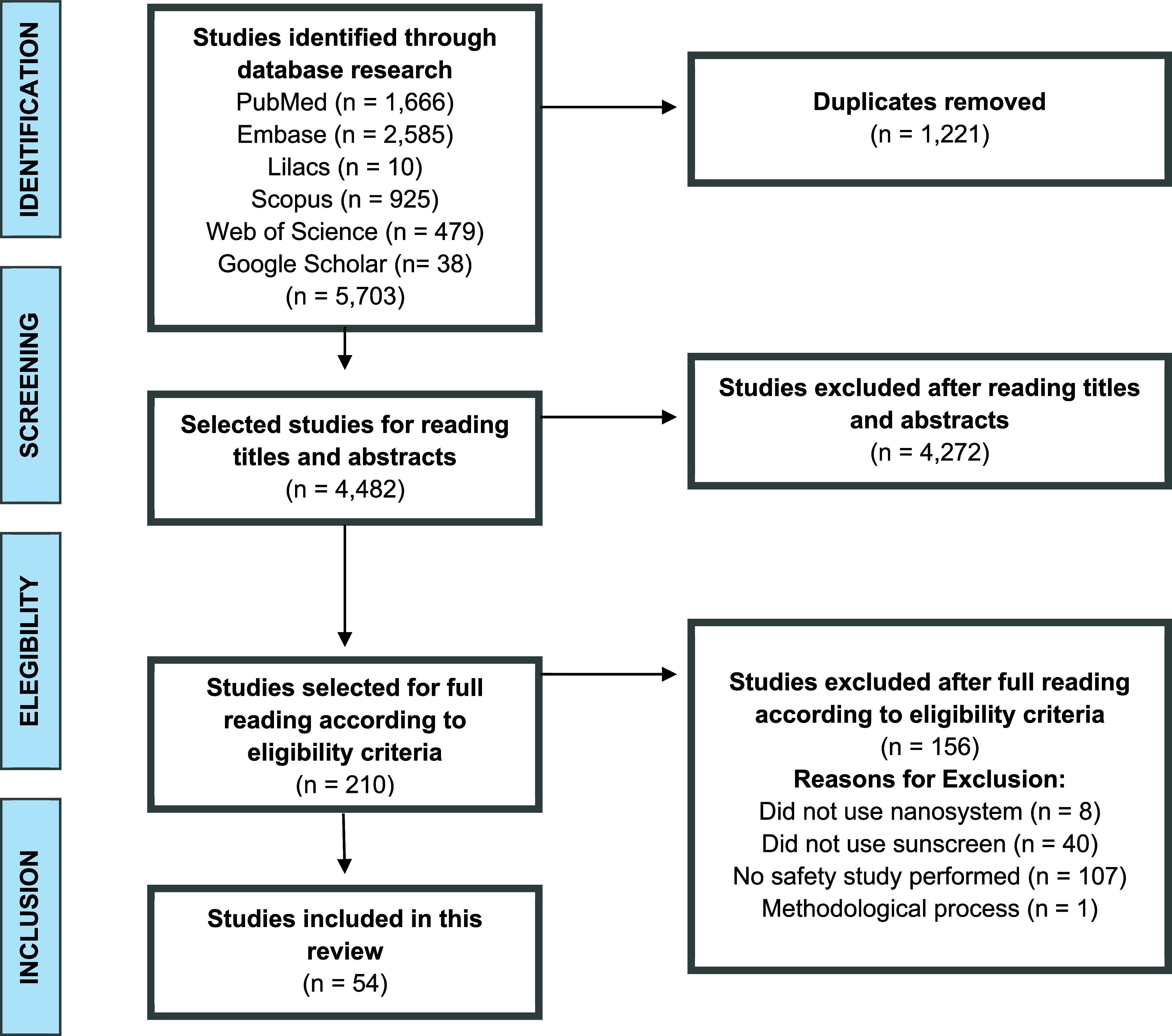
A total of 5703 references were identified. Of these, 1221 duplicate publications were automatically removed, and a total of 4482 records were included for initial screening. After reading the titles and abstracts, 4272 studies were excluded because they did not meet the established eligibility criteria: irrelevance to the topic, lack of application of nanosystems, and unrelated safety and experimental models. 210 were included for full-text review. A detailed analysis of these studies resulted in the inclusion of 54 studies for data synthesis. The study selection process is described in Figure.
PRISMA flowchart describes the search results in the databases and the reference list of the selected studies.
Among the included studies (n = 54), all were primary studies, divided into experimental (n = 51) and clinical (n = 3) research. Fifteen were European studies, 19 were Asian, 15 were Brazilian, three were studies originating in Oceania, and two were North American (Figure).
Quantitative parameters of the articles selected in the review: geographic distribution, types of systems used, and experimental safety models employed in the analyzed studies. (A) Percentage distribution of studies according to the geographic region of origin, with a predominance of research conducted in Asia (35.2%), Europe (27.8%), Brazil (27.8%), Oceania (5.5%), and North America (3.7%). (B) Relative frequency of the different types of nanostructured systems investigated. (C) Number of studies per system type, according to the experimental model employed, including in vivo assays, Franz diffusion using pig, rodent, and human skin, associated models, and unreported studies.
There is a predominance of studies conducted in Asia (35.2%), followed by Europe (27.8%) and Brazil (27.8%), while North America (3.7%) and Oceania (5.5%) show more limited participation (FigureA). This reflects not only the strong presence of Asian and European groups but also the relevant role of Brazil in this field. On the other hand, the low representation of North America may be related to more restrictive regulatory differences, which could impact the volume of published research.
It can be observed that the most frequently used nanosystem in the studies included in this review is nanoparticles, probably due to the greater availability of previous data that facilitate development, comparison of results, and experimental validation (FigureB). Other studies pointed to the association of nanosystems (12.96%), as well as the use of nanoemulsions (NE) (3.70%), niosomes (3.70%), and nanostructured lipid carriers (NLCs) (3.70%), while other systems, such as solids lipid microspheres (SLMs), Mesoporous Silica SBA-15SBA-15, liposomes, cyclodextrins, and polymeric nanocapsules, appear sporadically (≅1.85% each) (FigureB). This profile indicates that, although there is a diversity of nanostructured systems, only a portion of them have been explored more consistently, highlighting research gaps for less studied nanosystems.
Methodological analysis reveals a clear predominance of studies based on Franz diffusion cells, mainly using pig ear skin and, to a lesser extent, rodent and human skin, in addition to a significant number of studies in which the method was not clearly reported (FigureC). This finding reinforces a recurring limitation in the literature: the dependence on ex vivo and in vitro models, which, although useful, do not faithfully reproduce the physiological conditions of human skin in vivo. The scarcity of clinical studies and long-term evaluations limits the extrapolation of results, and this will be discussed in this review.
Among the main carriers found in this review, vesicular, lipid, polymeric, porous, and inclusion complexes stand out (Table).
1: Characteristics of the Studies Are Included
In vesicular systems, liposomes are nanosystems formed by phospholipids organized in bilayers, allowing the encapsulation of hydrophilic and lipophilic compounds.? Alternatively, niosomes use surfactants instead of phospholipids, overcoming limitations such as chemical instability and high cost.? Transethosomes, derived from ethosomes and transferosomes, exhibit high deformability, which facilitates skin penetration and targeted release.?
Among the lipid systems, NEs, lipid microparticles, SLNs, and NCs stand out. NEs are oil/water or water/oil dispersions composed of an oil phase, an aqueous phase, and surfactants, the choice of which influences stability and biological interaction. ?,? Microparticles have a solid lipid matrix stabilized by surfactants, ensuring skin substantivity and low systemic absorption.? SLNs act as physical filters and, combined with molecular filters, promote a synergistic effect in photoprotection.? NCs, in turn, provide prolonged release of active ingredients, keeping them on the skin surface for longer, which is advantageous in UV blockers.?
In polymeric systems, microgels reduce skin irritation and control the penetration of active ingredients,? while microsponges, consisting of porous microspheres with a high surface area, allow slow and controlled release, without significant permeation.?
In the porous systems group, mesoporous silica SBA-1 has an ordered pore structure, favoring the encapsulation and protection of sunscreens against degradation.?
Finally, in inclusion complexes, cyclodextrins trap hydrophobic compounds within their cavities, increasing solubility and modulating percutaneous absorption according to the desired application.? Figure presents an illustrative image of the particulate and vesicular lipid nanosystems, the safety methodology used for their evaluation, and the skin types employed in the tests described in this article.
Nanosystems, safety studies, and skin types used in the trials described in this article.
Only one article used an in vivo methodology, with volunteers applying the product to the skin on their backs.? The remaining studies were conducted in Franz cells using rodent skin (mice and rats), pig skin, and human skin, with some works combining more than one skin type. One study did not specify the evaluation model (Table).
2: Assessment Methods, Results, and Conclusion of Included Studies
Some studies (n = 52) concluded that nanosystems are capable of providing a sustained-release carrier system, in which the sunscreen remains longer in the superficial layers of the skin, minimizing systemic absorption and sunscreen toxicity (Table).
One article reported that small amounts of Zn from Zn oxide particles in sunscreens could be detected in blood and urine. However, the extra amounts of Zn added to the blood over a 5 h period are minimal compared to the body’s Zn burden. Similarly, research has shown that elastic niosomes can penetrate deeper layers of the skin.
Another study reported that titanium dioxide (TiO_2_) nanoparticles (NPs) can diffuse through both damaged and healthy skin in small quantities. However, the majority of the applied nanoparticles (60%) remained on the surface of healthy skin after 24 h. Even after the loss of the most superficial layers of the epidermis, it was observed that some of the NPs could be retained in deeper layers such as the epidermis and dermis.
Discussion
Excessive sun exposure represents a global public health problem, being directly associated with the development of skin cancer.? Therefore, sunscreens have become essential products for photoprotection.? In this context, nanotechnology has emerged as a promising strategy, offering innovative approaches for the encapsulation of UV filters in different nanosystems. These systems have the potential to enhance photoprotection, improve the retention of active ingredients on the skin surface, and consequently reduce systemic permeation, minimizing toxicological risks. ?,? Nevertheless, concerns regarding the safety of nanocarriers remain, particularly related to their skin behavior, biodistribution, and potential long-term adverse effects.? This review sought to map studies evaluating the safety of sunscreens delivered in nanosystems, each with its own unique characteristics and objectives.
The articles included in this review indicate that nanocarriers can improve both the safety and the efficacy of sunscreens. These parameters are closely related to the photoprotective performance and exposure profile of the active ingredients. Nanocarriers promote a more uniform distribution on the skin surface, ensuring continuous and homogeneous coverage against UVA and UVB radiation, which is directly associated with an enhanced efficacy. Additionally, they contribute to improved photostability by preserving the ability of UV filters to absorb or reflect radiation throughout the period of sun exposure. Another key advantage is the controlled release and enhanced skin retention of active compounds, which limits penetration into deeper skin layers and reduces potential systemic absorption, directly impacting formulation safety. ?,?,?,?,?,?,?,?,?,?,?
Consequently, nanocarriers increase the delivery of active ingredients to the desired site of action while maintaining biodegradability and biocompatibility along with high encapsulation efficiency. These features collectively contribute to improved performance and reduced toxicological risks when compared to conventional sunscreen formulations. ?,?,?,?,?,?,?,?,?,?,?,?
Their safety is generally assessed based on skin permeation studies. Among the methodologies employed, the use of Franz diffusion cells, recommended by the FDA, stands out as a widely used in vitro tool. ?,?,?,?,?,?,?,?−? ? ?,?−? ? ? ? ? ? ? ? ? ? ? ? ? ? ? ? ? ? ? ? ? ? ? ? ? ? ? ? ? ? ? ? ? ? ? ? Diffusion cells are the most widely used in vitro screening tools for evaluating the permeation of drugs or nanoparticles through the skin. Introduced by Dr. Thomas J. Franz in 1970, these cells are generally composed of a donor chamber, a receptor chamber, and a semipermeable membrane that separates both chambers, allowing drug diffusion.?
During the development stages of studying membrane kinetics, quantification of skin permeation is a crucial step.? However, there are numerous variables in this methodology, such as agitation, temperature, and dosage, which consequently result in a high degree of variability between replicated experiments, but, even so, it is a very widespread method during the formulation development stages to study kinetics through membranes.?
In the in vitro studies included in this review, porcine skin was frequently selected as the permeation barrier due to its structural and compositional similarities to human skin. ?,?,?,?,?,?,?,? ? ? ?−?,? ?,?−? ?,?,?,?−? ?,? Pig ear skin has a comparable thickness of the stratum corneum and epidermis, as well as similar follicular density, making it a well-established surrogate model in skin permeation studies.?
Rodent skins are also used, for example, rats and mice ?,?,?,?,?,?,?,?,?,?,?,?,?,?,?,? employed due to their availability, ease of handling, small size, and lower cost.? However, comparative studies have demonstrated that rodent skin is significantly more permeable than human skin (sometimes by up to 10-fold), which may lead to an overestimation of skin penetration and limit its translational relevance. ?,?
Although animal-derived membranes are widely used, the application of human skin models is strongly encouraged due to their superior physiological relevance ?,?,?,?,?,?,?,?,?,? presenting specific structural and biochemical characteristics, such as stratum corneum thickness, lipid composition, follicular density, and organization of cell junctions. These factors are crucial for evaluating the efficacy and safety of photoprotectors.?
In vitro studies, such as cytotoxicity and skin permeation assays using Franz diffusion cells, synthetic or nonsynthetic skin models, are widely used due to their reproducibility, lower cost, and ethical advantages; however, these approaches have limitations when compared to real physiological conditions. ?,?,?,?,?,?,?,?,?,?
Nevertheless, in vivo models allow for a more integrated assessment not only of photoprotective efficacy but also of safety, including potential inflammatory effects and systemic absorption, but are less frequent due to ethical restrictions, high costs, and greater experimental complexity. ?,?,?,?,?,? The combination of these in vitro and in vivo models helps to understand the biological behavior of different nanosystems, reducing methodological biases and strengthening the interpretation of results, which improve the scientific quality and translational relevance of the studies analyzed.
Formulations with inadequate photoprotective efficacy may result in insufficient protection against UVA and UVB radiation, increasing the risk of erythema, sunburn, premature photoaging, cumulative DNA damage, and, ultimately, skin cancer development.? From a safety perspective, sunscreens that fail to adequately control skin penetration may promote systemic absorption of UV filters, raising concerns related to endocrine disruption, immunological reactions, and other long-term toxicological effects.? These risks underscore the importance of developing sunscreen formulations that are both effective and safe.
These limitations become even more relevant in the context of nanostructured sunscreens, which are designed to remain predominantly in the superficial layers of the skin, minimizing systemic exposure. In this scenario, the adoption of New Approach Methodologies (NAMs), including three-dimensional skin models, assays based on human cells, computational tools, and omics approaches, represents a significant advance.?
Such methodologies are strongly encouraged by international regulatory agencies such as the European Medicines Agency (EMA), the European Chemicals Agency (ECHA), and the Brazilian Health Regulatory Agency (ANVISA), and are aligned with ethical principles and animal welfare requirements, especially in regions where the use of animals in cosmetic testing is restricted or prohibited. ?,?,? Nevertheless, standardizing experimental models for the toxicological evaluation of nanostructured sunscreens remains a substantial challenge, mainly due to the limitations of currently available methods for quantifying and tracking nanosystems in biological tissues, as well as the high costs and ethical requirements associated with advanced toxicological assays. ?,?,? Despite these limitations, such approaches are indispensable for guiding future research, supporting regulatory advancement, and ensuring the safe development of nanotechnology-based photoprotective formulations.
The vast majority of studies included in this review ?,?−? ?,?−? ?,? ?−? ?,?,?−? ? ? ? ? ? ? ? ? ? ? ? ? ? ? ? ? ? ? ? ? ? ? ? ? ? ? ? ? ? ? ? ? ?,?,? concluded that nanosystems limited the permeation of sunscreens into the deeper layers of the skin, preferentially remaining on the skin surface, where the sunscreens should act, minimizing their toxicity.
Furthermore, the incorporation of nanocarriers into sunscreen formulations offers clear advantages over conventional systems. An example is the study by Daneluti et al.,? which investigated whether the UV filters OXY, AVO, and OMC, incorporated into SBA-15 mesoporous silica, met safety requirements by significantly reducing skin permeation and deposition. The authors demonstrated that OXY-, AVO-, and OMC-loaded SBA-15 mesoporous silica stick formulations significantly reduced OXY permeation of the OXY and AVO skin compared to that of a commercially available stick product. In conventional formulations, these filters (AVO, OXY, and OMC) present limitations such as photochemical instability, potential systemic skin penetration, and an increased risk of irritation or long-term adverse effects. ? ?,? Therefore, encapsulation in nanocarriers emerges as an effective strategy to overcome these limitations, contributing to improved safety, efficacy, and overall performance of photoprotective formulations compared with systems without nanotechnology.
Ghazwani and colleagues,? when developing a sunscreen gel using silver nanoparticles loaded with methyl anthranilate (MA) (MA-AgNPs), observed that MA transport in the epidermal layers increased compared to the conventional gel formulation loaded with MA, demonstrating that the MA-AgNPs gel was able to increase retention in the dermal layers.
Furthermore, studies evaluating combinations of nanosystems containing UV filters also demonstrated benefits, such as minimal penetration? and a significant increase in the amount of filter in the epidermis without increasing its penetration. ?,?,? One article reported that small amounts of Zn from ZnO particles in sunscreens were detectable in blood and urine.? However, ZnO nanoparticles are commonly used for dermal applications due to their easy visualization through a microscope on the skin, presenting primarily in the stratum corneum without any toxic effects.?
Similarly, Tarantini et al.? investigated TiO_2_ nanoparticles and observed that they could also penetrate both intact and damaged skin, albeit in small quantities. Although the majority of the applied nanoparticles (approximately 60%) remained retained on the surface of healthy skin after 24 h. Even with the removal of the most superficial layers of the epidermis, it has been found that NPs can still accumulate in the deeper layers of the epidermis or even in the dermis.
Research has shown that elastic niosomes can penetrate the deeper layers of the skin,? but it is generally known that the performance of a sunscreen formulation depends not only on the physicochemical properties of the filters but also on the carrier used to trap and distribute them.?
The main gap identified in this review relates to the safety of these nanosystems’ skin retention. This characteristic is essential to ensure the desired localized effect, especially for sunscreens, which must act only on the superficial layers: epidermis and dermis. ?,? Although many studies have suggested retention or low permeation, few simultaneously address the toxicity, efficacy, and stability aspects of the formulations, highlighting the need for more robust and integrated investigations.
The behavior of different nanosystems is associated with their physicochemical properties, including controlled particle size, lipid or polymeric matrix, and favorable interactions with the stratum corneum. ?,?
From a toxicological point of view, comparative studies suggest that SLNs and NLCs generally have a better biocompatibility profile, since they use physiologically compatible lipids, which reduces the risk of cytotoxicity and inflammatory responses. ?,?,? In contrast, polymeric nanocapsules and inorganic systems, such as TiO_2_, ZnO, and mesoporous silica nanoparticles, may exhibit greater variability in toxicity profiles, depending on factors such as material composition, surface charge, and degree of degradation. ?,?−? ?,?,?
In this context, a comparative analysis of the toxicity profiles between different nanosystems shows that nanotechnology should not be evaluated as a homogeneous concept but rather as distinct biological behaviors. Understanding these differences is fundamental for the development of safer and more effective photoprotective formulations as well as for guiding regulatory decisions and future research focused on long-term safety.
Conducting robust toxicity studies is paramount to strengthening the safe use of nanostructured sunscreens, given that different nanosystems may exhibit distinct behavior in terms of cytotoxicity, skin penetration, and potential systemic absorption. ?,?,?,?,? However, the available literature is still relatively scarce, especially regarding in vivo and long-term clinical studies, and this may be related to methodological and regulatory challenges, since the regulation of nanotechnology-based sunscreens differs among the main jurisdictions (Food and Drug Administration (FDA), European Union (EU), Australia, Cosmetics Directive of the Association of Southeast Asian Nations (ASEAN), and others). ?,?,?
Although the present study shows advances in the application of nanotechnology to sunscreens, there is significant diversity in the methodologies used to evaluate different nanosystems.
This review presents some limitations that should be considered in the interpretation of the results, such as the methodological heterogeneity of the included studies, especially regarding the experimental models employed (in vitro and ex vivo), which do not fully reproduce the physiological conditions of human skin in vivo. In addition, the wide variability in the types of nanocarriers makes direct comparisons between studies difficult and may significantly influence the outcomes related to skin permeation, dermal retention, and safety of sunscreens, suggesting a possible publication bias. The scarcity of clinical studies and long-term evaluations limits more robust conclusions about the chronic safety and translational relevance of nanosystems applied to photoprotective formulations.
Therefore, the interpretation of the data must carefully consider the experimental model adopted, reinforcing the need for more standardized and complementary approaches to evaluate the efficacy and safety of nanostructured sunscreens.
Although the included studies employed systems that can be quite different (nanoparticles, nanosystems, nanoemulsions, microspheres, liposomes, among others) and varied biological models (humans, pigs, rodents), the conclusions of this review suggest that these systems represent significant advances over conventional formulations, especially due to their potential to increase the safety of sunscreens.
Conclusions
The results of this exploratory review suggest that incorporating sunscreens into nanostructured systems can improve photostability and modulate skin penetration, compared to conventional formulations. Sunscreen formulations with inadequate performance may offer insufficient protection against UVA and UVB radiation, increasing the risk of erythema, sunburn, photoaging, cumulative DNA damage, and skin cancer. Furthermore, the lack of control over skin penetration may favor the systemic absorption of UV filters, raising concerns about potential long-term endocrine, immunological, and toxicological effects. Therefore, the development of sunscreens that combine high efficacy with safety becomes essential.
The 54 studies included in this review consistently corroborate the conclusions presented, as they cover a wide variety of nanosystems, UV filters, experimental models, and safety and efficacy assessment strategies. However, more studies are needed, especially safety studies, as they require a longer residence time in the dermal layers, preventing systemic absorption. The use of nanotechnology has been observed in scientific articles due to the improvements it offers not only to formulations but also to UV filters. Therefore, the combination of nanostructures and UV filters offers excellent opportunities for the cosmetics industry.
Methods
Study Design
This scoping review was conducted following Joanna Briggs’ guidelines for mapping, describing, and categorizing available information on the safety of formulations using nanotechnology for photoprotection.
The selection steps for the studies included in this review were conducted based on the Preferred Reporting Items for Systematic Reviews and Meta-Analyses (PRISMA) statement and its extension for Scoping Reviews (PRISMA-ScR).? This research protocol is registered in the Open Science Framework database, available at https://osf.io/xbpyg/?view_only=4cfbe5bd4fde400bb41f54b80d22ac8b (2025-06-10).
Stakeholder Involvement
This review involved the participation of two professionals (AFONSO, MS; SOUZA, PM; SANTOS, AL dos) with experience in developing scoping reviews, as well as two professionals specializing in formulations (FREITAS, ZMF; DO CARMO, FA).
Research Question
This scoping review was guided by the following question: “How have nanosystems been applied in sunscreens and what is the evidence regarding their safety?” The research question follows the acronym Population, Concept, and Context (PCC):
- Population: nanosystems applied to topical formulations.
- Concept: evaluation of improved safety in photoprotective formulations through nanotechnology.
- Context: photoprotective formulations used in cosmetic products.
Search Strategy for Identifying Studies
The complete strategy for each database is described in Table and was developed using the following Medical Subject Headings (MeSH), Health Descriptors (DeCS), alternative terms, and keywords:
3: Search Strategy for the Articles
MeSH: Liposome; Transferosomes; Niosomes; Niosome; Nanoparticle; Nanocrystalline Materials; Nanocrystalline Material, Nanocrystals, Nanocrystal, Sunscreen; Agents, Sunscreening; Sunscreens.
DeCS: Liposomes; Nanoparticles; Sunscreening Agents.
Alternative terms for DeCS: Liposomes; Niosomes; Nanocrystalline Materials; Nanocrystals; Sunscreen Agents; Sunscreen; Sunscreens.
Keywords: Nanoemulsions, Niosomes, Liposomes, Nanoparticles, Sunscreens, In vitro and in vivo.
Electronic Databases for Study Identification
The search was conducted up to June 10, 2025, in five electronic databases: MEDLINE (PubMed), Embase, BVS (Biblioteca Nacional em Sade Brasil), Scopus (Elsevier), and Web of Science (WoS, Clarivate Analytics), without restrictions on year and language.
Other Search Resources for Study Identification
The search strategy was also adapted to gray literature including Google Scholar. Manual searches of the included studies were also performed to find as much material as possible for this review.
Eligibility Criteria
Primary and secondary studies, conducted in vivo and in vitro, that addressed the influence of nanosystems on the safety of sunscreens, especially regarding permeation and skin retention, were included. No restrictions were applied regarding the year of publication, country of origin, or location of the studies. Studies that did not simultaneously address nanosystems, sunscreens, and safety-related aspects were excluded. Literature reviews, book chapters, conference abstracts, and letters to the editor were also excluded.
Eligibility Determination
References were managed and selected using the Rayyan web application (Rayyan, Intelligent Systematic Review, Rayyan), where duplicates were automatically removed. Reviewers underwent a calibration process before determining eligibility, achieving a Cohen’s Kappa coefficient of 0.97.
Titles and abstracts were independently assessed by three reviewers (AFONSO, MS; SOUZA, PM; and SANTOS, AL) to verify their eligibility. Subsequently, the same reviewers independently read the entire article to confirm eligibility within the guidelines described above. Discrepancies were resolved by consensus from a third reviewer when necessary.
Data Extraction
Data from the included studies were independently extracted by three reviewers (AFONSO, MS; SOUZA, PM; SANTOS, AL). The information was organized in a Microsoft Excel spreadsheet. The same reviewers independently performed data extraction. Discrepancies were resolved through discussion and consensus. The reviewers were calibrated by extracting at least three documents of different quality levels and reaching consensus. This procedure was repeated until the reviewers were able to extract the data correctly and in a standardized manner. For this scoping review, the following data were extracted: Study characteristics: country, study design, bibliometric information (Digital Object Identifier (DOI), authors, year of publication, title, and country of the article).
- Study characteristics: country, study design, bibliometric information (DOI, authors, year of publication, title, and country of the article);
- Intervention characteristics: evaluation method and nanosystem used;
- Outcome characteristics: performance of the formulation using nanosystems.
The reference list from the paper itself. Each links out to its DOI / PubMed record.
- 1Wissing S. A.Müller R. H.Solid lipid nanoparticles as carrier for sunscreens: in vitro release and in vivo skin penetration J. Controlled Release 200281322523310.1016/S 0168-3659(02)00056-1 · doi ↗
- 2Monteiro-Riviere N. A.Wiench K.Landsiedel R.Schulte S.Inman A. O.Riviere J. E.Safety Evaluation of Sunscreen Formulations Containing Titanium Dioxide and Zinc Oxide Nanoparticles in UVB Sunburned Skin: An In Vitro and In Vivo Study Toxicol. Sci.2011123126428010.1093/toxsci/kfr 14821642632 · doi ↗ · pubmed ↗
- 3Ricci-Junior E.Dellamora Ortiz G. M.Pereira dos Santos E.de Carvalho Varjao Mota A.Antonio Ozzetti R.Luiz Vergnanini A.Santos-Oliveira R.Santos Silva R.Lira Ribeiro V.Maria Faria de Freitas Z.In vivo and in vitro evaluation of octyl methoxycinnamate liposomes Int. J. Nanomed.2013468910.2147/IJN.S 51383 · doi ↗
- 4Cerqueira C.Nigro F.Campos V. E. B.Rossi A.Santos-Oliveira R.Cardoso V.Vermelho A. B.dos Santos E. P.Mansur C. R. E.Nanovesicle-based formulations for photoprotection: a safety and efficacy approach Nanotechnology 2019303434510210.1088/1361-6528/ab 177c 30965299 · doi ↗ · pubmed ↗
- 5Cerqueira-Coutinho C.Santos-Oliveira R.dos Santos E.Mansur C. R.Development of a photoprotective and antioxidant nanoemulsion containing chitosan as an agent for improving skin retention Eng. Life Sci.201515659360410.1002/elsc.201400154 · doi ↗
- 6Micha J. P.Bohart R. D.Goldstein B. H.A review of sunscreen in the prevention of skin cancer J. Oncol. Pharm. Pract.202531114510.1177/1078155225132759640123348 · doi ↗ · pubmed ↗
- 7Wang J.Pan L.Wu S.Lu L.Xu Y.Zhu Y.Guo M.Zhuang S.Recent Advances on Endocrine Disrupting Effects of UV Filters Int. J. Environ. Res. Public Health 201613878210.3390/ijerph 1308078227527194 PMC 4997468 · doi ↗ · pubmed ↗
- 8Iannacone M. R.Hughes M. C. B.Green A. C.Effects of sunscreen on skin cancer and photoaging Photodermatol., Photoimmunol. Photomed.2014302–3556110.1111/phpp.1210924417448 · doi ↗ · pubmed ↗