B and T cell responses to pre-erythrocytic R21/Matrix-M and blood-stage RH5.1/Matrix-M malaria vaccines in endemic settings
Caroline K. Bundi, Olivia Muñoz, Elizabeth Kibwana, Duncan Bellamy, Lisa Stockdale, Jordan R. Barrett, Kirsty McHugh, Ivanny Mtaka, Wilmina Kalinga, Domtila Kimani, Lydia Nyamako, Kelvias Keter, Rodney Ogwang, Adrian V. S. Hill, Philip Bejon, Mainga Hamaluba, Sarah E. Silk

TL;DR
This study examines how different vaccination schedules and factors like age and malaria exposure affect B and T cell responses to malaria vaccines in children and adults.
Contribution
The study reveals how delayed booster dosing and adjuvant dose influence B cell and Tfh cell responses to malaria vaccines in endemic populations.
Findings
Infants and higher Matrix-M® doses (50μg) showed increased NANP-specific IgG+ memory B cells for R21.
Delayed booster dosing (10-10-10μg at 0-1-6months) led to stronger RH5-specific IgG+ memory B cell responses.
Higher malaria exposure correlated with increased RH5-specific cTfh and cTfh2 cell frequencies.
Abstract
There is great interest in combining the licensed pre-erythrocytic malaria vaccine R21/Matrix-M® and the blood-stage candidate vaccine RH5.1/Matrix-M® to maximise efficacy against Plasmodium falciparum malaria. As protection is understood to be antibody-mediated for both vaccines, the success of a multistage vaccination strategy will be aided by understanding factors that impact the cellular drivers of humoral immunity, e.g. dosing regimen, exposure to malaria, and age. Prior analyses of adult vaccinees showed higher RH5-specific memory B cell responses with delayed fractional versus monthly booster dosing (50-50-10μg at 0-1-6months and 10-10-10μg at 0-1-2months, respectively), but the B cell impact of delayed booster regimens has not yet been evaluated in the target paediatric population. There have also not yet been NANP-specific B cell immunogenicity analyses with R21/Matrix-M.…
Genes, proteins, chemicals, diseases, species, mutations and cell lines named across the full text — each resolved to its canonical identifier and authoritative record.
Click any figure to enlarge with its caption.
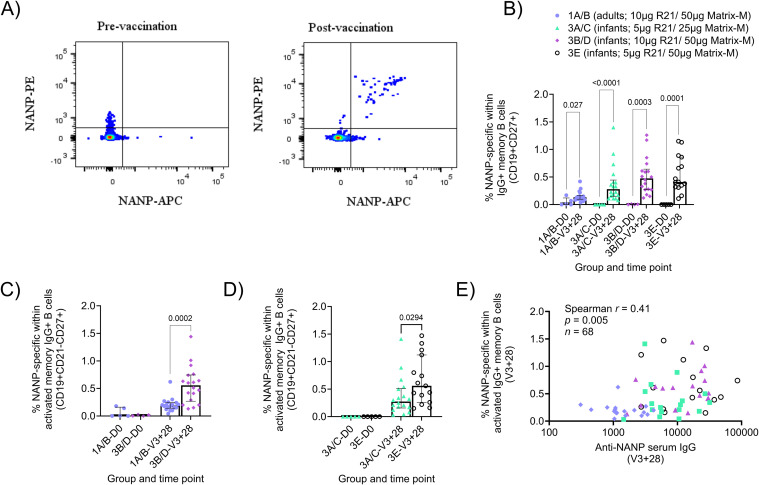 Figure 1
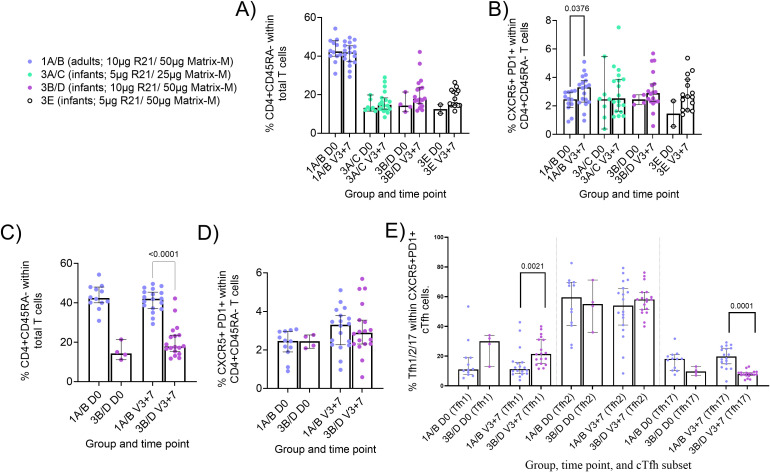 Figure 2
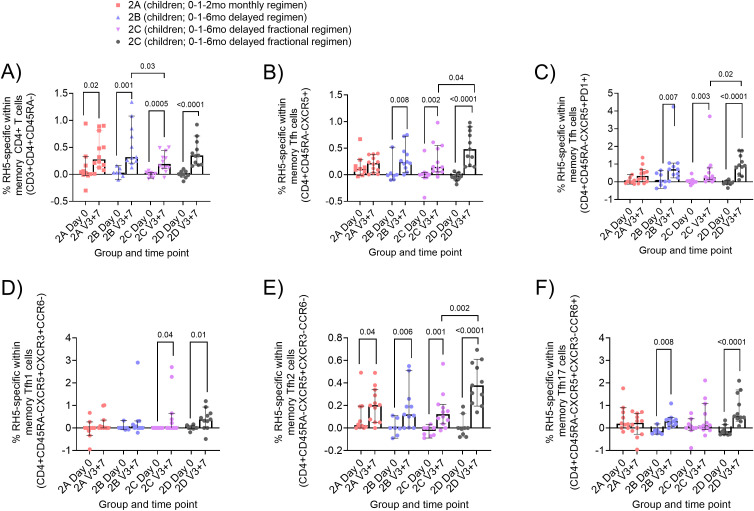 Figure 3
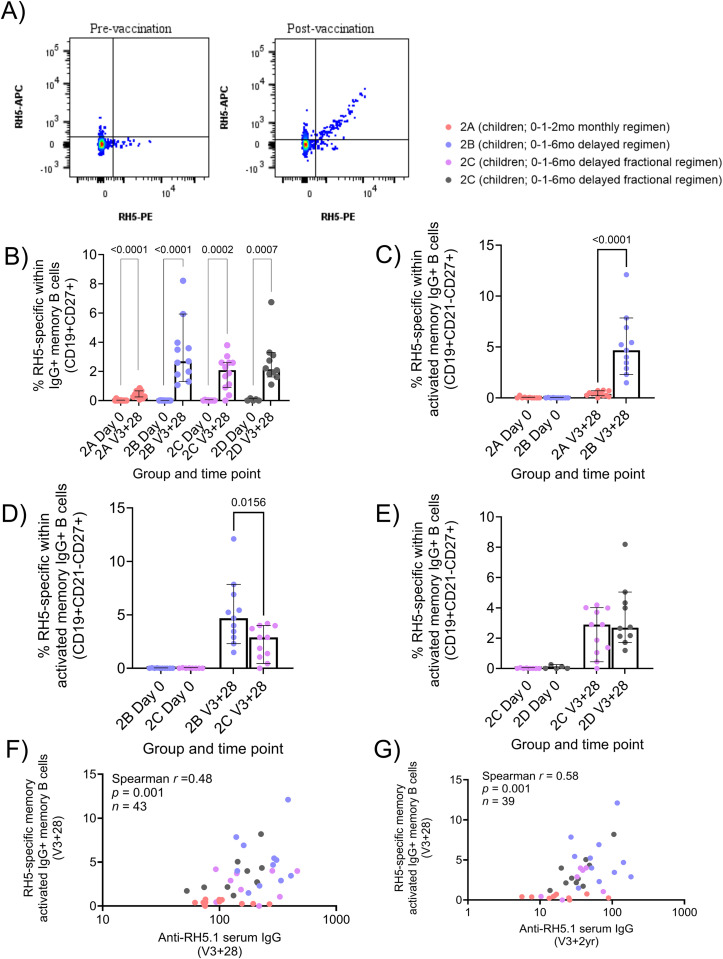 Figure 4
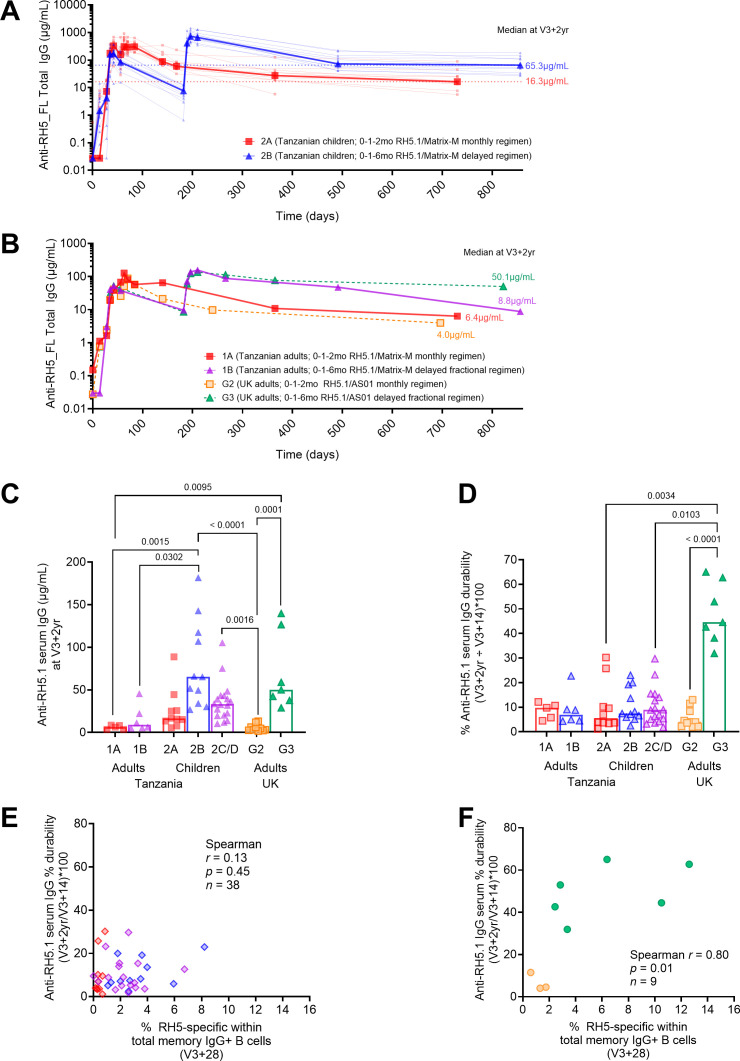 Figure 5
| Group (Age) | Number of participants | Month 0 (V1) | Month 1 (V2) | Month 2 (V3) |
|---|---|---|---|---|
| Group 1A/B | 18 | 10μg R21 | 10μg R21 | 10μg R21 |
| Group 3A/C | 18 | 5μg R21 | 5μg R21 | 5μg R21 |
| Group 3B/D | 18 | 10μg R21 | 10μg R21 | 10μg R21 |
| Group 3E | 15 | 5μg R21 | 5μg R21 | 5μg R21 |
| Group (Age) | Number of participants | Malaria pre-exposure status* | Month 0 (V1) | Month 1 (V2) | Month 2 (V3) (monthly regimen) | Month 6 (V3) (delayed regimen) |
|---|---|---|---|---|---|---|
| Group 1A adults (18–45 years) | 6 | Low | 10μg RH5.1 | 10μg RH5.1 | 10μg RH5.1 | |
| Group 1B adults (18–45 years) | 6 | Low | 50μg RH5.1 | 50μg RH5.1 | 10μg RH5.1 | |
| Group 2A | 12 | Low | 10μg RH5.1 | 10μg RH5.1 | 10μg RH5.1 | |
| Group 2B | 12 | Low | 10μg RH5.1 | 10μg RH5.1 | 10μg RH5.1 | |
| Group 2C | 12 | Low | 50μg RH5.1 | 50μg RH5.1 | 10μg RH5.1 | |
| Group 2D | 12 | High | 50μg RH5.1 | 50μg RH5.1 | 10μg RH5.1 |
| Group (Age) | Number of participants | Month 0 (V1) | Month 1 (V2) | Month 2 (V3) (monthly regimen) | Month 6 (V3) (delayed regimen) |
|---|---|---|---|---|---|
| Group 2 | 12 | 10μg RH5.1 | 10μg RH5.1 | 10μg RH5.1 | |
| Group 3 | 12 | 50μg RH5.1 | 50μg RH5.1 | 10μg RH5.1 |
Peer Reviews
No public reviews on file for this paper yet. If you reviewed it on a platform where reviews are public (OpenReview, ICLR, NeurIPS, ICML), you can paste yours below so the community can read it here.
Videos
No videos yet. Explain this paper in a talk, walkthrough, or lecture? Add one.
Taxonomy
TopicsMalaria Research and Control · vaccines and immunoinformatics approaches · Immune responses and vaccinations
Introduction
Immunisation is a key pillar in global health, saving millions of lives each year (1). Vaccines play a vital role in controlling, eliminating, and potentially eradicating diseases, with smallpox serving as a powerful example (2). Vaccines work by generating immune memory, enabling a rapid response to future pathogen exposure through memory B cells and T cells (3). For malaria, the rapid decline of vaccine-induced immunity remains a major challenge (4–7), making it crucial to understand how existing malaria vaccines induce and sustain a strong immune response.
Recent advances in malaria vaccine development have been significant, particularly with the licensing and WHO recommendation of RTS,S/AS01 and R21/Matrix-M (8, 9). These vaccines target the pre-erythrocytic stage of Plasmodium falciparum, aiming to prevent infection by inhibiting the parasite’s development immediately after mosquito inoculation. Both are based on the circumsporozoite protein (CSP) fused to the hepatitis B surface antigen (10, 11), and both show correlation between IgG antibody levels to the four amino acid repeat region (NANP) and clinical efficacy (12, 13). In contrast, blood-stage vaccines target the asexual parasite forms responsible for clinical disease. Among the candidates in development, P. falciparum reticulocyte-binding protein homolog 5 (RH5) is the leading blood-stage antigen. The RH5.1/Matrix-M^®^ formulation has shown encouraging results in a Phase 1b trial in Tanzania and is currently under evaluation in a Phase 2b trial in Burkina Faso (14, 15). Notably, protection from both R21 and RH5-based vaccines is primarily antibody-mediated, highlighting the importance of understanding B cell and T follicular helper (Tfh) cell responses in driving robust and durable humoral immunity.
Data from the RH5.1 programme indicate stronger humoral responses in children compared to adults, particularly with a delayed booster schedule (0-1–6 months, 10-10-10µg antigen), which outperformed both monthly (0-1–2 months, 10-10-10µg antigen) and delayed fractional (antigen) dosing regimens (0-1–6 months, 50-50-10µg) in eliciting antibody responses (14). Interim efficacy results from the ongoing Phase 2b trial show 55% efficacy at 6 months with the delayed regimen, compared to 40% with the monthly schedule (15), with 12-month efficacy data forthcoming. The trial is also testing the combination of R21 and RH5.1 vaccines in children; these first proof-of-concept multi-stage vaccine efficacy results are eagerly awaited. Additional trials are also underway, including one combining RH5.1 and R78C (a fusion protein of the C-terminal EGF-like domains of RIPR with CyRPA, both components of the invasion complex used in RH5-mediated invasion of red blood cells (16) in adults and children in the UK and Tanzania (NCT05385471; PACTR202407803870883), and another evaluating delayed versus delayed fractional dosing regimens of RH5.1/Matrix-M^®^ in UK adults (NCT06141057). These multi-stage/multi-antigen vaccine studies mark a promising step toward broader and more effective malaria control.
Varying vaccination booster schedules and antigen doses have also been shown to influence the frequencies of the vaccine-induced memory B cells in other programmes (6, 17–20). Specifically, a delayed fractional vaccine antigen dose has been associated with higher frequencies of memory B cells compared to monthly dosing (6, 17, 19). The vaccination platform has also been shown to influence the RH5-specific circulating T follicular helper (cTfh) cell response in RH5 vaccinees, with the RH5.1/AS01_B_ protein/adjuvant platform inducing higher responses compared to RH5 delivered by a heterologous viral vector platform (21).
Various other factors influencing malaria vaccine-induced humoral responses have also been proposed (22, 23). These include: variation of the vaccination regimens (antigen and adjuvant dose), age of the vaccinee, and impact of previous exposure to malaria. Published data across R21 and RH5.1 clinical trials suggest all of these factors may be important (4, 6, 14, 19, 21, 24–28). For example, in a Phase 1 trial, R21 showed higher anti-NANP and anti-C-terminus IgG antibodies in infants compared to both older children (18-36mo) and adults (25, 27), and in a Phase 3 trial, younger children aged 5–17 months had higher titres compared with children aged 18–36 months (13). A Phase 2 trial with n=150 per group showed increased efficacy using a higher Matrix-M^®^ adjuvant dose (50µg) compared with a half-dose (25µg) when the R21 dose was held the same (5µg), although the mechanism behind this finding remains unclear (5, 24). In a Phase 3 trial, R21/Matrix-M^®^ showed efficacy in areas with seasonal (75%) and perennial (68%) malaria transmission with a dose of 5μg R21/50μg Matrix-M^®^ (13). NANP-specific B cell responses have not previously been analysed in these contexts.
While B cells are the cellular source of antibodies, Tfh cells are essential for B cell support in germinal centres (GCs), aiding the production of memory B cells and plasma cells (29). Analogous to total CD4+ T cells, Tfh can be classified into Tfh1 (CXCR3+ CCR6), Tfh2 (CXCR3- CCR6-), and Tfh17 (CXCR3- CCR6+) (30, 31). Secondary lymphoid tissues are ideal for studying Tfh cells, but ethical and logistical limitations often hinder sampling for research. However, cTfh cells (expressing CXCR5 -/+ programmed cell death protein 1 (PD1)) in peripheral blood share similar phenotypic and functional profiles with GC Tfh cells and are thus useful proxies for studying GC responses (32, 33). The important role played by Tfh in vaccination has been demonstrated in influenza, (34), HIV (32), SARS-CoV-2 (35), and yellow fever (36) vaccines, among others. Frequencies of vaccine-specific cTfh cells have also been shown to correlate with serum antibodies in RTS,S/AS01, and earlier RH5.1/AS01_B_ clinical trials (17, 21, 37, 38).
Despite the above evidence, R21- and RH5.1-specific B and cTfh cell responses in the target populations in malaria-endemic regions remain unexplored. In this study, we sought to address these data gaps and evaluated the effect of vaccination regimens (vaccination dose, adjuvant dose, vaccination schedule), age, and malaria exposure on RH5.1/Matrix-M^®^ and, separately, R21/Matrix-M^®^.
Methods
Clinical trials
This study was nested within two independent clinical trials: R21/Matrix-M^®^ (NCT03580824; 2019-2022) and RH5.1/Matrix-M^®^ (NCT04318002; 2021-2023). We additionally compared a subset of the RH5.1/Matrix-M^®^ (NCT04318002) read-outs to previously published data with an RH5.1/AS01_B_ clinical trial in a malaria-naïve UK adult population (NCT02927145; 2016-2019). Sample sizes for the analyses were determined by sample availability and are summarised in the Supplementary Table 1. The group sizes shown in Tables 1–3 represent the maximum sample size as defined by trial enrolment.
The R21/Matrix-M^®^ “VAC073” trial (NCT03580824) was a Phase 1b, open-label, age de-escalation, dose-escalation trial conducted at KEMRI, Kilifi, Kenya, involving adults (18–45 years), children (1–5 years; not included in the analyses presented here), and infants (5–11 months). Vaccines were administered on a 0-1–2 month regimen, with groups varying in the dose of R21 antigen and/or Matrix-M^®^ adjuvant (Table 1). Full details of the clinical trial can be found in the primary trial publication, including analyses of 1-5-year olds and antibody responses following further booster doses which were outside the scope of this study (25, 27).
The RH5.1/Matrix-M^®^ “VAC080” trial (NCT04318002) was also a Phase 1b, open-label, age de-escalation dose-escalation trial that was conducted at Ifakara Health Institute, Bagamoyo, Tanzania. The trial recruited healthy adults (18–45 years); not included in the analyses presented here (19), and children (5–17 months) (14). Vaccines were administered on a 0-1–2 month “monthly” or 0-1–6 month “delayed” regimen, with delayed regimen groups varying in terms of the vaccine antigen dose of the final booster (“delayed” versus “delayed fractional”) and pre-exposure to malaria infection (Table 2). Full details of the clinical trial, including analyses of adult participants, can be found in the primary trial publication (14).
To note, in the interest of consistency we use the age group nomenclature as per primary trial publications, i.e. 5-11mo “infants” in the R21/Matrix-M^®^ trial (NCT03580824) (25) and 5-17mo “children” in the RH5.1/Matrix-M^®^ trial (NCT04318002) (14). We do not seek to draw any comparisons between these two overlapping age groups in this study.
The RH5.1/AS01_B_ “VAC063” trial (NCT02927145) was a Phase 1/2a trial conducted in malaria-naïve adults in the UK to determine the safety, immunogenicity, and efficacy of RH5.1/AS01_B_ against blood-stage controlled human malaria infection (CHMI) model (4). Vaccines were administered on a 0-1-2 “monthly” or 0-1–6 month “delayed fractional regimen” (Table 3). Full details of the clinical trial, including groups not included in this study, can be found in the primary trial publication (4).
All three trials were conducted according to the principles of the Declaration of Helsinki 2013 and Good Clinical Practice. For the RH5.1/Matrix-M^®^ trial (NCT04318002), guardians of the child participants signed or thumb-printed an informed consent form at the in-person screening visit, and consent was verified verbally before each vaccination. For the RH5.1/AS01_B_ trial (NCT02927145), all participants signed written consent forms, and consent was checked before each vaccination and prior to CHMI. For the R21/Matrix-M^®^ trial (NCT03580824) written informed consent for participation in this trial was provided by adult volunteers, whilst the children and infant participants’ parents or legal guardians provided consent for participation in this trial, which allowed the use of the sample and data for the primary trial objective and future exploratory analysis.
RH5-specific and NANP-specific B cell flow cytometry
Cryopreserved PBMCs from the RH5.1/Matrix-M^®^ and R21/Matrix-M^®^ vaccine trials were thawed using pre-warmed R10 media (RPMI [R0883, Sigma] supplemented with 10% heat-inactivated FCS [60923, Biosera], 100U/ml penicillin/0.1mg/mL streptomycin [P0781, Sigma], and 2mM L-glutamine [G7513, Sigma]). Thawed PBMC were washed twice and rested in R10 for 1h at 37 °C with benzonase (70664-10KUN, EMD Millipore). The PBMCs were enriched for B cells using the Human Pan-B cell Enrichment Kit [19554, StemCell]. Enriched B cells were then stained with viability dye FVS780 (565388, BD Biosciences), followed by incubation with Trustain (422302, Biolegend) to block non-specific Fc receptor staining. Subsequent surface staining of B cells was performed with anti-human CD19-BV786 (563325, BD Biosciences), IgG-BB515 (564581, BD Biosciences), IgM-BV605 (562977, BD Biosciences), CD27-PE-Cy7 (560609, BD Biosciences), CD21-BV711 (563163, BD Biosciences) IgA-PerCP-Vio700 (130-113-478, Miltenyi), CD38-BV480 (566137, BD Biosciences), and CD138-APC-R700 (566050, BD Biosciences). Two fluorophore-conjugated NANP or RH5 probes, for R21/Matrix-M^®^ and RH5.1/Matrix-M^®^ trial samples respectively, were also included. The preparation of the RH5 probes has been published previously (6, 19). In brief, monobiotinylated RH5 was produced by transient co-transfection of HEK293F cells with a plasmid encoding BirA biotin ligase and a plasmid encoding a full-length RH5. The RH5 plasmid was based on ‘RH5-bio’ (a gift from Gavin Wright; University of York, York, United Kingdom; Addgene plasmid 47780; http://n2t.net/addgene:47780;RRID: Addgene_47780; (39). RH5-bio was modified prior to transfection to incorporate a C-tag for subsequent protein purification. The monobiotinylated NANP peptide used for probe generation was commercially obtained (CPD70698, Thinkpeptides, ProImmune). Two probes per antigen were freshly prepared for each experiment, by incubation of monobiotinylated RH5 or NANP with streptavidin-PE (S866, Invitrogen) or streptavidin-APC (17-4317-82, Biolegend) at an approximately 4:1 molar ratio to facilitate tetramer generation. Probes were then centrifuged at 13000rpm (max microfuge speed) for 10min at room temperature to remove aggregates. After surface staining, enriched B cells were permeabilised and fixed with Transcription Factor Buffer Set (562574, BD Biosciences) to enable intracellular staining. The fixed cells were stained with anti-human Ki67-BV650 (563757, BD Biosciences; data not shown) and probes at 1/10 dilution as compared to concentrations used for surface staining. The cells were washed and stored at 4 °C until acquisition.
B cells were acquired on a Fortessa X20 flow cytometer with FACSDiva8.0 (BD Biosciences). Data were analysed using FlowJo (v10.8; Tree Star Inc.). Samples were excluded from analysis if there were < 50 cells in the parent population. NANP- or RH5-specific IgG+ B cells were identified as RH5/APC+RH5/PE+ or NANP/APC+NANP/PE+ cells within various live memory B cell populations as shown in Supplementary Figure 1.
Ex vivo cTfh cell assay
Technical issues with our CSP stimulation meant we were unable to investigate frequencies of CSP-specific cTfh cells within total memory cTfh cells from available PBMC in the R21/Matrix-M^®^ trial (NCT03580824). Instead, we used a different read-out as a proxy for vaccine-induced cTfh cell responses 7 days after the final vaccination in the primary three-dose series (V3 + 7), total CXCR5+PD1+ cTfh cells.
The ex vivo total cTfh assay was adapted from previously published methodology (37). In brief, cryopreserved PBMC from the R21/Matrix-M^®^ clinical trial (NCT03580824) were thawed, washed twice in R10 as above, and then rested for a further 3h at 37 °C. PBMC were then stained with viability dye Live/Dead Aqua (L34957, ThermoFisher) and washed before surface staining with anti-human PD1-BV650 (329950, Biolegend), CD45RA-eF450 (304123, Biolegend), CXCR5-FITC (356913, Biolegend), CCR6-PE (G034E3, G034E3), CD4-APC-eF780 (47-0049-42, eBioscience), CD3-AF700 (56-0038-82, eBioscience) and CXCR3-APC (353708, Biolegend) at 37°C. Cells were fixed with 1% paraformaldehyde (43368, Alfa Aesar) and stored at 4 °C until acquisition on the same day.
The cells were acquired on a Fortessa X20 flow cytometer with FACSDiva8.0 (BD Biosciences). Data were analysed using FlowJo (v10.8; Tree Star Inc.). Samples were excluded from analysis if there were < 50 cells in the parent population. Memory CD4+ T cells were identified as live CD4+ CD45RA- cells, and cTfh were defined as CXCR5+PD1+ within the memory CD4+ T cells as shown in Supplementary Figure 2.
Activation induced marker assay
The AIM assay was adapted from previously published methodology (21). In brief, cryopreserved PBMC from the RH5.1/Matrix-M^®^ clinical trial (NCT04318002) were thawed as above and washed twice in R10 before resting for 3h at 37°C with benzonase (70664-10KUN, EMD Millipore). This was followed by 22h stimulation with either R10 medium alone as a negative control, 2.5μg/peptide/mL of a RH5 peptide pool (20-mer peptides spanning full-length RH5 protein, overlapping by 10 amino acids, total of 50 peptides [NeoScientific] (21, 40) or 1μg/mL Staphylococcal enterotoxin B (SEB; S-4881, Sigma; positive control). Following stimulation, PBMC were surface stained as per the ex vivo cTfh cell panel above as well as anti-human CD134 (OX40)-BUV395 (743286, BD Biosciences), CD25-PE-Cy7 (335824, BD Biosciences), and CD69- PE-Cy5 (555532, BD Biosciences). Finally, the cells were washed and then fixed with 1% paraformaldehyde (43368, Alfa Aesar) and stored at 4 °C until acquisition on the same day.
Samples were acquired on a Fortessa X20 flow cytometer with FACSDiva8.0 (BD Biosciences). Data were analysed using FlowJo (v10.8; Treestar). Samples were excluded from analysis if there were <50 cells in the parent population. RH5-specific cells within memory CD4+ or cTfh cells were defined as CD25+OX40+ or CD25+CD69+ as shown in Supplementary Figures 2–4. Background responses to medium alone were subtracted from RH5-specific responses in matched samples.
IgG standardised ELISA
Standardised ELISAs were used to quantify the magnitude of the anti-NANP and anti-RH5 serum IgG pre- and post-vaccination with R21/Matrix-M^®^ and RH5.1/Matrix-M^®^ vaccines, respectively. Anti-RH5.1 total IgG ELISAs were performed against full-length RH5 protein (RH5.1) using standardised methodology as previously described (14, 26). Anti-NANP total IgG antibodies were measured against a synthetic peptide comprising 6 repeats of the amino acid sequence NANP (NANP6), as previously described (25). In both trials, the reciprocal of the test sample dilution giving an OD_405_ of 1.0 in the standardised assay was used to assign an ELISA unit value of the standard. A standard curve and Gen5 ELISA software v3.04 (BioTek, UK) were used to convert the OD_405_ of individual test samples into AU. In RH5 vaccinees, the AU were converted into μg/mL following generation of a conversion factor by calibration-free concentration analysis as reported previously (40).
Statistical analyses
Data was analysed using GraphPad Prism version 10.1 for Windows (GraphPad Software Inc., California, USA). Comparisons between different time points/groups were done with Mann-Whitney U tests and/or a Kruskal-Wallis test with Dunn’s correction for multiple comparisons. Spearman’s rank correlation was used to test associations. All p values (or adjusted p values for tests with Dunn’s correction) are two-tailed and were considered significant at the value of < 0.05. Only significant results are annotated on figures but all statistical tests performed (including those with non-significant results) are detailed in figure legends.
Results
NANP-specific B cell responses to R21/Matrix-M® are influenced by age and adjuvant dose
Within the R21/Matrix-M^®^ clinical trial (NCT03580824), NANP probes were used to identify circulating NANP-specific IgG+, IgM+, and IgA+ memory B cells (mBC; defined as shown in Figure 1A; Supplementary Figure 1) in PBMC samples at baseline (Day 0 (D0)) and 28 days after the final vaccination in the primary three-dose series (V3 + 28). The groups from NCT03580824 included in this analysis are summarised in Table 1. In brief, this comprises Group 1A/B (adults; 10µg R21/50µg Matrix-M^®^ at 0-1–2 months), Group 3A/C (infants; 5µg R21/25µg Matrix-M^®^ at 0-1–2 months), Group 3B/D (infants; 10µg R21/50µg Matrix-M^®^ at 0-1–2 months), and Group 3E (infants; 5µg R21/50µg Matrix-M^®^ at 0-1–2 months). Significant NANP-specific responses were observed within total, resting, or activated memory IgG+, IgA+, and IgM+ B cell populations between D0 and V3 + 28 within all adult and infant groups, with the only exception of resting IgA+ memory B cells in Groups 3B/D and 3E, activated and resting IgM+ in Group 3B/D and 3A/C, respectively (Supplementary Figure 5). Of the different mBC subsets, the highest median responses were observed within the activated IgG+ memory subset (Figure 1B; Supplementary Figure 5).
NANP-specific memory B cell responses to R21/Matrix-M®. Cryopreserved PBMCs from Day 0 ((D0); baseline) and V3 + 28 (28 days post-third vaccination (V3)) were stained ex vivo and analysed by flow cytometry. NANP-specific cells within total/activated memory B cell populations were defined as shown in Figure (A) and Supplementary Figure 1. Frequencies were compared between (B) NANP-specific total IgG+ memory B cells at D0 and V3 + 28 within groups, (C) NANP-specific activated IgG+ memory B cells in adults [Group 1A/B] and infants [Group 3B/D] at D0 and V3 + 28, and (D) NANP-specific activated IgG+ memory B cells in low [Group 3A/C] or high [Group 3E] Matrix-M® infants at D0 and V3 + 28. A Spearman correlation analysis was performed between NANP-specific activated IgG+ memory B cells and anti-NANP serum IgG at V3 + 28 in all groups (E). Post-vaccination responses were compared within groups by the Mann-Whitney test (B) or between groups (C, D). Sample sizes for all assays were based on sample availability (1A/B D0 n = 5, V3 + 28 n = 18; 3A/C D0 n = 5, V3 + 28 n = 18; 3B/D D0 n = 4, V3 + 28 n = 18; 3E D0 n = 5, V3 + 28 n = 15); each point represents a single sample. Bars and error bars represent medians and interquartile ranges, respectively. Significant p values are annotated on graphs; p < 0.05 was considered significant.
In terms of differences between groups, the comparisons we were most interested in within the R21/Matrix-M^®^ trial were: Group 1A/B versus Group 3B/D (adults versus infants; same doses of R21 and Matrix-M^®^), Group 3A/C versus Group 3E (25µg versus 50µg Matrix-M^®^ in infants; same dose R21), and Group 3B/D versus Group 3E (5µg versus 10µg R21 in infants; same dose of Matrix-M^®^). Post-vaccination NANP-specific B cell frequencies were significantly higher in infants than adults (receiving the same 10μg R21/50μg Matrix-M^®^ regimen; Groups 1A/B and 3B/D) within total memory IgG+ and IgA+ B cells, as well as within activated and resting memory IgG+ subpopulations (activated memory IgG+ Figure 1C; V3 + 28 medians: 0.19% Group 1A/B adults, 0.56% Group 3B/D infants p = 0.0002; Supplementary Figure 6).
There were no significant differences by age within any of the NANP-specific memory IgM+ B cell populations (Supplementary Figure 6). Within the infant groups, an increase in Matrix-M^®^ dose from 25µg (Group 3A/C) to 50µg (Group 3E) with the same R21 dose was weakly associated with increased activated memory IgG+ B cells (Figure 1D; V3 + 28 medians: 0.28% Group 3A/C 25µg Matrix-M^®^, 0.56% Group 3E 50µg Matrix-M^®^, p = 0.0294). Increasing the R21 antigen dose showed no significant difference in the NANP-specific mBC populations (Group 3B/D versus Group 3E; data not shown). When pooling all groups analysed, frequencies of NANP-specific cells within memory IgG+ B cells correlated with matched time point V3 + 28 serum anti-NANP IgG (activated memory IgG+ Figure 1E; Supplementary Figure 7), but not late time point serum anti-NANP IgG titres (V3 + 1yr infants, V3 + 2yr adults; data not shown). To note, these differences were no longer significant when groups were analysed separately.
Trend towards higher frequencies of cTfh1 and lower frequencies of cTfh17 within CXRC5+PD1+ cTfh cells in infants as compared to adults R21/Matrix-M® vaccinees
While there were no significant post-vaccination differences in memory CD4+ T cells within total T cells in all groups (Figure 2A), there were weak trends to increased frequencies of CXCR5+PD1+ cTfh cells within the memory CD4+ T cell population and this was significant in adults (Figure 2B; Group 1A/B adults D0 median: 2.47% vs V3 + 7 median: 3.31% p = 0.0376). Few baseline samples were assayed in the infant groups; thus we were not able to meaningfully compare pre- and post-vaccination responses given baseline frequencies of these subsets were not negative (Figures 2A, B).
Memory CD4+ and circulating Tfh (cTfh) responses to R21/Matrix-M®. Cryopreserved PBMCs from Day 0 ((D0); baseline) and V3 + 7 (7 days post-third vaccination (V3)) were stained ex vivo and analysed by flow cytometry. Memory CD4+, CXCR5+PD1+ cTfh cells, and cTfh1/2/17 cells were defined as shown in Supplementary Figure 2. Frequencies were compared between (A) memory CD4+ T within total T cells at D0 and V3 + 7 within groups (B) cTfh (CXCR5+ PD1+) within total memory CD4+ T cells at D0 and V3 + 7 within groups, (C) memory CD4+ T cells between adults [Group 1A/B] and infants [Group 3B/D] at V3 + 28, and (D) cTfh cells between adults [Group 1A/B] and infants [Group 3B/D] at V3 + 28. (E) cTfh (CXCR5+ PD1+) phenotypes at D0 and V3 + 7 between adults [Group 1A/B] and infants [Group 3B/D]. Post-vaccination responses were compared within groups by Mann-Whitney test (A, B) or between groups (C–E). Sample sizes for all assays were based on sample availability (1A/B D0 n = 12, V3 + 7 n = 18; 3A/C D0 n = 7, V3 + 7 n = 18; 3B/D D0 n = 4, V3 + 7n = 18; 3E D0 n = 2, V3 + 7 n = 15); each point represents a single sample. Bars and error bars represent medians and interquartile ranges, respectively. Significant p values are annotated on graphs; p < 0.05 was considered significant.
In terms of differences between adults and infants, adult vaccinees had significantly higher frequencies of memory CD4+ T cells post-vaccination as compared to infant vaccinees (Figure 2C V3 + 7 medians adults 1A/B 42% vs infants 3B/D median 17.8% p = 0.0001). Within this CD4+ memory population, we observed no difference in frequencies of CXCR5+PD1+ cTfh cells in infants compared to adults (Figure 2D). There were also no significant differences in the frequencies of memory CD4+ T cells or CXCR5+PD1+ cTfh cells between the infant groups that received different R21 or Matrix-M^®^ doses (data not shown). However, we did observe higher frequencies of cTfh1 and lower frequencies of cTfh17 in infants as compared to adults within the CXRC5+PD1+ cTfh population, suggesting some differences in the cTfh cell repertoire (Figure 2E; Tfh1 medians adults 1A/B 11.25% vs infants 3B/D 27.50% p = 0.0021, and Tfh17 medians adults 1A/B 19.70% vs infants 3B/D median 7.91% p = 0.0001). No correlation was observed between the frequencies of CXCR5+PD1+ cTfh cells at V3 + 7 and serum antibody at V3 + 28 or late time point (~2 years post-vaccination; data not shown).
Higher post-vaccination frequencies of RH5-specific cTfh cells were observed in children with higher previous exposure to malaria
In addition to our analyses of the licensed malaria vaccine R21/Matrix-M^®^, we were also interested in the vaccine antigen-specific cTfh and B cell responses to the leading blood-stage malaria vaccine candidate, RH5.1/Matrix-M^®^. The groups from NCT04318002 included in this analysis are summarised in Table 2. In brief, this comprises Group 2A (children; 10µg RH5.1/50µg Matrix-M^®^ at 0-1–2 months), Group 2B (children; 10µg RH5.1/50µg Matrix-M^®^ at 0-1–6 months), Group 2C (children; 50µg RH5.1/50µg Matrix-M^®^ at 0–1 months and 10µg RH5.1/50µg Matrix-M^®^ at 6 months), and Group 2D (“high exposure” children; 50µg RH5.1/50µg Matrix-M^®^ at 0–1 months and 10µg RH5.1/50µg Matrix-M^®^ at 6 months).
Using cryopreserved samples from the RH5.1/Matrix-M^®^ trial, we were able to employ an AIM assay to report on RH5-specific cTfh frequencies. We first evaluated the baseline (Day 0; D0) and post-vaccination cTfh cell responses 7 days after the final vaccination in the primary three-dose series (V3 + 7) within total memory CD4+ T cells and total memory cTfh cells (as defined in Supplementary Figures 2–4). RH5-specific responses were detected within total memory CD4+ T cells in all groups (Figure 3A) and within total memory cTfh cells in all delayed regimen groups (Figure 3B). Trends were very similar when reporting frequencies of RH5-specific memory cTfh cells within CXCR5+PD1+ cells (Figure 3C). However, there were no significant bulk changes in the frequencies of total CXCR5+PD1+ cTfh cells within the memory CD4+ T cell population post-vaccination, except in the high malaria-exposed group (Supplementary Figure 8). Within cTfh1 (Figure 3D), cTfh2 (Figure 3E), and cTfh17 (Figure 3F) subsets (as defined in Supplementary Figure 2), RH5-specific responses were only detected consistently across all groups within the cTfh2 population (Figure 3E).
RH5-specific memory CD4+ and circulating Tfh (cTfh) responses to RH5.1/Matrix-M®. Cryopreserved PBMCs from Day 0 ((D0); baseline) and V3 + 7 (7 days post-third vaccination (V3)) were stimulated with medium alone or a RH5 peptide pool for 24h, then stained and analysed, identifying RH5-specific cells as those co-expressing CD25 with OX40 and/or CD69 following stimulation. RH5-specific memory T cells were identified as shown in Supplementary Figures 2–4). Frequencies were compared between (A) RH5-specific CD4+ T cells at D0 and V3 + 7 within groups, (B) RH5-specific cell responses within the total memory CXCR5+ cTfh at D0 and V3 + 7 within groups, (C) RH5-specific cells responses within total memory CXCR5+PD1+ cTfh at D0 and V3 + 7 within groups, (D–F) RH5-specific cTfh1, cTfh2 and cTfh17 at D0 and V3 + 7 within groups. The Mann-Whitney test was used for comparison between Day 0 (D0) and V3 + 7 (7 days post third vaccination), and between two groups. Sample sizes for all assays were based on sample availability (2A D0 n = 10, V3 + 7 n = 12; 2B D0 n = 7, V3 + 7 n = 11; 2C D0 n = 9, V3 + 7 n = 12; 2D D0 n = 9 V3 + 7 n = 11); each point represents a single sample. Bars and error bars represent medians and interquartile ranges, respectively. Significant p values are annotated on graphs; p < 0.05 was considered significant. Note that negative data points are expected given that background responses to medium alone are subtracted from RH5-specific responses in matched samples in the AIM assay as described in Methods and published previously (21).
With respect to differences between groups, the comparisons we were interested in within the children vaccinees in the RH5.1/Matrix-M^®^ trial were Group 2A versus 2B (monthly versus delayed regimen), Group 2B versus 2C (delayed versus delayed fractional regimen), and Group 2C versus 2D (low versus high prior exposure to malaria; same delayed fractional regimen). Interestingly, within this RH5-specific cTfh cell data set, it was only in comparison between the different malaria pre-exposure groups that we observed differences in the magnitude of the RH5-specific cTfh cell response. Specifically, we observed higher frequencies of RH5-specific cells within the total memory CXCR5+ cTfh (Figure 3B V3 + 7 median 2D 0.48% vs 2C 0.15% p = 0.04), total memory CXCR5+PD1+ cTfh (Figure 3F V3 + 7 median 2D 0.88% vs 2C 0.19% p = 0.004), and memory cTfh2 (Figure 3D V3 + 7 median 2D 0.38% vs 2C 0.12% p = 0.001) populations in the “high exposure” Group 2D as compared to “low exposure” Group 2C who received the same delayed fractional regimen. Additionally, RH5-specific responses detected within total memory CD4+ T cells in the delayed regimen group (2B) were significantly higher than the delayed fractional regimen group (2C) post vaccination (Figure 3A V3 + 7 median 2B 0.32% vs 2C 0.19%, p = 0.03). In contrast to the ex vivo cTfh assay described for R21/Matrix-M^®^, no significant correlations were observed between frequencies of RH5-specific cTfh cells and anti-RH5.1 serum IgG at V3 + 28 (data not shown).
Delayed booster vaccination drives higher RH5-specific memory IgG+ B cells than monthly or delayed fractional booster regimens
Within the RH5.1/Matrix-M^®^ trial (NCT04318002), RH5 probes were used to identify circulating RH5-specific IgG+, IgM+ and IgA+ memory B cells (defined as shown in Figure 4A; Supplementary Figure 1) in PBMC samples at baseline (Day 0; D0) and 28 days after the final vaccination in the primary three-dose series (V3 + 28). Significant RH5-specific total, resting, or activated memory IgG+ B cell responses were observed at V3 + 28 in all groups (total memory IgG+ Figure 4B; Supplementary Figures 9A, B). In contrast to the NANP analyses in R21/Matrix-M^®^ trial (Supplementary Figure 5), but consistent with previously published adult analyses from the same trial (19), no significant IgM+ or IgA+ responses were detected post vaccination (Supplementary Figures 9C, D). However, at baseline, adults had a background signal with the RH5 probes in the IgM+ and IgA+ memory B cell subsets.
RH5-specific memory IgG+ B cells to RH5.1/Matrix-M®. Cryopreserved PBMCs from Day 0 (D0) and V3 + 28 (28 days post-third vaccination (V3)) were stained ex vivo and analysed by flow cytometry. RH5-specific memory B cell phenotypes were defined as shown in Figure (A) and Supplementary Figure 1. Frequencies were compared between (B) RH5-specific total IgG+ memory B cells at D0 and V3 + 28 within groups, (C) RH5-specific activated IgG+ memory B cells between “monthly” (Group 2A) vs “delayed” (Group 2B) vaccination regimen, (D) RH5-specific total IgG+ memory B cells between delayed (Group 2B) vs delayed fractional dose regimen (Group 2C), (E) RH5-specific total IgG+ memory B cells between low malaria pre-exposure (Group 2C) vs high malaria pre-exposure (Group 2D). Post-vaccination responses were compared within groups by the Mann-Whitney test (B) or between groups (C–E). A Spearman correlation analysis was performed between RH5-specific activated IgG+ mBC and anti-RH5.1 serum IgG at V3 + 28 and V3 + 2yr, respectively (F, G). Sample sizes for all assays were based on sample availability (2A D0 n = 11, V3 + 7 n = 12; 2B D0 n = 10, V3 + 7 n = 11, 2C D0 n = 8, V3 + 7 n = 12, 2D D0 n = 5 V3 + 7 n = 10); each point represents a single sample. Bars and error bars represent medians and interquartile ranges, respectively. Significant p values are annotated on graphs; p < 0.05 was considered significant.
The delayed booster regimen induced substantially higher frequencies of RH5-specific B cells as compared to the monthly booster regimen across total, activated, and resting memory IgG+ populations (activated memory, Figure 4C; V3 + 28 medians: 0.40% Group 2A monthly, 4.68% Group 2B delayed, p = < 0.0001; Supplementary Figures 9E, F). Within activated memory IgG+ B cells, delayed boosting also appeared to induce a superior response than delayed fractional boosting (V3 + 28 median: 2.90% Group 2C delayed fractional, p = 0.0156; Figure 4D). There was no impact of high malaria pre-exposure on responses by any of the B cell populations measured (activated memory, Figure 4E; other data not shown). With respect to the relationship to serum antibody, RH5-specific responses within both total and activated memory IgG+ B cells correlated with matched time point serum anti-RH5.1 IgG (activated memory, Figure 4F; r = 0.48, p = 0.001; Supplementary Figure 9G). Unlike with NANP responses described above, these RH5-specific B cell responses continued to correlate strongly with serum IgG out to V3 + 2yr (Figure 4G; r = 0.58, p = 0.001, Supplementary Figure 9H).
RH5.1/AS01 induced more durable antibodies in UK adults compared to RH5.1/Matrix-M® in Tanzanian adults
Given these data on the strength of the RH5-specific B cell and serum antibody response in the context of delayed booster dosing of RH5.1/Matrix-M^®^, we contextualised these findings with previously published data on RH5.1. The anti-RH5.1 serum IgG kinetics from baseline to V3 + 2yr were replotted for both RH5.1/Matrix-M^®^ Tanzanian children vaccinees (Figure 5A; (14)) that have been the focus of the RH5 component of this study, as well as the Tanzanian RH5.1/Matrix-M^®^ adult vaccinees from the same trial, alongside RH5.1/AS01_B_ adult vaccinees from an earlier UK clinical trial (Figure 5B; NCT04318002/ (4)).
Comparison of Tanzanian RH5.1/Matrix-M® serum IgG and B cell responses to previous RH5.1/AS01B UK clinical trial. Full anti-RH5.1 serum IgG kinetics from baseline to 2 years post-third vaccination (FV + 2yr) was measured by ELISA in both the RH5.1/Matrix-M® (NCT04318002) (14) and RH5.1/AS01B (NCT02927145) clinical trials (4). Here we draw attention to the kinetics between “monthly” (2A) and “delayed” (2B) groups in Tanzanian children receiving RH5.1/Matrix-M®(A) and between “monthly” (1A), “delayed fractional” (1B) Tanzanian adults receiving RH5.1/Matrix-M®, and “monthly” (G2) or “delayed fractional” (G3) UK adults receiving RH5.1/AS01B(B). Anti-RH5.1 serum IgG at V3 + 2yr was compared between groups in both trials (C), as well as percentage durability of anti-RH5.1 serum IgG (a read-out of serum IgG durability/persistence/decay) between V3 + 14 and V3 + 2yrs (D). A Kruskal Wallis test was used to compare the mean rank of each group with the mean rank of every other group with Dunn’s correction for multiple comparisons (C, D). Spearman correlation analyses were performed between percentage durability of anti-RH5.1 serum IgG with RH5-specific total memory IgG+ B cells (V3 + 28) in children receiving RH5.1/Matrix-M® (NCT04318002; (E)) and adults receiving RH5.1/AS01B (NCT02927145; (F)). In all graphs, red = monthly regimens with Matrix-M®, blue = delayed regimens with Matrix-M®, purple = delayed fractional regimens with Matrix-M®, orange = monthly regimens with AS01B, and green = delayed fractional regimens with AS01B. Sample sizes for all assays were based on sample availability (1A n = 5; 1B n = 6; 2A n = 10-12; 2B n = 11, 2C/D n = 18 - 22, G2 n = 3-10; G3 n = 6-7); each point represents a single sample with the exception of (A) where thick lines and large points represent group medians and (B) where all lines and points represent group medians. Bars and error bars represent medians and interquartile ranges, respectively (C, D). Significant p values are annotated on graphs; p < 0.05 was considered significant.
While delayed boosting with Matrix-M^®^ in Tanzanian children or delayed fractional boosting with AS01_B_ in UK adults results in higher anti-RH5.1 serum IgG at V3 + 2yr as compared to monthly regimens, we did not see the same effect in Tanzanian adults receiving delayed fractional boosting with Matrix-M^®^. Only the Tanzanian children who received the delayed regimen (2B) with Matrix-M^®^ and the UK adults who received the delayed fractional regimen (G3) with AS01_B_ maintained median anti-RH5.1 IgG concentrations above 50 µg/mL at V3 + 2yr (Figure 5C; see original trial publications for detailed comparisons of antibody responses between groups within each clinical trial) (4, 14). However, the mechanism behind these high V3 + 2yr anti-RH5.1 titres appears to be different: in the delayed fractional dosing AS01_B_ UK adults, the serum IgG percentage durability was approximately four-fold higher than in any other regimen (median = 44.5% of peak anti-RH5.1 µg/mL still present at V3 + 2yr versus < 10% in all other groups; Figure 5D). Conversely, the high V3 + 2yr titres in Tanzanian children seemed linked to a more robust peak response in the first instance, not an improvement in serum antibody persistence. Consistent with this, both V3 + 28 B cell and serum IgG responses correlate with late time point V3 + 2yr serum antibody (Figure 4F) but not percentage durability (Figure 5E) in the Tanzanian children. In contrast, the V3 + 28 B cell response in UK adults with AS01_B_ correlates with both late time point V3 + 2yr serum antibody and percentage durability (Figure 5F).
There is perhaps a yet to be understood interaction between adjuvant, age, antigen-specific B cell activation and serum antibody persistence. However, we also note that these are small sample sizes and that the median timing of the V3 + 2yr visit was earlier in the G2 and G3 RH5.1/AS01_B_ UK groups as compared to the RH5.1/Matrix-M^®^ Tanzanian groups due to differences in operational use of approved sampling windows during the respective clinical trials (NCT04318002 G2/G3 median = V3 + 510 days [range 386-826]; NCT04318002 median = V3 + 681 days [range 675-698]). Further work is therefore needed to validate these findings, ideally with larger sample sizes and – for the flow cytometry – head-to-head comparisons within the same assays.
Discussion
In this study, we investigated the impact of multiple parameters on the induction of vaccine-specific B and cTfh cell responses to R21/Matrix-M^®^ and candidate RH5.1/Matrix-M^®^ malaria vaccines. Using PBMC samples from the R21/Matrix-M^®^ trial in Kenya (NCT03580824) and the RH5.1/Matrix-M^®^ trial in Tanzania (NCT04318002), we were able to identify differences in immunogenicity by timing of booster vaccinations (RH5.1), prior exposure to malaria (RH5.1), adjuvant dose (R21), and age (R21).
The impact of delayed booster dosing on B cell immunogenicity and resultant serum antibody responses to RH5.1 remains an intriguing topic. We have previously published enhanced B cell immunogenicity with delayed fractional booster dosing in Tanzanian adults receiving RH5.1/Matrix-M^®^ (14, 19), and in UK adults receiving RH5.1/AS01_B_ (4, 6). Here, we present the first data on the effect of RH5.1 delayed boosting on B cell responses in children living in a malaria-endemic setting. We observed an increased IgG+ memory B cell response with delayed booster dosing compared to monthly dosing regimen or delayed fractional dosing, which correlated with both matched peak (V3 + 28) and late (V3 + 2yr) time point serum antibody. Additionally, a delayed booster induced higher RH5-specific IgG+ memory B cells than a delayed fractional dose in children. This is the first report on the head-to-head comparison of delayed vs delayed fractional dose impact on RH5-specific memory B cells and is highly supportive of further clinical development of the delayed boosting regimen. The mechanism by which delayed booster dosing induces higher B cell responses is not fully understood, but is likely related to enhanced germinal centre responses, possibly driven by increased competition for antigen in the delayed versus delayed fractional dose groups (41–44), or waning negative feedback from circulating serum antibody and ongoing germinal centres induced by the second vaccination (6, 19). Ongoing studies using fine needle aspiration of draining lymph nodes aim to directly examine these mechanisms (NCT05978037; NCT06320535).
The analysis of NANP-specific memory B cell responses post-vaccination with R21/Matrix-M^®^ revealed interesting heterogeneity, with higher responses in infants compared to adults in Kenya. This could be associated with the effect of previous malaria exposure since this cohort was recruited from a region of moderate malaria endemicity (Junju, Kenya) (45). Previously, the frequency of total B cells was reported to be 1.4-fold lower in individuals with previous malaria exposure compared to those with primary infection (46). However, immunomodulatory effects of chronic malaria exposure are well documented (47–49). In addition, there was a significant increase in responses above baselines in all isotypes (IgG+, IgA+, and IgM+ B cells) in contrast to RH5. This could be an indication of a difference between RH5.1/Matrix-M^®^ and R21/Matrix-M^®^ vaccine responses, for example, related to soluble protein vs nanoparticle platforms, respectively. Our findings align with a recent report showing increased C-terminus and full-length R21-specific memory B cells after R21 vaccination across IgG, IgM and IgA isotypes in malaria-exposed Kenyan adults, as measured by Fluorospot (50). Analyses of NANP-specific memory B cells were not included in this prior study despite the central role of anti-NANP antibodies in R21/Matrix-M^®^ vaccine development and licensure (13).
In the R21/Matrix-M^®^ cohort, vaccination with a higher dose of Matrix-M^®^ was observed to drive more activated B cells in infant vaccinees. Previously, a higher Matrix-M^®^ dose (50µg) has been associated with increased clinical efficacy, and higher magnitude of NANP IgG antibodies in Burkinabe children (24) and higher complement fixing capacity and sporozoite inhibitory capabilities compared to the lower Matrix-M^®^ dose (25µg) in Kenyan children (27). We hypothesise that the higher Matrix-M^®^ dose, and not the vaccine antigen dose, improved germinal centre activity by enhancing vaccine antigen uptake and presentation (51), resulting in higher frequencies of total and activated NANP-specific IgG+ memory B cells in circulation. These data emphasise the importance of optimising the adjuvant dose for vaccine immunogenicity (52). While all RH5.1/Matrix-M^®^ vaccinees received 50 µg Matrix-M^®^, precluding any analysis of the impact of adjuvant dose, these R21/Matrix-M^®^ data indicate that decreasing the Matrix-M^®^ adjuvant dose would likely have a negative impact on RH5.1 immunogenicity.
The goal of this work was not to directly compare R21 and RH5.1 vaccine responses, but differences in the magnitude of antigen-specific memory B cell responses at V3 + 28 are noteworthy. In infants receiving R21/Matrix-M^®^ (NCT03580824), the highest median NANP-specific activated IgG+ memory B cell response (Group 3B/D; 0.56%) was eight-fold lower than that observed in RH5.1/Matrix-M^®^ Group 2B delayed regimen vaccinees (NCT04318002; 4.68%), though comparable to the lowest monthly regimen (Group 2A; 0.40%). As delayed dosing has not been evaluated for R21, it remains unclear whether a delayed booster would elicit responses similar to those seen with RH5.1. Data from different dosing regimens with the licensed pre-erythrocytic vaccine RTS,S/AS01_B_ (also a CSP-based nanoparticle) are mixed, suggesting delayed boosting with an arrayed repeat epitope, such as a CSP-based nanoparticle vaccine, may behave differently from delayed boosting with a protein antigen, such as RH5.1. For example, while delayed fractional dosing with RTS,S/AS01_B_ has been associated with higher frequencies of memory B cells compared to a monthly schedule (17), no delayed boosting regimens have yet been linked to higher efficacy in endemic settings (53). To note, in delayed fractional RTS,S/AS01_B_ groups both the RTS,S antigen and AS01 adjuvant were fractionated, whereas in our RH5.1 trials, only the antigen is fractionated while the adjuvant dose (AS01 or Matrix-M^®^) is held constant.
Similarly, we were not intending to directly compare the magnitude of vaccine-specific B cell responses to historical B cell flow cytometry datasets from UK adults with RH5.1/AS01_B_ (NCT02927145) or Tanzanian adults with RH5.1/Matrix-M^®^ (NCT04318002), given that the assays were run years apart with slightly different protocols and cytometer settings. However, trends remain consistent with higher frequencies of RH5-specific IgG+ memory B cells observed with delayed booster regimens in both trials (6, 19).
Given the critical role of Tfh in supporting the GC B cell response, there is significant interest in efficiently eliciting Tfh responses to vaccine antigens (54). Following R21/Matrix-M^®^ vaccination, we observed increased frequencies of bulk circulating Tfh (cTfh) cells in adults, consistent with findings in Kenyan adults showing elevated CXCR5+PD1+ cTfh among memory CD4+ T cells two weeks post-vaccination (50). No significant differences were observed in infants or between adults and infants at baseline or post-vaccination. However, within CXCR5+PD1+ cTfh, infants displayed higher proportions of cTfh1 and lower cTfh17 subsets compared to adults post-vaccination. This aligns with previous observations that cTfh1 phenotypes predominate in children, while cTfh2 phenotypes are more frequent in adults (55).
In the RH5.1/Matrix-M^®^ trials, the vaccination dose or timing of final (third) vaccine booster did not impact the RH5-specific cTfh cell response. Similarly, in a prior RH5.1/AS01_B_ trial (NCT02927145) in malaria-naïve UK adults, no significant difference was found between delayed and monthly dosing schedules (4). This consistent with observations from SARS-CoV-2 mRNA vaccine, where delayed boosting had no effect on the CD4+ T cells (18). In contrast, delayed boosting enhanced CSP-specific cTfh frequencies in malaria naïve adults vaccinated with RTS,S/AS01_B_ (0-1-7mo versus 0-1-2mo) (17). Surprisingly, RH5-specific cTfh and cTfh2 frequencies were higher in malaria pre-exposed (“high exposure”) than in “low exposure” children. Although chronic malaria exposure has been associated with impaired immune systems (47, 56), in this cohort the children were young (5–17 months) and thus may not have sufficiently prolonged/chronic exposure required to impair the immune system, especially given that exposure levels in Tanzania are overall low in the wider African context (see discussion and methods in the original trial publication (14). The higher RH5-specific cTfh and cTfh2 responses seen among “high exposure” children could possibly be associated with low existing memory boosted by the vaccine, but given that RH5 responses to natural exposure are very low, this seems unlikely (14, 15, 26). Consistent with this, no difference was detected in RH5-specific B cell or serum IgG responses by exposure level, suggesting no impairment to the humoral response. Similar analyses in higher endemicity settings may be of interest.
One main challenge facing any malaria vaccine is maintenance of vaccine-induced immunity (4, 5, 57, 58). Published data has shown that RH5.1/AS01_B_ vaccination of UK adults (4) resulted in higher anti-RH5.1 serum IgG at V3 + 2yr compared to Tanzanian adults vaccinated with RH5.1/Matrix-M^®^ (14). While demographic (malaria naïve vs exposed) and timing of V3 + 2yr sampling differences may contribute to this, adjuvant effects on antibody durability are also possible. For example, with RH5.1/Matrix-M^®^, peak vaccine-specific B cell and serum antibody correlate with late time point antibody (i.e., better responses at peak indicative of better maintained serum IgG after 2 years), but not with percentage serum antibody durability (i.e., rate of decay of serum antibody). In contrast, RH5.1/AS01_B_ data shows correlations both between peak time point B cells and also serum antibody maintenance. This suggests further work is needed to understand how adjuvants interact with dosing regimen to affect the durability of humoral immunogenicity. Extending our pilot bone marrow sampling work to look at long-lived plasma cell induction with different adjuvant/dosing regimen combination would be useful (19) as would draining lymph node sampling to assess germinal centre responses and systems vaccinology approaches to better understand early biomarkers of vaccine-induced antibody responses and whether these differ between vaccine platforms (59, 60). Serology and B cell data from monthly, delayed, and delayed fractional regimens with RH5.1/Matrix-M^®^ in ongoing Phase I trials (NCT05385471, NCT06141057) in healthy malaria-naïve UK adults will also fill in important gaps needed for improving our understanding of this potential adjuvant/dosing regimen interaction. The first multi-stage malaria vaccine clinical trials – testing RH5.1/Matrix-M^®^ and R21/Matrix-M^®^ – are currently ongoing and include both vaccination regimens where RH5.1 and R21 vaccines are administered at different visits (NCT05790889), and also regimens where both vaccine antigens are administered at the same visit and “share” the Matrix-M^®^ dose (NCT05357560). To note, if the beneficial impact of delayed booster dosing is ultimately found to be adjuvant-dependent (AS01 or similar), this may present complications for co-formulation/co-administration of blood-stage vaccines with pre-erythrocytic vaccines that utilise different adjuvants, e.g., R21/Matrix-M^®^ or sporozoite candidates.
Our study had a few limitations. First, we used samples from Phase 1b malaria vaccine trials, which involved small numbers of participants (n <20 per group) (25, 26), and further reduced by limited PBMC vial availability. Therefore, statistical power for between-group comparisons was low, and analyses could not account for potential confounders such as sex. Replication with larger datasets will be essential to validate our findings, particularly for the ex vivo cTfh cell assay where baseline frequencies are more variable than with the antigen-specific B cell and AIM cTfh cell assay read-outs. PBMC availability also affected the time points used in the B cell analyses; as V3 + 7 was used for the cTfh cell assays we were unable to also analyse B cell responses at this time point, precluding our capacity to report short-lived plasma cell responses which peak at this time point, but are transient (19). Previous pilot studies have explored the option of splitting vials between assays since the B cell assay described here uses negatively enriched B cells (i.e., the B cell-depleted PBMC fraction could be used for a T cell assay), but preliminary data suggested this might negatively affect background in the AIM assay. While it would have been of considerable interest to assess the impact of various parameters, such as timing of booster vaccinations, prior malaria exposure, adjuvant dose, and age, on immune responses to both R21/Matrix-M^®^ and RH5.1/Matrix-M^®^, such analyses were limited by the constraints of the original study design.
To conclude, this study provides the first direct analysis of vaccine antigen-specific B cell responses in the target population for both the licensed pre-erythrocytic vaccine R21/Matrix-M^®^ and the leading blood-stage candidate RH5.1/Matrix-M^®^. Taken together, this work indicates that age, adjuvant dose, vaccine dose, and timing of final booster vaccination impact the magnitude of the antigen-specific B cell response. We also previously observed this in antibody responses (14, 27). The cTfh cell data were less clear and overall suggest that these modifiable vaccine parameters have a greater influence on B cell rather than T cell immunogenicity. Comparison to historical RH5.1/AS01_B_ data further implies that adjuvant choice (Matrix-M^®^ vs AS01) may influence the relationship between peak B cell responses and long-term antibody persistence, though current RH5.1/AS01_B_ data remain limited to a small malaria-naïve adult cohort (no children or infants). Regardless, there is clear scope for a discussion in the malaria vaccine field regarding the importance of declining serum antibody concentrations over time: if two regimens induce equivalent antibody concentrations after 2 years is it biologically relevant if decay kinetics are different? Should vaccine development programmes seek to optimise peak responses, late time point concentrations, or limit the rate of decline between the two? Answering such questions will likely require modelling data from Phase 2b efficacy trials where antibody concentrations can be evaluated alongside clinical episodes. Likewise, further cellular analyses in larger, independent clinical trials will be important to help us further understand the impact of these modifiable vaccine parameters to guide multi-stage malaria vaccine optimisation, as well as the identification of putative early B cell biomarkers of durability of humoral immunity and protection.
The reference list from the paper itself. Each links out to its DOI / PubMed record.
- 1WHO . World malaria report 2023. Geneva: World Health Organization (2023).
- 2Shchelkunova GA Shchelkunov SN . 40 years without smallpox. Acta Naturae. (2017) 9(4):4–12. doi: 10.32607/20758251-2017-9-4-4-12 PMC 576282329340212 · doi ↗ · pubmed ↗
- 3Palm AKE Henry C . Remembrance of things past: long-term B cell memory after infection and vaccination. Front Immunol. (2019) 10, 1787. doi: 10.3389/fimmu.2019.01787, PMID: 31417562 PMC 6685390 · doi ↗ · pubmed ↗
- 4Minassian AM Silk SE Barrett JR Nielsen CM Miura K Diouf A . Reduced blood-stage malaria growth and immune correlates in humans following RH 5 vaccination. Med. (2021) 2(6):701–19.e 19. doi: 10.1016/j.medj.2021.03.014, PMID: 34223402 PMC 8240500 · doi ↗ · pubmed ↗
- 5Datoo MS Natama HM SoméA Bellamy D TraoréO Rouamba T . Efficacy and immunogenicity of R 21/Matrix-M vaccine against clinical malaria after 2 years’ follow-up in children in Burkina Faso: a phase 1/2b randomised controlled trial. Lancet Infect Dis. (2022) 22(12):1728–36. doi: 10.1016/S 1473-3099(22)00442-X, PMID: 36087586 · doi ↗ · pubmed ↗
- 6Nielsen CM Barrett JR Davis C Fallon JK Goh C Michell AR . Delayed boosting improves human antigen-specific Ig and B cell responses to the RH 5.1/AS 01B malaria vaccine. JCI Insight. (2023) 8(2):e 163859. doi: 10.1172/jci.insight.163859, PMID: 36692019 PMC 9977309 · doi ↗ · pubmed ↗
- 7Dicko A Ouedraogo JB Zongo I Sagara I Cairns M Yerbanga RS . Seasonal vaccination with RTS,S/AS 01E vaccine with or without seasonal malaria chemoprevention in children up to the age of 5 years in Burkina Faso and Mali: a double-blind, randomised, controlled, phase 3 trial. Lancet Infect Dis. (2024) 24(1):75–86. doi: 10.1016/S 1473-3099(23)00368-7, PMID: 37625434 · doi ↗ · pubmed ↗
- 8WHO . WHO recommends groundbreaking malaria vaccine for children at risk, World Health Organization (2021). Available online at: https://www.who.int/news/item/06-10-2021-who-recommends-groundbreaking-malaria-vaccine-for-children-at-risk (Accessed July 7, 2025).