Active Suppression of Differential Light Shift Drift in an Atom Gravimeter
Wei-Hao Xu, Xi Chen, Jin-Ting Li, Dan-Fang Zhang, Wen-Zhang Wang, Jia-Yi Wei, Jia-Qi Zhong, Biao Tang, Lin Zhou, Run-Bing Li, Jin Wang, Min-Sheng Zhan

TL;DR
This paper presents methods to reduce measurement errors in atom gravimeters caused by laser sideband drift.
Contribution
A Dual-Sideband Ratio Locking scheme is introduced to suppress gravity drift in atom interferometers.
Findings
Gravity drifts of 13.13 μGal were observed and linked to Raman laser sidebands.
A compensation method reduced drift to 2.54 μGal.
The Dual-Sideband Ratio Locking achieved a gravity error below 0.1 μGal.
Abstract
Differential light shift (DLS) is an important error term that limits the atom interferometer’s measurement precision, especially for the case of the electro-optic modulator (EOM)-based scheme, where multiple laser sidebands exist, and their ratios are hard to control synchronously. This article carried out an experimental and theoretical study on this subject. By conducting long-term gravity measurement, we find that the gravity exhibits drifts of about 13.13 μGal, and is strongly correlated to the Raman laser’s sidebands. A model of the DLS-induced gravity error is established and a DLS compensation method is proposed to suppress the gravity drift to 2.54 μGal. Besides the compensation method, we propose a Dual-Sideband Ratio Locking scheme to more robustly eliminate the gravity measurement drift. By feeding back to both the EOM microwave power and the tapered amplifier’s temperature,…
Click any figure to enlarge with its caption.
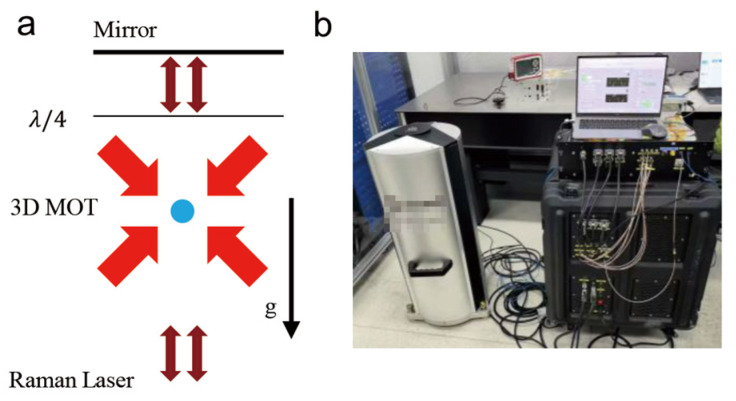 Figure 1
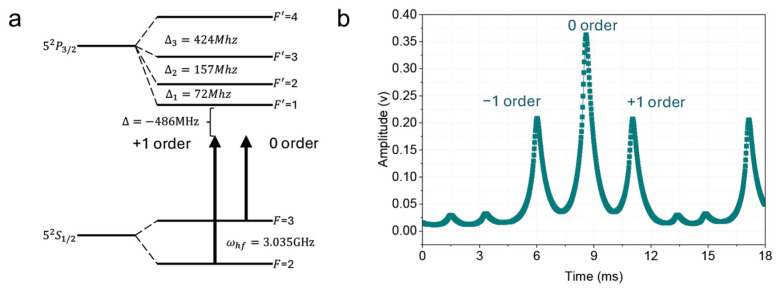 Figure 2
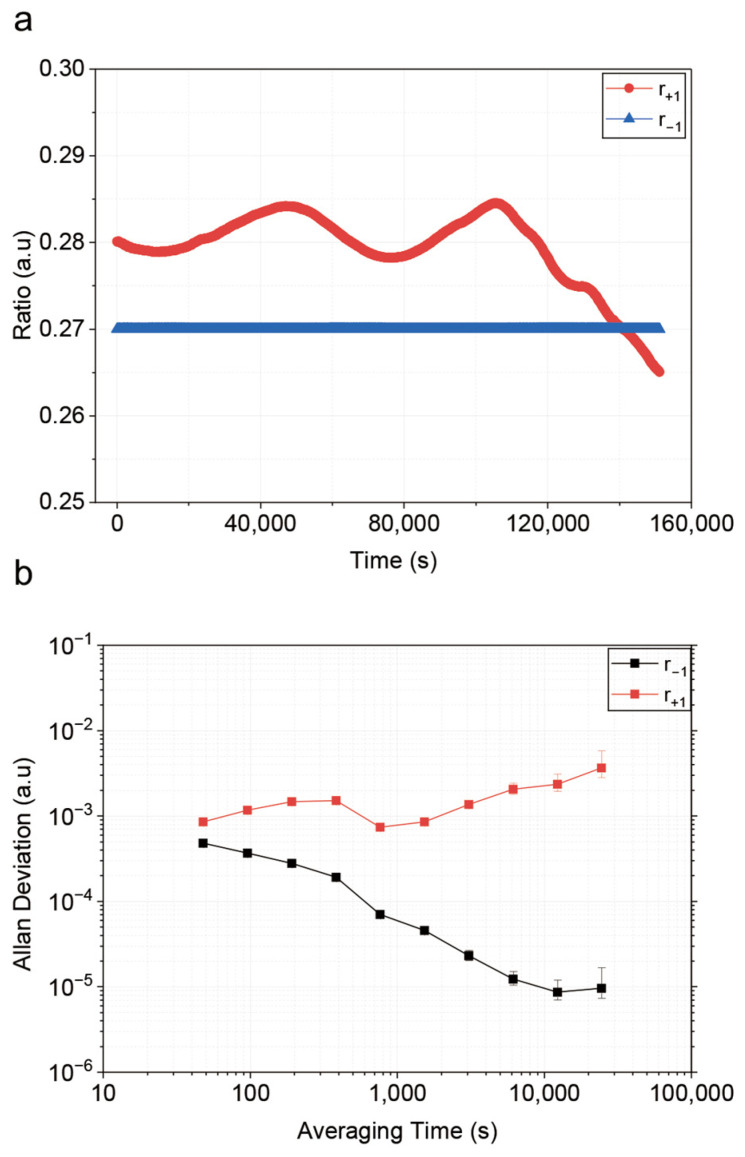 Figure 3
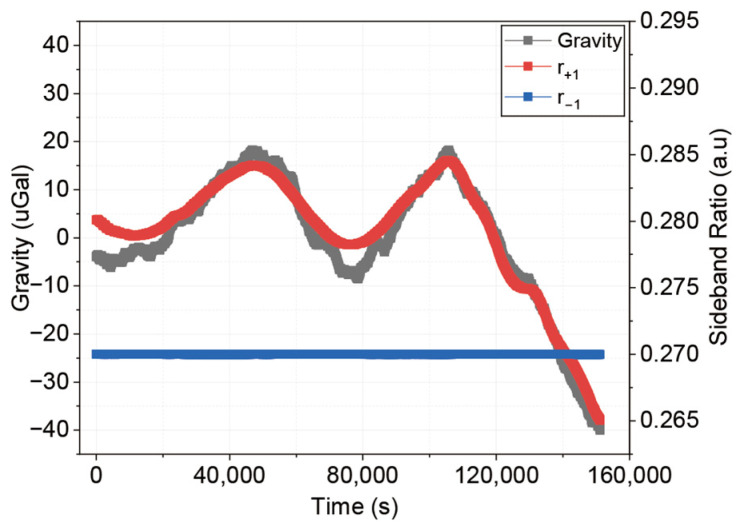 Figure 4
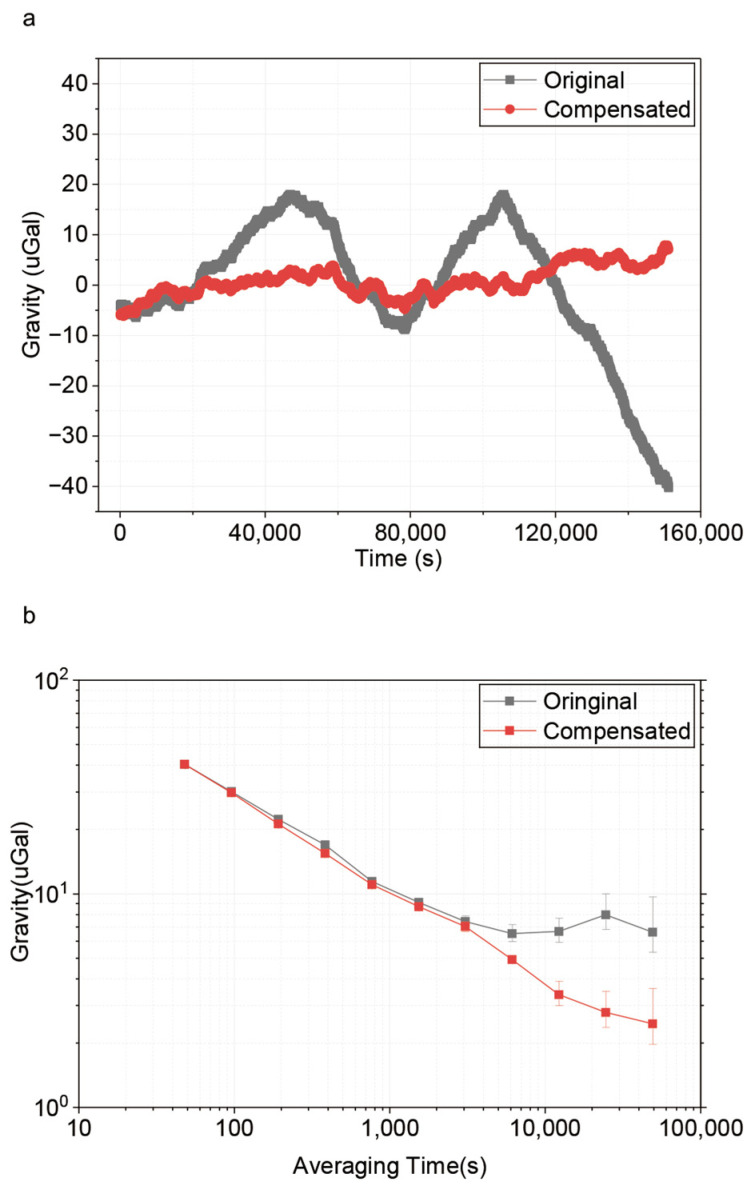 Figure 5
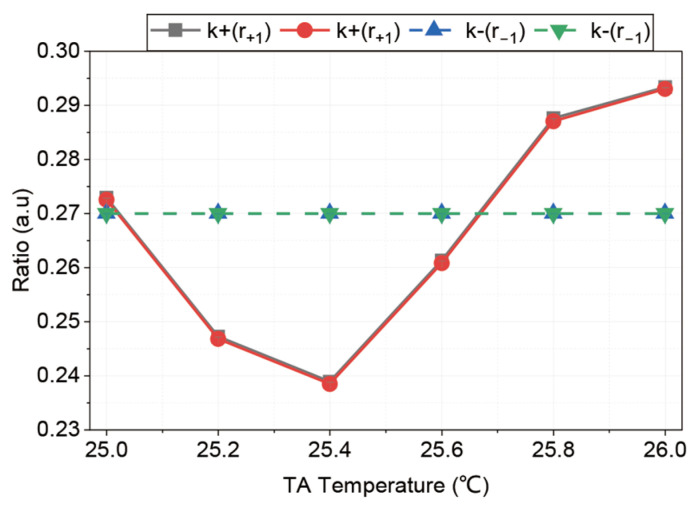 Figure 6
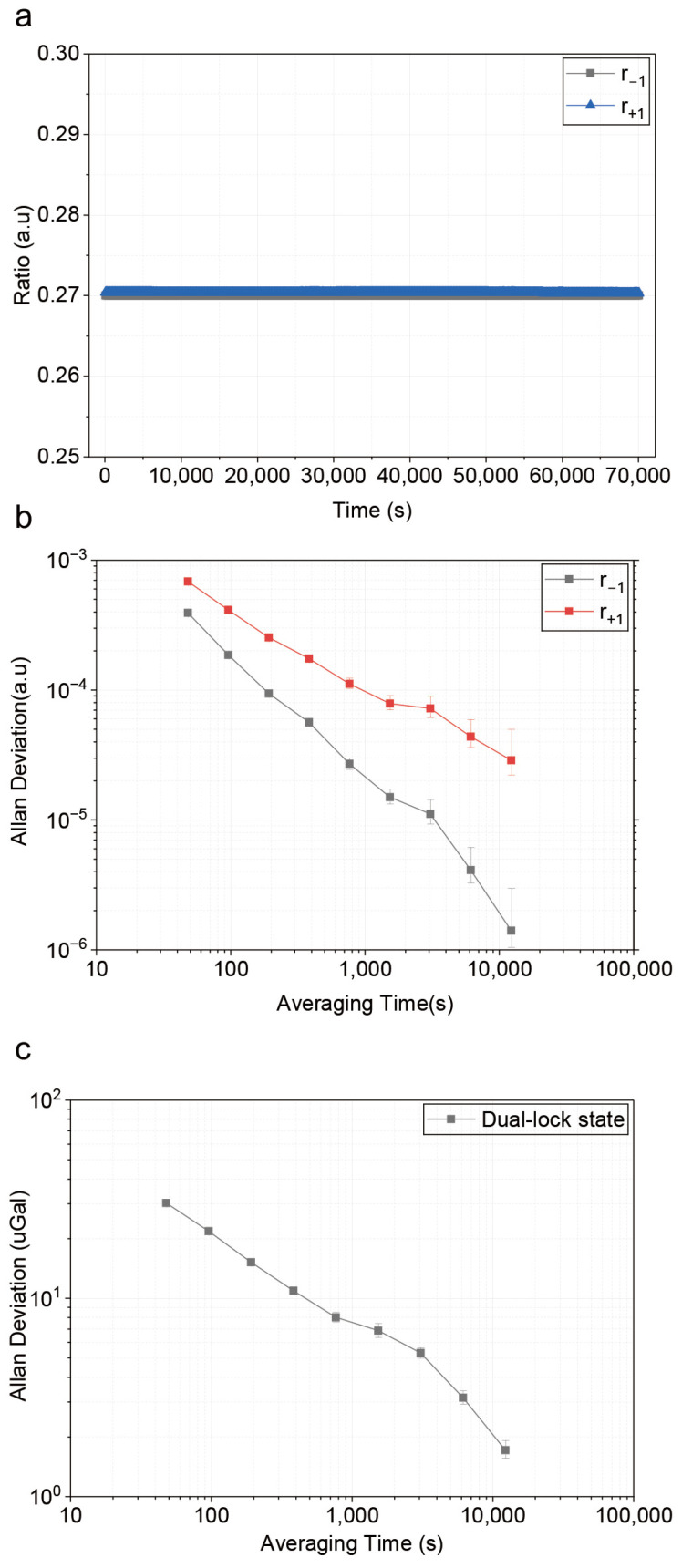 Figure 7
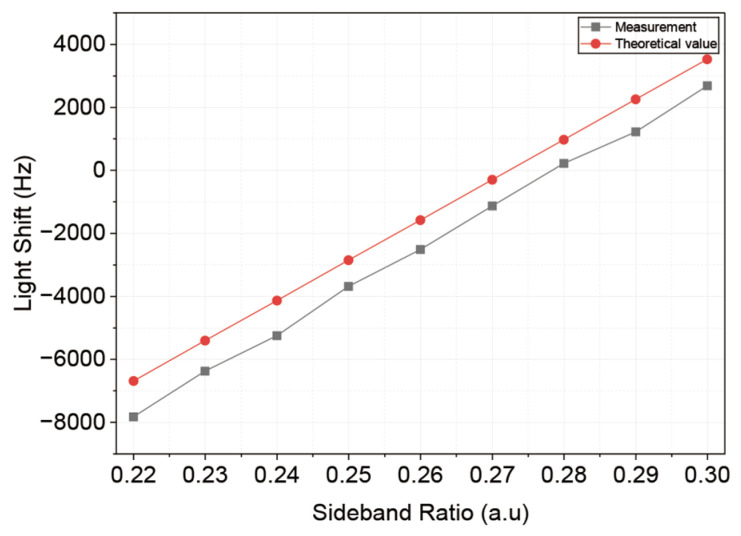 Figure 8
- —Space Application System of China Manned Space Program (second batch of the Scientific Experiment Project and JC2-0576)
- —Quantum Science and Technology-National Science and Technology Major Project (QNMP)
- —Hubei Provincial Science and Technology Major Project
- —National Key R&D Program of China
- —National Natural Science Foundation of China
- —China Postdoctoral Science Foundation
Peer Reviews
No public reviews on file for this paper yet. If you reviewed it on a platform where reviews are public (OpenReview, ICLR, NeurIPS, ICML), you can paste yours below so the community can read it here.
Videos
No videos yet. Explain this paper in a talk, walkthrough, or lecture? Add one.
Taxonomy
TopicsCold Atom Physics and Bose-Einstein Condensates · Advanced Frequency and Time Standards · Atomic and Subatomic Physics Research
1. Introduction
Atom interferometers use the matter-wave properties of atoms to achieve absolute measurements of inertial quantities through precise coherent manipulation of atomic internal or external states [1]. Due to their high precision and low drift, atom interferometers have become important tools for fundamental physics tests, such as equivalence principles tests [2,3,4,5,6], measurement of the gravitational constant G [7,8], and geophysical applications [9,10,11]. Various techniques have been developed to suppress errors and enhance stability, such as vibration isolation platforms for suppressing vibration noise [12,13,14] and piezoelectric tip-tilt mirrors for compensating phase errors induced by the Coriolis force [15,16].
In the optical architecture of atomic gravimeters, frequency-modulation schemes based on an electro-optic modulator (EOM) are widely adopted due to the fewer optical components and high integration [17,18,19,20]. While pulsed light schemes enhance efficiency [21] and single-sideband (SSB) modulation [22,23,24] provides pure dual frequencies, the EOM associated with the tapered amplifier (TA) architecture remains a common choice for laser power amplification. In this configuration, the Raman light contains three main frequency components: the carrier, the positive, and negative first-order sidebands. It is difficult to independently manipulate the ratio of these three light components using only the EOM radio frequency (RF) driving power as a single degree of freedom.
Laser-atom interactions induce a differential light shift (DLS) via the AC Stark effect [25,26]; therefore, the power ratio of the laser components directly impacts measurement accuracy [27]. In experiments, the “zero light shift point” is usually found by adjusting the intensity ratio via RF power [28,29], combined with the k-vector reversal method [30] to eliminate the error. However, environmental factors such as EOM temperature variations [31] cause random drifts in the sideband ratio. Furthermore, due to potential variations in system noise or atomic state during the k-vector reversal, the light shift cannot be completely canceled, causing measurement bias.
In this work, we study the EOM’s sideband-induced gravity measurement drift and propose a method to eliminate it. In Section 2, we use an atom gravimeter to conduct a long-term gravity measurement and find that its drift is strongly correlated with the EOM’s sideband. In Section 3, we theoretically analyze this gravity drift, construct a DLS model, and apply the measured sideband values to effectively compensate for the gravity measurement drift. In Section 4, we present a method to lock EOM’s sideband based on TA temperature modulation. This method improves the long-term stability of the sideband ratio and, therefore, improves the stability of gravity measurement.
2. Atom Gravimeter Measurements
We use a homemade atom gravimeter (as shown in Figure 1) to conduct a long-term gravity measurement [32]. The physics package is based on a titanium alloy ultra-high vacuum (UHV) system, providing an ideal environment for atomic free fall and interference. In the measurement cycle, the system loads approximately ^85^Rb atoms into a three-dimensional magneto-optical trap (3D-MOT). After polarization gradient cooling (PGC), the atomic cloud is released and falls freely in the gravitational field. During this period, the atoms are prepared into the F = 2, mF = 0 magnetically insensitive state using the Raman state selection. Then the atomic cloud undergoes a stimulated Raman transition pulse sequence to perform interference (Figure 1a). For this work, the selected pulse duration is 10 μs, and the free evolution time is T = 71 ms.
The experiment employs a single-seed laser scheme. The Raman beams are generated by a phase-modulating electro-optic modulator (EOM, iXblue, Besançon, France), with its RF modulation frequency tuned to the ground state hyperfine splitting of ^85^Rb (3.035 GHz). The modulated light contains a carrier (0th order) and a pair of first-order sidebands (±1st orders), among which the carrier and the +1st order sideband contribute the major amplitude of the Raman transition (Figure 2a), while the single-photon detuning of the +1st order sideband relative to the F = 2 to F′ = 1 transition is set to red detuning . The laser output from the EOM is amplified by a TA and passes through an acousto-optic modulator (AOM) for pulse switching, finally being coupled into a polarization-maintaining fiber for delivery to the vacuum chamber. At the top of the vacuum chamber, the laser beam passes through a quarter-wave plate and is retro-reflected by a mirror, forming a Raman light field with a configuration.
We use a voltage-controlled Fabry-Pérot (FP) cavity to monitor the sideband ratios of the EOM. The Raman pulses are generated by switching an acousto-optic modulator (AOM), while the monitoring beam is split off before the AOM for sideband measurement. By scanning the voltage of the FP cavity, we obtain the transmission signal of the FP cavity. The scan uses a 20 ms linear voltage ramp, starting 10 ms before each Raman pulse. The transmission signal is detected by a photodetector and converted into a voltage via an I–V conversion circuit. Subsequently, we extract the magnitude of the sideband ratios through a peak detection algorithm. The FP cavity is mounted on a large heat sink, and the entire optical setup is temperature-controlled. Even after the temperature-control, the peak positions may drift. We adjust the scanning voltage range of the FP cavity to ensure we always capture ( ). This allows us to consistently read the sideband ratios, although the peak positions may drift. Figure 2b shows the actual signal of the carrier and sideband data. We denote as the intensity ratios of the individual frequency components. Specifically, each ratio is defined as the optical power of the individual sideband divided by the total optical power of the Raman light ( , where ). Based on the DLS theory and experimental parameters (the detailed derivation is provided in Appendix A), the ideal sideband ratios for zero light shift are . The sum of these ratios satisfies . Therefore, we only discuss and in the following, to avoid redundancy.
Consequently, we lock to by feedback-controlling the power of the EOM’s microwave driver. The feedback loop achieves a long-term stability of for the locked sideband ratio. However, despite being locked, a significant relative drift of is observed, as shown in Figure 3a. The drift amplitude of is approximately 0.02 over time. As shown in Figure 3b, the Allan deviation for is at a time of 24,576 s.
Gravity measurements are performed simultaneously with the measurement of the Raman light sideband ratios. The experiment lasted approximately 42 h ( s), with a single measurement cycle time of s. Data processing is applied to extract gravity values, including the application of k-vector reversal and the subtraction of theoretical solid tides and atmospheric pressure effects. To clearly reveal the long-term drift trends, a moving average method with a time window of 120 s is applied to both the processed gravity data and the measured sideband ratio, as shown in Figure 4. The gravity data have a standard deviation of 13.13 μGal. The scopes of measured gravity and are strongly correlated with a correlation coefficient of . Since is already locked, the ratio drift of the was identified as the main factor for the long-term drift in the gravity measurement.
3. Gravity Compensation Model
In an atom gravimeter, the measured phase is composed of the gravity g-induced phase and the DLS-induced phase , which can be expressed as:
where is the effective Raman wave vector, g is the gravitational acceleration, T is the free evolution time. And the symbol represents the cases of the k-vector reversed method. The arises from the differential light shifts in the Raman pulses. While a detailed theoretical derivation is provided in the Appendix A, the DLS ( ) for the i-th pulse can be expressed in terms of the actual Raman laser intensity (9.3 mW/cm^2^) and detuning as:
Here, the DLS and the numerical coefficients are expressed in units of Hz. According to Figure 2, the ±2nd-order sidebands each account for ~4% of the total power ( ). As detailed in Appendix A.1, the induced DLS is only ~1.6% of the absolute DLS contributed by the primary 1st-order sideband. Therefore, they are neglected in this model. By integrating with the interferometer sensitivity function (detailed in the Appendix A), the DLS-induced phase shift takes the following form:
where is the width of the π pulse time. The parameter denotes the effective laser intensity differences between the first and the third Raman pulses. The DLS-induced gravity bias is then expressed as:
where means the gravity correction for the and situations. is the phase to gravity scale factor. For our experiment parameters, its value is 1232 μGal/red. The final gravity correction after the k-vector reversed method is
Based on the model derived from Equations (2), (4) and (5), is a function of both and . The and are physically independent. We measure the sideband ratio of , and and gravity value for the interference cases. The least square method is used to obtain the optimized values of . The fitted result is and . The fitted is a comprehensive result of multiple factors. It accounts for effects including the atomic cloud expansion [33] and the spatial variation in the laser field, as well as the atomic trajectory. In addition, the spatial interference of the reflected Raman beams causes the Raman transition to be location-dependent [34]. Since these contributions may counteract each other, an parameter near one corresponds to approximately equal effective intensities for the first and third pulses.
Using the obtained parameters and measured sideband ratios, we perform a point-by-point compensation on the gravity data to remove its error. We call this method the differential light shift compensation (DLSC) method. Figure 5a shows that the gravity drift induced by the variation is effectively suppressed after compensation. At an integration time of τ = 24,576 s, the Allan deviation of the gravity measurement is shown in Figure 5b. It improves from 11.1 μGal (before compensation) to 2.44 μGal and the standard deviation of the gravity measurement data (after applying moving average method) is reduced from 13.13 μGal to 2.54 μGal, which shows the efficiency of our differential light shift model.
4. Sideband Ratio Locking Scheme Based on TA Temperature
While the DLSC method reduces gravity drift, it relies on the parameters of the expansion coefficient , which may vary over time and cannot be determined accurately. Therefore, active control of sideband ratios is a better way to suppress the long-term gravity drift. We varied the TA’s temperature and recorded the resulting change in sideband ratio, as shown in Figure 6. Specifically, we scanned the TA temperature while keeping the locked via the EOM’s microwave power. Over a temperature range of 1 °C, the changed by approximately . The possible reason for this fluctuation is the TA’s non-linear gain characteristics. Previous research [35] investigated the frequency-dependent amplification (FDA) in TAs, demonstrating that the optical gain varies with laser frequency and is sensitive to operating parameters such as saturation, temperature, and current. Based on these non-linear properties, we infer that the independent drift of the sideband ratios in our system results from mode competition among the carrier and sidebands sharing the limited gain medium.
The temperature-varied covers the value that eliminates the differential light shift (0.27), which means that one can adjust this ratio to its proper value by adjusting the TA’s temperature. Consequently, we developed a Dual-Sideband Ratio Locking (DSRL) method that employs feedback to both the EOM’s microwave power and the TA’s temperature. This method consists of two feedback loops. The first loop uses RF control for the , by adjusting the EOM RF driving power during each Raman pulse. We lock for each Raman pulse. The second loop adjusts the temperature control of TA to lock the . We measure the during the middle pulse as the input signal to feedback the TA temperature via a proportional-integral-derivative (PID) algorithm. These two loops operate independently with a sampling period of 0.6 s. Since the sidebands are coupled, we avoid control conflict by setting different integration times for the two loops. The microwave modulation loop is set to a fast response to lock the −1st order sideband, while the temperature loop feeds back on with a slower integration time to balance sideband ratio.
remained locked with a long-term Allan deviation of . Compared with the single-sideband locking, the long-term Allan deviation of improved from to , corresponding to an improvement factor of 142.
We can use this fluctuation to calculate the DLS effect-induced gravity noise. According to Equations (2) and (3), the calculated result is μGal. After applying the DSRL method, the sideband fluctuation induced by gravity noise is well below the gravity’s measurement resolution, and does not contribute to gravity measurement errors. In addition, this method is effective but does not increase optical complexity.
Continuous gravity measurements were conducted for approximately 42 h ( s) under the dual-locked state. The k-vector reversal method is applied and solid tides and atmospheric pressure effects are subtracted. The gravity data showed no observable drift and has a standard deviation of 0.7 μGal (after 120 s moving average filter). The Allan deviation decreases consistently with the average time and has a resolution of 1.6 μGal at an integration time of 12,288 s, as shown in Figure 7.
5. Conclusions
In summary, we have identified the drift of the unlocked sideband ratio (specifically, in our system) as a major error source limiting the long-term stability of our EOM-TA-based atomic gravimeters. To actively suppress this error, we introduced a Dual-Sideband Ratio Locking method using the temperature dependence of the TA. By adding TA temperature as a feedback variable, active control of the previously drifting sideband was achieved. Experimental results show this method effectively suppresses gravity drift and enhances long-term stability without requiring complex optical modifications.
The proposed method ensures the long-term stability of the sidebands. To improve short-term stability, on one hand, it is necessary to enhance the stability of the parameters, such as the laser intensity and EOM microwave power; on the other hand, it is also possible to design a fast locking scheme within a single cycle, thereby reducing the impact of this effect on the short-term stability of gravity measurements.
The proposed DLSC method and DSRL method are not only suitable for the EOM-TA configuration but can also be extended to other Raman laser schemes. The optical phase-locked loops (OPLL) or high-frequency AOM schemes may also encounter sideband ratio drifts. The proposed method could also be applied in such schemes to improve the measurement precision of atom interferometer such as atom gravimeters, gradiometers, and gyroscopes, etc.
The reference list from the paper itself. Each links out to its DOI / PubMed record.
- 1Bongs K. Holynski M. Vovrosh J. Bouyer P. Condon G. Rasel E. Schubert C. Schleich W.P. Roura A. Taking Atom Interferometric Quantum Sensors from the Laboratory to Real-World Applications Nat. Rev. Phys.2019173173910.1038/s 42254-019-0117-4 · doi ↗
- 2Schlippert D. Hartwig J. Albers H. Richardson L.L. Schubert C. Roura A. Schleich W.P. Ertmer W. Rasel E.M. Quantum Test of the Universality of Free Fall Phys. Rev. Lett.201411220300210.1103/Phys Rev Lett.112.203002 · doi ↗
- 3Tarallo M.G. Mazzoni T. Poli N. Sutyrin D.V. Zhang X. Tino G.M. Test of Einstein Equivalence Principle for 0-Spin and Half-Integer-Spin Atoms: Search for Spin-Gravity Coupling Effects Phys. Rev. Lett.201411302300510.1103/Phys Rev Lett.113.02300525062176 · doi ↗ · pubmed ↗
- 4Zhou L. Long S. Tang B. Chen X. Gao F. Peng W. Duan W. Zhong J. Xiong Z. Wang J. Test of Equivalence Principle at 10−8 Level by a Dual-Species Double-Diffraction Raman Atom Interferometer Phys. Rev. Lett.201511501300410.1103/Phys Rev Lett.115.01300426182096 · doi ↗ · pubmed ↗
- 5Geiger R. Trupke M. Proposal for a Quantum Test of the Weak Equivalence Principle with Entangled Atomic Species Phys. Rev. Lett.201812004360210.1103/Phys Rev Lett.120.04360229437443 · doi ↗ · pubmed ↗
- 6Asenbaum P. Overstreet C. Kim M. Curti J. Kasevich M.A. Atom-Interferometric Test of the Equivalence Principle at the 10−12 Level Phys. Rev. Lett.202012519110110.1103/Phys Rev Lett.125.19110133216577 · doi ↗ · pubmed ↗
- 7Bertoldi A. Lamporesi G. Cacciapuoti L. de Angelis M. Fattori M. Petelski T. Peters A. Prevedelli M. Stuhler J. Tino G.M. Atom Interferometry Gravity-Gradiometer for the Determination of the Newtonian Gravitational Constant G Eur. Phys. J. D 20064027127910.1140/epjd/e 2006-00212-2 · doi ↗
- 8Panda C.D. Tao M.J. Ceja M. Khoury J. Tino G.M. Müller H. Measuring Gravitational Attraction with a Lattice Atom Interferometer Nature 202463151552010.1038/s 41586-024-07561-338926574 · doi ↗ · pubmed ↗