Relay-Assisted Communications over Multi-Cluster Two-Wave Fading Channels
Muhammad Junaid Rabbani, Zakir Hussain, Haider Mehdi, Shahzad Ashraf, Syed Muhammad Atif Saleem

TL;DR
This paper analyzes the security of a relay-assisted D2D communication system in THz channels affected by fading and interference.
Contribution
The study introduces a CF-based analysis of secrecy metrics in MTW fading THz channels with CCI.
Findings
MRC improves secrecy performance in multi-cluster THz fading environments.
CCI significantly impacts the secrecy outage and intercept probabilities.
Derived expressions validate the system's behavior under various channel conditions.
Abstract
This paper examines the secrecy performance of a decode-and-forward (DF) relay-assisted device-to-device (D2D) communication system operating over Terahertz (THz) channels in multi-cluster two-wave (MTW) fading environments. Eavesdroppers are located near the relay and the receiver, intercepting their respective signals. Co-channel interference (CCI) affecting the relay, receiver, and eavesdroppers is also considered. To counter fading, both the relay and the receiver employ Maximal Ratio Combining (MRC). The analysis uses a characteristic function (CF)-based approach to derive key secrecy metrics, such as secrecy outage probability, secrecy success probability, the probability of strictly positive secrecy capacity, and intercept probability. The derived expressions are dependent on the characteristics of the THz, MTW fading, and CCI parameters. Finally, the system’s performance is then…
Click any figure to enlarge with its caption.
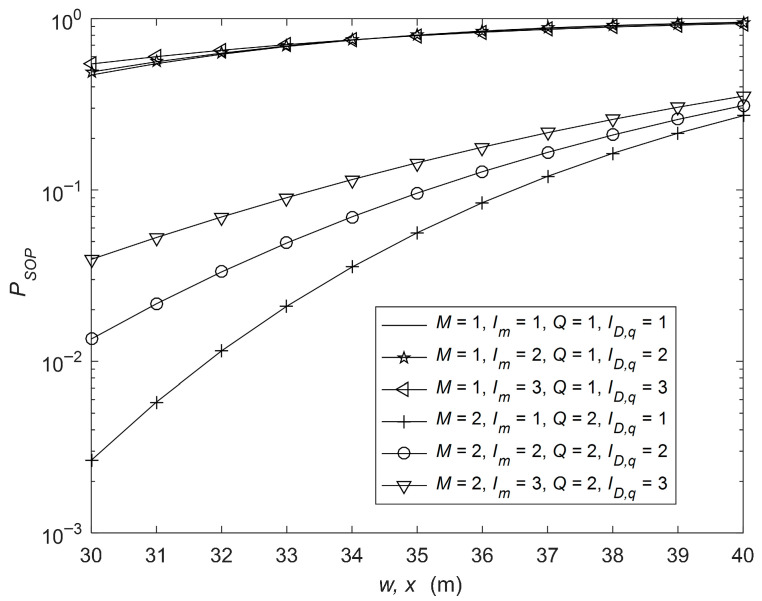 Figure 2
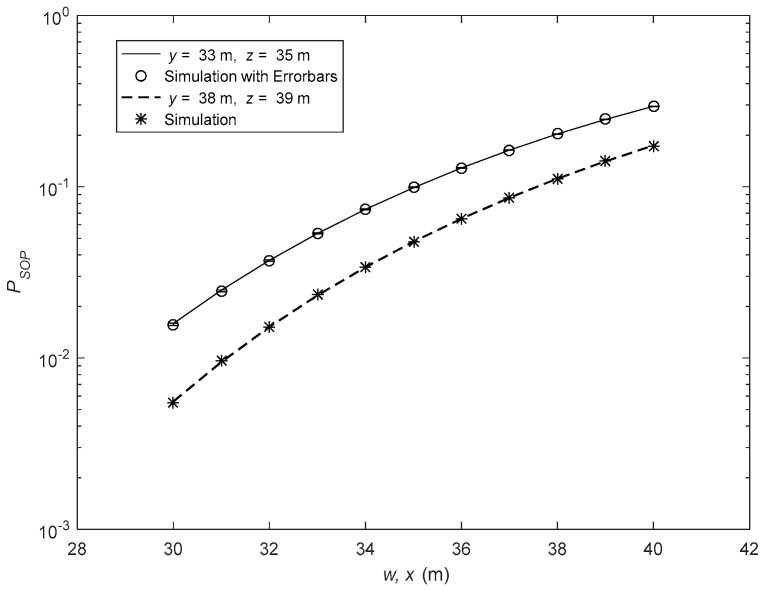 Figure 3
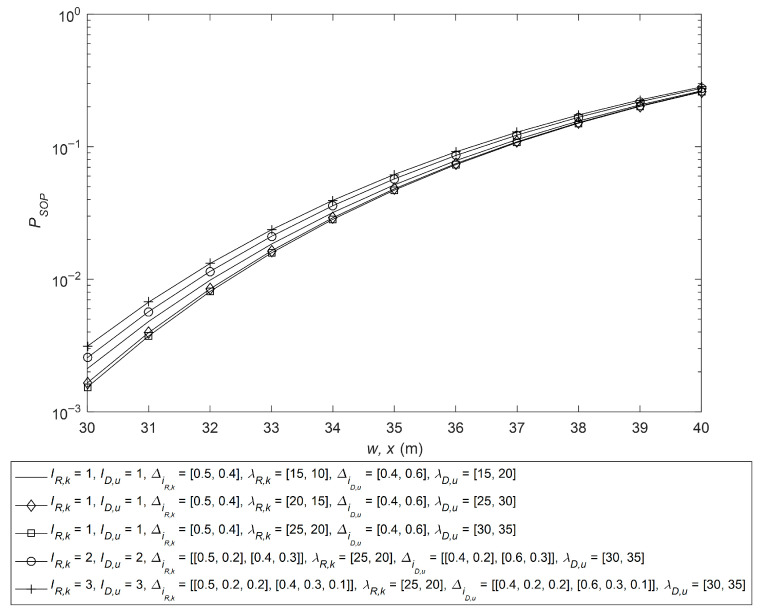 Figure 4
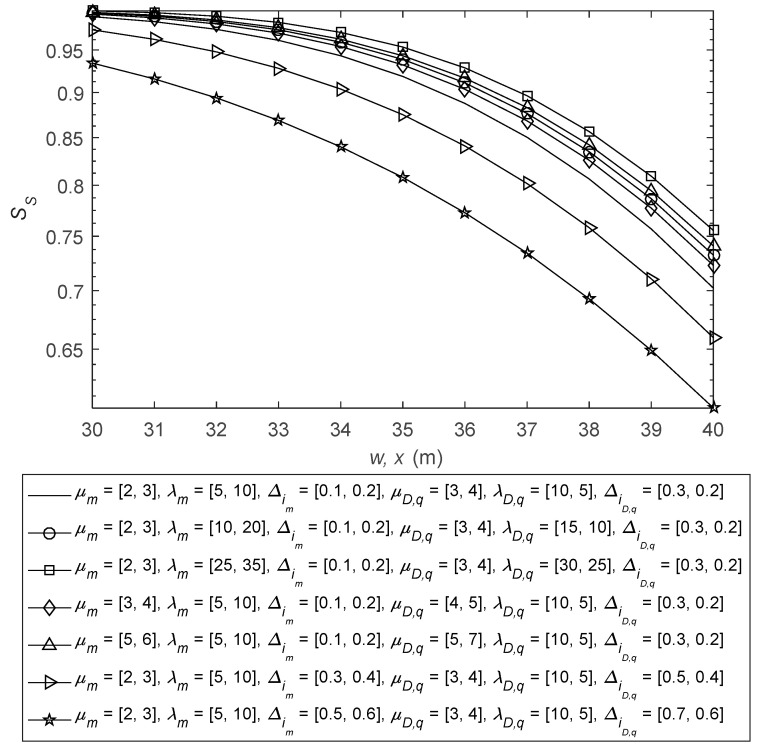 Figure 5
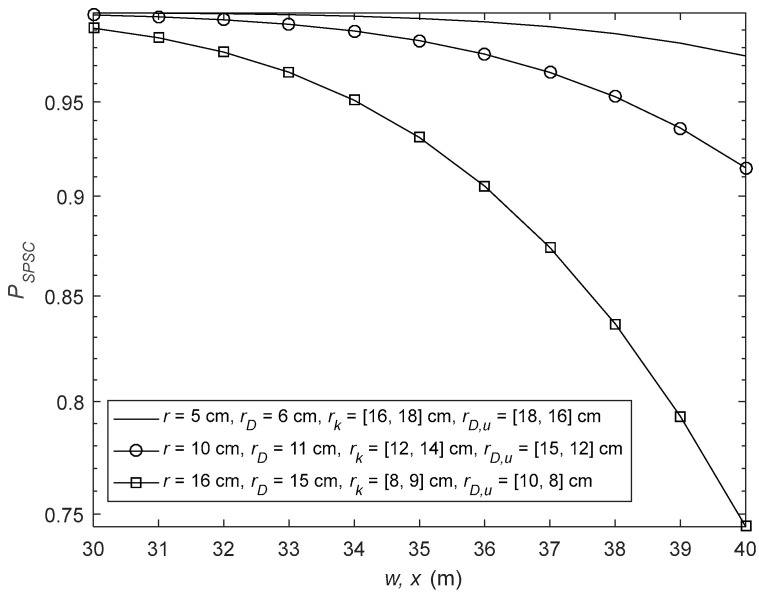 Figure 6
Peer Reviews
No public reviews on file for this paper yet. If you reviewed it on a platform where reviews are public (OpenReview, ICLR, NeurIPS, ICML), you can paste yours below so the community can read it here.
Videos
No videos yet. Explain this paper in a talk, walkthrough, or lecture? Add one.
Taxonomy
TopicsWireless Communication Security Techniques · Cooperative Communication and Network Coding · Advanced Wireless Communication Technologies
1. Introduction
Device-to-device (D2D) communication is a device-centric method that generally operates without a direct connection to the network infrastructure [1,2,3]. For extended ranges, relay-based D2D is often employed. In decode-and-forward (DF) communication systems, for instance, an intermediate device decodes and subsequently forwards the signal to its receiver [4]. A prevalent issue in wireless systems is co-channel interference (CCI), which arises when multiple devices utilize the same channel resources [5]. This research also considers the specific characteristics of Terahertz (THz) channels [6]. The inherent weakness of wireless communication is the possibility of signal interception. A transmitted signal can be intercepted by any unauthorized party (an eavesdropper) within its range, rather than only the intended receiver. Mathematically, physical layer security (PLS) analysis is employed to quantify this level of security [7].
The literature review and background work can be summarized as follows: The authors of [8] analyzed a PLS framework that integrates intelligent reflecting surfaces (IRSs), non-orthogonal multiple access (NOMA), and cooperative jamming to enhance spectral efficiency and secure communication. They contribute a theoretical performance analysis by deriving an expression of the ergodic secrecy rate (ESR) to evaluate the system under Rayleigh fading. In [9], the authors theoretically prove that traditional far-field multiple-antenna techniques and Frequency Diverse Arrays (FDAs) are ineffective in providing physical-layer range security in the Terahertz band. To overcome this limitation and optimize the secrecy rate, they propose a near-field Widely Spaced Array (WSA) architecture combined with hybrid beamforming design and a Non-Constrained Optimum Approaching (NCOA) algorithm. Meanwhile, [10] investigates a secure low Earth orbit (LEO) satellite communication framework that integrates reconfigurable intelligent surface (RIS) with THz technology to mitigate atmospheric scintillation and pointing errors. They derive analytical expressions for secrecy outage probability and average secrecy rate. In [11], the authors established a unified analytical framework for investigating PLS over mixture Gamma distributed fading channels with discrete inputs. They derive closed-form expressions for the average secrecy rate and secrecy outage probability. In [12], the authors address the limitations of conventional fading models in capturing mmWave signal fluctuations. This study conducts a comprehensive PLS analysis using the Fluctuating Two-Ray (FTR) model. The authors derive the exact analytical expressions for secrecy capacity, secrecy outage probability, and the probability of strictly positive secrecy capacity. In [13], authors analyze PLS over M-distributed fading channels, deriving the exact integral expressions for secrecy outage probability and ergodic secrecy capacity. They arrive at closed-form lower bounds for secrecy outage probability and ergodic secrecy capacity to reduce computational complexity. They establish a closed-form exact expression for the probability of strictly positive secrecy capacity. In the next paragraph, the key contributions of this work are given.
This work analyzes the PLS of DF-based D2D systems operating over THz channels. However, unlike prior research, the presence of CCI is also considered. We assume the CCI originates from uncoordinated external devices. Both the D2D and the interference links are modeled using the novel multi-cluster two-wave (MTW) distribution proposed in [14]. MTW is a unified framework that encompasses both two-wave with diffuse power (TWDP) and fading conditions. Maximal Ratio Combining (MRC) is deployed at both the relay and the receiver to mitigate fading effects. By utilizing a characteristic function (CF) approach, we derive analytical expressions for the secrecy outage probability, secrecy success probability, the probability of strictly positive secrecy capacity, and intercept probability. To the best of our knowledge, this is the first work to investigate the secrecy performance of DF/MRC-based D2D systems under MTW fading and CCI constraints in the THz band. A comparison of our key contributions with previous works is summarized in Table 1.
The work is presented as follows: in Section 2, system model and mathematical derivations are given; in Section 3, numerical results are analyzed; and in Section 4, this work is concluded.
2. Problem Description and Formulation
A D2D network with DF relaying over a novel MTW fading channel is shown in Figure 1. The network parameters are outlined in Table 2. In this environment, independent and non-identically distributed co-channel interferers impact the D2D network. The relay, the relay’s eavesdropper, the receiver, and the receiver’s eavesdropper are subjected to , , and interferers, respectively. Noise is neglected in this analysis. As the system is considered interference-limited, the interference power renders the effects of noise negligible.
Secrecy outage probability (SOP) is considered here to evaluate the secrecy performance of a D2D network. It is defined as the probability that the secrecy capacity (SC) is below a target capacity, . The SC is given as [7]:
where is the minimum of two, , and are signal-to-interference ratios (SIRs) at relay and D2D receiver, respectively. Also, and are SIRs at eavesdropper near relay and eavesdropper near D2D receiver, respectively. Hence, SOP is given as:
The signal-to-interference ratio (SIR) at relay incorporating branch diversity is:
where D2D signal power is S_R_, CCI power is S_I_, the D2D source transmitted power is P_S_ and the source-to-relay THz channel parameter is [6]. is the MTW channel gain of D2D signal in the branch. is the power, the THz channel gain is and is the MTW gain for the CCI in the branch. The path loss is , where carrier frequency is f and speed of light is c. Transmitter and receiver antenna gains in the diversity branch at relay are and , respectively. Here, it is considered that all are equal. The parameter is the molecular absorption loss. Absorption coefficient is .
, where , , , , , , and is defined as the water vapor’s volume mixing ratio, where is defined as the relative humidity, gives the pressure and is defined as the saturated water vapor partial pressure. is defined as:
Now, , , , , and Also, the pressure is in hectopascal and the absolute temperature is . is the misalignment due to the pointing error, , gives the error function, , a is detection area radius of the receiver, is transmitter beam waist and gives the equivalent beam width. The parameter is the pointing error; it is defined as the radial distance between the reception area and the transmitter beam focus centers. Pointing errors are same for all branches. Now, where is the transmit antenna gain of the CCI, and where is the pointing error of the CCI. No diversity conditions are assumed at the eavesdropper near relay. The SIR at the eavesdropper near relay is:
where is the signal power at eavesdropper, is the CCI power at eavesdropper and defines the THz channel gain of the source-to-eavesdropper channel. where is MTW gain for the source-to-eavesdropper channel and is the expectation operator. In where is the eavesdropper receive antenna gain. The parameter and where is the eavesdropper’s pointing error. Also, CCI power at eavesdropper is , where is the CCI MTW gain at eavesdropper and is CCI THz channel gain at eavesdropper. where is the transmitter antenna gain of the CCI, and where is the pointing error of the CCI. From (3), by considering threshold ,
The outage probability is defined as the probability of SIR of the source-to-relay channel falling below a defined threshold value , i.e., . The decision variable, , CF is [12]:
The D2D signal’s MTW parameters [12] in the branch of relay are as follows: gives the number of clusters, is defined as the ratio of the specular components’ powers to the diffuse components’ powers from all the clusters, describes the asymmetry between the specular components of the cluster, , where is the number of clusters containing two specular components and gives the average power. The modified Bessel function of the first kind is . Similarly, , , with and with are MTW parameters of the CCI at the relay. These are defined in a similar manner as the MTW parameters of the D2D signal. Also, . The outage probability is given by:
The integrals in (8) can be solved with the help of MATLAB R2016a built-in ‘integral’ function based on global adaptive quadrature. The convergence criteria were determined by the default error tolerances: a relative tolerance of and an absolute tolerance of . Infinite integration limits were handled via the function’s internal variable transformation strategies. At the receiver, a -branch MRC scheme is deployed. The SIR is:
where is the D2D power, CCI power is , power transmitted from the relay is , is the MTW gain for the relay-to-receiver transmission channel in the branch, is the CCI power and the CCI MTW gain is . , where is the transmitter antenna gain and is the receiver antenna gain in the branch, respectively. and ; in the pointing error is . Pointing errors are same for all branches. Furthermore, , where is the transmitter antenna gain of the CCI, and where is the CCI’s pointing error. It is assumed that all are equal. No diversity conditions are assumed at the eavesdropper near receiver. The SIR at the eavesdropper near receiver is:
where is the signal power, CCI power is and the THz channel gain for the relay-to-eavesdropper channel is . where is the MTW gain of the relay-to-eavesdropper channel. where is the eavesdropper receive antenna gain. The parameter and where is the eavesdropper’s pointing error. is the power of the CCI at the eavesdropper, where is the CCI MTW gain at the eavesdropper and is the THz channel parameter of the CCI at the eavesdropper. where is the CCI’s transmit antenna gain, and , where is the CCI’s pointing error. From (3), by considering threshold ,
For relay-to-receiver channel, outage probability is defined as . The decision parameter, , CF is:
where , , , and are the MTW distribution parameters of the D2D signal in the branch. Now, , , , and are the MTW parameters for the interferer. Outage probability is given as:
Now, based on (3), (8) and (13), the SOP of the D2D system is:
From (14), the overall secrecy success probability (SSP) condition for the D2D system is
The strictly positive secrecy capacity (SPSC) is an important benchmark. SPSC probability given as [7]
where
and,
Intercept probability (IP) is the probability of an eavesdropper succeeding in intercepting the desired signal. Such condition shows the probability that SC is less than zero [15]. The IPs at the relay and receiver are, respectively, as follows:
and,
In the subsequent special scenario, outage capacity probability (OCP), without any eavesdroppers in the D2D system, is presented. OCP is defined as the probability when D2D system’s capacity falls below a target capacity, . Overall OCP of the D2D system is given as:
where
and,
3. Results
Results are presented here by using the analytical expressions of Section 2, under various conditions of the channel and CCI. THz channel parameter values are based on [6]. In Table 3, fixed parameter values are shown.
In Figure 2, the SOP analysis is presented for various source-to-relay and relay-to-receiver distances. The parameters are as follows: = 15 cm, = [9, 8] cm, = [20, 25], = [4, 3], = [0.3, 0.4], = [2, 3], = [15, 10], = [0.5, 0.4], = [3, 4], = [25, 20], = [0.3, 0.2], = [3, 2], = [15, 20], = [0.4, 0.6], = 14 cm, = [10, 8] cm, = 1 and = 1. It can be seen from the figure that by increasing source-to-relay and relay-to-receiver distances, SOP increases. Furthermore, under diversity conditions, SOP is decreased. Hence, for the following analysis, diversity conditions are considered, i.e., = 2 and = 2. Also, as the values of and increase from 1 to 3, the SOP of the system increases. Hence, for the following analysis, and are fixed at 1. In Figure 3, the SOP performance is shown for various source-to-eavesdropper and relay-to-eavesdropper distances. The parameters are as follows: = 15 cm, = [9, 8] cm, = [20, 25], = [3, 4], = [0.4, 0.2], = [1, 1], = [15, 10], = [0.5, 0.4], = [4, 3], = [35, 30], = [0.3, 0.5], = [1, 1], = [15, 10], = [0.4, 0.6], = 14 cm, = [10, 8] cm, = 1 and = 1. It is obvious from the figure that, as the source-to-eavesdropper and relay-to-eavesdropper distances are increased, SOP is decreased. It is because, as the eavesdroppers move away from the D2D source and relay, the intercepted signal powers decrease at both eavesdroppers. Furthermore, it is also observed that the numerical analysis based on the expressions are in close agreement with the simulation results. Trial count for the simulations is 10^6^. Figure 3 also includes error bars representing 95% confidence intervals.
SOP analysis with various values of source-to-relay and relay-to-receiver distances.
SOP performance with various values of source-to-eavesdropper and relay-to-eavesdropper distances.
In Figure 4, SOP is given with different MTW CCI parameters at the relay and receiver. The parameters are as follows: = 15 cm, = [9, 8] cm, = [20, 25], = [4, 3], = [0.3, 0.4], = [4, 4], = [3, 4], = [25, 20], = [0.3, 0.2], = [3, 4], = 14 cm and = [10, 8] cm. It can be observed from the figure that, by varying the MTW parameters of CCI at the relay and receiver, slight variations in SOP are observed. Various CCI MTW parameters have a negligible effect on the SOP because the system’s performance is largely governed by the aggregate average power of interference. Consequently, variations in the fading parameters play a secondary role and do not significantly influence the SOP. For the rest of the analysis, the values of and are fixed at 1. Also, it is observed from the figure that maximum SOP deviation occurs at w, and x = 30 m. For the worst case, SOP is P_SOP,W_ = 0.003123, and for the best case, SOP is P_SOP,B_ = 0.001533. The maximum SOP deviation is P_SOP,W_ − P_SOP,B_ = 0.00159. The maximum SOP deviation in dB is 10log_10_(0.003123/0.00159) = 3.09 dB.
In Figure 5, SSP is given with varying MTW channel parameters of source-to-relay and relay-to-receiver D2D signals. Now, = 15 cm, = [9, 8] cm, = [4, 3], = [25, 20], = [0.5, 0.4], = [3, 4], = [15, 20], = [0.4, 0.6], = 14 cm and = [10, 8] cm. It can be observed from the figure that, by increasing the values of parameters , , and , SSP performance improvement is observed due to enhanced SIR conditions. However, as the values of and are increased, degradation in SSP performance is seen due to detriment in SIR conditions.
In Figure 6, the SPSC analysis is given with different values of pointing errors of the D2D signal and the CCI signal at the relay and the receiver. The parameters are as follows: = 8 cm, = [18, 16] cm, = [10, 5], = [2, 3], = [0.2, 0.3], = [4, 3], = [25, 20], = [0.5, 0.4], = [3, 2], = [5, 10], = [0.3, 0.2], = [3, 4], = [15, 20], = [0.4, 0.6], = 8 cm and = [18, 16] cm. It can be seen that, when the pointing errors of the D2D signals are increased and the pointing errors of CCI are reduced at the relay and the receiver, the SPSC performance is degraded.
SOP analysis with various CCI MTW parameters at the relay and the receiver.
SSP analysis with varying D2D signals and MTW parameters at the relay and the receiver.
SPSC analysis for various pointing error values of the D2D signal and the CCI signal at the relay and the receiver.
In Figure 7, the IP performance at the relay is given with varying pointing errors of the eavesdropper and eavesdropper’s CCI signals. The parameters are as follows: = [10, 5], = [2, 3], = [0.2, 0.3], = [4, 3], = [25, 20], = [0.5, 0.4], = [3, 2], = [5, 10], = [0.3, 0.2], = [3, 4], = [15, 20], = [0.4, 0.6], = 8 cm and = [18, 16] cm. From the figure, it is obvious that, by increasing the pointing errors of the eavesdropper, IP decreases. However, when the pointing errors of the eavesdropper are decreased, IP is increased. On the other hand, by increasing the pointing errors of eavesdropper’s CCI, IP is increased. And, when the pointing errors of eavesdropper’s CCI are decreased, IP is decreased.
In Figure 8, the IP performance at the receiver is given with varying pointing errors of the eavesdropper and eavesdropper’s CCI signals. The parameters are as follows: = [10, 5], = [2, 3], = [0.2, 0.3], = [4, 3], = [25, 20], = [0.5, 0.4], = [3, 2], = [5, 10], = [0.3, 0.2], = [3, 4], = [15, 20], = [0.4, 0.6], = 7 cm and = [15, 17] cm. Figure 8 shows a similar pattern to that of Figure 7.
Figure 9 illustrates the comparison of SOP performance between MTW and TWDP models. The TDWP model can be obtained from MTW by setting the number of clusters to 1 in MTW expressions [14]. The parameters are as follows: = 15 cm, = [9, 8] cm, = [3, 2], = [0.4, 0.2], = [10, 20], = [4, 2], = [15, 10], = [0.5, 0.4], = [4, 3], = [15, 10], = [0.3, 0.5], = [2, 3], = [15, 10], = [0.4, 0.6], = 14 cm and = [10, 8] cm. From the figure, it is clear that MTW shows better SOP performance than TWDP for the same channel conditions. It is because, as the number of clusters increases, it causes the receiver to combine energy from multiple independent clusters. It is usually unlikely for all clusters to experience deep fades simultaneously. This averaging effect smoothens out the severe fluctuations in the received power, leading to a more stable connection and a lower SOP.
4. Conclusions
This paper presents an analysis of the PLS for a DF D2D network operating over recently proposed MTW channels in the presence of THz propagation and CCI. Utilizing a CF-based approach, the authors derive mathematical expressions for SOP, SSP, SPSC, and IP, all of which are functions of diversity, interference, and fading parameters. To mitigate the effects of fading, MRC diversity schemes are employed at the relay and the receiver. Numerical results indicate that, while the implementation of diversity improves secrecy outage performance, an increase in the number of clusters containing specular components leads to higher secrecy outage. CCI MTW parameters showed negligible impact on secrecy outage. Furthermore, secrecy success performance improves with a higher number of D2D signal’s clusters and a higher ratio of the specular to diffuse power. However, secrecy success performance degrades as the value of the parameter measuring the asymmetry between specular components in a cluster increases. The probability of SPSC worsens with increased D2D pointing errors and reduced interference pointing errors. Future work will consider a signal-to-interference-plus-noise ratio (SINR)-based analysis, the effect of mobile eavesdroppers, and machine learning approaches for PLS over co-channel interference-limited THz channels.
The reference list from the paper itself. Each links out to its DOI / PubMed record.
- 1Hayat O. Ngah R. Mohd Hashim S.Z. Dahri M.H. Firsandaya Malik R. Rahayu Y. Device Discovery in D 2D Communication: A Survey IEEE Access 2019713111413113410.1109/ACCESS.2019.2941138 · doi ↗
- 2Gismalla M.S.M. Azmi A.I. Salim M.R.B. Abdullah M.F.L. Iqbal F. Mabrouk W.A. Othman M.B. Ashyap A.Y.I. Supa’at A.S.M. Survey on Device to Device (D 2D) Communication for 5GB/6G Networks: Concept, Applications, Challenges, and Future Directions IEEE Access 202210307923082110.1109/ACCESS.2022.3160215 · doi ↗
- 3Ma L. Deng X. Wang J. Huang Y. Shi F. Downlink Resource Sharing in Multichannel Device-to-Device Communication IEEE Wirel. Commun. Lett.2019874174410.1109/LWC.2018.2890599 · doi ↗
- 4Xu W. Zhang J. Zhang P. Tellambura C. Outage Probability of Decode-and-Forward Cognitive Relay in Presence of Primary User’s Interference IEEE Commun. Lett.2012161252125510.1109/LCOMM.2012.061912.120770 · doi ↗
- 5Doan T.X. Hoang T.M. Duong T.Q. Ngo H.Q. Energy Harvesting-Based D 2D Communications in the Presence of Interference and Ambient RF Sources IEEE Access 201755224523410.1109/ACCESS.2017.2681696 · doi ↗
- 6Abdalla R. Cooper A.B. Performance Analysis of LOS T Hz Systems Under Misalignment and Deterministic Fading Proceedings of the 57th Annual Conference on Information Sciences and Systems (CISS)Baltimore, MD, USA 22–24 March 202315
- 7Pan X. Ran H. Pan G. Xie Y. Zhang J. On Secrecy Analysis of DF Based Dual Hop Mixed RF-FSO Systems IEEE Access 20197667256673010.1109/ACCESS.2019.2914227 · doi ↗
- 8Souzani A. Pourmina M.A. Azmi P. Naser-Moghadasi M. Physical Layer Security Enhancement via IRS Based on PD-NOMA and Cooperative Jamming IEEE Access 202311659566596710.1109/ACCESS.2023.3290104 · doi ↗