Structure of Stacked Aggregates of Semiflexible Rings Under Spherical Confinement: A Computational Study
Xiaolin Zhou, Yifan Qin, Youfei Xie, Andrey G. Cherstvy

TL;DR
This study uses simulations to show how semiflexible ring polymers arrange under spherical confinement, revealing how their structure changes with cavity size.
Contribution
The paper introduces a computational investigation of semiflexible ring polymer conformations under varying spherical confinement sizes.
Findings
Semiflexible ring polymers transition from flexible coils to disk-like conformations as bending energy increases.
Stacked aggregates of semiflexible ring polymers form under strong confinement (R < 2Rg) and reach maximum order at R ≈ 2Rg.
Increased cavity size (R > 3Rg) reduces the order of stacked aggregates, with the orientational-order parameter dropping to S ≈ 0.05.
Abstract
How ordered and mutually independent are semiflexible ring polymers (RPs) confined to a spherical cavity of variable radius? By varying the cavity radius, we systematically investigate the effect of the confinement size on the conformations of RPs using the coarse-grained molecular dynamics simulations. The results reveal that as the bending energy increases, the RPs exhibit a transition from a purely flexible coil to an elongated oblate-shaped object and, eventually, to a disk-like conformation. Simultaneously, the stacked aggregates composed of adjacent, mutually nearly parallel, semiflexible RPs emerge for stiffer chains. We find that the structural modulation of the stacked aggregates is regulated by the confinement size. For the conditions of strong confinement (R<2Rg, where Rg is the radius of gyration of an RP), the semiflexible RPs undergo peculiar deformations and twisting that…
Genes, proteins, chemicals, diseases, species, mutations and cell lines named across the full text — each resolved to its canonical identifier and authoritative record.
Click any figure to enlarge with its caption.
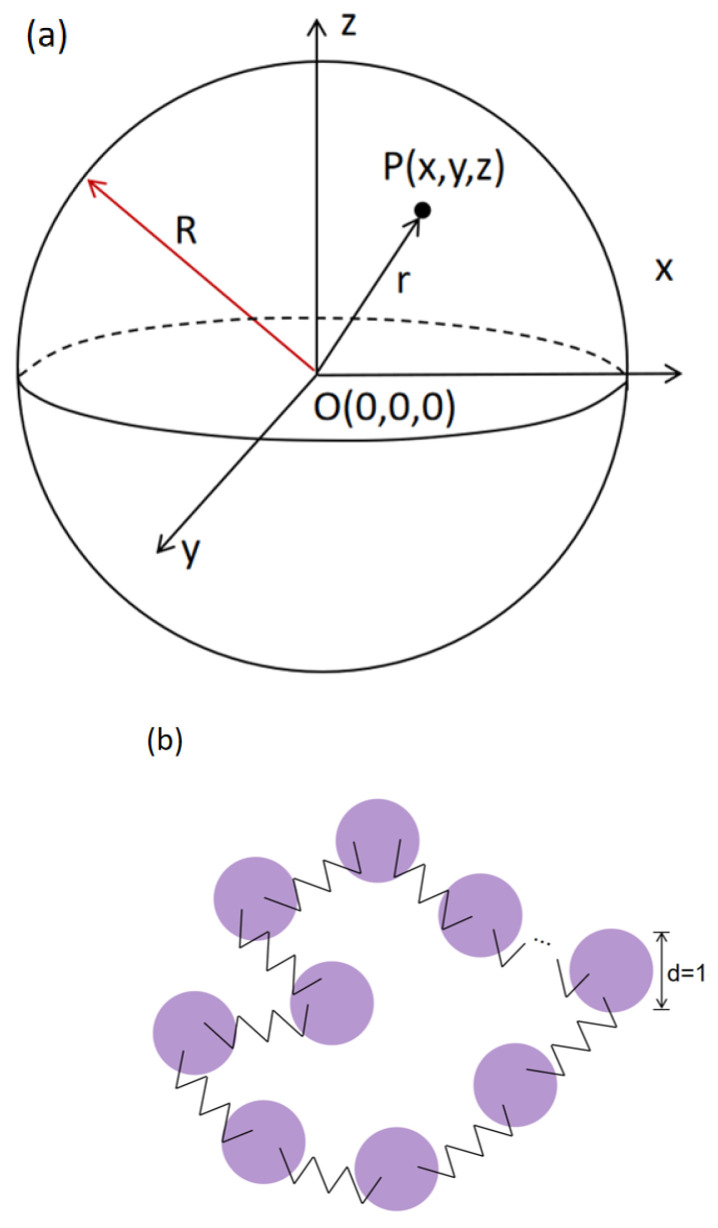 Figure 1
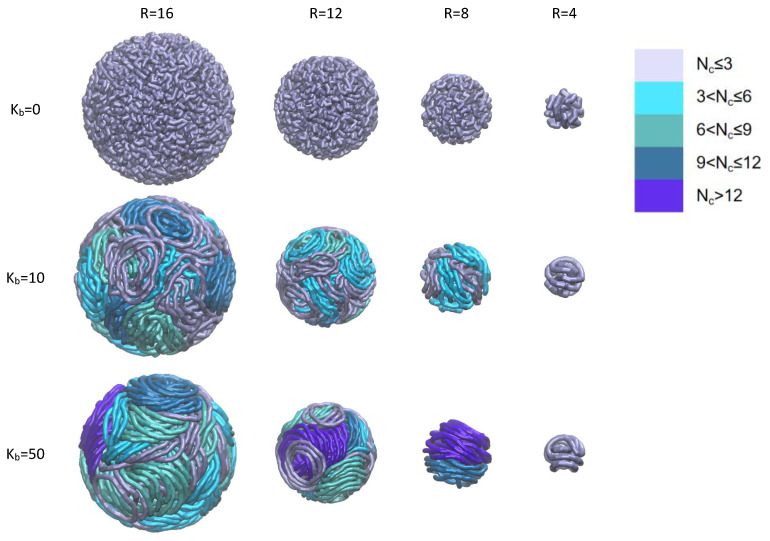 Figure 2
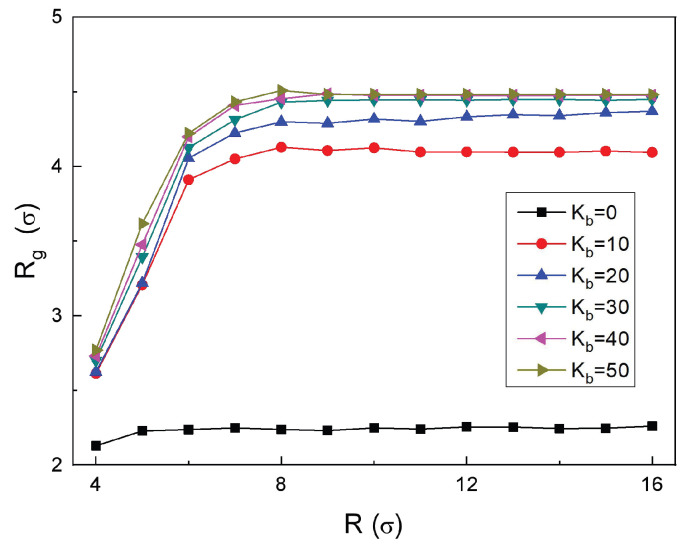 Figure 3
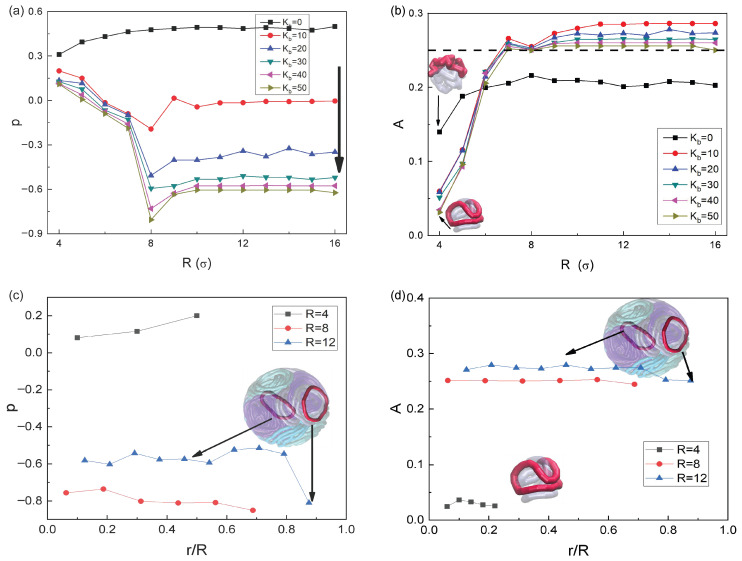 Figure 4
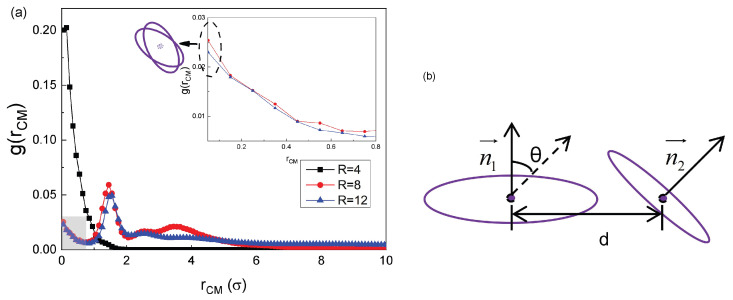 Figure 5
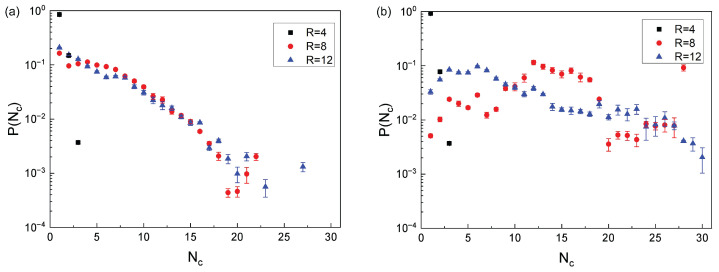 Figure 6
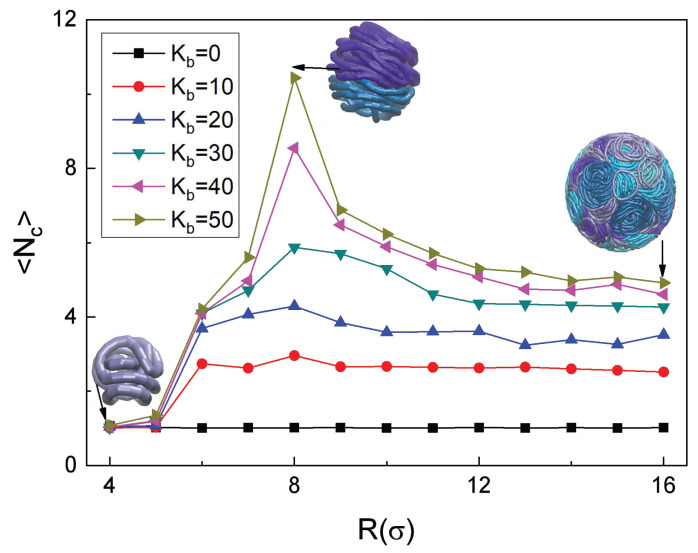 Figure 7
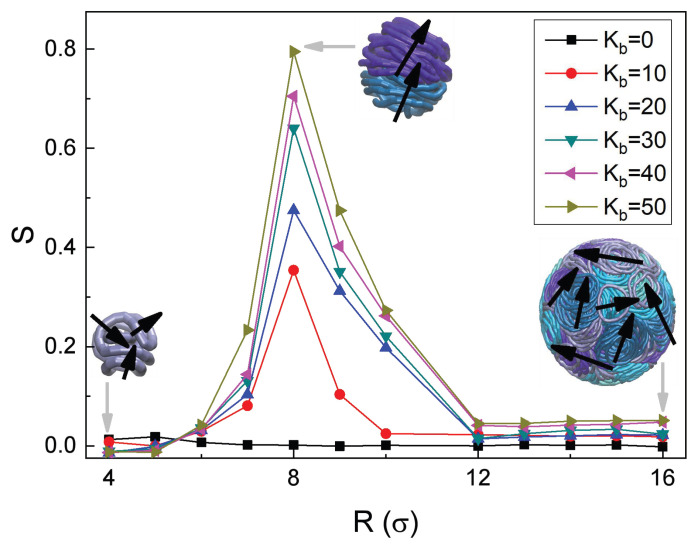 Figure 8
Peer Reviews
No public reviews on file for this paper yet. If you reviewed it on a platform where reviews are public (OpenReview, ICLR, NeurIPS, ICML), you can paste yours below so the community can read it here.
Videos
No videos yet. Explain this paper in a talk, walkthrough, or lecture? Add one.
Taxonomy
TopicsAdvanced Materials and Mechanics · Force Microscopy Techniques and Applications · Advanced Physical and Chemical Molecular Interactions