Energy Adequacy of Planned Diets in Institutionalized Older Adults: A Scenario Analysis Based on Requirements from Indirect Calorimetry
Michał Ławiński, Natalia Grodzicka, Agnieszka Pawłowska-Muc, Kinga Biernacka-Stefańska, Krzysztof Ławiński, Mirosław Perliński, Katarzyna Zadka

TL;DR
This study finds that while planned diets for older adults in care facilities provide more energy than needed, many residents still consume too little, leading to undernutrition.
Contribution
The study uses indirect calorimetry to assess individual energy needs and models how varying food consumption levels affect energy adequacy in institutionalized older adults.
Findings
Planned energy intake exceeded measured total energy expenditure, with an average surplus of 552 kcal/day.
Scenario analysis showed that energy adequacy declines significantly when intake drops below 70% of planned energy intake.
Only about half of residents consumed more than 75% of their served portion, highlighting a gap between prescribed and actual intake.
Abstract
Background/Objectives: Older adults living in long-term care facilities (LTCFs) are at high risk of undernutrition. This study evaluated the adequacy of planned energy intake (PEI) by comparing prescribed diets with individual requirements measured using indirect calorimetry (IC) and by modelling how different levels of food consumption affect energy adequacy. Methods: In this cross-sectional study, 169 adults aged ≥ 65 years living in LTCFs underwent anthropometric assessment and IC-based measurement of resting energy expenditure. Total energy expenditure (TEE) was derived using activity-specific PAL factors. PEI was calculated from 7-day menu records (oral diets) or enteral feeding prescriptions. Scenario analyses assumed intake levels from 100% to 50% of PEI and applied BMI-specific adequacy thresholds. Results: Mean TEE was 1447 ± 359 kcal/day (25 ± 6 kcal/kg), whereas mean PEI was…
Genes, proteins, chemicals, diseases, species, mutations and cell lines named across the full text — each resolved to its canonical identifier and authoritative record.
Click any figure to enlarge with its caption.
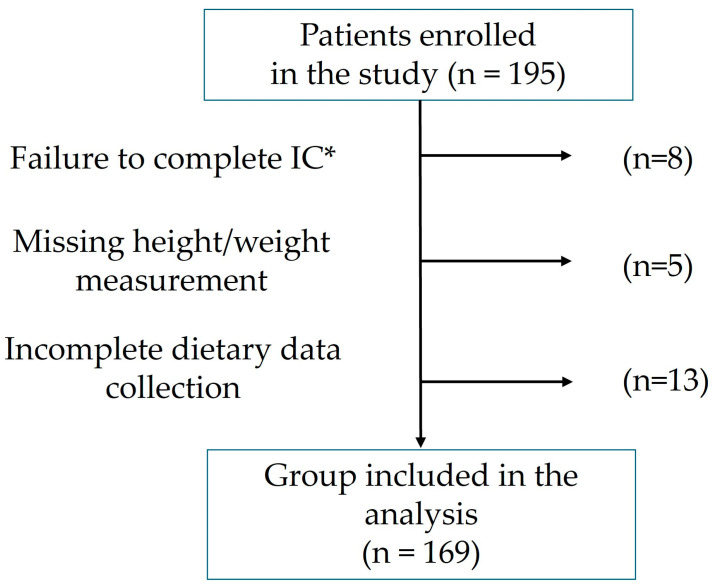 Figure 1
Peer Reviews
No public reviews on file for this paper yet. If you reviewed it on a platform where reviews are public (OpenReview, ICLR, NeurIPS, ICML), you can paste yours below so the community can read it here.
Videos
No videos yet. Explain this paper in a talk, walkthrough, or lecture? Add one.
Taxonomy
TopicsClinical Nutrition and Gastroenterology · Nutrition and Health in Aging · Child Nutrition and Water Access