Three-Dimensional Infinite Cluster Function as a Descriptor of Through-Plane Effective Conductivity in Porous Electrodes of Membrane Electrode Assemblies
Abimael Rodriguez, Jaime Ortegón, Abraham Rios, Carlos Couder, Romeli Barbosa

TL;DR
This paper studies how the 3D structure of porous electrodes affects their conductivity, showing that connectivity quality, not just quantity, determines performance.
Contribution
The study introduces a new descriptor, the three-dimensional infinite cluster function, to evaluate through-plane conductivity in MEA electrodes.
Findings
OCF morphology shows the highest normalized conductivity due to vertically coherent channels.
MFM1 underperforms due to laminated constrictions despite high spanning-cluster fraction.
Conductivity magnitude depends on percolating-skeleton quality, not just phase amount.
Abstract
Through-plane electronic transport in porous membrane electrode assembly (MEA) electrodes is governed by the three-dimensional (3D) connectivity of the conducting phase. Here, we quantify the role of the spanning-cluster fraction P∞, defined as the fraction of conducting-phase voxels that belong to the z-spanning connected component in a finite reconstructed volume, on effective conductivity using scanning electron microscopy (SEM)-informed 3D reconstructions of four archetypal morphologies: a granular catalyst layer (CL), labeled CL1; a fibrous gas diffusion layer (GDL), labeled GDL1; an open-cell foam (OCF); and a micro-fibrous non-woven (MFM), labeled MFM1. Each morphology is reconstructed on a 150×150×150 voxel grid, and z-spanning connectivity is identified with a 26-neighbor flood-fill algorithm. Steady-state conduction is solved by a finite-volume method (FVM) with an imposed…
Genes, proteins, chemicals, diseases, species, mutations and cell lines named across the full text — each resolved to its canonical identifier and authoritative record.
Click any figure to enlarge with its caption.
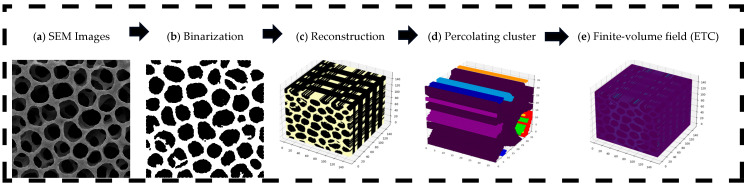 Figure 1
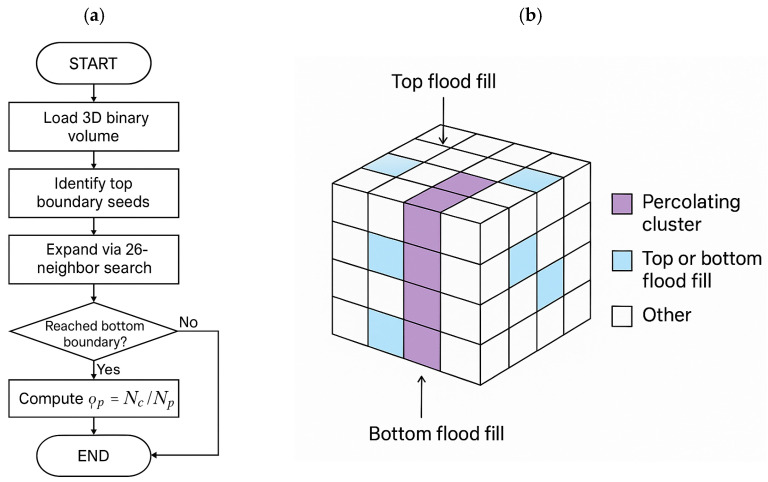 Figure 2
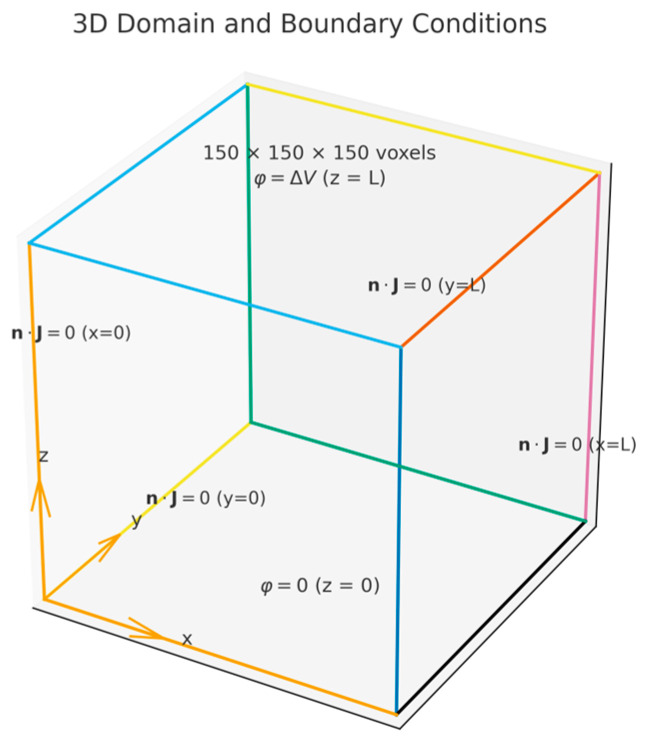 Figure 3
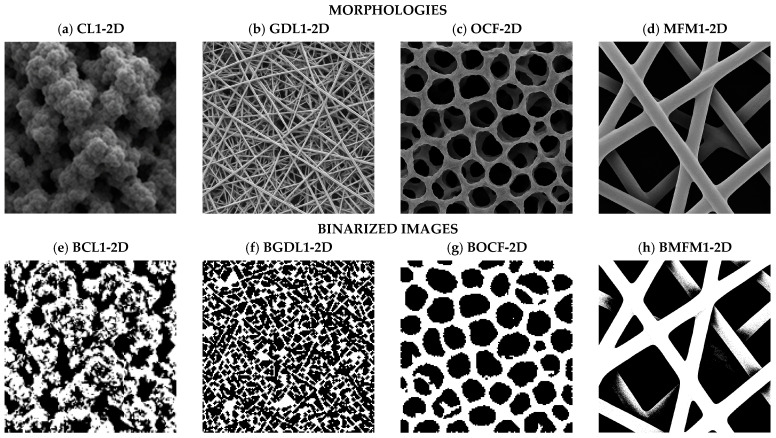 Figure 4
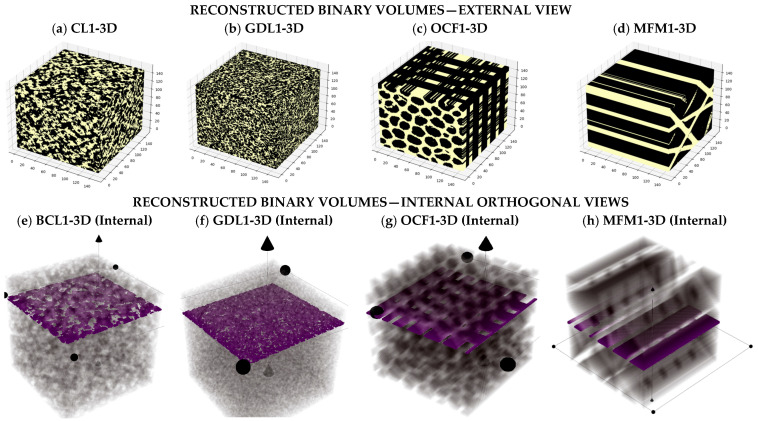 Figure 5
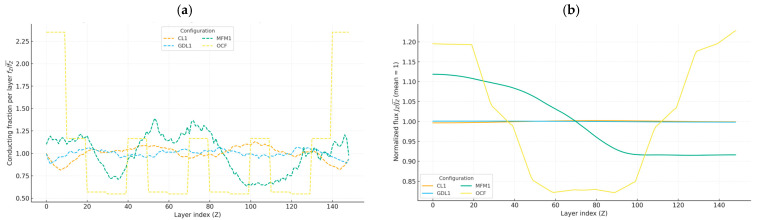 Figure 6
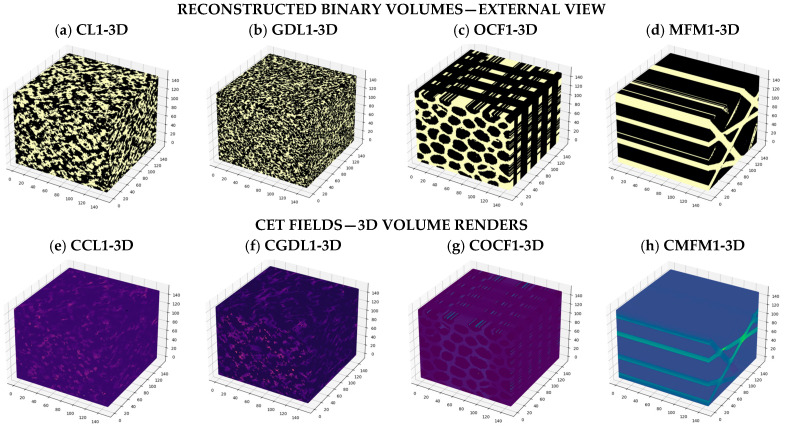 Figure 7
Peer Reviews
No public reviews on file for this paper yet. If you reviewed it on a platform where reviews are public (OpenReview, ICLR, NeurIPS, ICML), you can paste yours below so the community can read it here.
Videos
No videos yet. Explain this paper in a talk, walkthrough, or lecture? Add one.
Taxonomy
TopicsMolecular Junctions and Nanostructures · Electrocatalysts for Energy Conversion · Electrochemical Analysis and Applications