Psychosocial Outcomes and Quality of Life in Patients with Hemophilia a Without Inhibitors: The HemoLIFE Study
María Teresa Álvarez-Román, Ramiro José Núñez Vazquez, Olga Benítez Hidalgo, Laura Quintana Paris, Laura Entrena Ureña, Francisco José López Jaime, Hortensia De la Corte-Rodríguez, María García Dasí, Pau Bosch, Carmen Álvarez Cuervo, Itziar Guerra Garaeta

TL;DR
This study found that adults with hemophilia A without inhibitors experience significant impairments in quality of life, especially in leisure and work, and show high rates of anxiety and depression.
Contribution
The study provides real-life insights into psychosocial outcomes and quality of life in hemophilia A patients without inhibitors.
Findings
Quality of life was particularly impaired in sport, physical health, and future domains.
Anxiety and depression were present in over 10% of patients, with caregivers reporting higher rates.
Adult patients experienced more impairment than children, especially in leisure and work activities.
Abstract
Background: Hemophilia adversely affects several health domains and impairs the daily life of both patients and caregivers. Objectives: To assess the impact of hemophilia A without inhibitors on humanistic outcomes in adult and young patients and their caregivers in a real-life setting. Methods: This was a 12-month multicenter prospective observational study conducted in 18 Spanish hospitals. Patients who were diagnosed with hemophilia A (PWHs), without inhibitors, and who were 12 years of age or older, and their caregivers were included in the study. Results: A total of 85 PWHs (mean age: 33 years) and 12 caregivers participated in the study; 51 PWHs completed it, representing a 40% lost-to-follow-up rate. Twenty-five percent of PWHs showed maladjustment at study completion, with ‘leisure time’ and ‘work/studies’ being the most affected domains. Quality of life was particularly…
Genes, proteins, chemicals, diseases, species, mutations and cell lines named across the full text — each resolved to its canonical identifier and authoritative record.
Click any figure to enlarge with its caption.
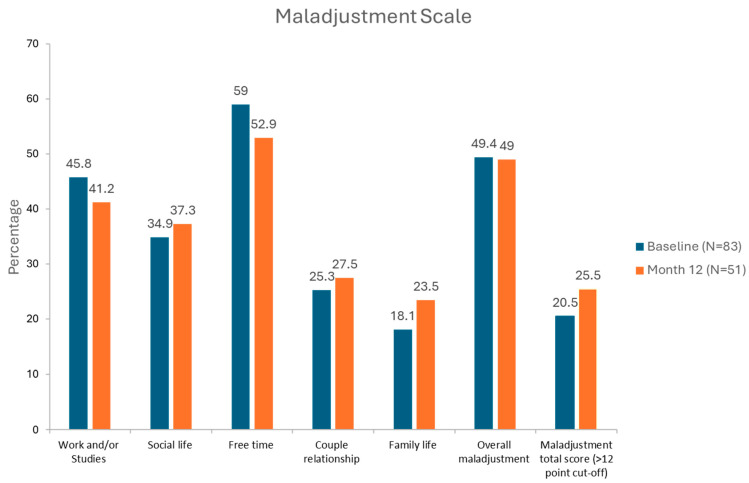 Figure 1
Peer Reviews
No public reviews on file for this paper yet. If you reviewed it on a platform where reviews are public (OpenReview, ICLR, NeurIPS, ICML), you can paste yours below so the community can read it here.
Videos
No videos yet. Explain this paper in a talk, walkthrough, or lecture? Add one.
Taxonomy
TopicsHemophilia Treatment and Research · Neurogenetic and Muscular Disorders Research · Blood donation and transfusion practices