Biological Nanoscaffolds from Hierarchical Construction to Applications
Yicong Zhang, Haolu Shi, Yijia Li, Yanlin Shen, Tingting Wang, Junqiu Liu

TL;DR
This review explores how biological scaffolds, made from DNA/RNA and proteins, offer unique advantages for assembling nanoparticles and delivering drugs due to their structure and biocompatibility.
Contribution
The paper systematically classifies and examines biological scaffolds based on nucleic acids and proteins, highlighting their structural features and applications.
Findings
Biological scaffolds offer advantages over synthetic ones due to their spatial structures and biocompatibility.
Nucleic acid and protein-based scaffolds are effective for assembling inorganic nanoparticles and drug delivery.
The structural symmetry of biomacromolecules influences the function of assembled scaffolds.
Abstract
Inspired by natural scaffolds, artificial scaffolds have garnered significant attention in recent years. Compared with synthetic scaffolds such as organic and polymer scaffolds, biological scaffolds from the foundational biomolecules nucleic acids (DNA/RNA) and proteins demonstrate distinct advantages in the assembly of inorganic nanoparticles and proteins, as well as in drug delivery. These advantages stem from their exquisite spatial structures, genetically encoded programmability, and their favorable biocompatibility, which is attributed to natural building blocks and degradable backbones that minimize long-term cytotoxicity. The intrinsic properties and structural symmetry of biomacromolecules as building blocks often determine the properties of the corresponding assemblies, and thus greatly influence their functions. In this review, we classify bottom-up constructed biological…
Genes, proteins, chemicals, diseases, species, mutations and cell lines named across the full text — each resolved to its canonical identifier and authoritative record.
Click any figure to enlarge with its caption.
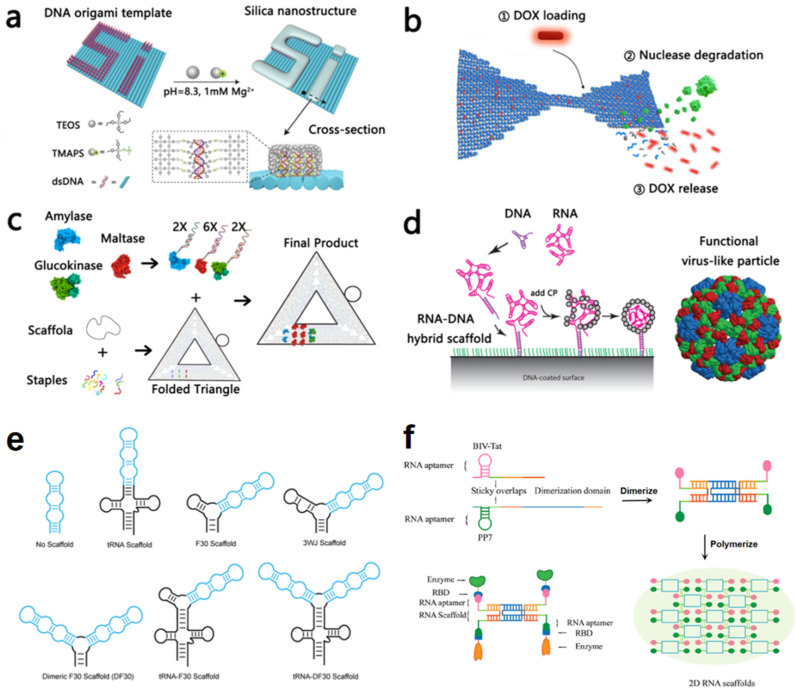 Figure 1
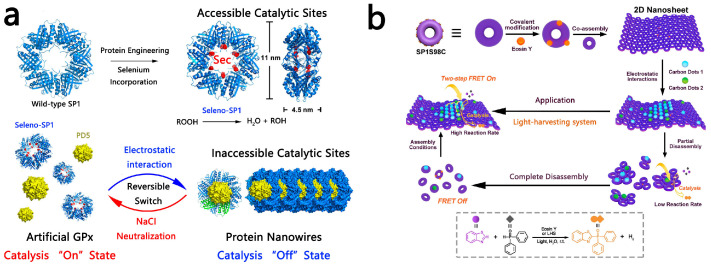 Figure 2
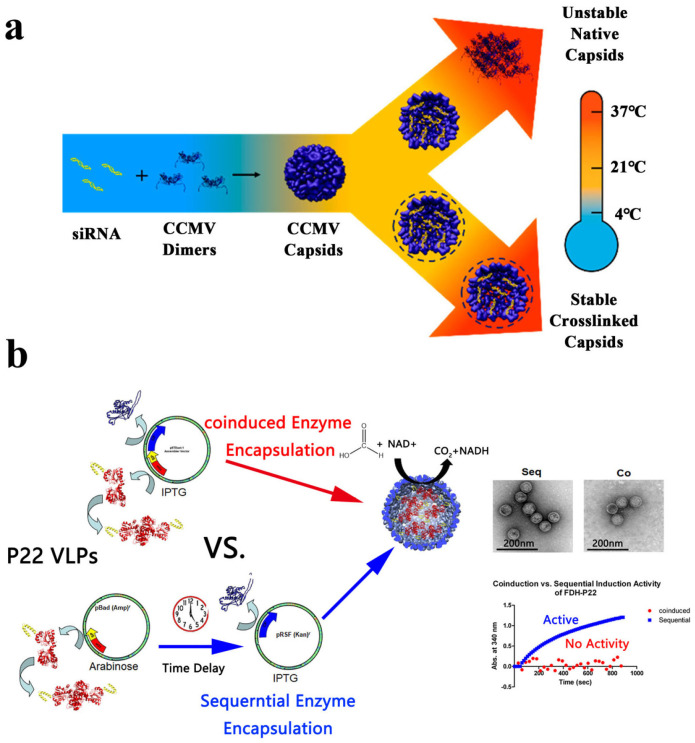 Figure 3
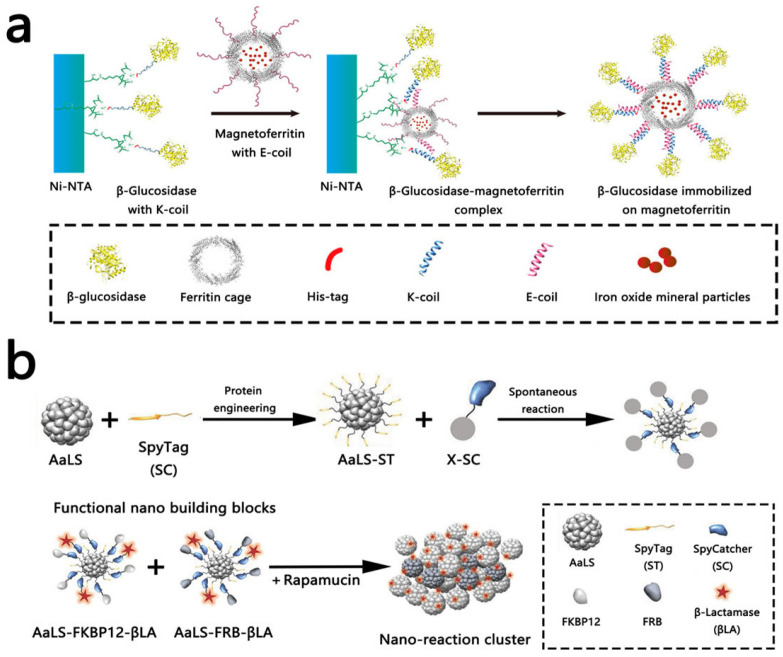 Figure 4
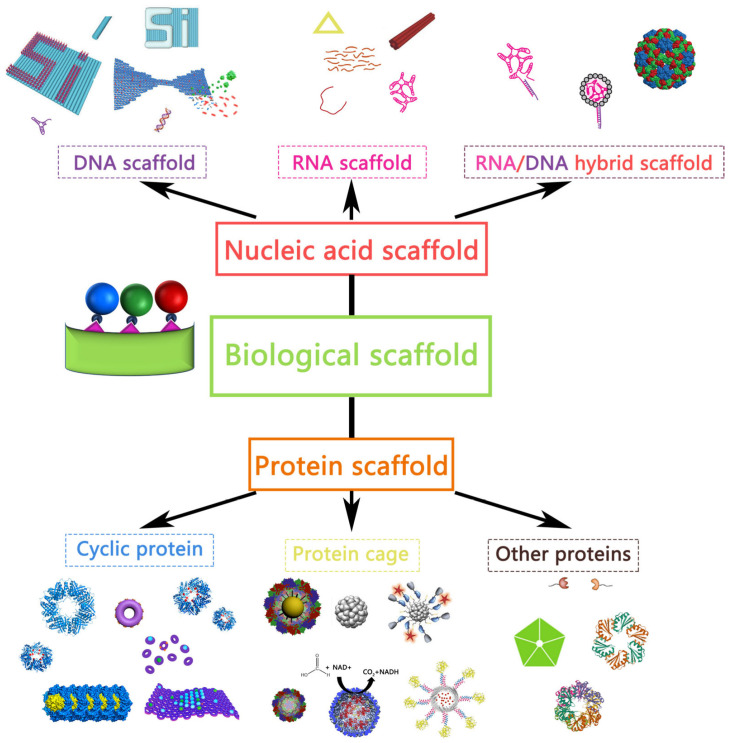 Figure 5
Peer Reviews
No public reviews on file for this paper yet. If you reviewed it on a platform where reviews are public (OpenReview, ICLR, NeurIPS, ICML), you can paste yours below so the community can read it here.
Videos
No videos yet. Explain this paper in a talk, walkthrough, or lecture? Add one.
Taxonomy
TopicsAdvanced biosensing and bioanalysis techniques · Supramolecular Self-Assembly in Materials · DNA and Nucleic Acid Chemistry