Brain Single-Cell Transcriptional Responses to Bexarotene-Activated RXR in an Alzheimer’s Disease Model
Carolina Saibro-Girardi, Yi Lu, Nicholas F. Fitz, Daniel P. Gelain, Iliya Lefterov, Radosveta Koldamova

TL;DR
This study explores how bexarotene, an RXR activator, affects brain cells in an Alzheimer’s disease model, revealing specific cellular responses and the role of APOE in these effects.
Contribution
The study identifies cell-type-specific transcriptional responses to bexarotene in Alzheimer’s disease models and highlights APOE-driven pathways as key mediators.
Findings
Bexarotene activates cholesterol biosynthesis and lipid metabolism in astrocytes and oligodendrocytes.
APOE expression is significantly elevated in microglia and oligodendrocytes.
Bexarotene modulates immune responses, promoting Aβ signatures while reducing inflammation in certain cells.
Abstract
Pharmacological activation of brain Retinoid X Receptors (RXRs) enhances cognition and facilitates amyloid-beta (Aβ) clearance in Alzheimer’s disease (AD) mouse models, partly by upregulating apolipoprotein E (Apoe), a major AD genetic risk factor. However, the specific cellular contributions to these effects are unclear. Here, we used single-cell transcriptomic profiling to investigate cell subpopulation-specific responses to bexarotene, an RXR agonist, in APP/PS1 mice. Our analysis revealed that bexarotene activated cholesterol biosynthesis and lipid metabolism transcriptional programs in homeostatic astrocytes and oligodendrocytes. Astrocytes also upregulated neurodevelopmental genes, while oligodendrocytes and endothelial cells showed enhanced protein folding and cellular growth pathways. Bexarotene further modulated immune responses, promoting Aβ-responsive signatures in…
Genes, proteins, chemicals, diseases, species, mutations and cell lines named across the full text — each resolved to its canonical identifier and authoritative record.
Click any figure to enlarge with its caption.
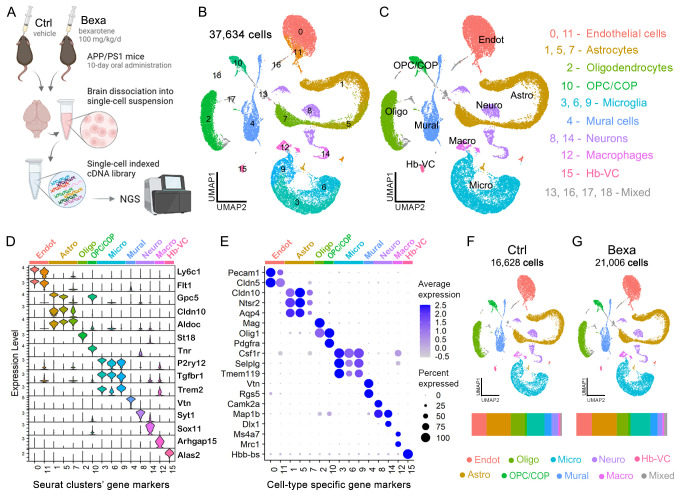 Figure 1
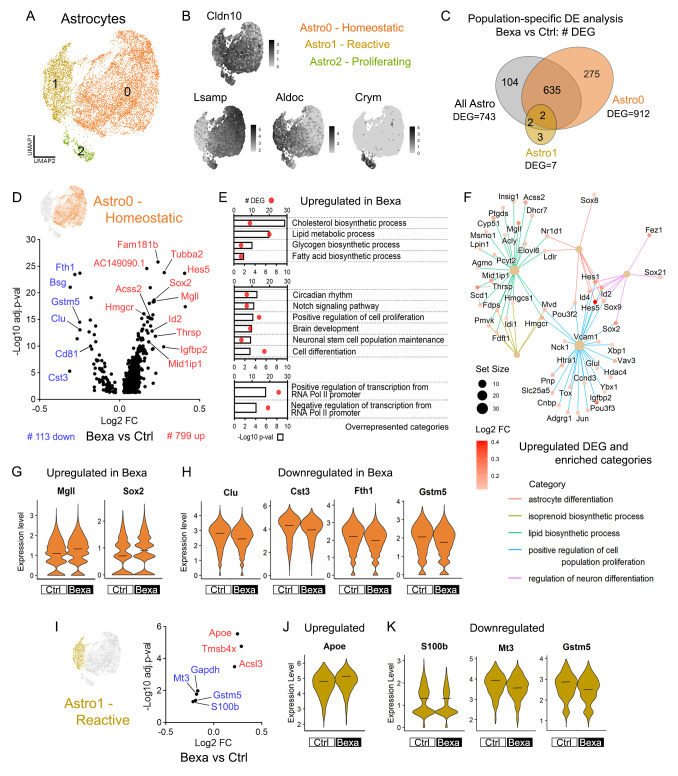 Figure 2
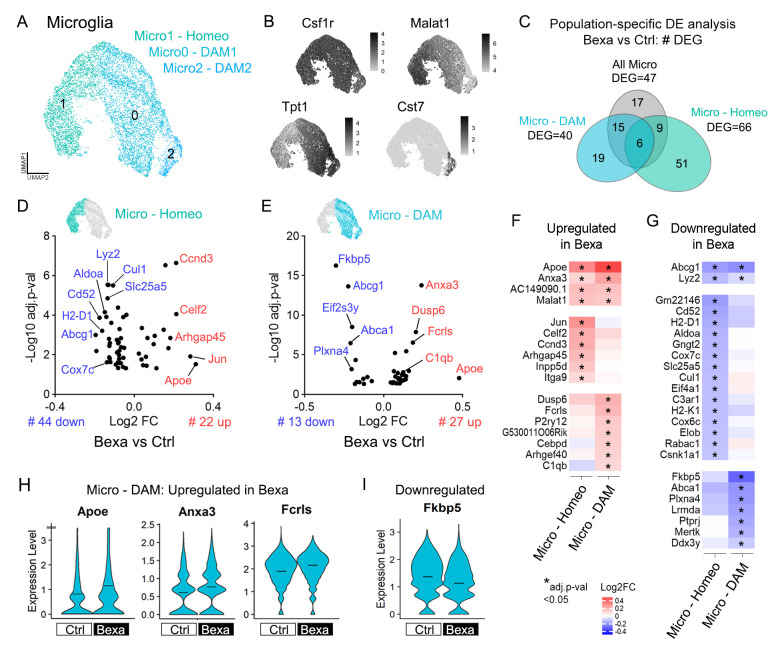 Figure 3
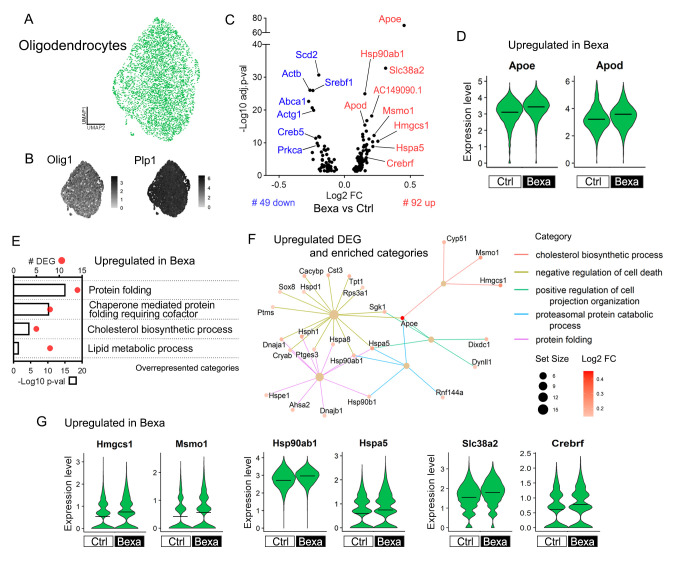 Figure 4
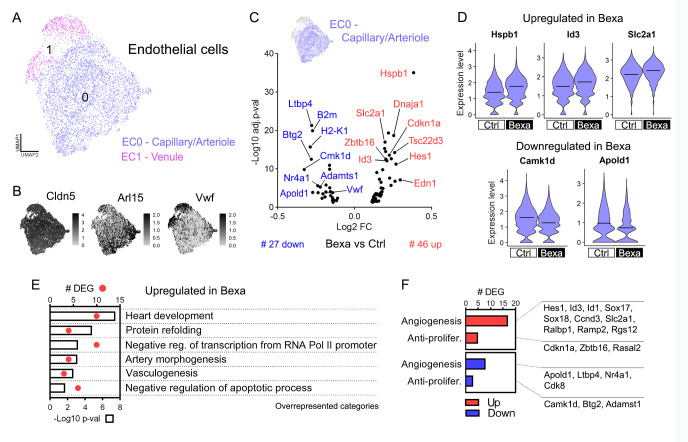 Figure 5
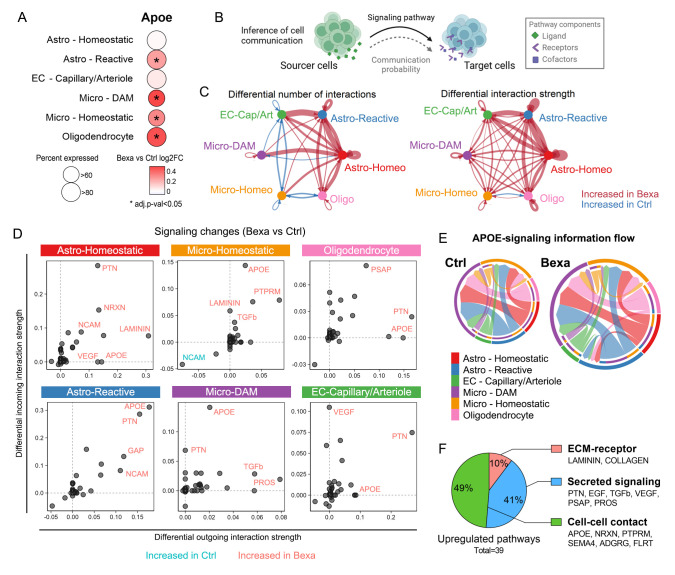 Figure 6
Peer Reviews
No public reviews on file for this paper yet. If you reviewed it on a platform where reviews are public (OpenReview, ICLR, NeurIPS, ICML), you can paste yours below so the community can read it here.
Videos
No videos yet. Explain this paper in a talk, walkthrough, or lecture? Add one.
Taxonomy
TopicsAlzheimer's disease research and treatments · Retinoids in leukemia and cellular processes · Neuroinflammation and Neurodegeneration Mechanisms