Comparative Effectiveness of Autologous Blood Clot Therapy (ActiGraft), Autologous Micrograft Therapy (Rigenera), and Advanced Wound Dressings for Refractory Chronic Lower Limb Ulcers: A Real-World Evidence Study
Muhammad Khatib, Dror Robinson, Eitan Lavon, Feras Qawasmi, Waseem Abu Rashed, Hamza Murad, Yaffa Maximov, Assil Mahamid, Mustafa Yassin

TL;DR
This study compares autologous therapies (ActiGraft and Rigenera) to advanced wound dressings for chronic leg ulcers, finding faster healing with ActiGraft.
Contribution
The study provides real-world evidence suggesting autologous therapies may offer faster healing for refractory chronic lower limb ulcers compared to advanced dressings.
Findings
ActiGraft showed significantly faster healing compared to advanced dressings in chronic lower limb ulcers.
Unadjusted closure rates were higher for ActiGraft and Rigenera compared to advanced dressings.
Infection rates were lower in autologous therapy groups compared to advanced dressings.
Abstract
Background/Objectives: Chronic lower limb ulcers represent a significant clinical challenge, with conventional therapies achieving healing in only 30–40% of complex cases. This study evaluated the comparative effectiveness of autologous blood clot therapy (ActiGraft, delivering platelet- and leukocyte-derived growth factors) and autologous micrograft therapy (Rigenera, containing viable progenitor cells) versus advanced wound dressings for refractory chronic wounds. Methods: This retrospective analysis of a prospectively collected, non-randomized clinical cohort included 132 patients with chronic lower limb ulcers refractory to prior therapy, who were treated between 2019 and 2024 at a single wound care center. The patients received ActiGraft (n = 32), Rigenera (n = 33), or advanced wound dressings (n = 67) based on their choice after informed discussion. The primary outcome was…
Genes, proteins, chemicals, diseases, species, mutations and cell lines named across the full text — each resolved to its canonical identifier and authoritative record.
Click any figure to enlarge with its caption.
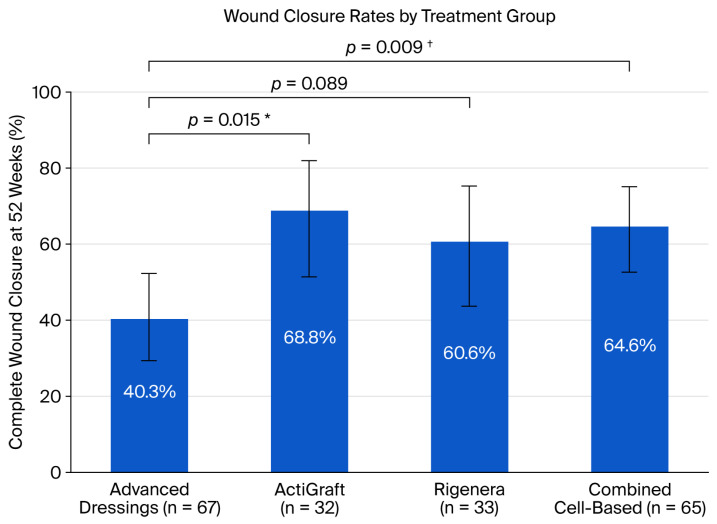 Figure 1
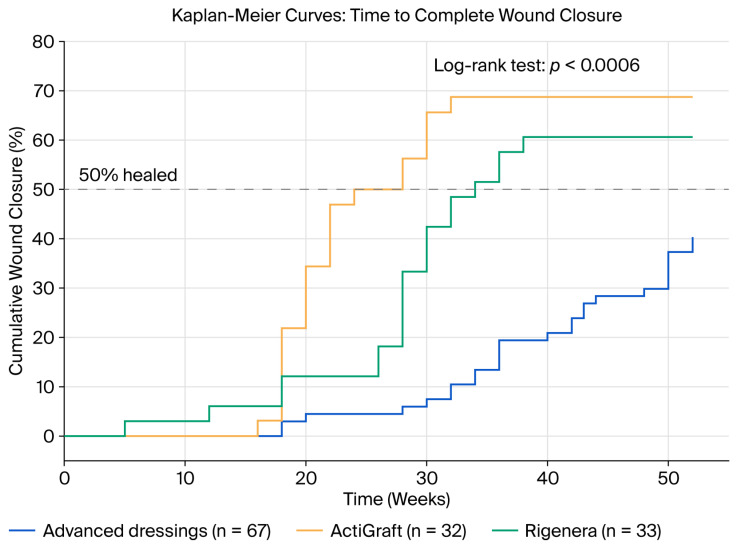 Figure 2
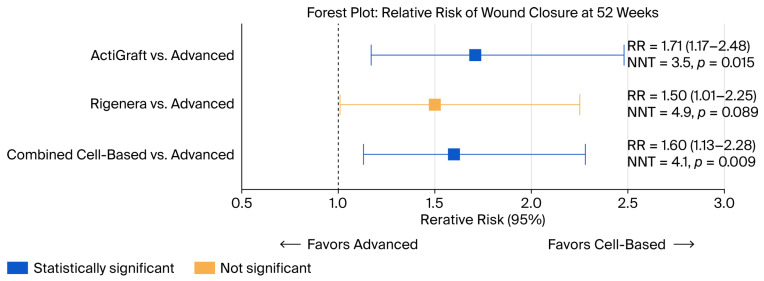 Figure 3
Peer Reviews
No public reviews on file for this paper yet. If you reviewed it on a platform where reviews are public (OpenReview, ICLR, NeurIPS, ICML), you can paste yours below so the community can read it here.
Videos
No videos yet. Explain this paper in a talk, walkthrough, or lecture? Add one.
Taxonomy
TopicsWound Healing and Treatments · Periodontal Regeneration and Treatments · Planarian Biology and Electrostimulation