Organ-Specific Chemical Diversity and Biofunctional Potential of Ebenus laguroides subsp. laguroides: Linking Phenolic Composition with Antioxidant and Enzyme Inhibitory Activities
Bedrettin Selvi

TL;DR
This study explores the chemical diversity and biofunctional properties of a gypsum-endemic legume, finding that different plant organs have distinct phenolic compounds with antioxidant and enzyme inhibitory effects.
Contribution
The study reveals organ-specific phenolic profiles and their correlation with antioxidant and enzyme inhibitory activities in a gypsum-adapted legume species.
Findings
Stems had the highest total phenolic and flavonoid contents, strongly correlated with antioxidant activity.
Roots showed the strongest acetylcholinesterase inhibition, while stems exhibited the highest tyrosinase inhibition.
Phenolic content was found to be closely linked to antioxidant potential and enzyme modulation.
Abstract
Plants adapted to gypsum-rich habitats often display unique metabolic specializations. This study investigated the organ-specific chemical diversity and biofunctional potential of Ebenus laguroides subsp. laguroides, a gypsum-endemic legume from Central Anatolia. Methanolic extracts of flowers, leaves, stems, and roots were analyzed for phenolic composition by LC–ESI–MS/MS and evaluated for antioxidant and enzyme inhibitory activities. Twenty-one phenolics were identified, dominated by hesperidin, verbascoside, and (+)-catechin, particularly abundant in stems. Stems exhibited the highest total phenolic (82.60 mg GAEs/g) and flavonoid (45.79 mg QEs/g) contents, correlating strongly with antioxidant capacity across multiple assays (r > 0.95). Enzyme inhibition tests revealed moderate but consistent activities, with roots showing the strongest acetylcholinesterase inhibition and stems the…
Genes, proteins, chemicals, diseases, species, mutations and cell lines named across the full text — each resolved to its canonical identifier and authoritative record.
Click any figure to enlarge with its caption.
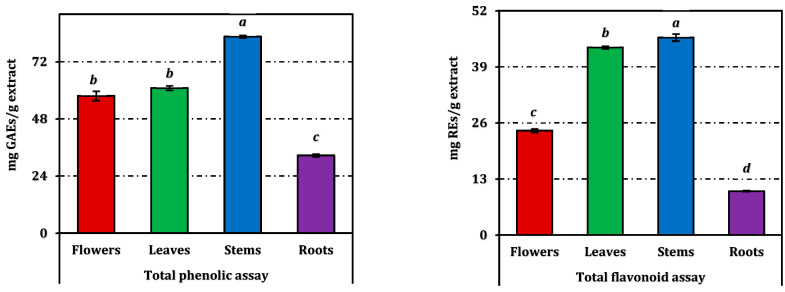 Figure 1
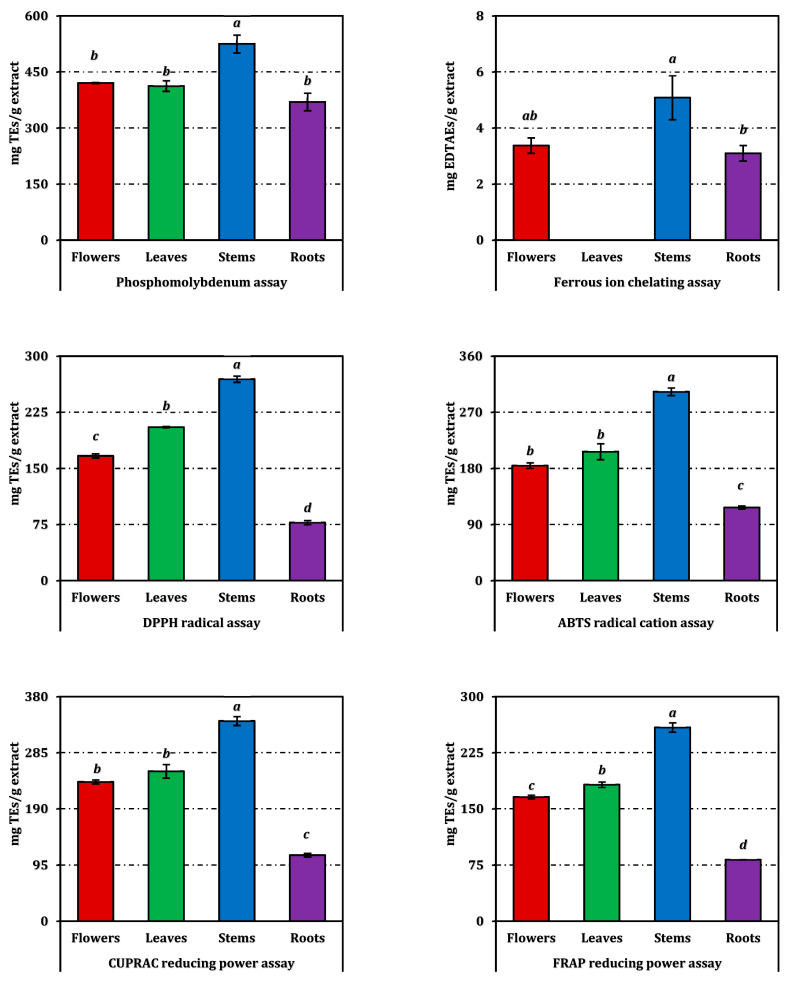 Figure 2
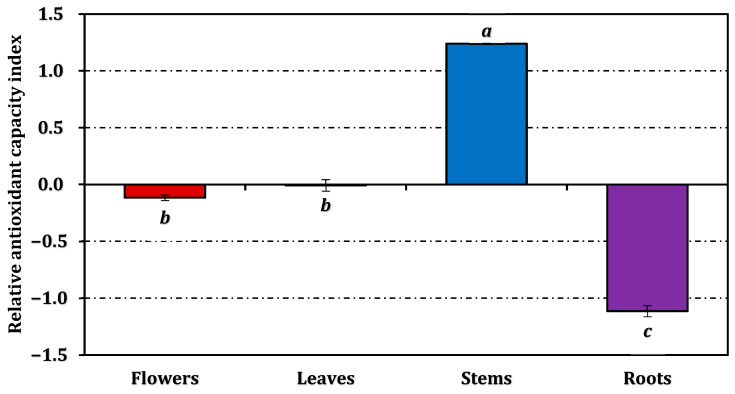 Figure 3
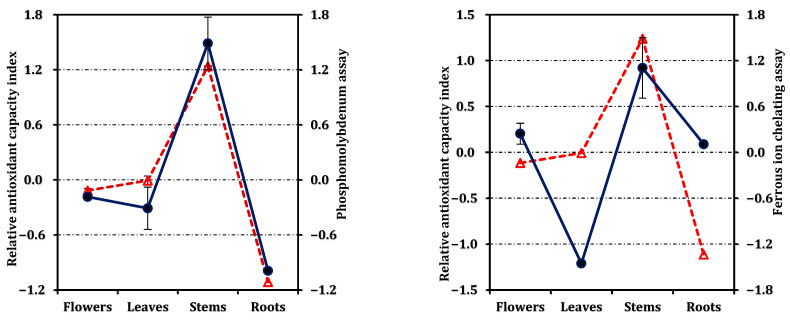 Figure 4
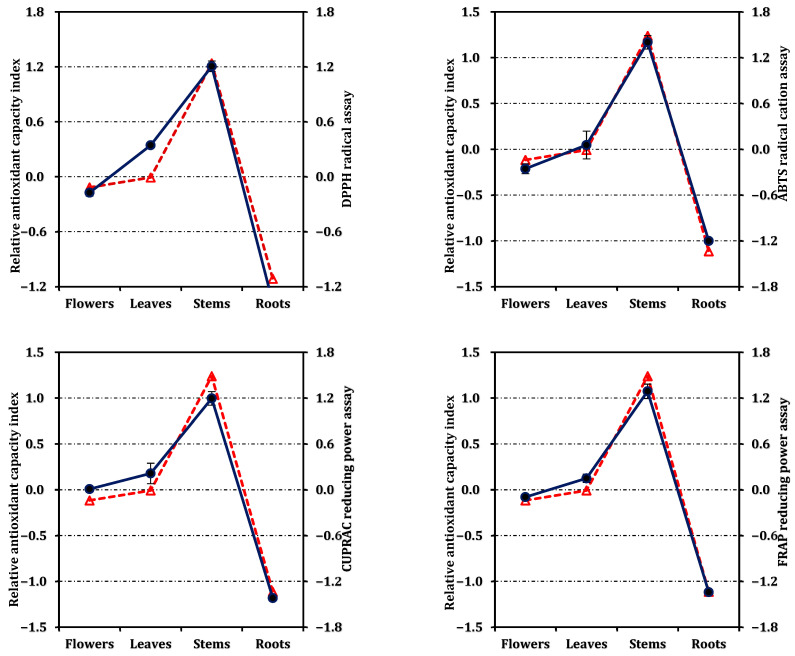 Figure 5
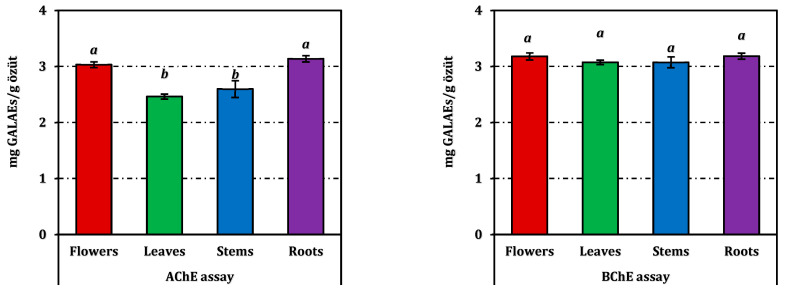 Figure 6
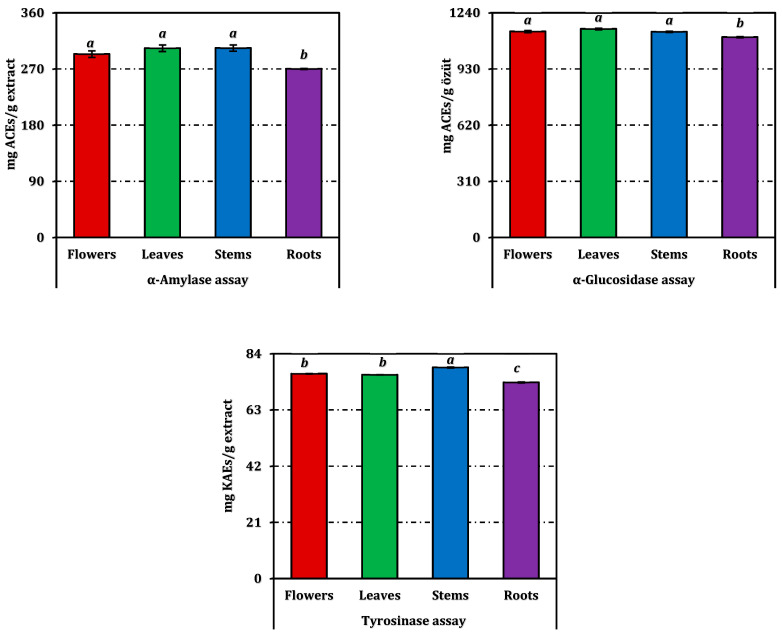 Figure 7
Peer Reviews
No public reviews on file for this paper yet. If you reviewed it on a platform where reviews are public (OpenReview, ICLR, NeurIPS, ICML), you can paste yours below so the community can read it here.
Videos
No videos yet. Explain this paper in a talk, walkthrough, or lecture? Add one.
Taxonomy
TopicsPhytochemicals and Antioxidant Activities · Natural Compound Pharmacology Studies · Bioactive natural compounds