Modulation of the Vasopressin System in Distributive and Cardiogenic Shock: Theoretical Principles and Practical Applications
Alfredo Mauriello, Adriana Correra, Anna Chiara Maratea, Valeria Cetoretta, Francesco Giallauria, Giovanni Esposito, Alfonso Desiderio, Gemma Marrazzo, Biagio Liccardo, Vincenzo Russo, Paolo Trambaiolo, Antonello D’Andrea

TL;DR
This paper reviews how the vasopressin system can help manage shock by reducing reliance on harmful catecholamines and improving outcomes like kidney function.
Contribution
The paper provides a comprehensive review of vasopressin and its analogues in shock treatment, emphasizing their role in decatecholaminization and future precision strategies.
Findings
Vasopressin reduces the need for renal replacement therapy and offers survival benefits in less severe shock.
Terlipressin has a longer half-life but increases the risk of peripheral ischemia.
Selepressin was designed to avoid fluid retention but has not shown superior clinical outcomes.
Abstract
Vasodilatory shock, primarily driven by sepsis, remains a leading cause of mortality in intensive care units (ICU), with mortality rates exceeding 90% in refractory cases. While norepinephrine is the first-line vasopressor, prolonged exposure to high doses of catecholamines is linked to severe adverse effects, including myocardial toxicity, arrhythmias, and immunodepression. Consequently, the concept of decatecholaminization, utilizing non-adrenergic vasopressors to reduce catecholamine burden, has emerged as a critical therapeutic strategy. This comprehensive review aims to define the current role of vasopressin and its analogues, terlipressin and selepressin, in managing patients with circulatory shock, evaluating their physiological rationale, clinical benefits, and adverse event profiles. The vasopressin system provides a multimodal approach to hemodynamic stability independent of…
Genes, proteins, chemicals, diseases, species, mutations and cell lines named across the full text — each resolved to its canonical identifier and authoritative record.
Click any figure to enlarge with its caption.
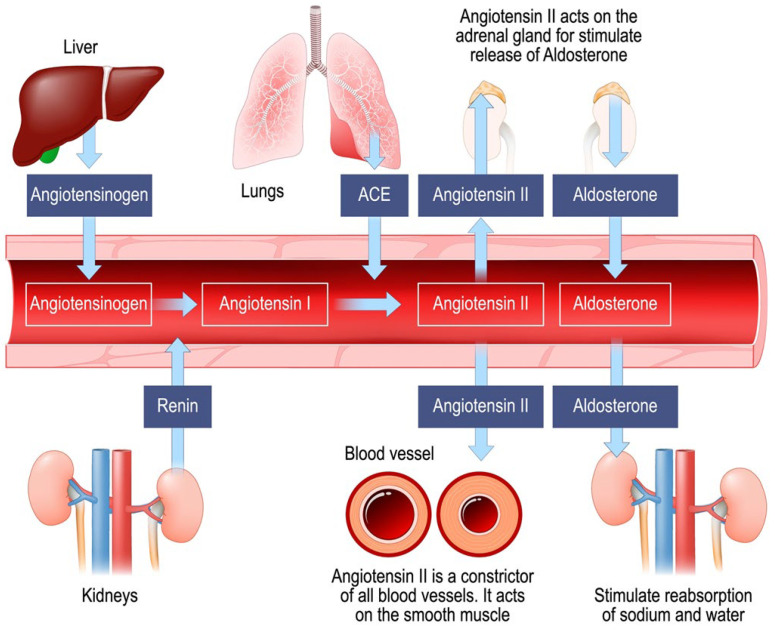 Figure 1
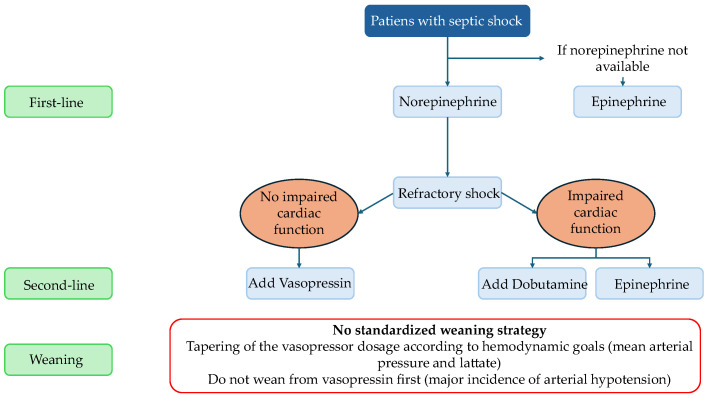 Figure 2
Peer Reviews
No public reviews on file for this paper yet. If you reviewed it on a platform where reviews are public (OpenReview, ICLR, NeurIPS, ICML), you can paste yours below so the community can read it here.
Videos
No videos yet. Explain this paper in a talk, walkthrough, or lecture? Add one.
Taxonomy
TopicsSepsis Diagnosis and Treatment · Acute Kidney Injury Research · Healthcare Technology and Patient Monitoring