Evidence for Genotype-Specific Optimal Blood Lead Levels for Cancer Risk: MKI67 rs11016073 and APOB rs1367117 in a Female Prospective Cohort
Krzysztof Lubiński, Wojciech Marciniak, Róża Derkacz, Adam Kiljańczyk, Milena Kiljańczyk, Marcin R. Lener, Sandra Pietrzak, Cezary Cybulski, Tadeusz Dębniak, Tomasz Huzarski, Wojciech Kluźniak, Tadeusz Sulikowski, Jan Lubiński, Rodney J. Scott, Jacek Gronwald

TL;DR
This study shows that the link between blood lead levels and cancer risk depends on a person's genetic makeup, particularly for breast cancer.
Contribution
The study identifies genotype-specific optimal blood lead levels for cancer risk based on MKI67 and APOB polymorphisms.
Findings
Women with APOB non-GG and MKI67 non-AA genotypes had lowest breast cancer risk at highest lead levels.
APOB GG and MKI67 AA carriers showed lowest risk at lowest lead levels.
Age-stratified analyses revealed genotype-specific optimal lead exposure ranges for cancer risk.
Abstract
This study’s aim was to clarify the regulatory roles of the MKI67 rs11016073 and APOB rs1367117 polymorphisms in the relationship between blood Pb levels and cancer risk. Blood Pb concentrations were measured using inductively coupled plasma mass spectrometry, and genotyping was performed by real-time PCR with TaqMan probes. Cancer incidence was assessed during a mean follow-up of six years and two months. During follow-up, 210 incident cancers were diagnosed among 2782 women. Pb exposure was categorized into quartiles (Q1: <9.44 µg/L; Q2: 9.44–12.58 µg/L; Q3: 12.59–17.16 µg/L; Q4: >17.16 µg µg/L). The association between Pb levels and cancer risk was strongly genotype dependent. Women carrying APOB non-GG and MKI67 non-AA genotypes exhibited the lowest breast cancer risk at the highest Pb levels (Q4), whereas carriers of APOB GG and MKI67 AA showed the lowest risk at the lowest Pb…
Genes, proteins, chemicals, diseases, species, mutations and cell lines named across the full text — each resolved to its canonical identifier and authoritative record.
Click any figure to enlarge with its caption.
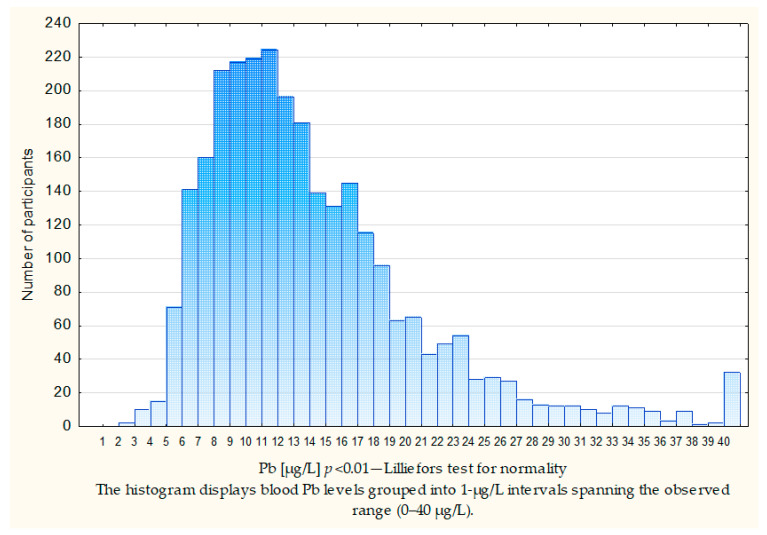 Figure 1
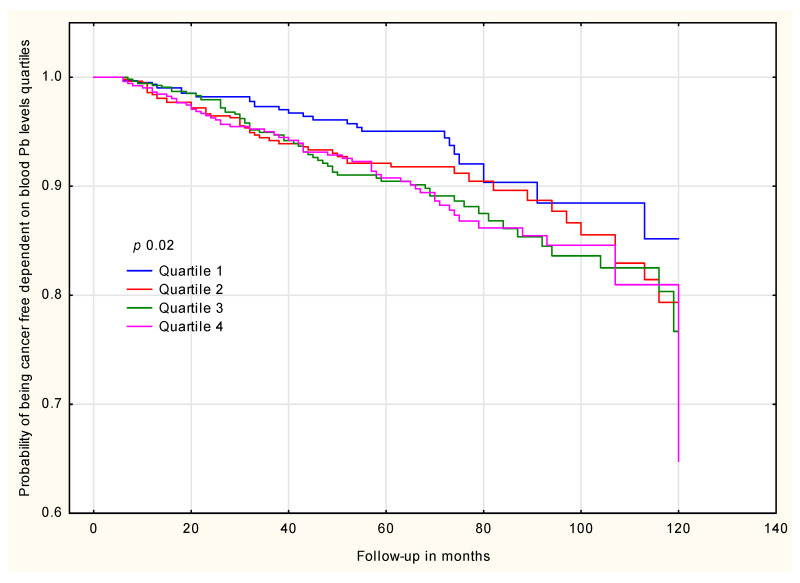 Figure 2
Peer Reviews
No public reviews on file for this paper yet. If you reviewed it on a platform where reviews are public (OpenReview, ICLR, NeurIPS, ICML), you can paste yours below so the community can read it here.
Videos
No videos yet. Explain this paper in a talk, walkthrough, or lecture? Add one.
Taxonomy
TopicsHeavy Metal Exposure and Toxicity · Carcinogens and Genotoxicity Assessment · Trace Elements in Health