Comparison of Hemodynamics After Fenestrated, Branched, and Chimney Endovascular Aneurysm Repair Employing Computational Fluid Dynamics
Stavros Malatos, Spyridon Katsoudas, Anastasios Raptis, Laura Fazzini, Petroula Nana, George Kouvelos, Athanasios Giannoukas, Michalis Xenos, Miltiadis Matsagkas

TL;DR
This study compares blood flow patterns after three types of aortic aneurysm repair procedures using computer simulations to evaluate their effectiveness.
Contribution
The study provides a detailed computational comparison of hemodynamic outcomes for FEVAR, BEVAR, and chEVAR in complex aortic aneurysm repair.
Findings
chEVAR showed marked hemodynamic deviations compared to FEVAR and BEVAR.
BEVAR had higher time-averaged wall shear stress (TAWSS) values than other methods.
All methods improved blood flow toward near-physiological conditions and preserved visceral artery perfusion.
Abstract
Background/Objectives: This study compared the hemodynamic performance of fenestrated (FEVAR), branched (BEVAR), and chimney endovascular aortic aneurysm repair (chEVAR) in patients with complex aortic aneurysms. Methods: The pre- (native) and post-endovascular repair (endograft-defined) blood lumen was reconstructed from computed tomography angiographies of nine (9) elective patients treated with FEVAR (n = 3), BEVAR (n = 3), and chEVAR (n = 3). Computational fluid dynamics (CFD) simulations obtained blood flow properties. Velocity magnitude, wall shear stress (WSS), time-averaged wall shear stress (TAWSS), oscillatory shear index (OSI), relative residence time (RRT), and local normalized helicity (LNH) were computed at peak systole and mid-diastole. The hemodynamic data were statistically analyzed to evaluate correlations between FEVAR, BEVAR, and chEVAR, focusing on targeted visceral…
Genes, proteins, chemicals, diseases, species, mutations and cell lines named across the full text — each resolved to its canonical identifier and authoritative record.
Click any figure to enlarge with its caption.
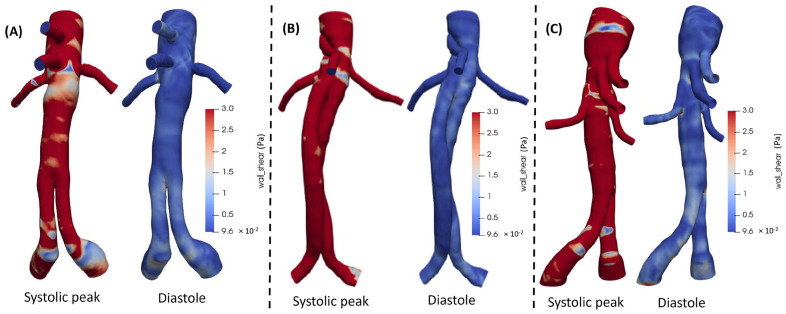 Figure 1
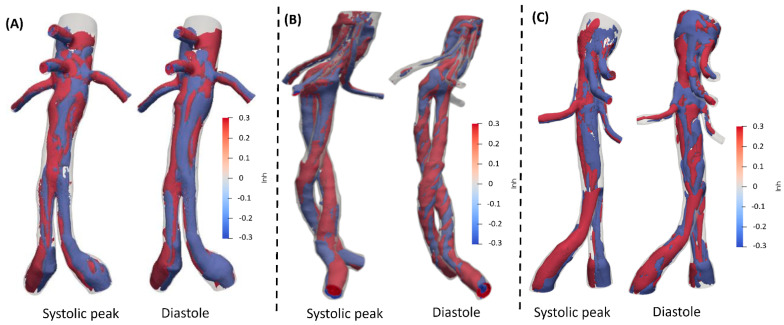 Figure 2
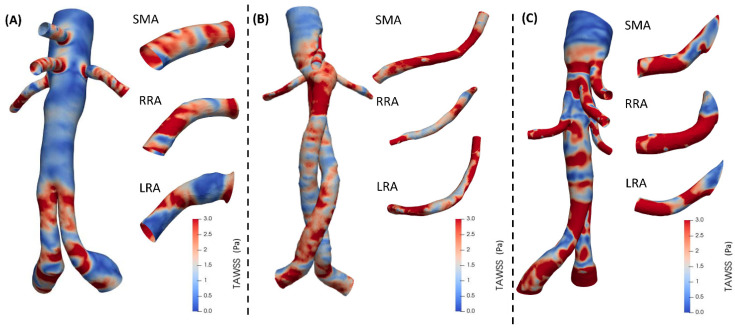 Figure 3
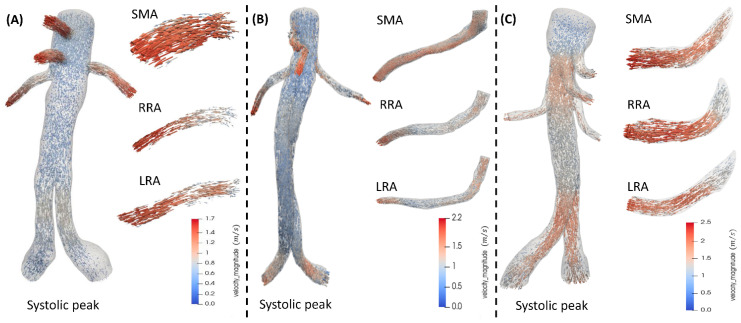 Figure 4
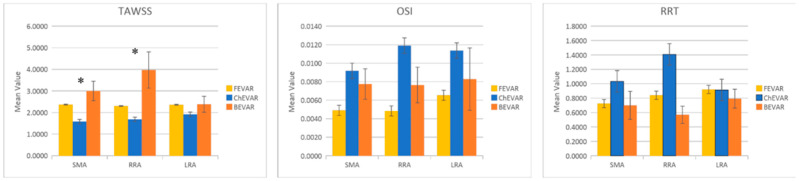 Figure 5
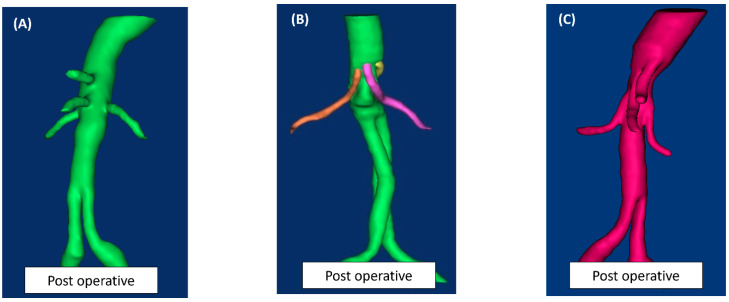 Figure 6
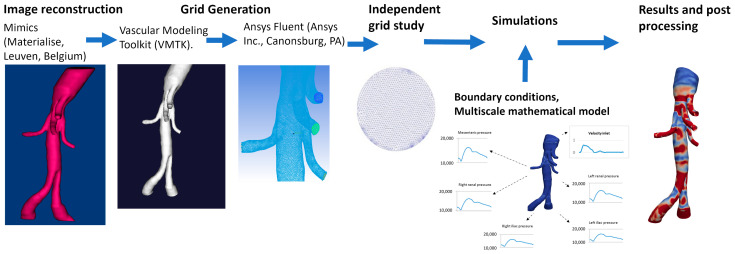 Figure 7
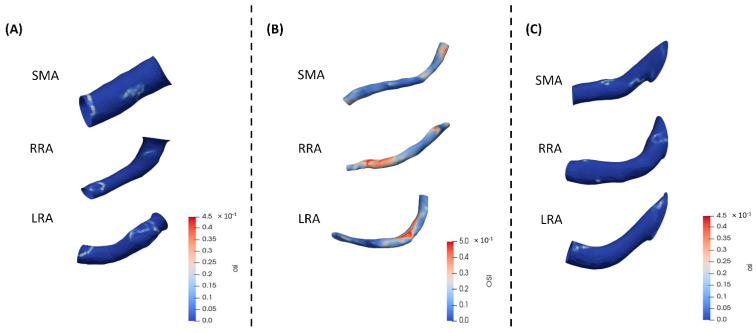 Figure 8
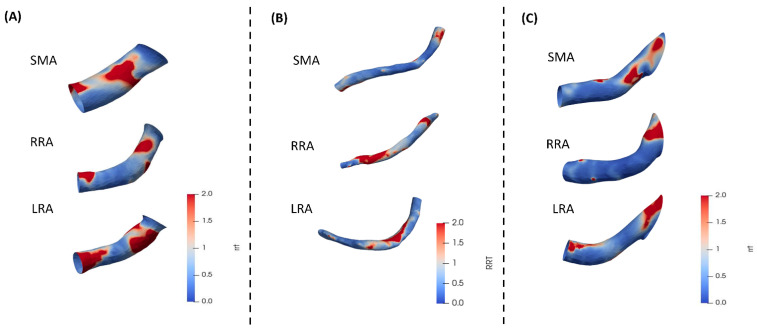 Figure 9
Peer Reviews
No public reviews on file for this paper yet. If you reviewed it on a platform where reviews are public (OpenReview, ICLR, NeurIPS, ICML), you can paste yours below so the community can read it here.
Videos
No videos yet. Explain this paper in a talk, walkthrough, or lecture? Add one.
Taxonomy
TopicsAortic aneurysm repair treatments · Aortic Disease and Treatment Approaches · Coronary Interventions and Diagnostics