The Role of Exosomes in the Regulation of Molecular Mechanisms Underlying Treatment Resistance—Linking Cellular Crosstalk to Clinical Implications in Depression
Kinga Dyndał, Patrycja Pańczyszyn-Trzewik, Bernadetta Jakubowska, Magdalena Sowa-Kućma

TL;DR
Exosomes may help explain treatment resistance in depression and could serve as biomarkers or drug delivery tools for the brain.
Contribution
This review explores the role of exosomes in depression, focusing on their potential as biomarkers and therapeutic tools for treatment-resistant depression.
Findings
Exosomes may carry miRNAs and BDNF, which could disrupt synaptic plasticity and contribute to antidepressant resistance.
Engineered exosomes show promise as targeted drug carriers for the central nervous system.
Standardization of exosome isolation methods and safety data are major challenges for clinical application.
Abstract
Depressive disorders (DDs), especially treatment-resistant depression (TRD), pose a significant challenge worldwide, largely because their underlying biological mechanisms are complicated and treatments often fall short. There is growing evidence pointing to factors like disrupted neuroplasticity, neuroinflammation, irregularities in the hypothalamic–pituitary–adrenal (HPA) axis, and glutamatergic system imbalances as contributors to the onset and persistence of depressive symptoms. Exosomes (small extracellular vesicles involved in communication between cells) have recently gained attention for their potential role in connecting peripheral and central nervous system (CNS) changes. They carry proteins, lipids, and nucleic acids and are even capable of crossing the blood–brain barrier. Because of this, exosomes might provide a window into molecular changes in the brain and serve as…
Genes, proteins, chemicals, diseases, species, mutations and cell lines named across the full text — each resolved to its canonical identifier and authoritative record.
Click any figure to enlarge with its caption.
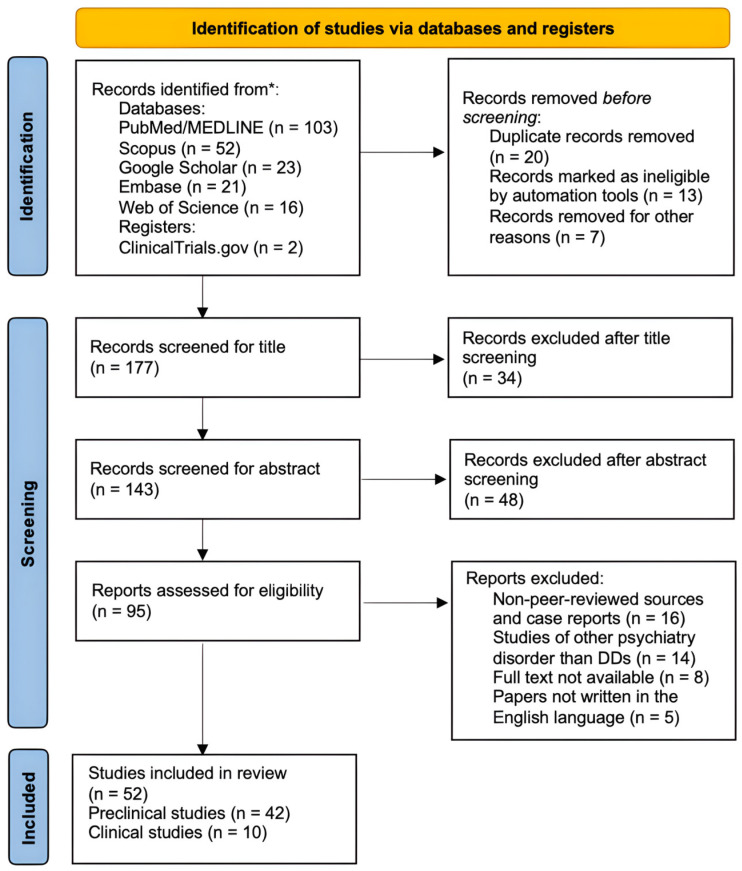 Figure 1
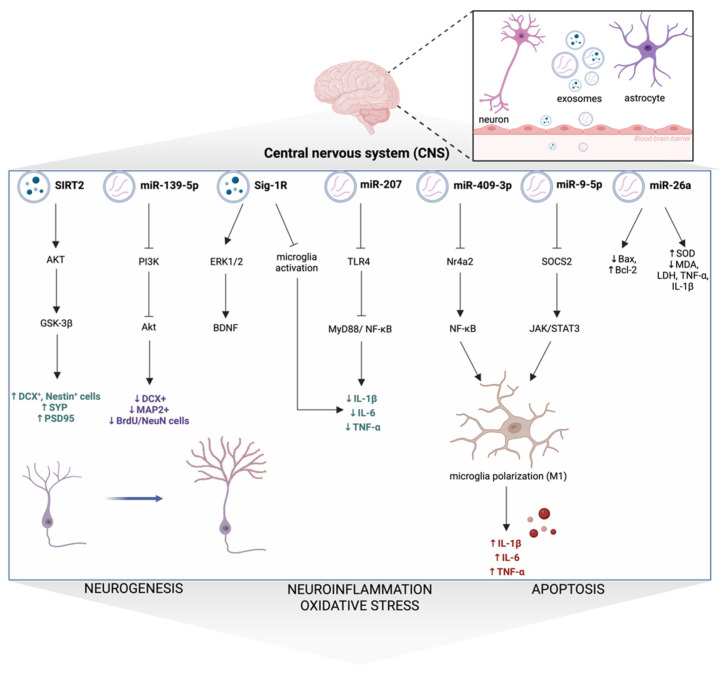 Figure 2
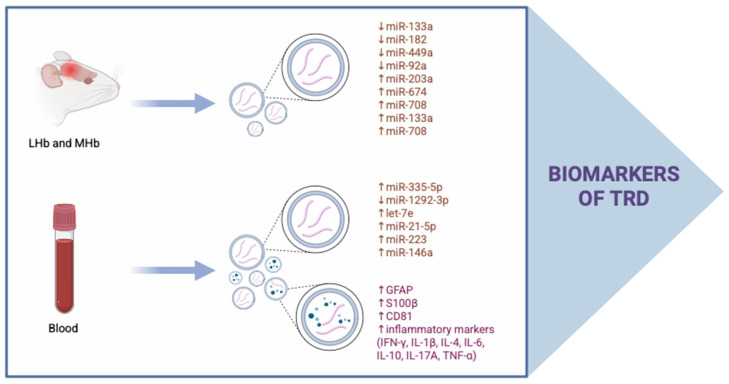 Figure 3
Peer Reviews
No public reviews on file for this paper yet. If you reviewed it on a platform where reviews are public (OpenReview, ICLR, NeurIPS, ICML), you can paste yours below so the community can read it here.
Videos
No videos yet. Explain this paper in a talk, walkthrough, or lecture? Add one.
Taxonomy
TopicsExtracellular vesicles in disease · Tryptophan and brain disorders · Phosphodiesterase function and regulation