Impact of PAX6-Related Congenital Aniridia on Corneal Diameter, Central Corneal Thickness and Keratometry
Kitti Kormányos, Béla Csákány, Mária Csidey, Annamária Náray, Klaudia Kéki-Kovács, Orsolya Németh, Krisztina Knézy, Mária Bausz, Andrea Szigeti, Anita Csorba, Dorottya Szabó, Marta Corton, Kálmán Tory, Eszter Jávorszky, Zoltán Zsolt Nagy, Achim Langenbucher, Erika Maka

TL;DR
This study finds that PAX6-related congenital aniridia affects corneal thickness, diameter, and curvature, with implications for eye surgery planning.
Contribution
The study identifies specific biometric differences in PAX6-related aniridia using a non-contact device, highlighting surgical implications.
Findings
Eyes with PAX6-related aniridia have increased central corneal thickness and reduced corneal diameter and keratometric values.
Axial length is more influenced by gender than by aniridia diagnosis.
No significant interocular asymmetry was observed in aniridia patients.
Abstract
Background/Objectives: PAX6 haploinsufficiency-related congenital aniridia is a panocular disease affecting multiple ocular structures. The aim of this study was to determine the biometric properties of eyes affected by PAX6 haploinsufficiency-related classical congenital aniridia using a non-contact device. Methods: Fifty-nine eyes from 31 aniridia patients (48.39% male; mean age 27.0 ± 17.65 years, range 7–56) and 99 eyes from 50 healthy controls (44.00% male; mean age 28.56 ± 21.73 years, range 4–81) were examined using the Movu biometer (Argos Inc.). Axial length (AL), corneal diameter (CD), central corneal thickness (CCT), anterior chamber depth (ACD), lens thickness (LT), pupil size (PS), and mean keratometric value (K-mean) were measured. Results: Linear mixed-effects models showed significant effects of diagnosis on CCT (β = 182.39, p < 0.001), CD (β = −0.55, p = 0.02), and…
Genes, proteins, chemicals, diseases, species, mutations and cell lines named across the full text — each resolved to its canonical identifier and authoritative record.
Click any figure to enlarge with its caption.
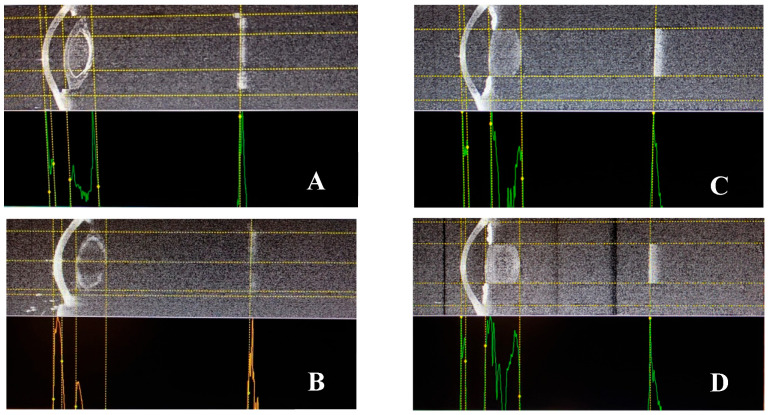 Figure 1
Peer Reviews
No public reviews on file for this paper yet. If you reviewed it on a platform where reviews are public (OpenReview, ICLR, NeurIPS, ICML), you can paste yours below so the community can read it here.
Videos
No videos yet. Explain this paper in a talk, walkthrough, or lecture? Add one.
Taxonomy
TopicsDevelopmental Biology and Gene Regulation · Corneal Surgery and Treatments · Ocular Disorders and Treatments