Pre-Existing Heart Failure, Biomarker Profiles, and Patients’ Vulnerability in Hospitalized COVID-19: A Biomarker-Driven Risk Framework
Ana-Maria Pah, Maria-Laura Craciun, Adina Avram, Ruxandra Maria Christodorescu, Daian Ionel Popa, Simina Crisan, Cristina Vacarescu, Diana-Maria Mateescu, Dragos-Mihai Gavrilescu, Florina Buleu, Adrian-Cosmin Ilie

TL;DR
This study finds that pre-existing heart failure in hospitalized COVID-19 patients is linked to higher cardiac biomarkers and complications, but not to increased sepsis or mortality when adjusting for inflammation and heart injury markers.
Contribution
The study introduces a biomarker-driven risk framework for hospitalized COVID-19 patients, showing that systemic inflammation and cardiac injury markers are better predictors of mortality than heart failure status alone.
Findings
Pre-existing heart failure is associated with higher levels of NT-proBNP and troponin, and more cardiovascular complications.
Heart failure is not independently linked to sepsis or mortality after adjusting for biomarkers like CRP, IL-6, and troponin.
Systemic inflammation and acute myocardial injury, as indicated by CRP, IL-6, and troponin, are strong predictors of mortality in hospitalized COVID-19 patients.
Abstract
Background/Objectives: Heart failure (HF) has been associated with adverse outcomes in coronavirus disease 2019 (COVID-19), but it remains unclear whether HF independently predicts sepsis and mortality once inflammatory and cardiac biomarkers are considered. Methods: This single-center retrospective cohort analysis included 127 adult patients hospitalized with laboratory-confirmed COVID-19 at a tertiary infectious diseases hospital between March 2020 and December 2024. Pre-existing HF was defined based on cardiology records and chronic HF therapy. Baseline assessments included clinical characteristics, echocardiography, and biomarkers (NT-proBNP, high-sensitivity troponin, C-reactive protein [CRP], interleukin 6 [IL-6], procalcitonin, and D-dimer) measured within 24 h of admission. Primary outcomes were sepsis and all-cause mortality (in-hospital or 30-day). Independent associations…
Genes, proteins, chemicals, diseases, species, mutations and cell lines named across the full text — each resolved to its canonical identifier and authoritative record.
Click any figure to enlarge with its caption.
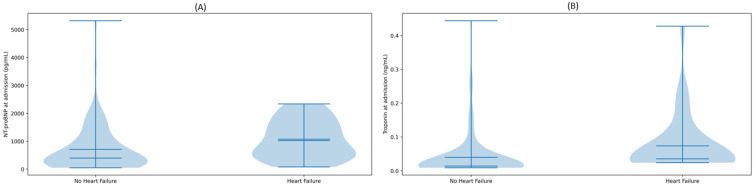 Figure 1
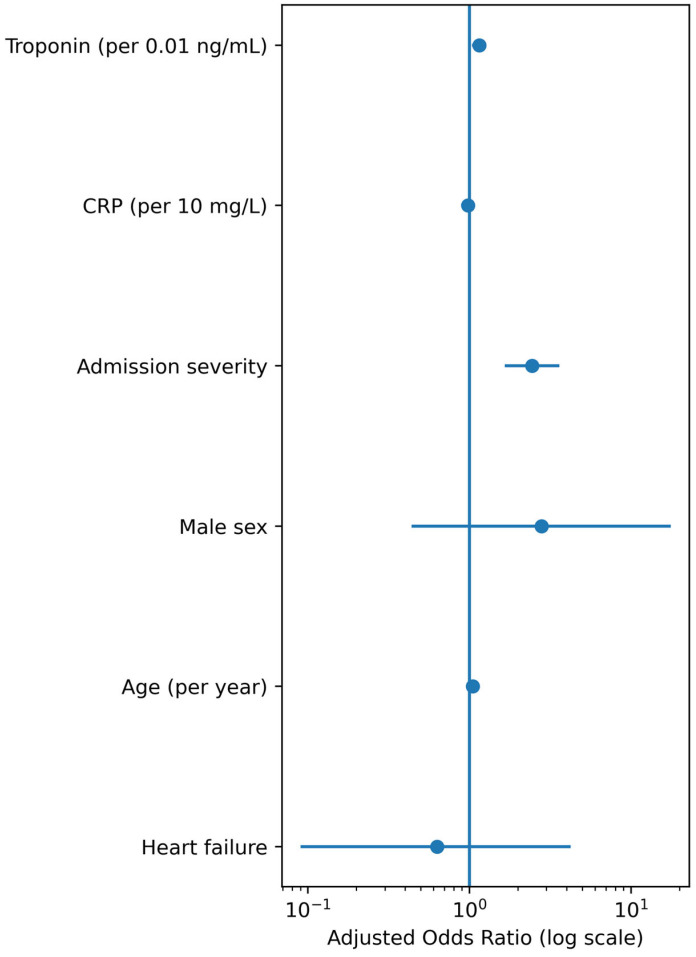 Figure 2
Peer Reviews
No public reviews on file for this paper yet. If you reviewed it on a platform where reviews are public (OpenReview, ICLR, NeurIPS, ICML), you can paste yours below so the community can read it here.
Videos
No videos yet. Explain this paper in a talk, walkthrough, or lecture? Add one.
Taxonomy
TopicsCOVID-19 Clinical Research Studies · Sepsis Diagnosis and Treatment · Long-Term Effects of COVID-19