sFlt-1/PlGF Ratio as a Central Biomarker for Preeclampsia and Perinatal Outcomes: A Multisystem Retrospective Cohort Study
Anca Tătaru-Copos, Anca Carmen Huniadi, Rodica Georgeta Negrini, Mircea Ioachim Popescu, Paula Trif, Gelu Florin Murvai, Radu Galiș, Cristian Sava, Florin Szasz, Romina Viorela Murvai

TL;DR
This study shows that the sFlt-1/PlGF ratio is a strong biomarker for preeclampsia and can predict poor maternal and neonatal outcomes.
Contribution
The study demonstrates the sFlt-1/PlGF ratio's dual role in diagnosing preeclampsia and predicting perinatal outcomes.
Findings
The sFlt-1/PlGF ratio was significantly higher in preeclamptic women compared to controls.
Higher sFlt-1/PlGF ratios were linked to earlier delivery, lower birth weight, and neonatal ICU admission.
The ratio showed good diagnostic accuracy with a high negative predictive value.
Abstract
Background: Preeclampsia is a major cause of maternal and perinatal morbidity, characterized by placental dysfunction and angiogenic imbalance. The soluble fms-like tyrosine kinase-1-to-placental growth factor (sFlt-1/PlGF) ratio has emerged as a promising biomarker for preeclampsia; however, its prognostic value for maternal and neonatal outcomes remains incompletely defined. Methods: This retrospective cohort study included 320 pregnant women, of whom 68 were diagnosed with preeclampsia, and 252 served as non-preeclamptic controls. Maternal serum sFlt-1 and PlGF levels were measured after 20 weeks of gestation at the time of clinical evaluation for suspected hypertensive disorders of pregnancy. Group comparisons, effect size analysis, receiver operating characteristic (ROC) curve analysis, and multivariable regression models were used to assess diagnostic performance and associations…
Genes, proteins, chemicals, diseases, species, mutations and cell lines named across the full text — each resolved to its canonical identifier and authoritative record.
Click any figure to enlarge with its caption.
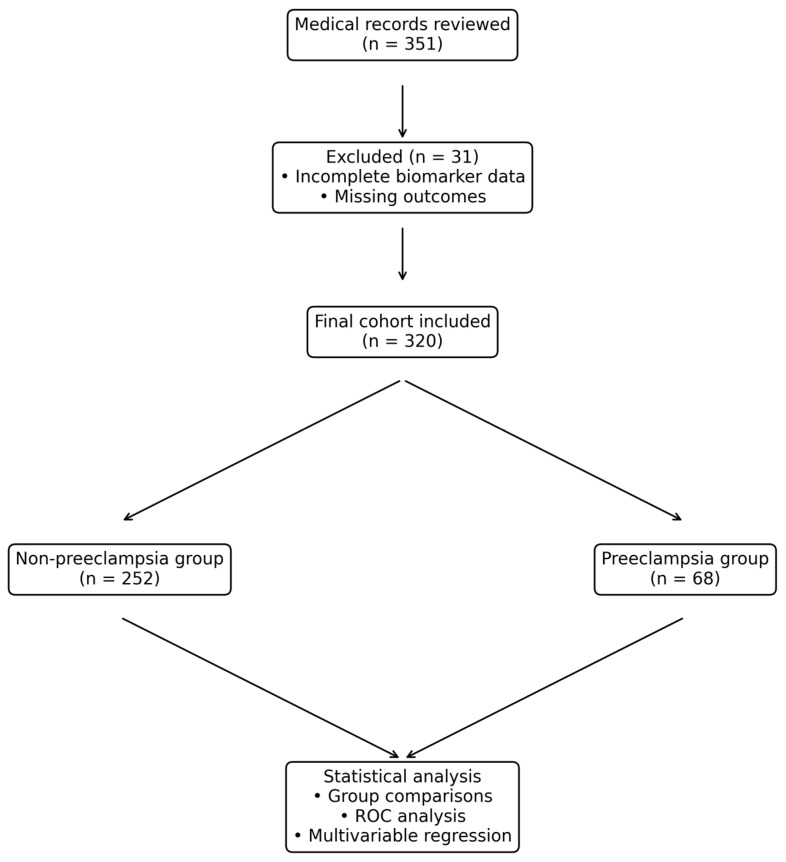 Figure 1
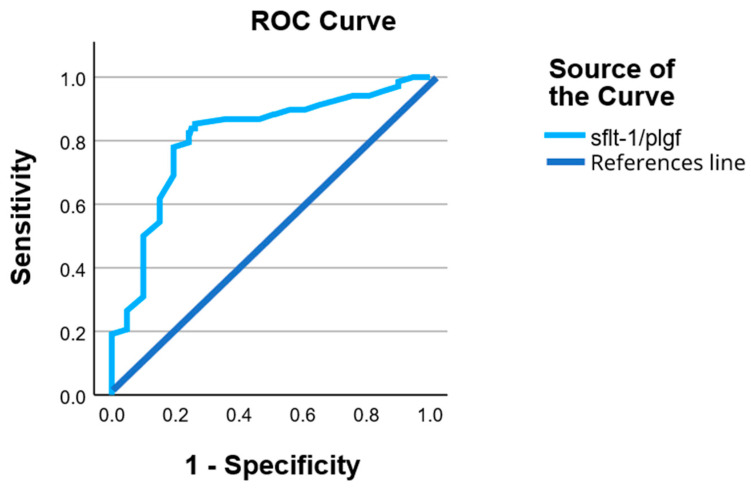 Figure 2
Peer Reviews
No public reviews on file for this paper yet. If you reviewed it on a platform where reviews are public (OpenReview, ICLR, NeurIPS, ICML), you can paste yours below so the community can read it here.
Videos
No videos yet. Explain this paper in a talk, walkthrough, or lecture? Add one.
Taxonomy
TopicsPregnancy and preeclampsia studies · Reproductive System and Pregnancy · Maternal and fetal healthcare