Phytochemistry and In Vitro Bioactivities of Elaeagnus angustifolia L. Leaves: Influence of Solvent Polarity, Antioxidant Properties, and α-Amylase Inhibition
Rayene Bouaita, Randa Djemil, Samira Bouhalit, Sabrina Lekmine, Ouided Benslama, Saber Boutellaa, Nabil Touzout, Gema Nieto, Ivan Mustać, Gabrijel Ondrašek, Muhammad Imtiaz Rashid

TL;DR
This study explores how different solvents affect the extraction of bioactive compounds from Elaeagnus angustifolia leaves and their potential as natural antidiabetic agents.
Contribution
The study identifies solvent-specific phytochemical profiles and evaluates antioxidant and α-amylase inhibition activities in Elaeagnus angustifolia leaf extracts.
Findings
Hydroethanolic extract had the highest yield (18.00%) and strong antioxidant activity.
n-Hexane extract showed the highest α-amylase inhibition (IC50 = 36.70 µg/mL), better than acarbose.
Rutin, chlorogenic acid, and chicoric acid were identified as potential α-amylase inhibitors via molecular docking.
Abstract
This study investigated the effect of solvent polarity on extraction yield, phytochemical composition, antioxidant activity, and α-amylase inhibition of Elaeagnus angustifolia L. leaf extracts to evaluate their antidiabetic potential. Extraction yields varied with solvent polarity, with the hydroethanolic extract showing the highest (18.00%) and n-hexane the lowest (0.05%) yield. The n-butanol and ethyl acetate fractions contained the most phenolics (309.05 and 290.97 mg GAE/g), ethyl acetate was the richest in flavonoids (102.11 mg QE/g), and tannins were concentrated in dichloromethane (66.24 mg CE/g). HPLC revealed solvent-specific profiles: rutin and gallic acid dominated in n-butanol, quercetin in ethyl acetate, and 4-hydroxybenzoic and ferulic acids in dichloromethane, while chicoric acid appeared in hydroethanolic and n-hexane extracts. Antioxidant assays (DPPH, ABTS, and FRAP)…
Genes, proteins, chemicals, diseases, species, mutations and cell lines named across the full text — each resolved to its canonical identifier and authoritative record.
Click any figure to enlarge with its caption.
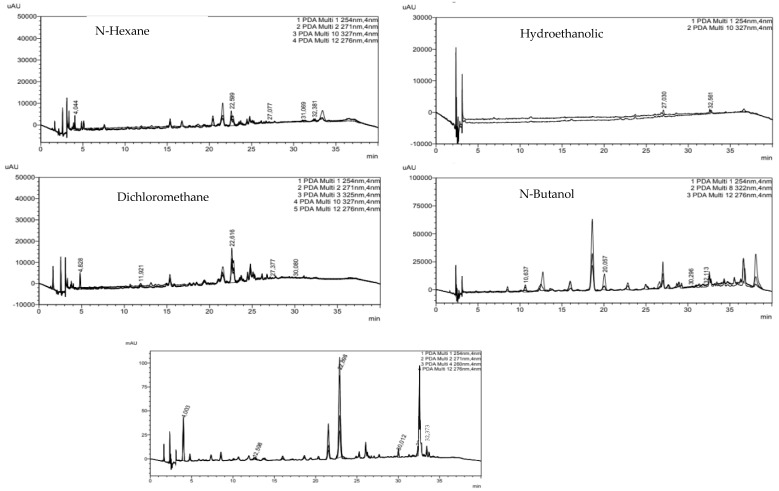 Figure 1
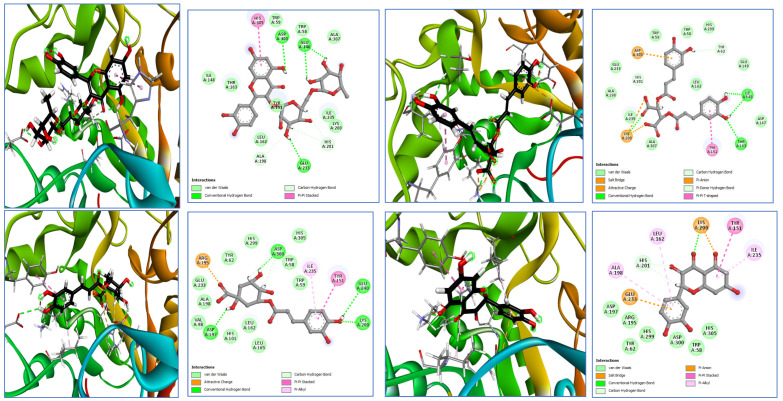 Figure 2
Peer Reviews
No public reviews on file for this paper yet. If you reviewed it on a platform where reviews are public (OpenReview, ICLR, NeurIPS, ICML), you can paste yours below so the community can read it here.
Videos
No videos yet. Explain this paper in a talk, walkthrough, or lecture? Add one.
Taxonomy
TopicsPhytochemical and Pharmacological Studies · Cynara cardunculus studies · Phytochemicals and Antioxidant Activities