Integrative Analysis of lncRNA–RBP (RNA-Binding Protein) Regulatory Networks Reveals Molecular Targets for Enhancing Zea mays Resistance to Aspergillus flavus and Aflatoxin Contamination
Ramya Parakkunnel, Bhojaraja Naik Keshava, Manjanagouda Siddanagouda Sannagoudar, Samudrala Prashant Jeevan Kumar, Kuldip Jayaswall, Aravindan Sundaram, Anandan Annamalai

TL;DR
This study explores how lncRNAs and RNA-binding proteins interact in maize to resist Aspergillus flavus infection and aflatoxin contamination.
Contribution
The study identifies novel lncRNA–RBP interactions and molecular targets for improving maize resistance to fungal infection.
Findings
461 lncRNAs were differentially expressed in maize under A. flavus infection.
lncRNA1–BPB complex showed the highest binding affinity in docking simulations.
lncRNAs function as decoys or precursors of stress-responsive miRNAs like zma-miR156 and zma-miR399.
Abstract
Aspergillus flavus infection and accumulation of carcinogenic aflatoxins are detrimental to maize (Zea mays) production and consumption. We investigated lncRNA–RBP interactions during maize–A. flavus crosstalk using transcriptomic profiling, structural analysis, molecular docking simulations, and machine learning approaches. Analysis of 18 RNA-seq datasets identified 2104 lncRNAs in maize, of which 461 were differentially expressed under A. flavus infection. Distinct lncRNAs were preferentially induced under infection (e.g., Zm00001eb303170) or normal germination (e.g., Zm00001eb144150, Zm00001eb406410). RNA secondary structure predictions indicated high structural heterogeneity and thermodynamic stability, consistent with dynamic regulatory potential. Docking simulations with six key RNA binding proteins (RBPs)—including branch point bridging protein (BPB), KH domain protein, and…
Genes, proteins, chemicals, diseases, species, mutations and cell lines named across the full text — each resolved to its canonical identifier and authoritative record.
Click any figure to enlarge with its caption.
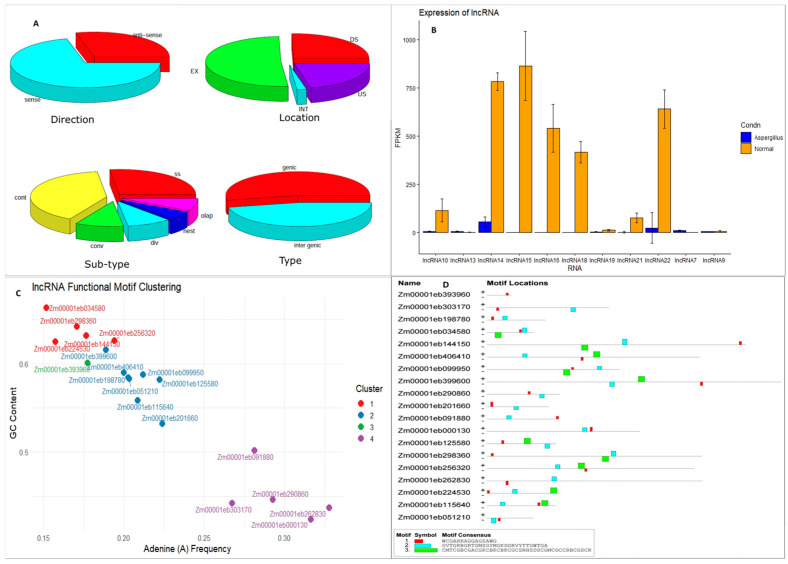 Figure 1
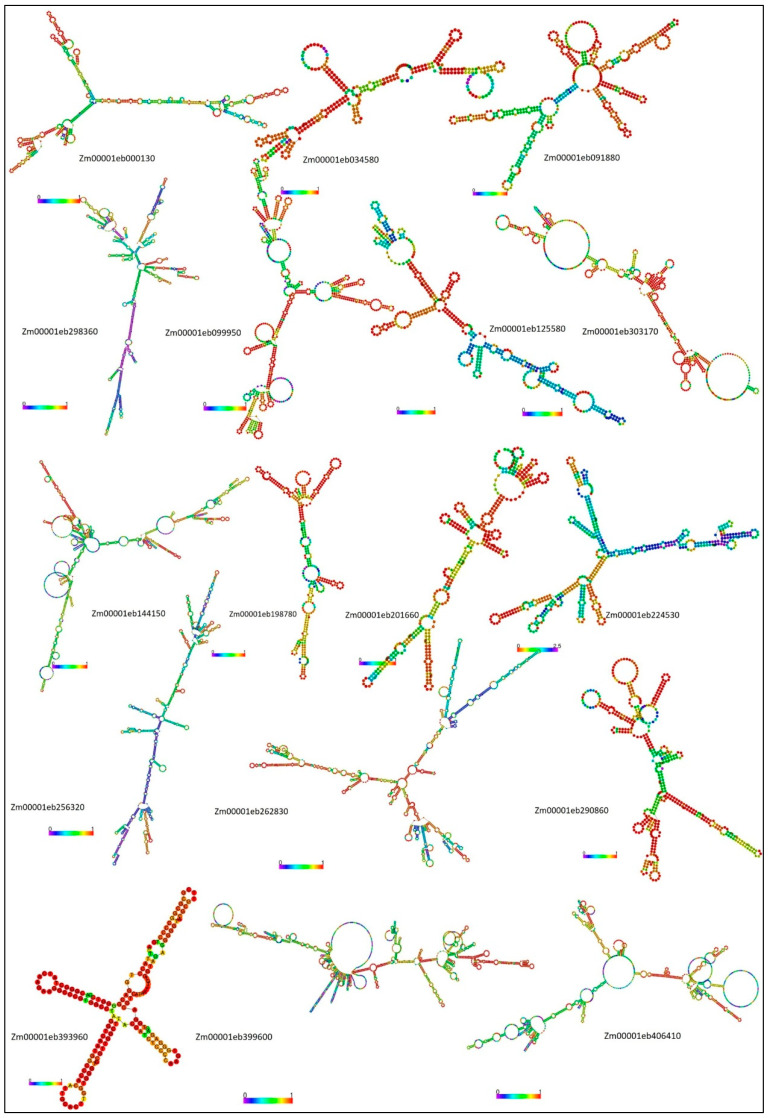 Figure 2
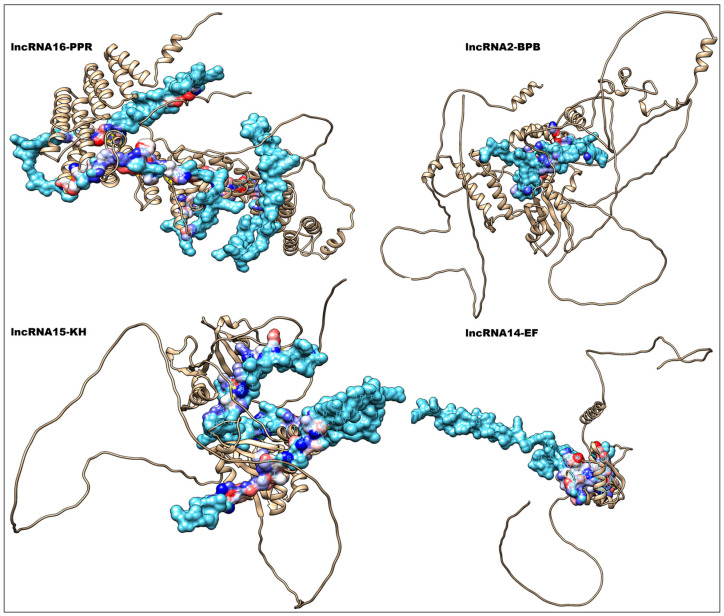 Figure 3
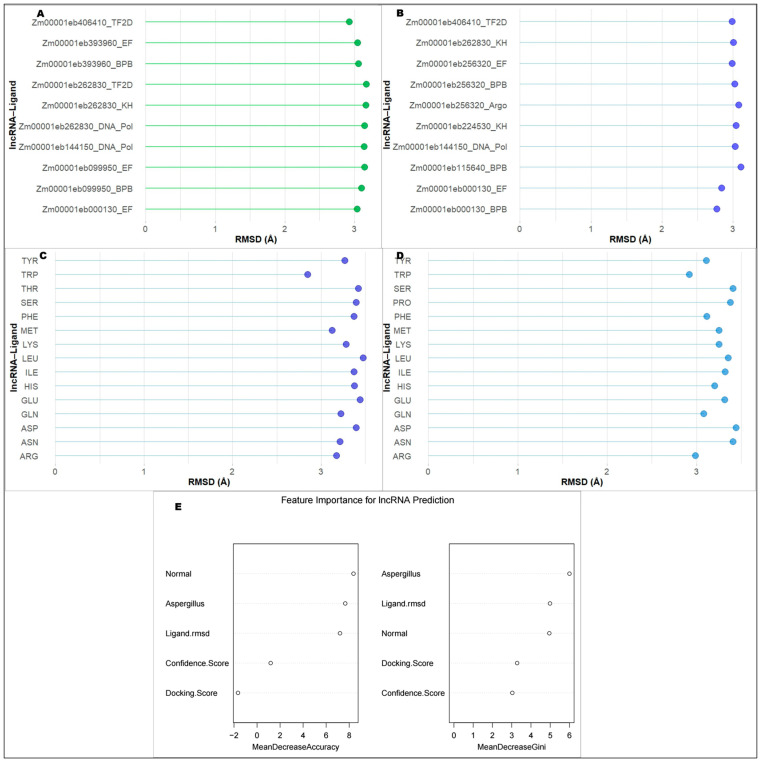 Figure 4
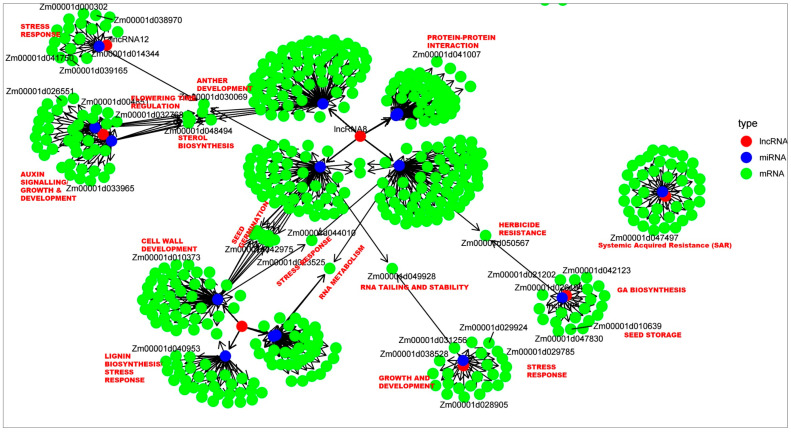 Figure 5
Peer Reviews
No public reviews on file for this paper yet. If you reviewed it on a platform where reviews are public (OpenReview, ICLR, NeurIPS, ICML), you can paste yours below so the community can read it here.
Videos
No videos yet. Explain this paper in a talk, walkthrough, or lecture? Add one.
Taxonomy
TopicsPlant Molecular Biology Research · Fungal and yeast genetics research · Plant-Microbe Interactions and Immunity