Minimally Invasive Mitrofanoff in Children: Versatile Laparoscopic Strategies—From Low-Resource to Non-Robotic High-Cost Settings in an Exploratory Case Series
Elisa Cerchia, Marta Serpentino, Viet Nguyen Duy, Lorenzo Cirigliano, Massimo Catti, Elena Ruggiero, Quang Thanh Nguyen, Paolo Caione, Simona Gerocarni Nappo

TL;DR
This study explores laparoscopic techniques for Mitrofanoff surgery in children, showing they are effective and accessible alternatives to robotic surgery, especially in low-resource settings.
Contribution
The paper introduces laparoscopic and laparoscopic-assisted Mitrofanoff techniques as cost-effective and feasible alternatives to robotic surgery in pediatric urology.
Findings
Laparoscopic Mitrofanoff had longer operative times but similar functional outcomes compared to laparoscopic-assisted Mitrofanoff.
Both techniques provided excellent continence and cosmetic satisfaction in children.
Laparoscopic approaches are viable in resource-limited settings, offering high-quality care without robotic systems.
Abstract
Background/Objectives: The Mitrofanoff appendicovesicostomy (MAV) is the gold standard for creating a continent catheterizable channel in children unable to perform clean intermittent catheterization (CIC) through the native urethra. Minimally invasive surgery has progressively replaced open techniques in pediatric urology, offering improved recovery and favorable cosmetic outcomes, and robotic-assisted Mitrofanoff has gained popularity in recent years. However, the high costs and limited availability of robotic systems create disparities in access to pediatric urologic reconstruction, particularly in low- and middle-income countries. In this context, the laparoscopic Mitrofanoff (MAV-L) and the laparoscopic-assisted Mitrofanoff (MAV-LA) represent practical, cost-effective alternatives, valuable in institutions without robotic platforms or in resource-limited settings. Recent evidence…
Genes, proteins, chemicals, diseases, species, mutations and cell lines named across the full text — each resolved to its canonical identifier and authoritative record.
Click any figure to enlarge with its caption.
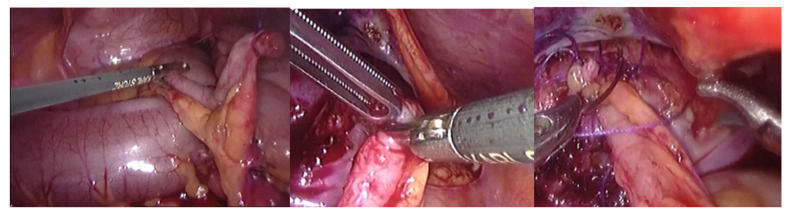 Figure 1
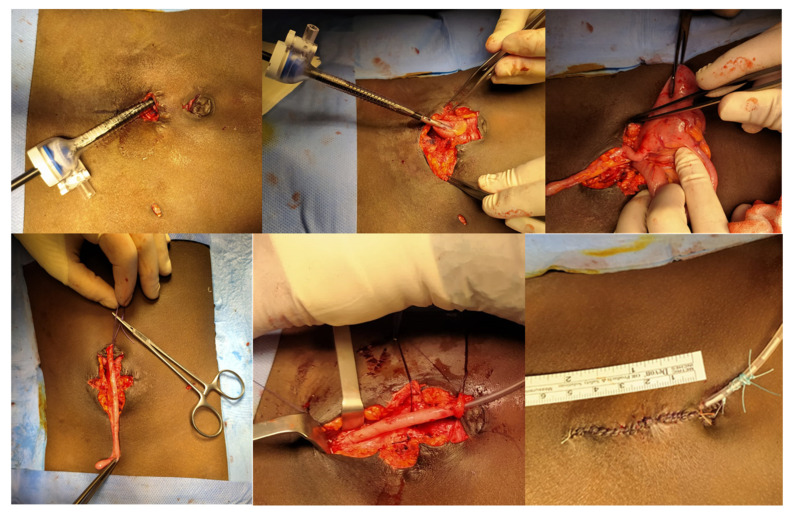 Figure 2
Peer Reviews
No public reviews on file for this paper yet. If you reviewed it on a platform where reviews are public (OpenReview, ICLR, NeurIPS, ICML), you can paste yours below so the community can read it here.
Videos
No videos yet. Explain this paper in a talk, walkthrough, or lecture? Add one.
Taxonomy
TopicsUreteral procedures and complications · Bladder and Urothelial Cancer Treatments · Pediatric Urology and Nephrology Studies