Astroglial and Neuronal Injury Markers (GFAP, UCHL-1, NfL, Tau, S100B) as Diagnostic and Prognostic Biomarkers in PTSD and Neurological Disorders
Ewa Alicja Ogłodek, Michal Bar

TL;DR
This paper explores how specific brain injury markers can help diagnose and monitor PTSD and related neurological conditions.
Contribution
The paper highlights the combined use of astroglial and neuronal biomarkers for a biologically grounded approach to PTSD.
Findings
GFAP and S100B indicate astrocyte activation and BBB permeability in PTSD.
UCHL-1, NfL, and tau reflect neuronal injury and axonal degeneration.
Altered biomarker levels correlate with symptom severity and neuroinflammation in PTSD.
Abstract
Post-traumatic stress disorder (PTSD) is increasingly recognized as a neurobiological condition involving persistent neuroinflammation, glial dysfunction, and neuronal injury. Chronic stress induces dysregulation of the hypothalamic–pituitary–adrenal axis, mitochondrial impairment, oxidative stress, and activation of inflammatory signaling pathways, leading to blood–brain barrier (BBB) disruption and progressive neural damage. These processes are reflected in circulating biomarkers that provide insight into underlying molecular pathology. This article focuses on key astroglial and neuronal injury markers—glial fibrillary acidic protein (GFAP), ubiquitin C-terminal hydrolase L1 (UCHL-1), neurofilament light chain (NfL), tau protein, and S100B—as indicators of stress-related brain dysfunction in PTSD. GFAP and S100B reflect astrocyte activation and BBB permeability, while UCHL-1, NfL, and…
Genes, proteins, chemicals, diseases, species, mutations and cell lines named across the full text — each resolved to its canonical identifier and authoritative record.
Click any figure to enlarge with its caption.
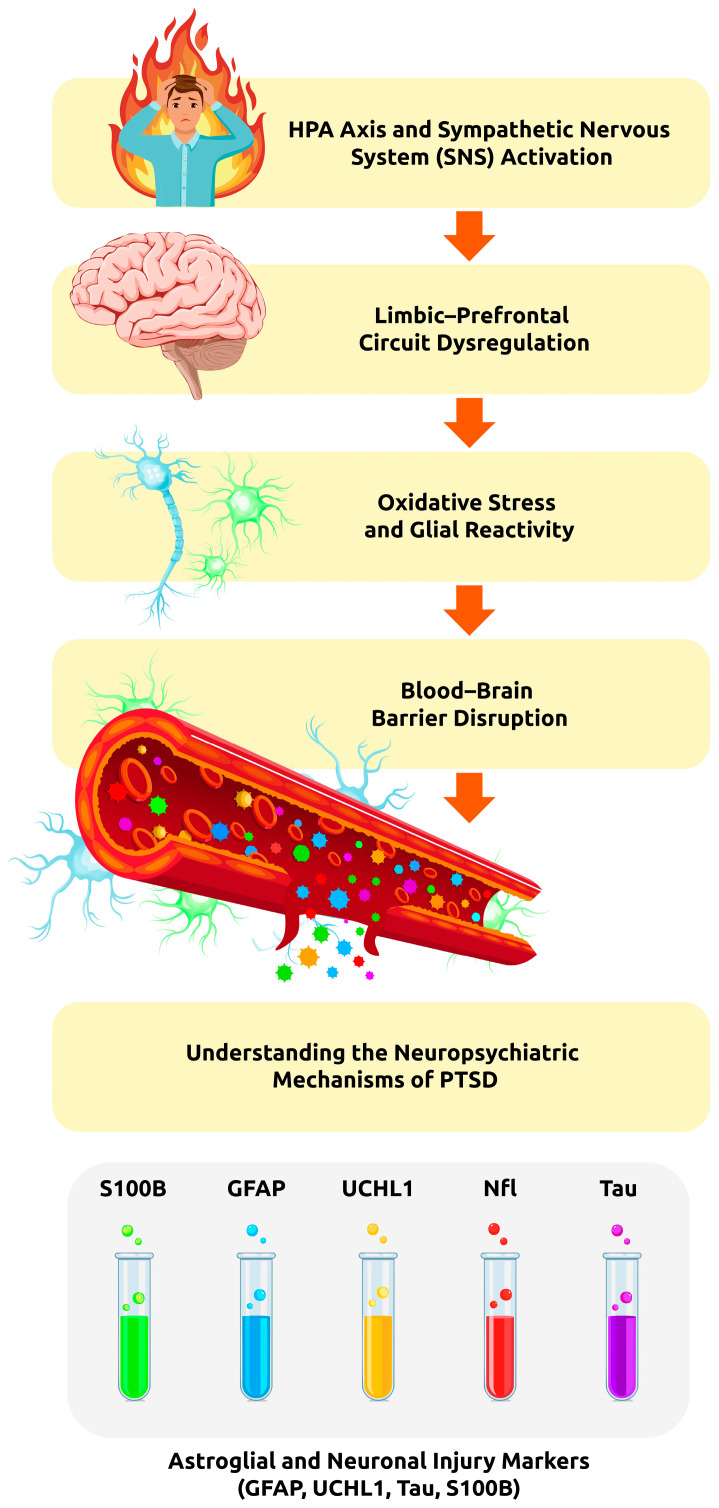 Figure 1
Peer Reviews
No public reviews on file for this paper yet. If you reviewed it on a platform where reviews are public (OpenReview, ICLR, NeurIPS, ICML), you can paste yours below so the community can read it here.
Videos
No videos yet. Explain this paper in a talk, walkthrough, or lecture? Add one.
Taxonomy
TopicsTryptophan and brain disorders · S100 Proteins and Annexins · Posttraumatic Stress Disorder Research