The Contribution of Massively Parallel Sequencing in Disclosing Unusual Tri- and Tetra-Allelic Type Patterns Detected at the Multicopy Loci DYS385a/b and DYF387S1
Chiara Saccardo, Domenico De Leo, Stefania Turrina

TL;DR
This paper shows how sequencing technology can reveal complex genetic patterns at specific Y-chromosome regions that traditional methods might miss.
Contribution
The study presents the first detection of a novel tetra-allelic pattern at the DYF387S1 locus using massively parallel sequencing.
Findings
MPS identified tri-allelic patterns at DYS385a/b and DYF387S1 in two DNA samples.
A new tetra-allelic pattern was detected at DYF387S1 with an isoallele showing double read counts.
MPS provides more accurate interpretation of complex Y-STR patterns compared to capillary electrophoresis.
Abstract
Atypical allelic patterns with additional alleles at multicopy Y-short tandem repeats (Y-STRs), such as DYS385a/b and DYF387S1, mainly arise from duplication or gene conversion events occurring in the palindromic regions of the Y chromosome where these markers are located. Although rarely encountered in forensic genetics, these allelic patterns require accurate deconvolution of the single allelic components to ensure correct genotype interpretation. Capillary electrophoresis (CE), the standard method for STR typing, infers multiallelic Y-STR genotypes through intra-locus and intra-color peak height ratios. However, this approach may be insufficient when the pattern includes isoalleles (alleles identical in length but differing in sequence), potentially leading to an underestimation of the number of alleles and therefore the true allelic configuration. Massively parallel sequencing (MPS)…
Genes, proteins, chemicals, diseases, species, mutations and cell lines named across the full text — each resolved to its canonical identifier and authoritative record.
Click any figure to enlarge with its caption.
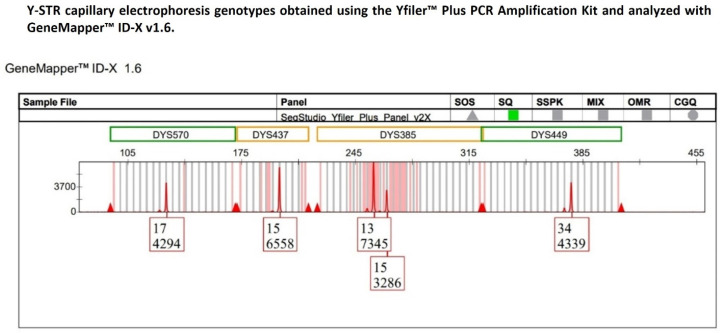 Figure 1
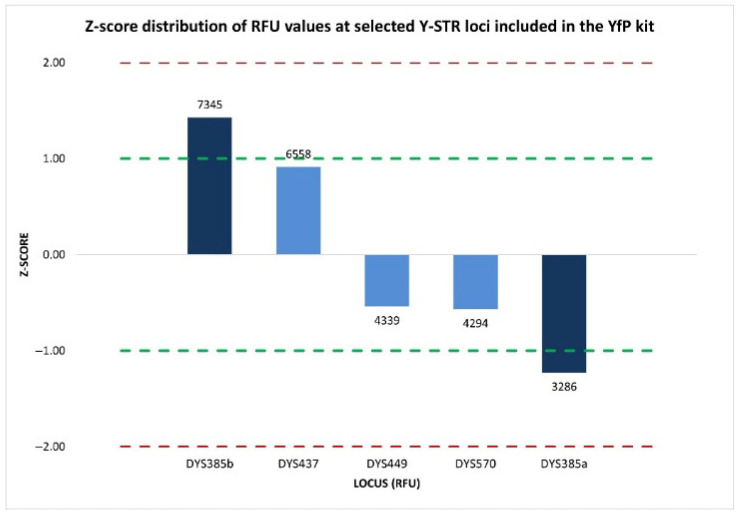 Figure 2
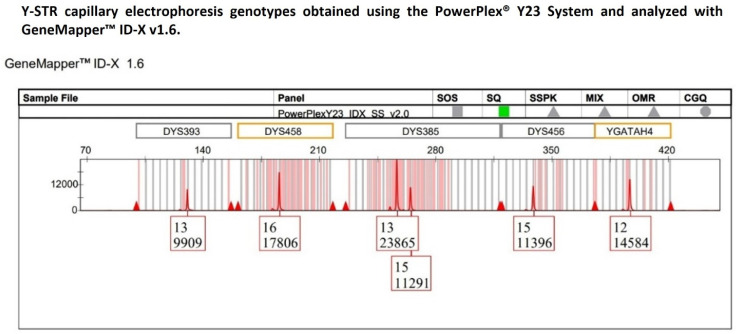 Figure 3
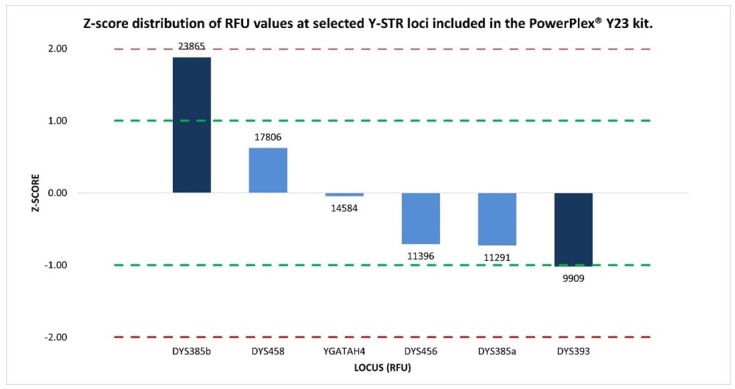 Figure 4
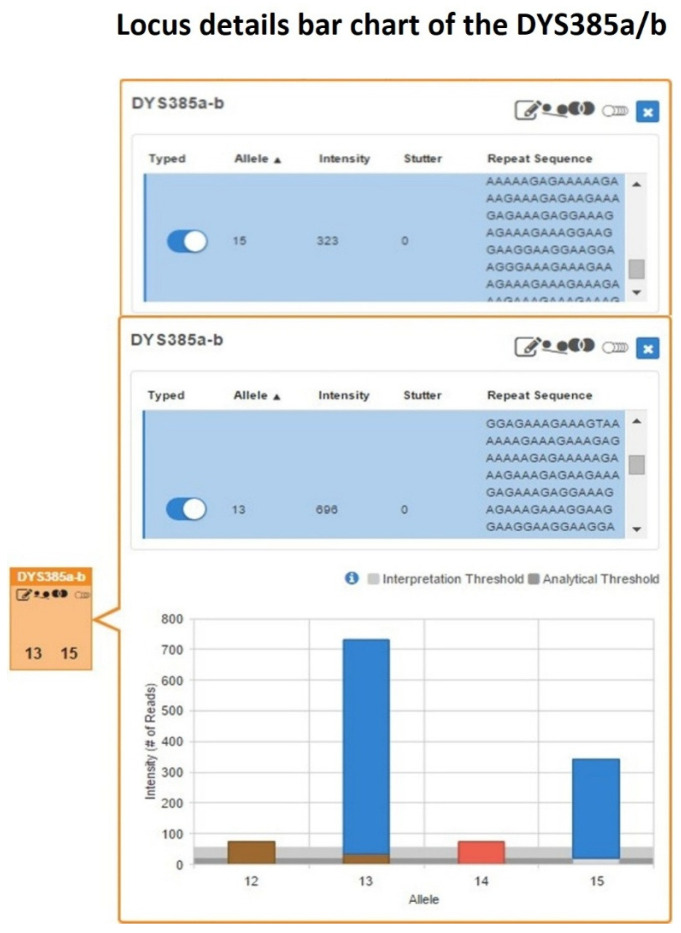 Figure 5
 Figure 6
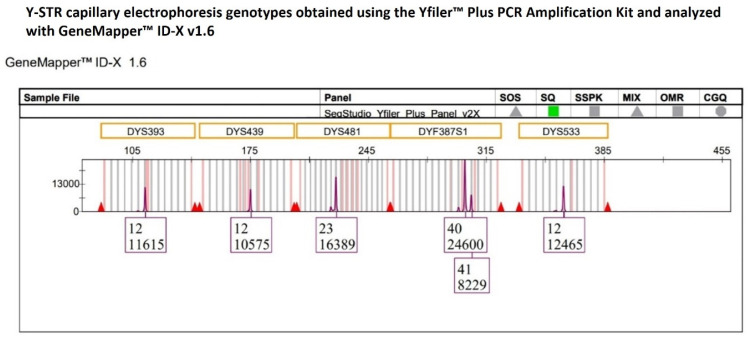 Figure 7
 Figure 8
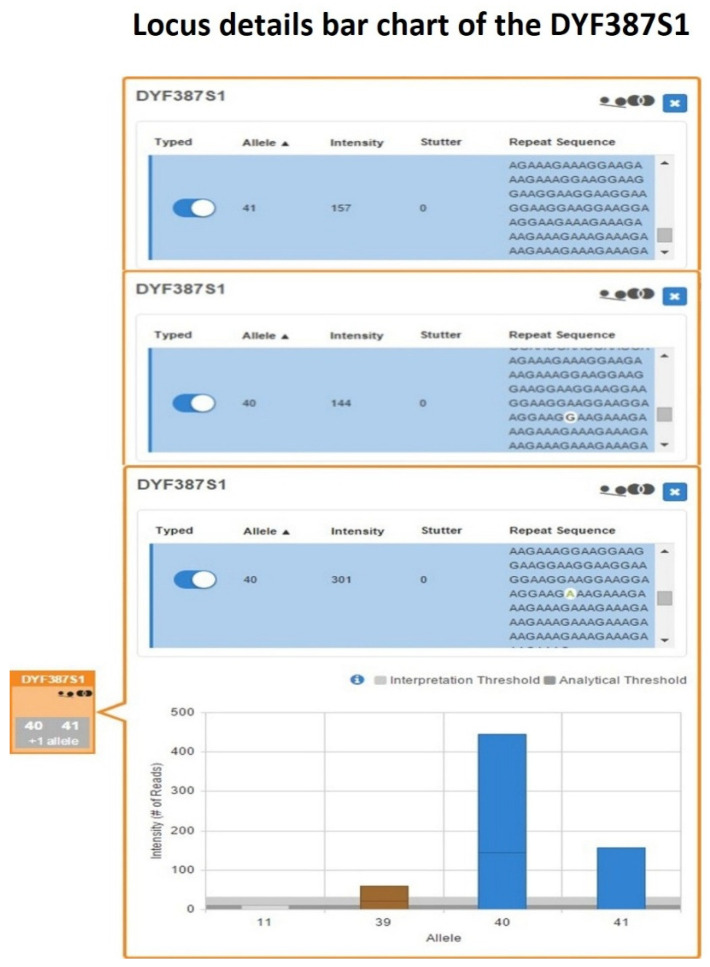 Figure 9
 Figure 10
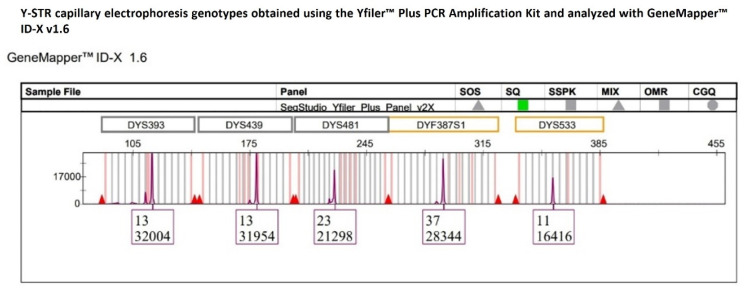 Figure 11
 Figure 12
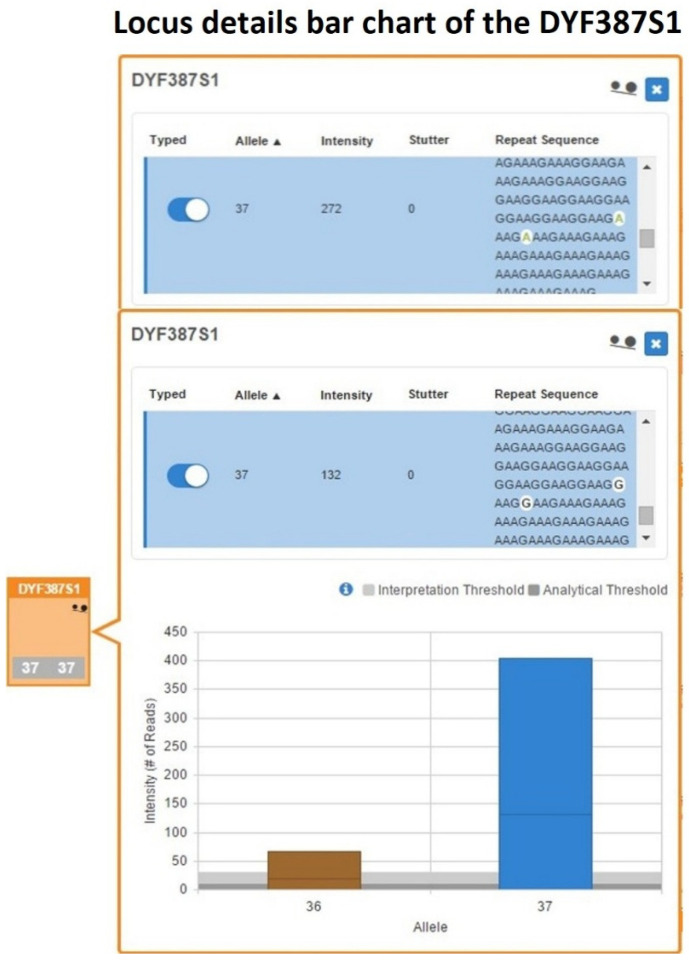 Figure 13
 Figure 14
Peer Reviews
No public reviews on file for this paper yet. If you reviewed it on a platform where reviews are public (OpenReview, ICLR, NeurIPS, ICML), you can paste yours below so the community can read it here.
Videos
No videos yet. Explain this paper in a talk, walkthrough, or lecture? Add one.
Taxonomy
TopicsForensic and Genetic Research · Molecular Biology Techniques and Applications · Genetic Associations and Epidemiology