Mechanisms, Management and Prognosis of Paraneoplastic Hypercalcemia in Penile Squamous Cell Carcinoma: A Structured Review
Andrei Andreșanu, Constantin Gîngu, Mihaela Roxana Oliță, Mihai Adrian Dobra, Bogdan Marian Sorohan, Bogdan Obrișcă, Dragoș Eugen Georgescu, Mihai Adrian Eftimie, Ioanel Sinescu

TL;DR
This review examines the causes, treatment, and outcomes of a rare condition called paraneoplastic hypercalcemia in penile cancer, highlighting its severity and the need for early intervention.
Contribution
The paper provides a structured review of a rare condition in penile cancer, offering insights into its mechanisms and management.
Findings
Severe hypercalcemia occurred in two-thirds of cases, with a median calcium level of 15.45 mg/dL.
Two main mechanisms were identified: PTHrP-mediated and bone metastasis-associated hypercalcemia.
Median overall survival was 9 weeks after hypercalcemia diagnosis, indicating poor prognosis.
Abstract
Background and Objectives: Paraneoplastic hypercalcemia represents a rare but clinically significant complication of penile squamous cell carcinoma (PSCC); however, limited information is available for this condition. Therefore, this systematically conducted narrative review aimed to comprehensively evaluate the pathophysiological mechanisms, clinical presentation, therapeutic strategies and prognostic outcomes of tumor-induced hypercalcemia in PSCC. Methods: A comprehensive literature search was conducted across PubMed/MEDLINE and Scopus databases from their inception to December 2024. Cases were included if they documented histopathologically confirmed PSCC with biochemically verified hypercalcemia and objective evidence of paraneoplastic etiology. Data extraction included tumor characteristics, severity of hypercalcemia, mechanistic classification, therapeutic interventions and…
Genes, proteins, chemicals, diseases, species, mutations and cell lines named across the full text — each resolved to its canonical identifier and authoritative record.
Click any figure to enlarge with its caption.
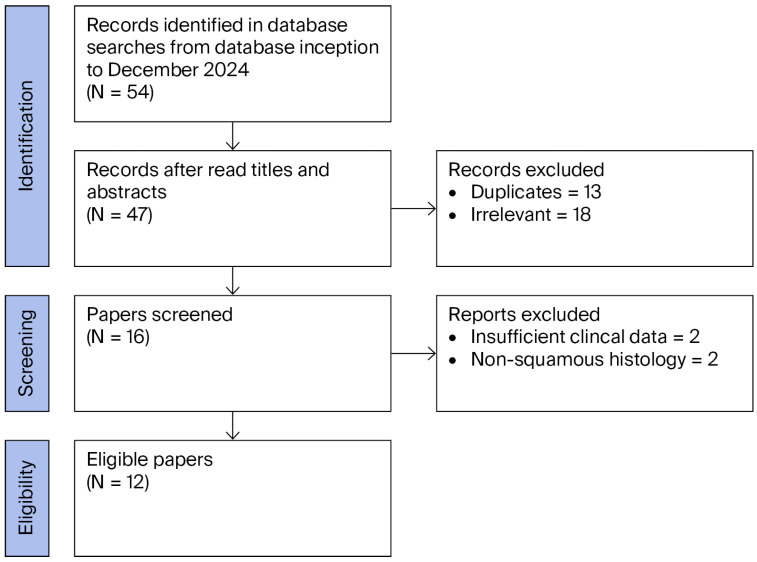 Figure 1
Peer Reviews
No public reviews on file for this paper yet. If you reviewed it on a platform where reviews are public (OpenReview, ICLR, NeurIPS, ICML), you can paste yours below so the community can read it here.
Videos
No videos yet. Explain this paper in a talk, walkthrough, or lecture? Add one.
Taxonomy
TopicsGenital Health and Disease · Bone health and treatments · Cancer Diagnosis and Treatment