Efficient Microwave-Assisted Palladium-Catalyzed Selective N-Arylation of Anilines with 2,3-Dihalopyridines in Water
Hao-Chun Hu, Cheng-Yi Chen, Shyh-Chyun Yang

TL;DR
This paper presents a green method for forming C–N bonds using microwave-assisted palladium catalysis in water, achieving high yields for N-arylation of anilines with 2,3-dihalopyridines.
Contribution
A novel microwave-assisted palladium-catalyzed N-arylation method in water with high efficiency and regioselectivity.
Findings
The optimized catalyst system achieved up to 91% yield for aminopyridine products.
The method works with various 2,3-dihalopyridines and substituted anilines, showing good regioselectivity.
The reaction mechanism follows a Pd(0)/Pd(II) cycle involving oxidative addition and reductive elimination.
Abstract
Under aqueous conditions, transition-metal catalysis offers an attractive platform for greener C–N bond formation by reducing reliance on hazardous organic solvents. Herein, we report a microwave-assisted palladium-catalyzed selective N-arylation of anilines with 2,3-dihalopyridines in water. Systematic optimization revealed that a catalyst system comprising PdCl2(1,10-phenanthroline)2 and (±)-BINAP in the presence of K3PO4 enables efficient coupling under microwave irradiation. Under the optimized conditions (PdCl2(1,10-Phenanthroline)2, 2 mol%; (±)-BINAP, 3 mol%; K3PO4, 3.5 equiv; H2O, 2.5 mL; 150 °C; 30 min), the coupling of aniline with 2,3-dichloropyridine afforded the corresponding aminopyridine product in up to 91% isolated yield. The method was extended to various 2,3-dihalopyridines and substituted anilines, providing moderate to excellent yields with good regioselectivity.…
Genes, proteins, chemicals, diseases, species, mutations and cell lines named across the full text — each resolved to its canonical identifier and authoritative record.
Click any figure to enlarge with its caption.
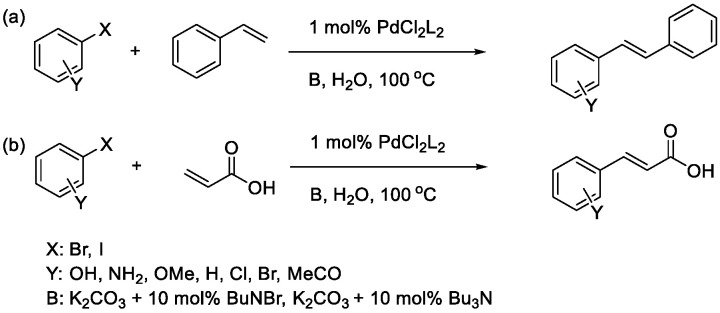 Figure 1
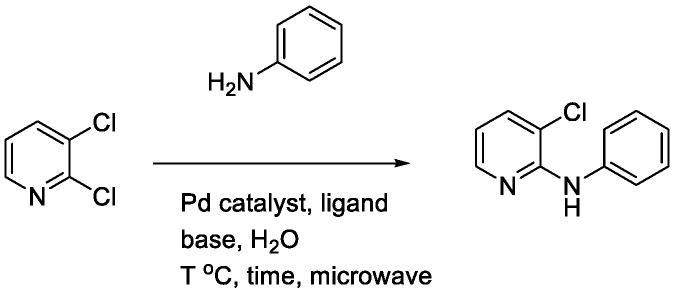 Figure 2
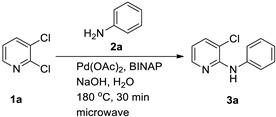 Figure 3
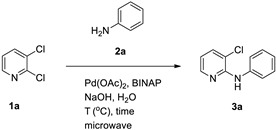 Figure 4
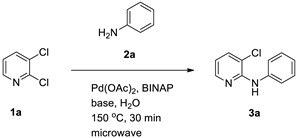 Figure 5
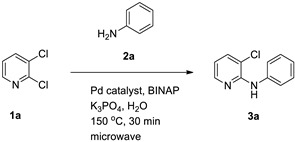 Figure 6
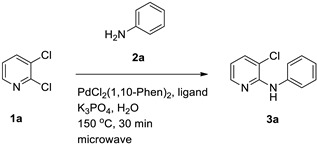 Figure 7
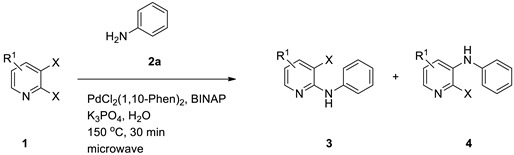 Figure 8
 Figure 9
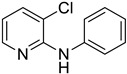 Figure 10
 Figure 11
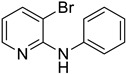 Figure 12
 Figure 13
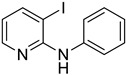 Figure 14
 Figure 15
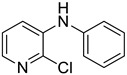 Figure 16
 Figure 17
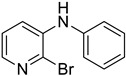 Figure 18
 Figure 19
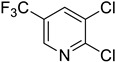 Figure 20
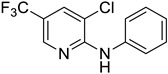 Figure 21
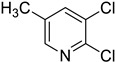 Figure 22
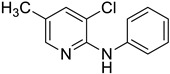 Figure 23
 Figure 24
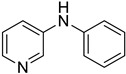 Figure 25
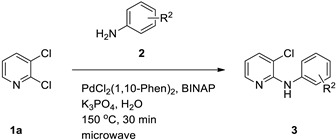 Figure 26
Peer Reviews
No public reviews on file for this paper yet. If you reviewed it on a platform where reviews are public (OpenReview, ICLR, NeurIPS, ICML), you can paste yours below so the community can read it here.
Videos
No videos yet. Explain this paper in a talk, walkthrough, or lecture? Add one.
Taxonomy
TopicsCatalytic C–H Functionalization Methods · Catalytic Cross-Coupling Reactions · Sulfur-Based Synthesis Techniques