C282Y Homozygosity Increases Erythrocyte Turnover and Decreases HbA1c—A Population-Based Study
Rebekka Hillingsø, Alisa Devedzic Kjaergaard, Morten Kranker Larsen, Thomas Mandrup-Poulsen, Henrik Enghusen Poulsen, Mathis Mottelson, Jesper Brix Petersen, Børge Grønne Nordestgaard, Hans Carl Hasselbalch, Stig Egil Bojesen, Jens Helby, Andreas Glenthøj, Christina Ellervik

TL;DR
People with the C282Y/C282Y gene variant have higher red blood cell turnover and lower HbA1c levels due to fewer but larger red blood cells.
Contribution
This study identifies the mechanisms by which HFE genotypes affect HbA1c through erythrocyte turnover and hemoglobin concentration.
Findings
C282Y/C282Y individuals had increased reticulocyte percentage and MCHC, indicating higher erythrocyte turnover.
HbA1c levels were lower in C282Y/C282Y individuals due to fewer but larger red blood cells with more hemoglobin.
The decrease in HbA1c was partially mediated by transferrin saturation, MCHC, and MCV, not by oxidative stress or reticulocyte count.
Abstract
Individuals with C282Y/C282Y in the hemochromatosis HFE gene have increased iron levels, which catalyze the formation of reactive oxygen species, and an increased risk of diabetes. These individuals may have disproportionately lower hemoglobin A1c (HbA1c) due to increased erythrocyte turnover, decreased erythrocyte counts, and/or an increased mean corpuscular hemoglobin concentration (MCHC). In the Copenhagen General Population Study (N = 103,734) and the Danish General Suburban Population Study (GESUS, N = 20,003), we investigated the association between C282Y/C282Y (N = 399) and other HFE genotypes with erythrocyte count, MCHC, mean corpuscular volume (MCV), red cell distribution width (RDW), and high-sensitivity C-reactive protein (hsCRP). In GESUS, we additionally investigated the association with oxidative stress (by 8-oxo-7,8-dihydroguanosine and…
Genes, proteins, chemicals, diseases, species, mutations and cell lines named across the full text — each resolved to its canonical identifier and authoritative record.
Click any figure to enlarge with its caption.
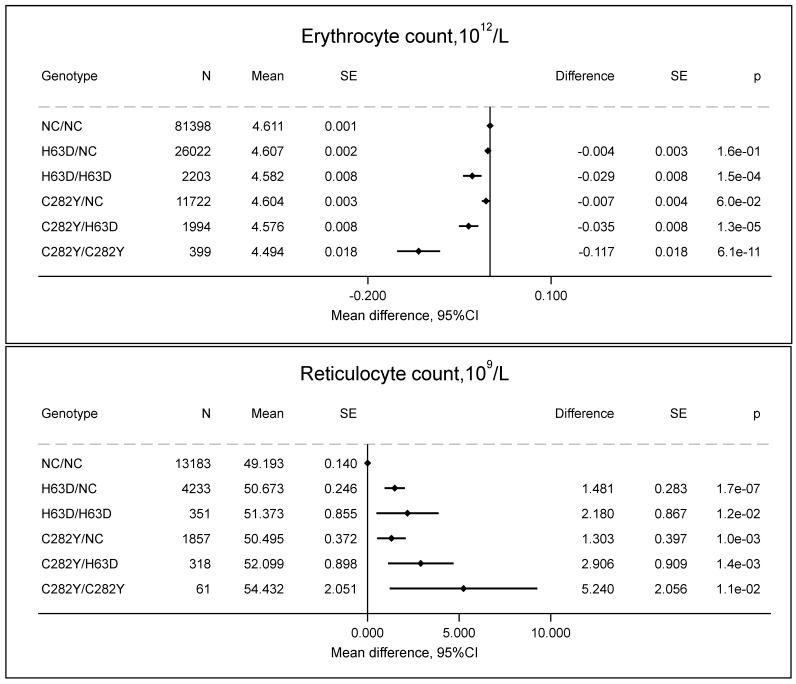 Figure 1
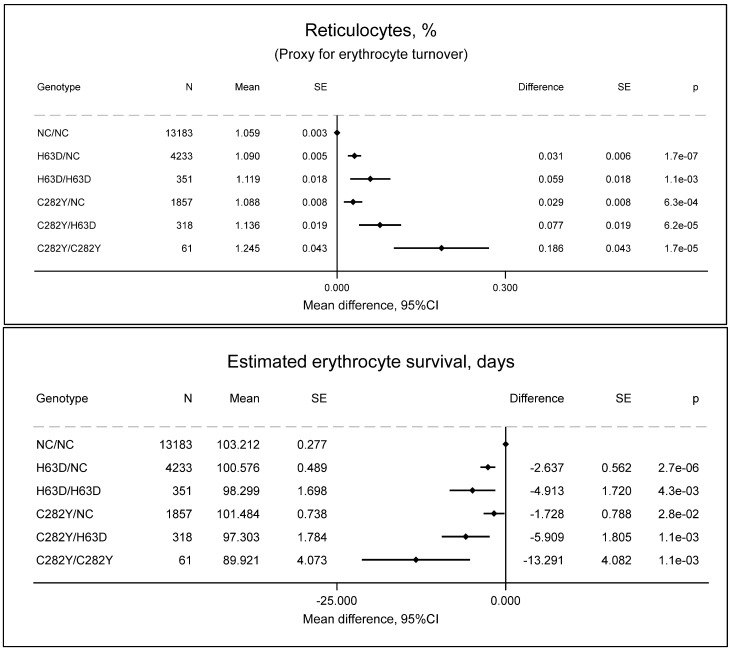 Figure 2
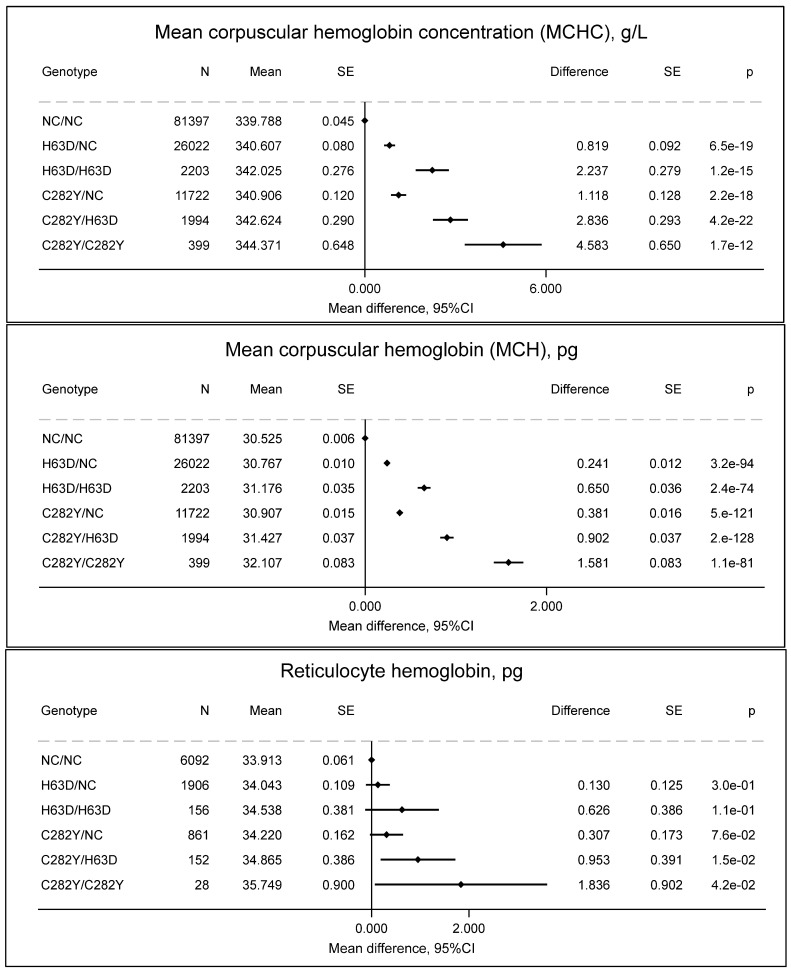 Figure 3
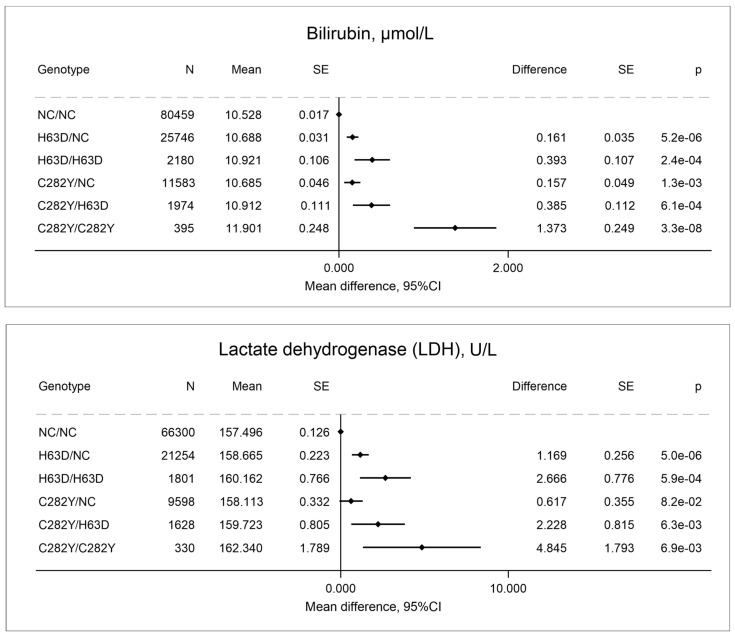 Figure 4
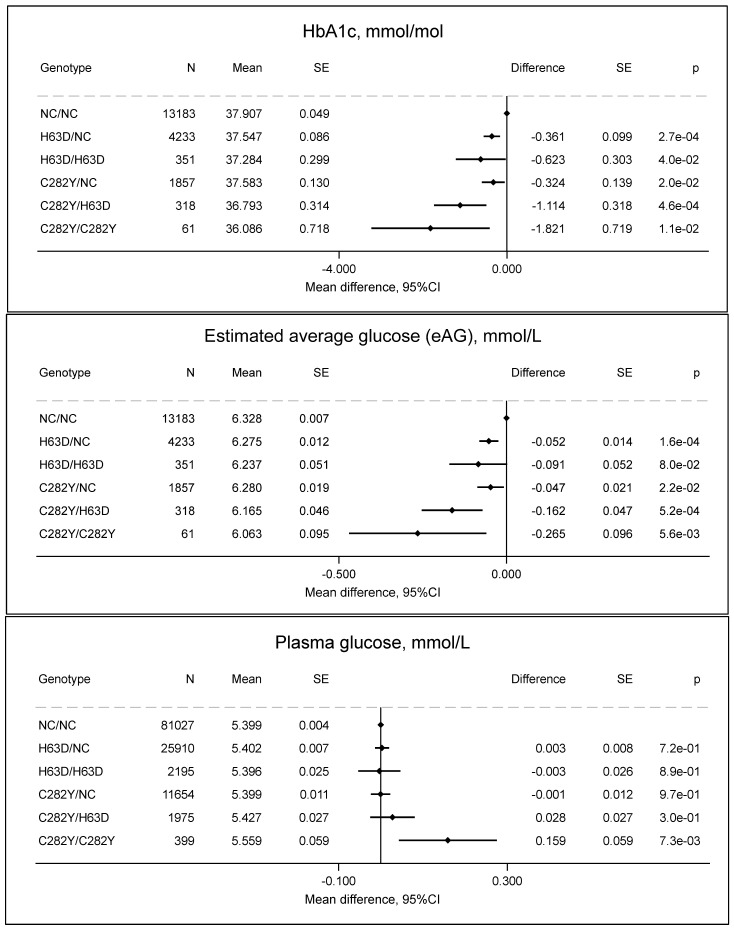 Figure 5
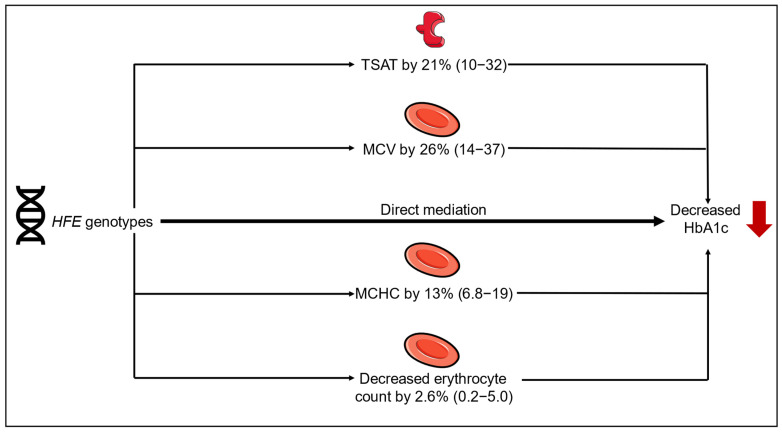 Figure 6
Peer Reviews
No public reviews on file for this paper yet. If you reviewed it on a platform where reviews are public (OpenReview, ICLR, NeurIPS, ICML), you can paste yours below so the community can read it here.
Videos
No videos yet. Explain this paper in a talk, walkthrough, or lecture? Add one.
Taxonomy
TopicsIron Metabolism and Disorders · Hemoglobinopathies and Related Disorders · Blood properties and coagulation