Galloylation-Driven Anchoring of the Asp325-Asp336 Ridge: The Molecular Logic Behind the Superior Kinetic Stabilization of HMPV Fusion Protein by Green Tea Dimeric Catechins
Shrikant S. Nilewar, Santosh S. Chobe, Amruta D. Gurav, Salman B. Kureshi, Srushti B. Palande, Jesica Escobar-Cabrera, Fabiola Hernández-Rosas, Tushar Janardan Pawar

TL;DR
This study explains how dimeric catechins from green tea stabilize a key viral protein, potentially leading to better antiviral treatments.
Contribution
The study identifies a novel 'Galloylation-Driven Anchoring' mechanism by which dimeric catechins stabilize the HMPV fusion protein.
Findings
The galloyl group of prodelphinidin A2 3′-gallate anchors to an acidic ridge on the HMPV F protein.
This anchoring increases the energy barrier for the virus's fusion process by 9.357 kJ/mol.
Dimeric catechins show superior stabilization compared to monomeric ones due to their structural complexity.
Abstract
The human metapneumovirus (HMPV) Fusion (F) glycoprotein is a high-priority target for “fusion-locking” agents that stabilize its metastable prefusion state. While monomeric catechins like EGCG are known antivirals, the molecular basis for the superior activity of structurally complex dimeric catechins remains poorly understood. We employed an advanced biophysical workflow, integrating 100 ns all-atom molecular dynamics (MD), free energy landscape (FEL) analysis, and MM/GBSA thermodynamic integration to decode the Structure–Dynamics Relationship (SDR) of 210 Camellia sinensis (Green tea) phytochemicals. The results reveal a “Galloylation-Driven Anchoring” mechanism: the galloyl moiety of prodelphinidin A2 3′-gallate provides critical electrostatic complementarity to the Asp325-Asp336 acidic ridge. FEL analysis quantitatively demonstrates that this anchoring leads to pronounced…
Genes, proteins, chemicals, diseases, species, mutations and cell lines named across the full text — each resolved to its canonical identifier and authoritative record.
Click any figure to enlarge with its caption.
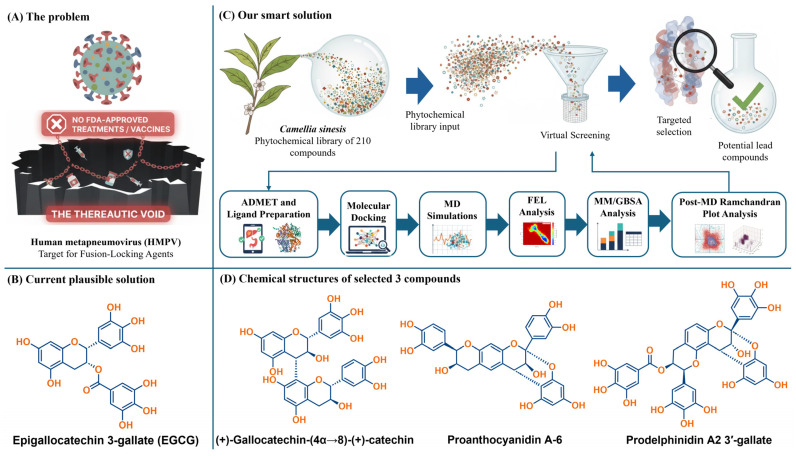 Figure 1
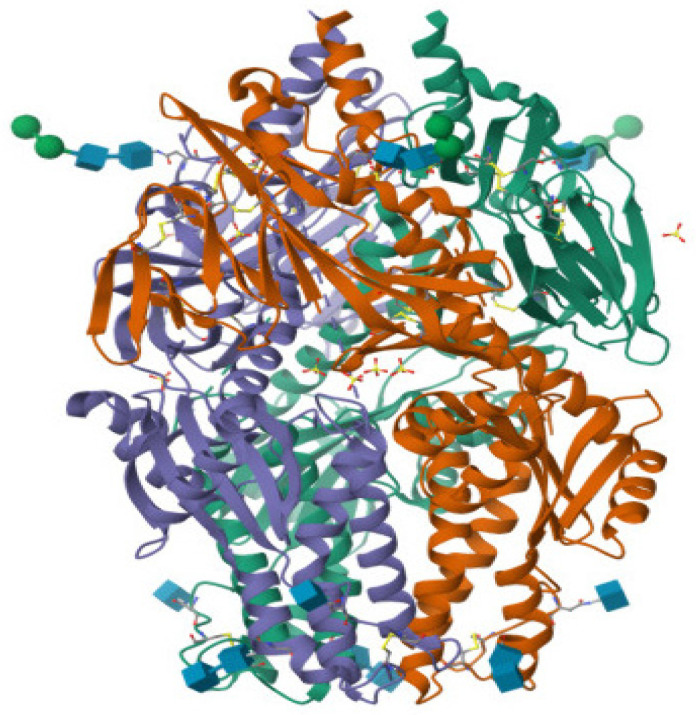 Figure 2
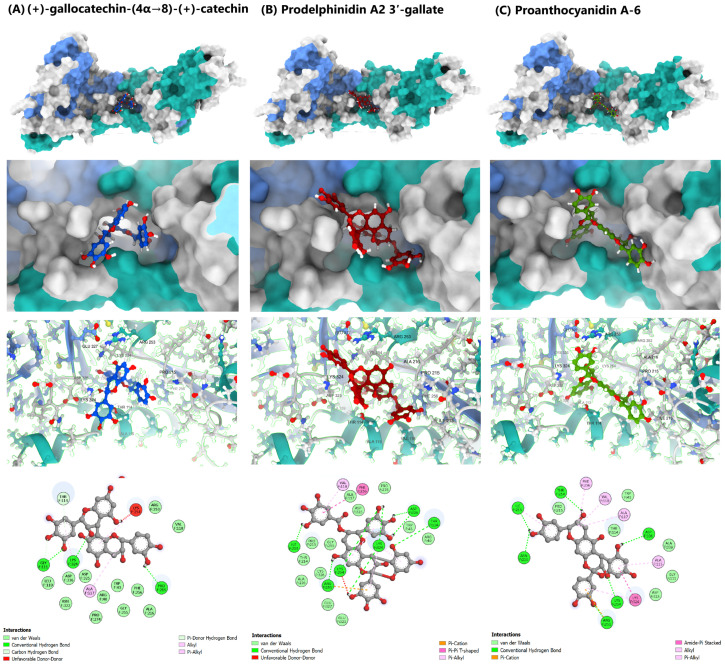 Figure 3
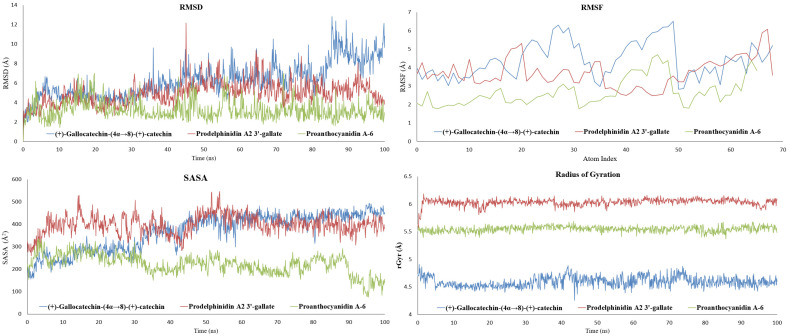 Figure 4
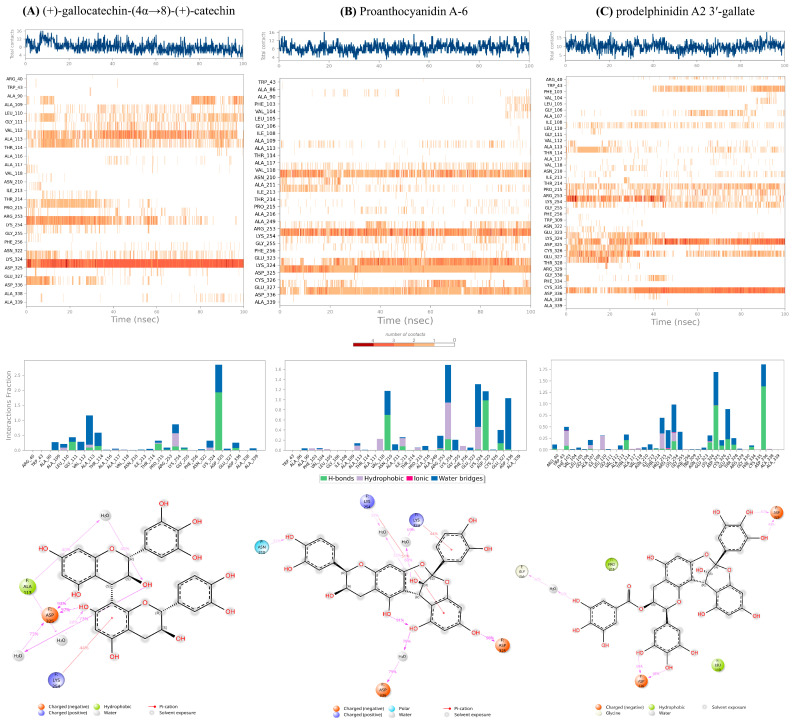 Figure 5
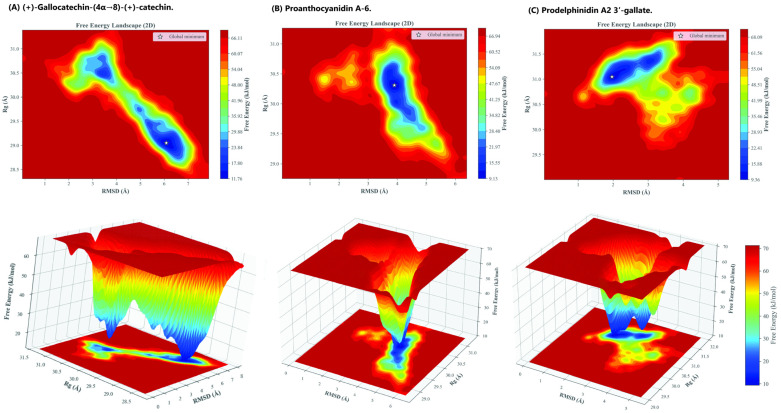 Figure 6
 Figure 7
Peer Reviews
No public reviews on file for this paper yet. If you reviewed it on a platform where reviews are public (OpenReview, ICLR, NeurIPS, ICML), you can paste yours below so the community can read it here.
Videos
No videos yet. Explain this paper in a talk, walkthrough, or lecture? Add one.
Taxonomy
TopicsTea Polyphenols and Effects · Ginseng Biological Effects and Applications · Hepatitis C virus research