Polarization-Insensitive Electro-Optic Modulator for the Terahertz Regime Enabled by a Graphene-Hybrid Plasmonic Waveguide
Xia Zhou, Caijing Liu, Yingting Li, Tingting Weng, Qilong Tan, Xuguang Huang, Jingshun Pan

TL;DR
A new graphene-based optical modulator works well at terahertz frequencies and is insensitive to light polarization, making it useful for advanced photonic applications.
Contribution
A polarization-insensitive graphene-hybrid plasmonic modulator is proposed with ultra-broadband performance and CMOS compatibility.
Findings
The modulator achieves 0.247 dB/μm maximum attenuation at 3 THz with a low polarization-dependent error.
The device operates effectively at 2.5 THz and is compatible with CMOS technology.
The design enables synchronous control of TE/TM modes via Fermi level tuning.
Abstract
A polarization-insensitive compact optical modulator based on a graphene-hybrid surface plasmon polariton waveguide is proposed. The inverted U-shaped structure enables the synchronous control of TE/TM modes via Fermi level tuning, achieving a maximum attenuation of 0.247 dB/μm (Ef = 0.3 eV) and a minimum attenuation of 0.026–0.028 dB/μm (Ef = 1.0 eV) at 3 THz, with a polarization-dependent modulation error of only 0.002 dB/μm. The 100 μm × 30 μm device operates effectively at 2.5 THz (120 μm), demonstrating its potential for integrated photonic circuits. Additionally, the proposed modulator is compatible with Complementary Metal-Oxide-Semiconductor (CMOS) technology. The excellent ultra-broadband modulation performance of the graphene-hybrid plasmonic waveguide (GHPW) thereby paves the way for high-speed communication, non-destructive testing, biomedical sensing and optical computing.
Genes, proteins, chemicals, diseases, species, mutations and cell lines named across the full text — each resolved to its canonical identifier and authoritative record.
Click any figure to enlarge with its caption.
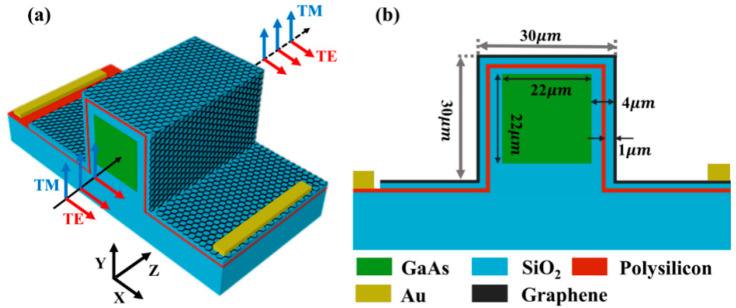 Figure 1
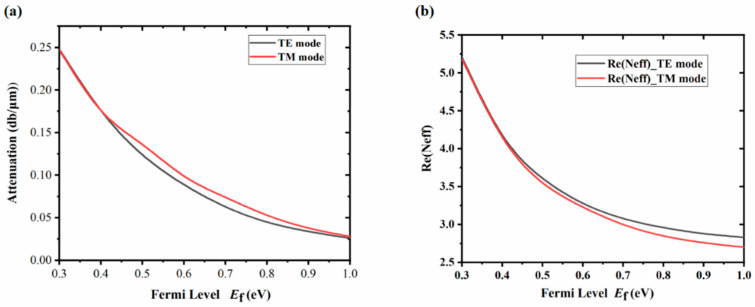 Figure 2
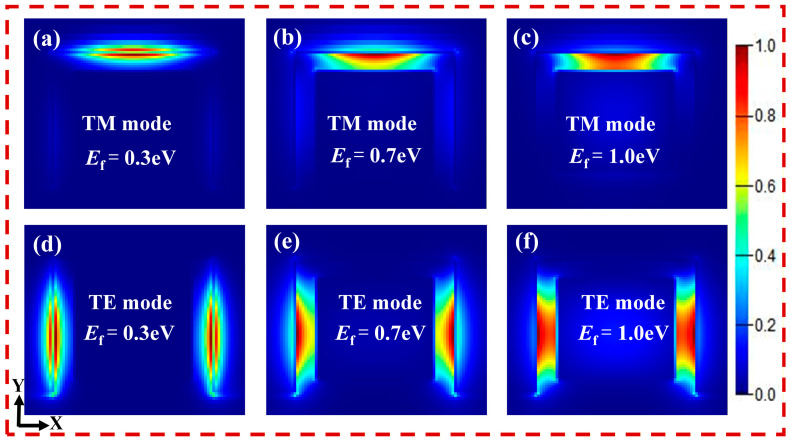 Figure 3
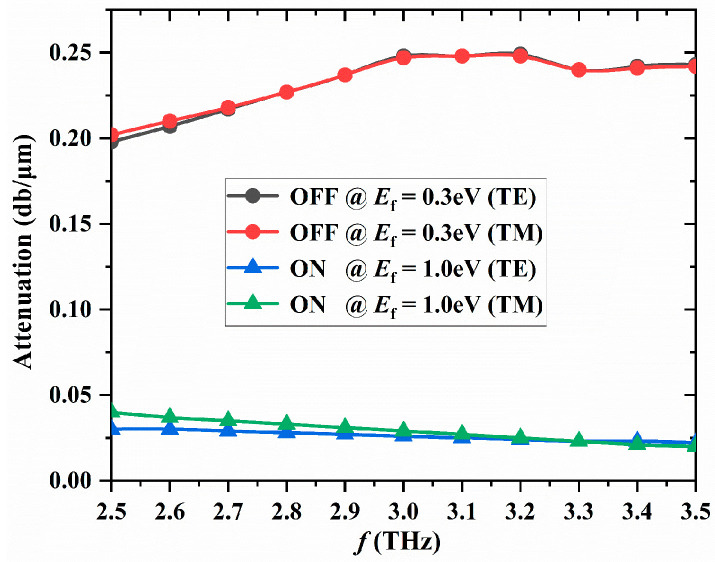 Figure 4
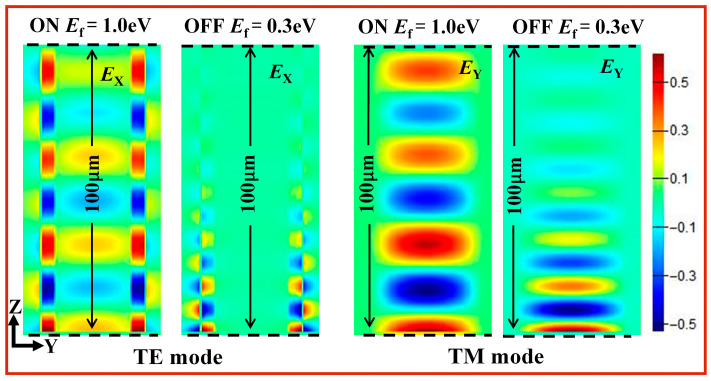 Figure 5
Peer Reviews
No public reviews on file for this paper yet. If you reviewed it on a platform where reviews are public (OpenReview, ICLR, NeurIPS, ICML), you can paste yours below so the community can read it here.
Videos
No videos yet. Explain this paper in a talk, walkthrough, or lecture? Add one.
Taxonomy
TopicsPlasmonic and Surface Plasmon Research · Terahertz technology and applications · Metamaterials and Metasurfaces Applications