Linear Magnetization Curve with Extremely Low Permeability Obtained via Stress Annealing of Fe- and Co-Based Nanocrystalline Alloys
Otto K. Temesi, Albert Karacs, Gábor Gulyás, Sándor Komáromi, Lajos K. Varga

TL;DR
This paper shows how stress annealing of Co-based nanocrystalline alloys can produce materials with a linear magnetization curve and very low permeability, which is more effective than Fe-based alloys.
Contribution
The study introduces a more effective method for achieving linear magnetization and low permeability using Co-based nanocomposites compared to Fe-based ones.
Findings
Stress annealing in Co-based MANCs is an order of magnitude more effective for linear magnetization than Fe-based MANCs.
Permeabilities as low as 10 can be achieved in Co-based nanocomposites under similar tensile stresses.
Linearity is linked to the fraction of the crystalline phase responsible for induced anisotropy.
Abstract
First, the properties of the linear magnetizing curve and low static permeability are summarized. Second, a design for technical implementation of mechanical stress-induced anisotropy in metal-amorphous nanocomposites (MANCs) is presented. Stress annealing, which creates the conditions for a linear magnetizing curve, is an order of magnitude more effective with Co-based MANCs than with Fe-based ones. Permeabilities between 3000 and 100 and between 100 and 10 can be obtained in Fe- and Co-based nanocomposites, respectively, at similar applied tensile stresses. A measure of linearity is introduced based on the parameters of the hysteresis loop, which is proven to be equal to the fraction of the crystalline phase responsible for the induced anisotropy. Lastly, experimental results concerning linearity and related properties are discussed.
Genes, proteins, chemicals, diseases, species, mutations and cell lines named across the full text — each resolved to its canonical identifier and authoritative record.
Click any figure to enlarge with its caption.
 Figure 1
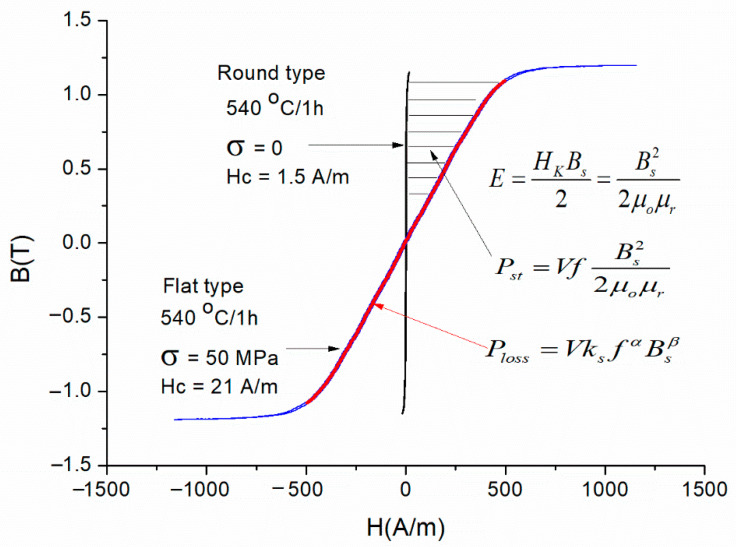 Figure 2
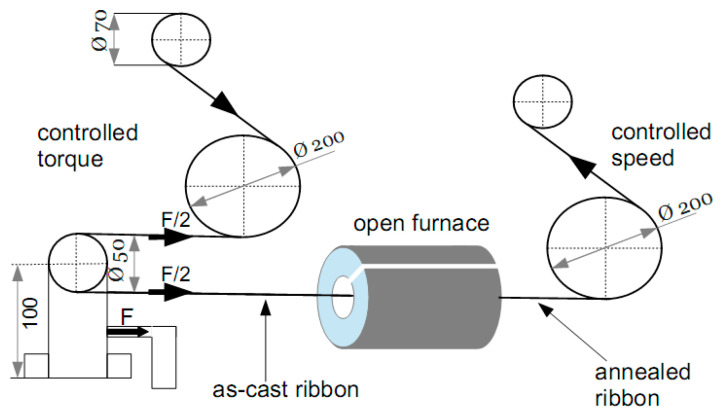 Figure 3
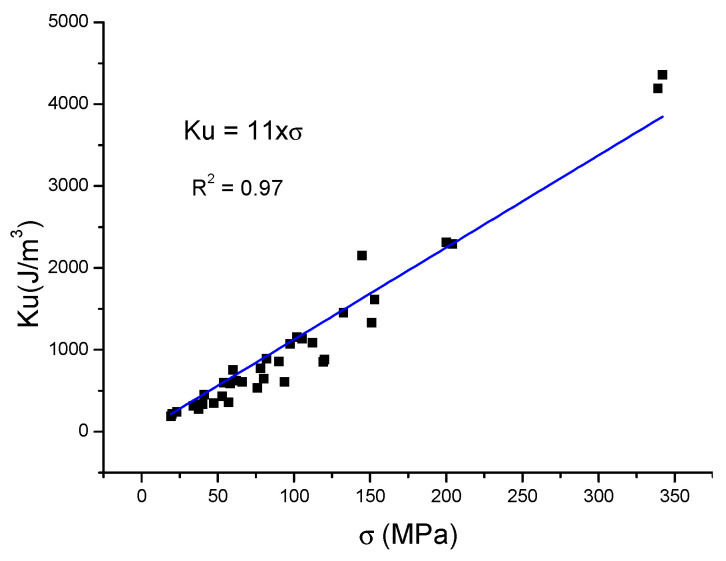 Figure 4
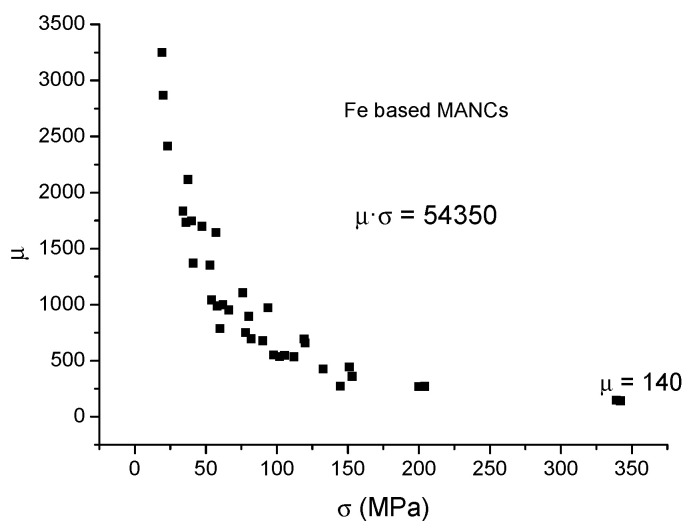 Figure 5
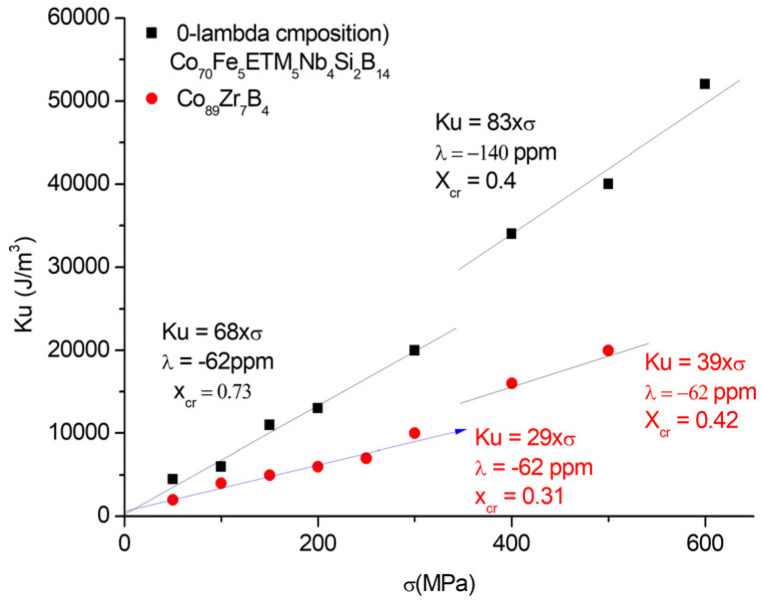 Figure 6
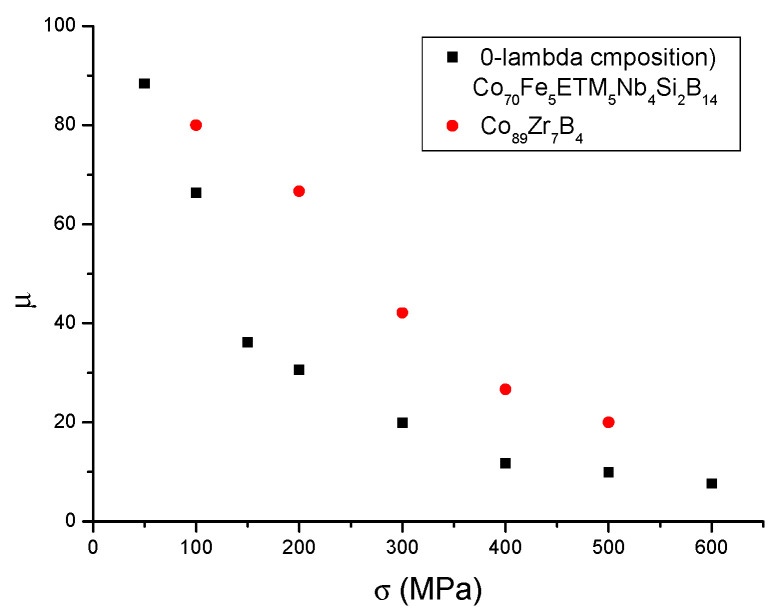 Figure 7
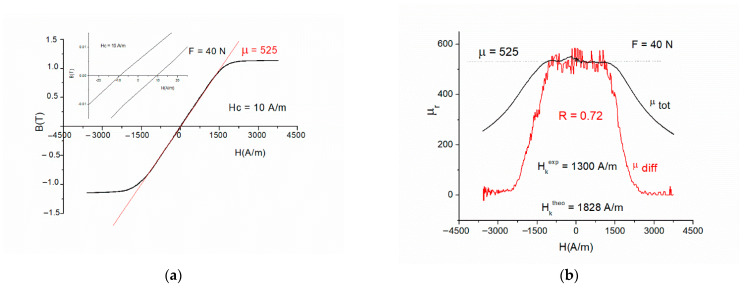 Figure 8
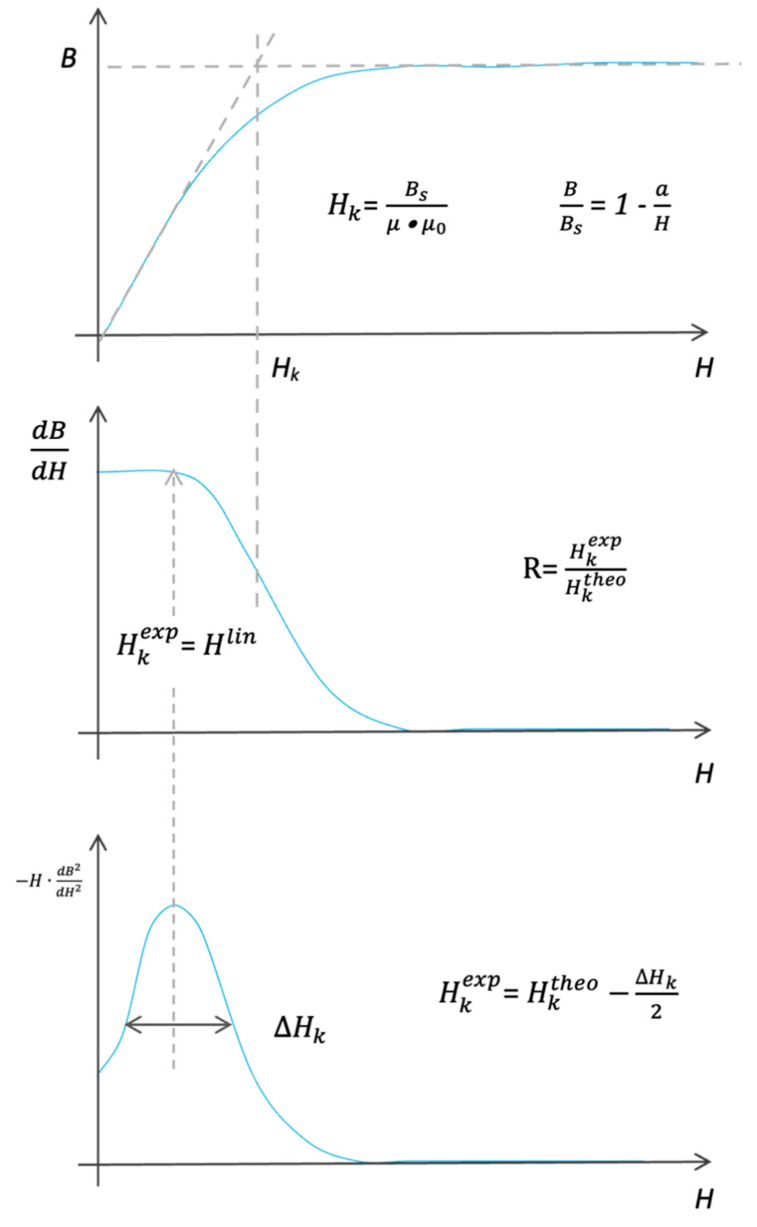 Figure 9
Peer Reviews
No public reviews on file for this paper yet. If you reviewed it on a platform where reviews are public (OpenReview, ICLR, NeurIPS, ICML), you can paste yours below so the community can read it here.
Videos
No videos yet. Explain this paper in a talk, walkthrough, or lecture? Add one.
Taxonomy
TopicsMetallic Glasses and Amorphous Alloys · Magnetic Properties and Applications · Magnetic properties of thin films