Beyond One-Size-Fits-All: Precision Mechanical Ventilation in ARDS
Saif Azzam, Karis Khattab, Sarah Al Sharie, Lou’i Al-Husinat, Pedro L. Silva, Denise Battaglini, Marcus J Schultz, Patricia R M Rocco

TL;DR
This paper argues for a shift from standard mechanical ventilation to personalized, precision-based strategies for treating ARDS, considering individual lung mechanics and physiology.
Contribution
The paper introduces a conceptual framework for precision mechanical ventilation in ARDS, emphasizing individualized physiological alignment over one-size-fits-all approaches.
Findings
ARDS patients exhibit significant variability in lung mechanics and physiology, making uniform ventilation strategies imprecise.
Precision ventilation strategies, such as subphenotyping and real-time monitoring, can improve safety and effectiveness in ARDS management.
Tools like esophageal pressure monitoring and AI can support personalized ventilatory decisions without replacing clinical judgment.
Abstract
Acute respiratory distress syndrome (ARDS) has traditionally been managed with population-based, protocolized mechanical ventilation strategies designed to limit ventilator-induced lung injury. While these approaches have improved outcomes, they fail to account for the pronounced biological, mechanical, radiological, and temporal heterogeneity that characterizes ARDS. Accumulating evidence shows that patients differ markedly in functional lung size, recruitability, chest wall mechanics, inflammatory burden, and tolerance to ventilatory stress, making uniform ventilatory targets physiologically imprecise and, at times, harmful. This narrative review examines the evolution from conventional lung-protective ventilation toward a precision-based paradigm that aligns ventilatory support with individual patient physiology. We conceptualize ARDS not as a static syndrome but as a dynamic…
Genes, proteins, chemicals, diseases, species, mutations and cell lines named across the full text — each resolved to its canonical identifier and authoritative record.
Click any figure to enlarge with its caption.
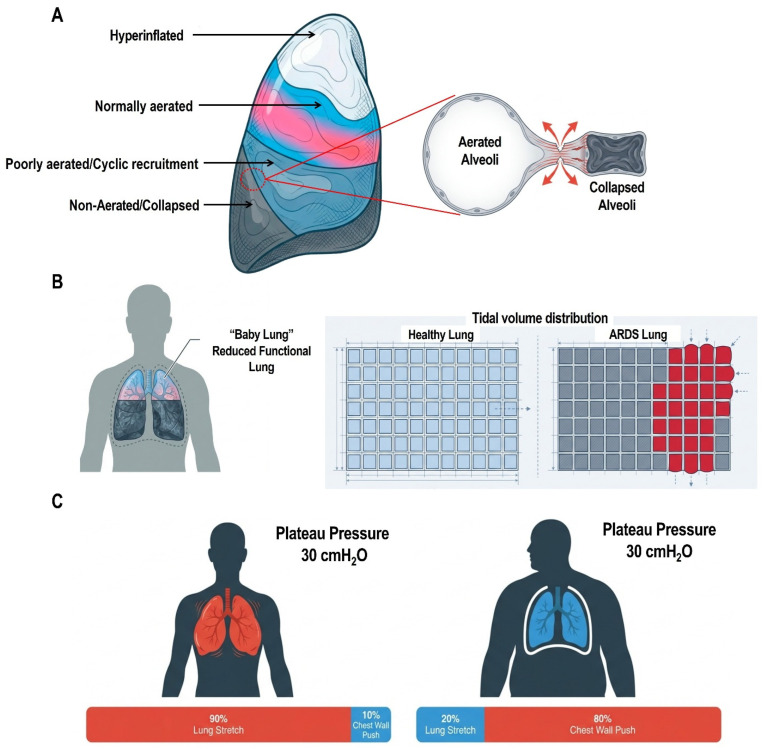 Figure 1
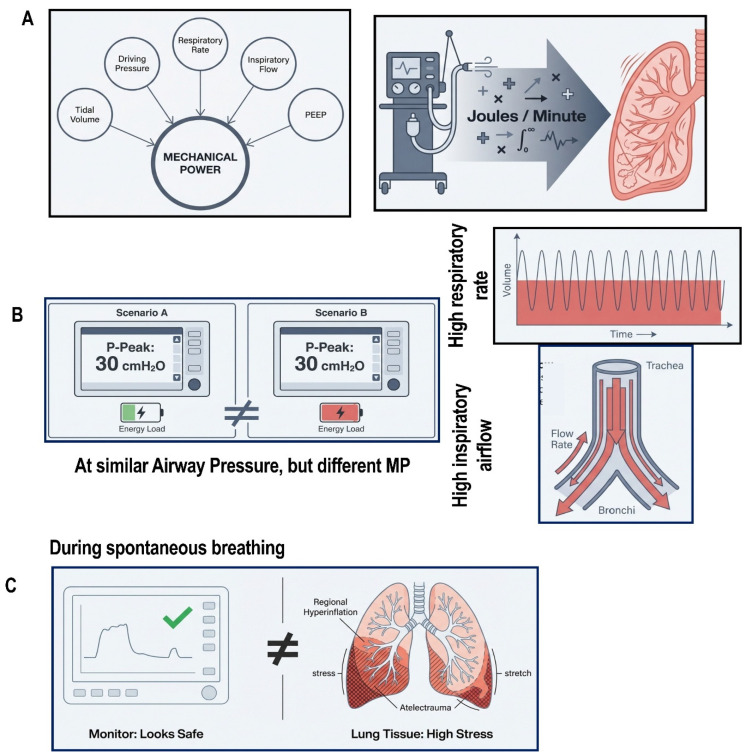 Figure 2
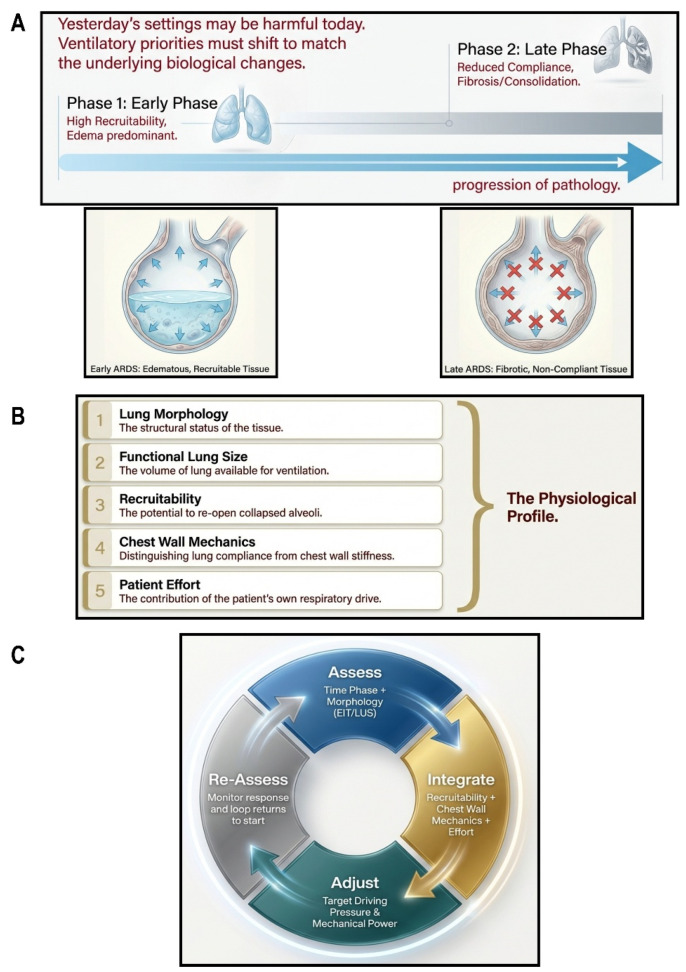 Figure 3
Peer Reviews
No public reviews on file for this paper yet. If you reviewed it on a platform where reviews are public (OpenReview, ICLR, NeurIPS, ICML), you can paste yours below so the community can read it here.
Videos
No videos yet. Explain this paper in a talk, walkthrough, or lecture? Add one.
Taxonomy
TopicsRespiratory Support and Mechanisms · Neonatal Respiratory Health Research · Ultrasound in Clinical Applications