Degradation of the Molecular Basis of Life During the Aging Process
Janusz Wiesław Błaszczyk

TL;DR
Aging involves the breakdown of metabolic processes, particularly glucose metabolism, which affects brain function and leads to aging-related decline.
Contribution
The paper highlights the role of NAD deficiency in aging and suggests NAD supplementation as a potential strategy for healthy aging.
Findings
Disturbances in glucose-dependent metabolism significantly impact the aging process.
NAD deficiency in neurons causes irreversible brain changes and aging.
NAD supplementation may support healthy aging despite the inability to halt aging entirely.
Abstract
Aging is a chronic, destructive process characterized by the progressive breakdown of the body, leading to a loss of control over homeostasis. Glucose is the most important metabolite involved in metabolism and maintaining homeostasis in the human body. Glucose-based energy metabolism is fundamental to the activity and structural changes in the brain, which is the main regulator of life processes. Disturbances in energy metabolism and glucose-dependent metabolic processes have a decisive impact on the aging process. Age-related deficiency of the coenzyme NAD, which regulates glucose metabolism in neurons, leads to irreversible changes in the brain, culminating in senescence. Research on NAD precursors offers hope that although we cannot completely halt the aging process, NAD supplementation may enable healthy aging.
Genes, proteins, chemicals, diseases, species, mutations and cell lines named across the full text — each resolved to its canonical identifier and authoritative record.
Click any figure to enlarge with its caption.
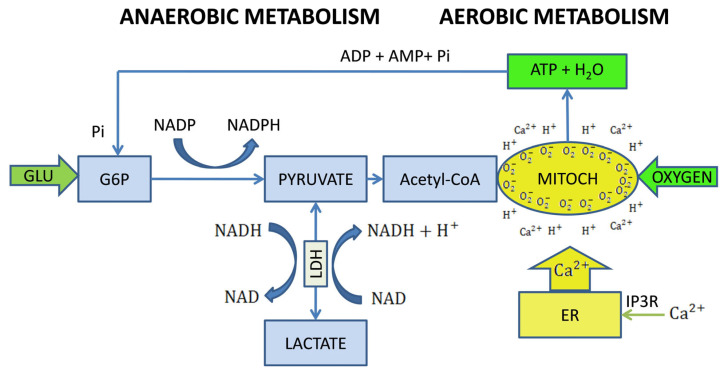 Figure 1
Peer Reviews
No public reviews on file for this paper yet. If you reviewed it on a platform where reviews are public (OpenReview, ICLR, NeurIPS, ICML), you can paste yours below so the community can read it here.
Videos
No videos yet. Explain this paper in a talk, walkthrough, or lecture? Add one.
Taxonomy
TopicsSirtuins and Resveratrol in Medicine · Coenzyme Q10 studies and effects · Biochemical Acid Research Studies