AP-2 Transcription Factors as Regulators of Ferroptosis: A Family-Wide Profiling in Diverse Cancer Contexts
Damian Kołat, Piotr Gromek, Mateusz Kciuk, Lin-Yong Zhao, Żaneta Kałuzińska-Kołat, Renata Kontek, Elżbieta Płuciennik

TL;DR
This study explores how AP-2 transcription factors regulate ferroptosis, a type of cell death, across various cancers, revealing new connections between AP-2 and cancer prognosis.
Contribution
The paper provides the first family-wide analysis of AP-2's role in ferroptosis across multiple cancer types, identifying novel regulatory links and potential therapeutic targets.
Findings
AP-2 expression correlates with ferroptosis scores and prognosis in five cancer types.
Genes like LOX, PTGS2, and NQO1 are linked to AP-2 and may be involved in ferroptosis regulation.
AP-2-associated genes suggest new pathways involving redox and lipid metabolism in cancer cell death.
Abstract
Ferroptosis is an iron-dependent programmed cell death (PCD) implicated in cancer therapy response, yet its transcriptional control remains unevenly characterized and often centered on a limited subset of transcription factors (TFs) rather than systematically addressing TF families. The Activating enhancer-binding Protein-2 (AP-2) family of TFs is a plausible but understudied regulatory node linking oncogenic programs to ferroptosis, with prior research limited to AP-2α and AP-2γ, suggesting anti-ferroptotic and pro-tumorigenic roles. Thus, the present study aimed to provide a family-wide analysis of the relationships between AP-2 and ferroptosis across tumors in which this PCD type is considered biologically and clinically relevant. The research integrates ferroptosis gene modules with AP-2 targetomes, tumor–normal expression comparisons, survival stratification, ferroptosis scoring,…
Genes, proteins, chemicals, diseases, species, mutations and cell lines named across the full text — each resolved to its canonical identifier and authoritative record.
Click any figure to enlarge with its caption.
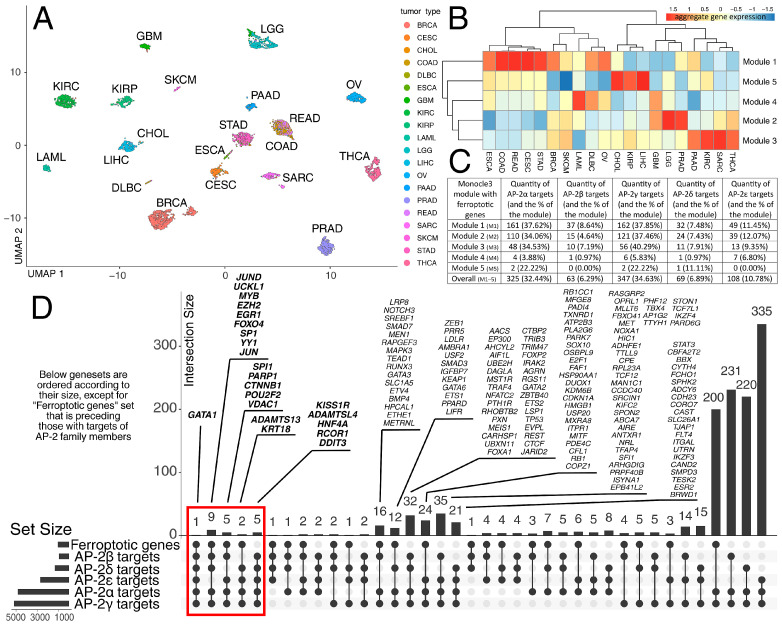 Figure 1
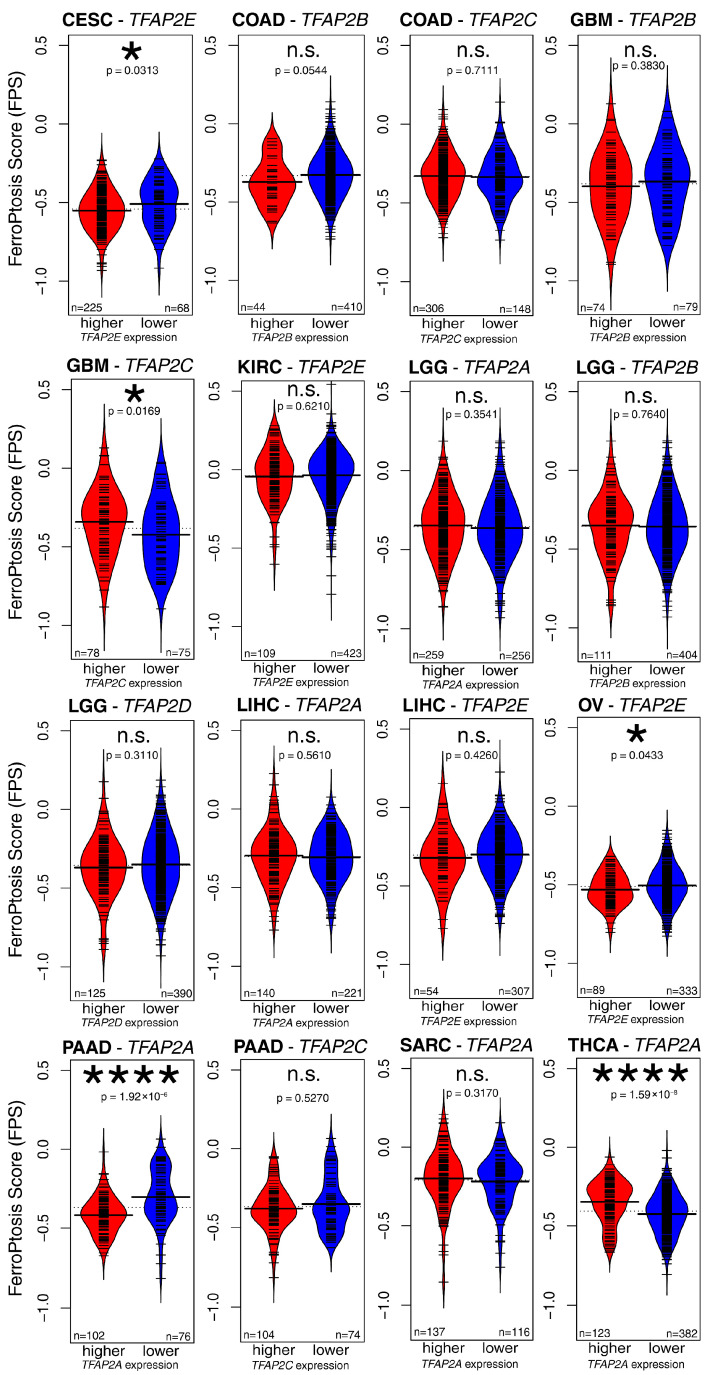 Figure 2
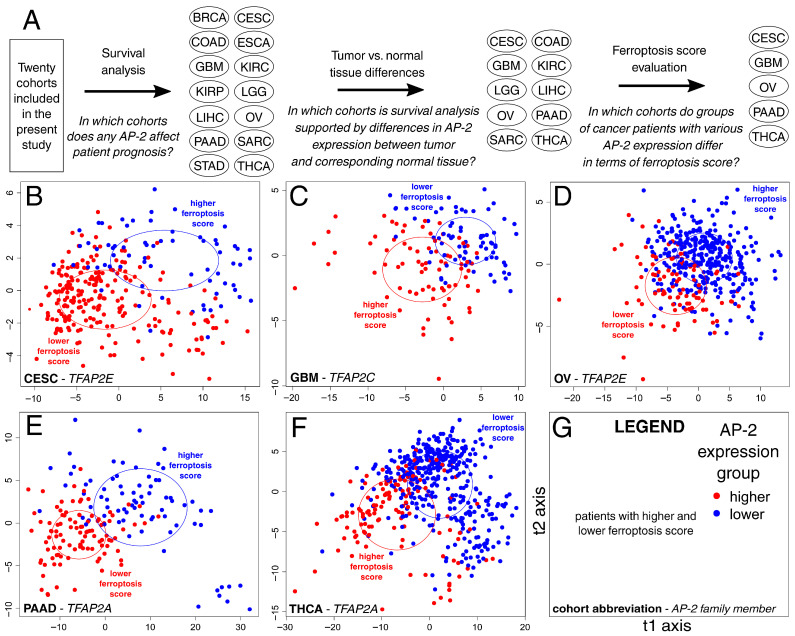 Figure 3
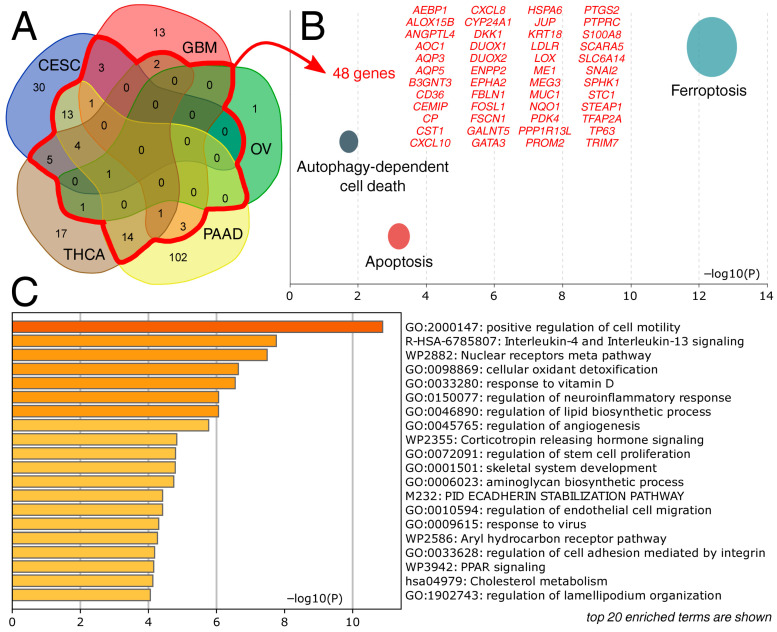 Figure 4
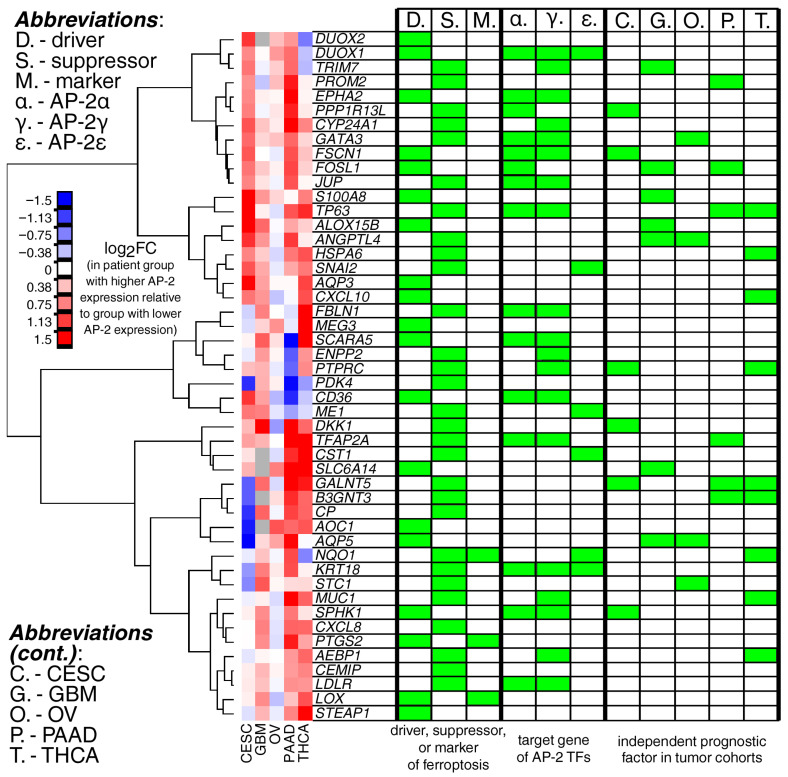 Figure 5
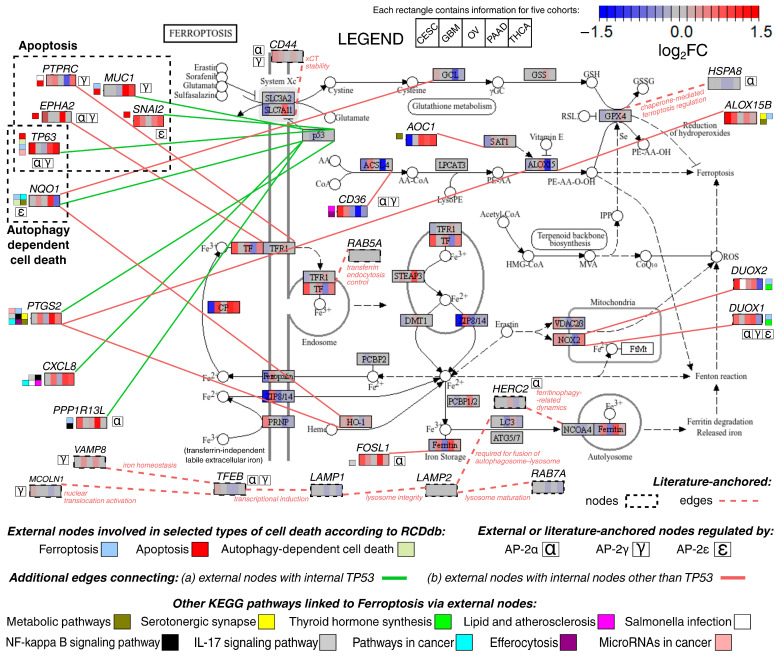 Figure 6
Peer Reviews
No public reviews on file for this paper yet. If you reviewed it on a platform where reviews are public (OpenReview, ICLR, NeurIPS, ICML), you can paste yours below so the community can read it here.
Videos
No videos yet. Explain this paper in a talk, walkthrough, or lecture? Add one.
Taxonomy
TopicsFerroptosis and cancer prognosis · Cancer-related molecular mechanisms research · Clusterin in disease pathology