Interpreting Resting Energy Expenditure in Critically Ill Patients with Obesity: Clinical Impact of Weight Adjustment
Sebastián Chapela, Jaen Cagua-Ordoñez, Juan Marcos Parise-Vasco, Daniel Tettamanti Miranda, Claudia Kecskes, Natalia Llobera, Jesica Asparch, Mariana Rella, María Victoria Peroni, Martha Montalvan, María Jimena Reberendo, Facundo Gutierrez, Mario O. Pozo, Ludwig Álvarez-Córdova

TL;DR
This study shows that adjusting resting energy expenditure by different weight measures changes its interpretation in critically ill obese patients, with respiratory quotient being a key metabolic indicator.
Contribution
The study identifies respiratory quotient as a stronger correlate of adjusted resting energy expenditure than traditional clinical scores in critically ill obese patients.
Findings
Absolute resting energy expenditure did not differ significantly between BMI categories.
Respiratory quotient was the most robust independent correlate of adjusted resting energy expenditure.
Stratified analyses revealed structural heterogeneity between obesity classes.
Abstract
Background: Accurately estimating resting energy expenditure (REE) in critically ill obese patients remains a significant clinical challenge, as predictive equations are consistently inadequate. Metabolic heterogeneity across obesity classes and the role of substrate utilization are insufficiently characterized. Objective: To evaluate the impact of different weight-normalization methods on the interpretation of REE and to identify independent metabolic determinants of weight-adjusted energy expenditure in critically ill patients with obesity. Methods: Bicentric cross-sectional study of 148 critically ill adults with obesity undergoing indirect calorimetry. REE normalized by actual body weight (REE/kg), ideal body weight (REE/IBW), and adjusted body weight (REE/AdjBW) was calculated. Multivariable models with robust standard errors (HC3), stratified analyses by obesity class (I–III) with…
Genes, proteins, chemicals, diseases, species, mutations and cell lines named across the full text — each resolved to its canonical identifier and authoritative record.
Click any figure to enlarge with its caption.
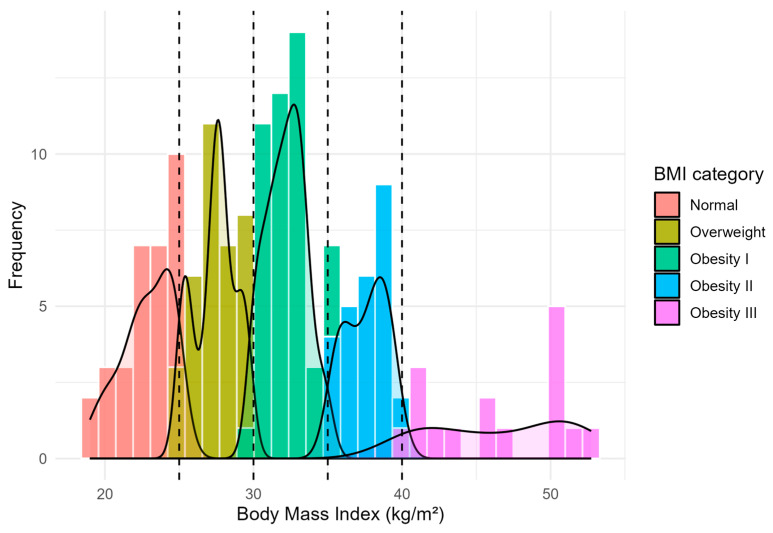 Figure 1
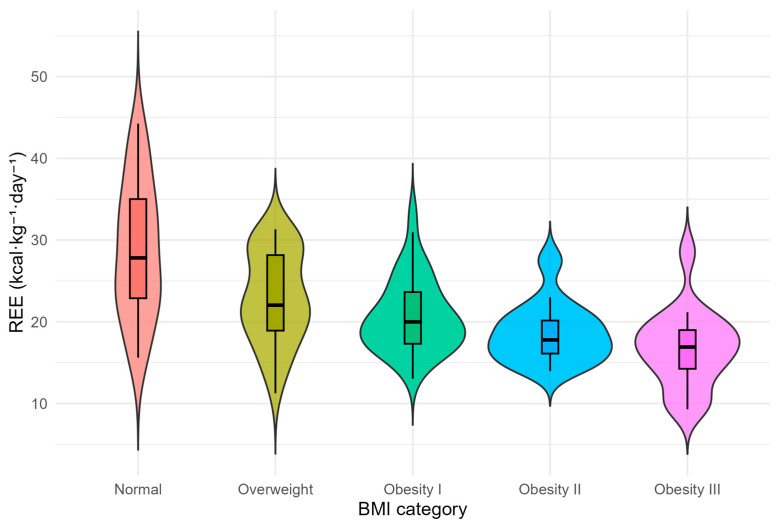 Figure 2
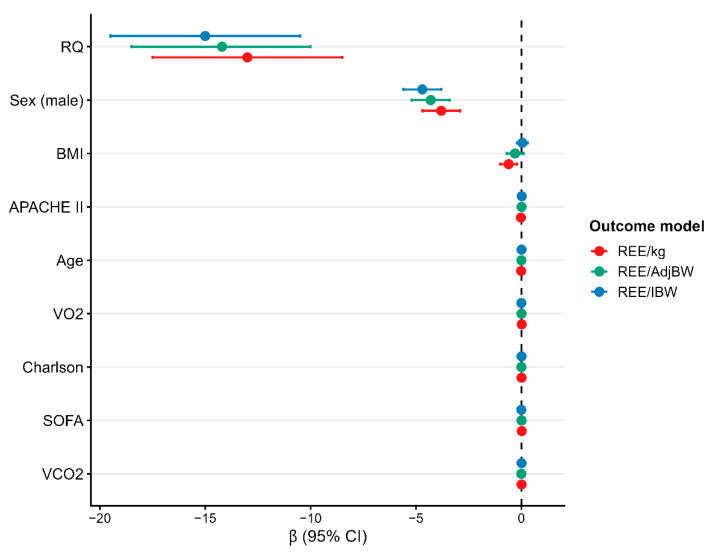 Figure 3
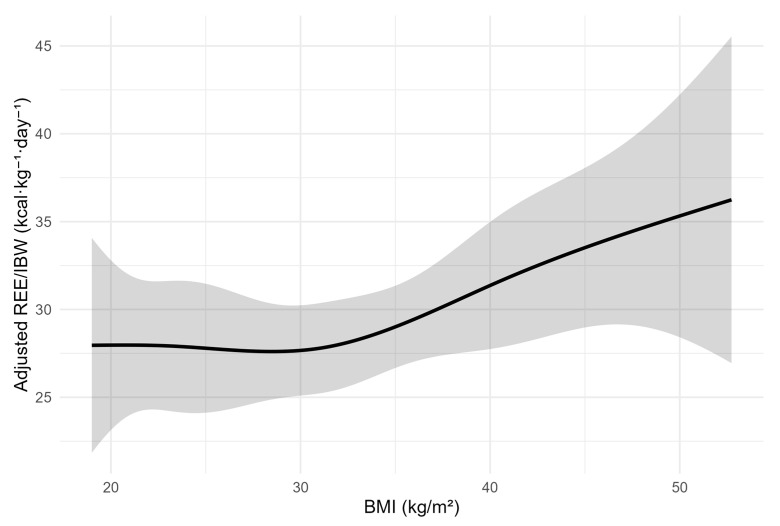 Figure 4
Peer Reviews
No public reviews on file for this paper yet. If you reviewed it on a platform where reviews are public (OpenReview, ICLR, NeurIPS, ICML), you can paste yours below so the community can read it here.
Videos
No videos yet. Explain this paper in a talk, walkthrough, or lecture? Add one.
Taxonomy
TopicsClinical Nutrition and Gastroenterology · Nutrition and Health in Aging · Sepsis Diagnosis and Treatment