Water-Scavenging Suspended Mediator in Electrolytes for Silicon-Based Lithium-Ion Batteries with High-Nickel Cathode
Siyuan Peng, Xianzheng Zhang, Weifeng Zhang, Ruiting Su, Wenwu Zou, Chenhui Pan, Limin Zhu, Li Du

TL;DR
A new electrolyte additive captures water to prevent battery degradation, enabling stable high-performance lithium-ion batteries with high-nickel cathodes.
Contribution
A boroxine-linked COF is introduced as a water-scavenging suspended mediator to suppress hydrolysis and electrode corrosion in lithium batteries.
Findings
A boroxine-linked COF effectively captures H2O, suppressing PF6− hydrolysis and HF formation.
The water-scavenging electrolyte enabled a Li-metal battery with a high-nickel cathode to retain 73% capacity after 500 cycles at 1 C.
The suspension strategy enabled stable cycling of a silicon-based battery with a high-nickel cathode over 500 cycles at 10 C.
Abstract
Trace amounts of H2O are inevitably introduced during lithium battery manufacturing processes, which induces the hydrolysis of LiPF6, leading to HF formation, which triggers a cascade of deleterious reactions that degrade the solid electrolyte interphase (SEI) and corrode electrode materials. In this work, a water-scavenging electrolyte was constructed by employing a boroxine-linked covalent organic framework (COF) as the suspended phase. The ring-opening reaction of the boroxine ring units in COFs can effectively capture H2O, thereby suppressing the hydrolysis of PF6− and mitigating electrode corrosion caused by HF. Consequently, a Li-metal battery with a high-nickel cathode retained 73% of its initial capacity after 500 cycles at 1 C, and a silicon-based lithium-ion battery with a high-nickel cathode sustained stable cycling over 500 cycles at a high rate of 10 C. This suspension…
Genes, proteins, chemicals, diseases, species, mutations and cell lines named across the full text — each resolved to its canonical identifier and authoritative record.
Click any figure to enlarge with its caption.
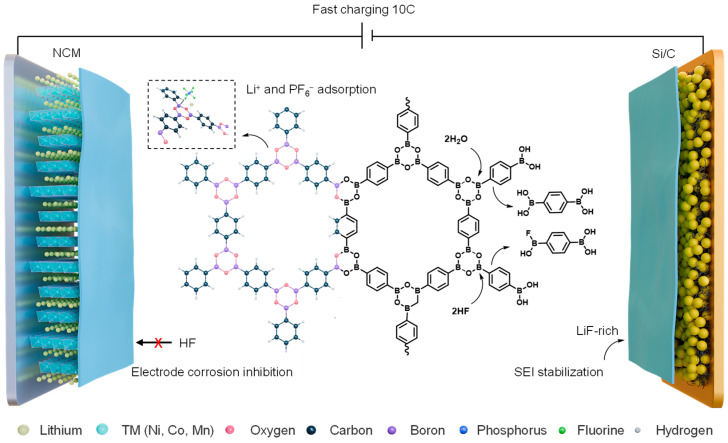 Figure 1
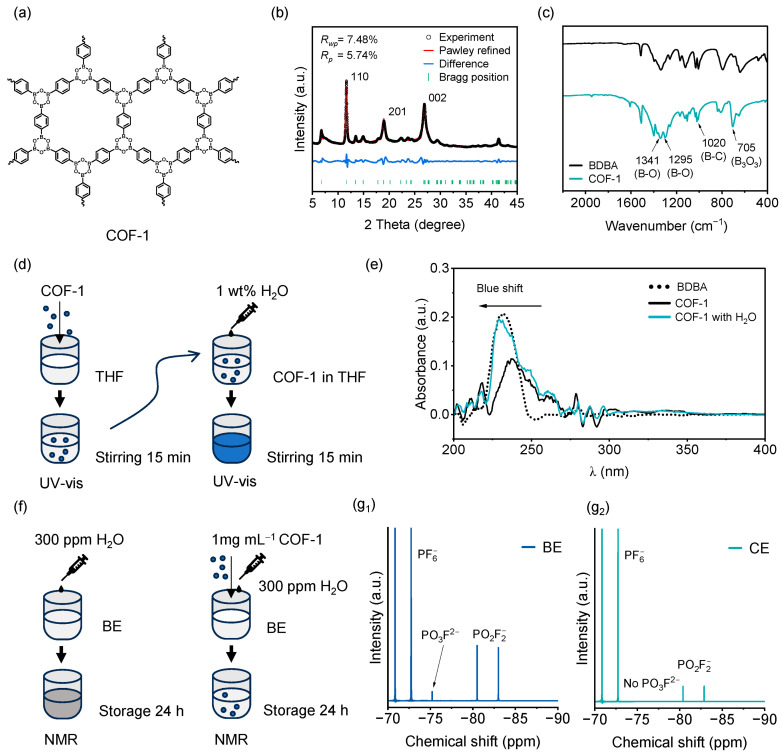 Figure 2
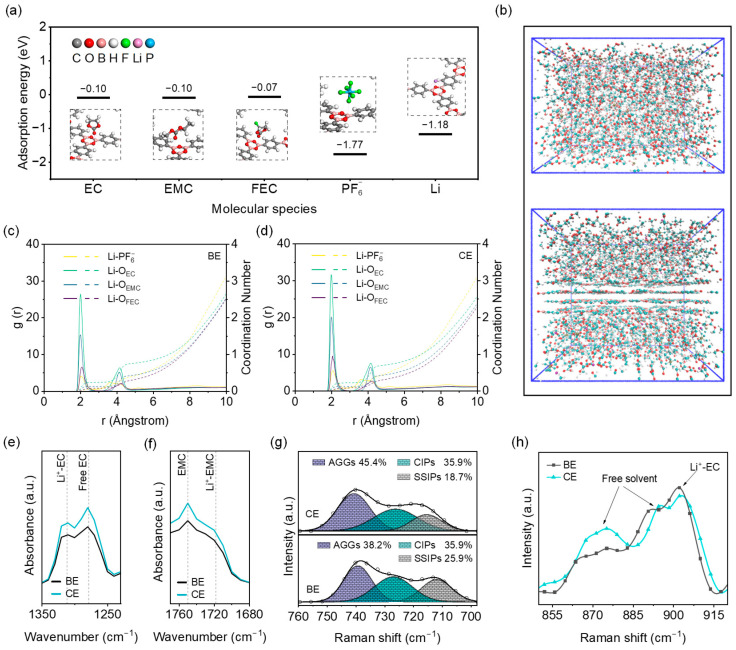 Figure 3
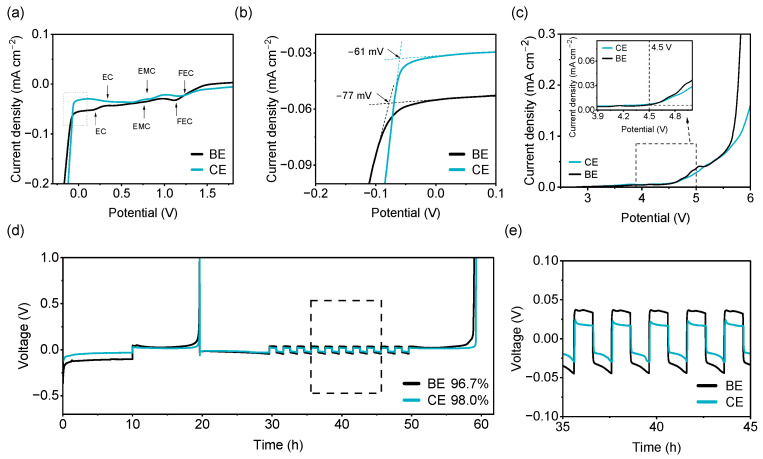 Figure 4
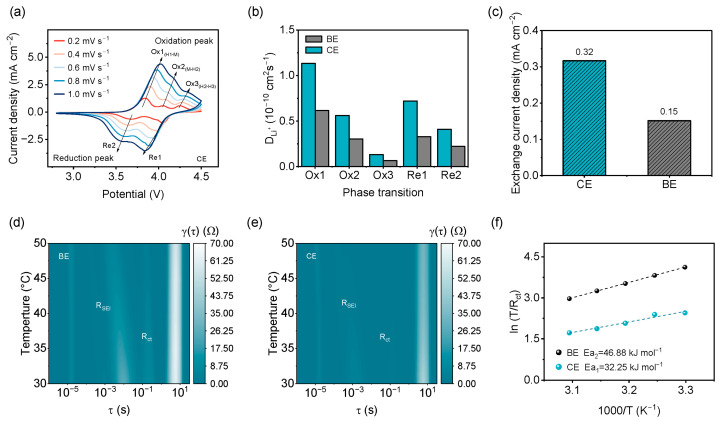 Figure 5
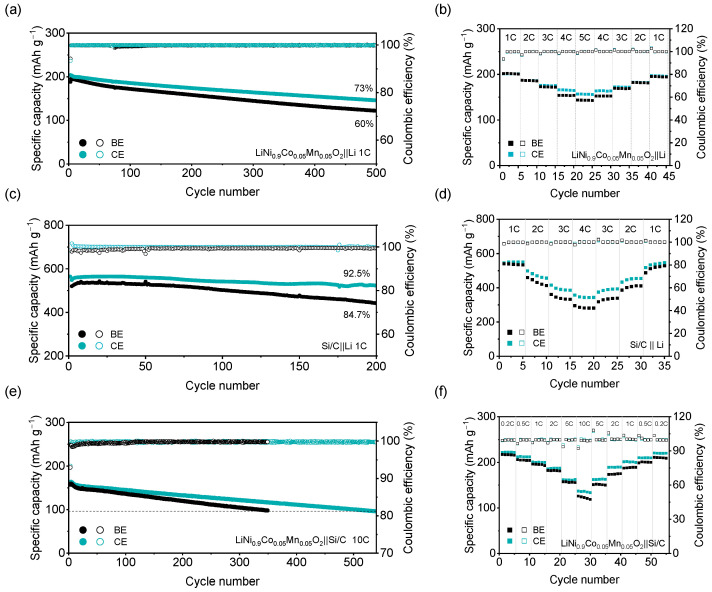 Figure 6
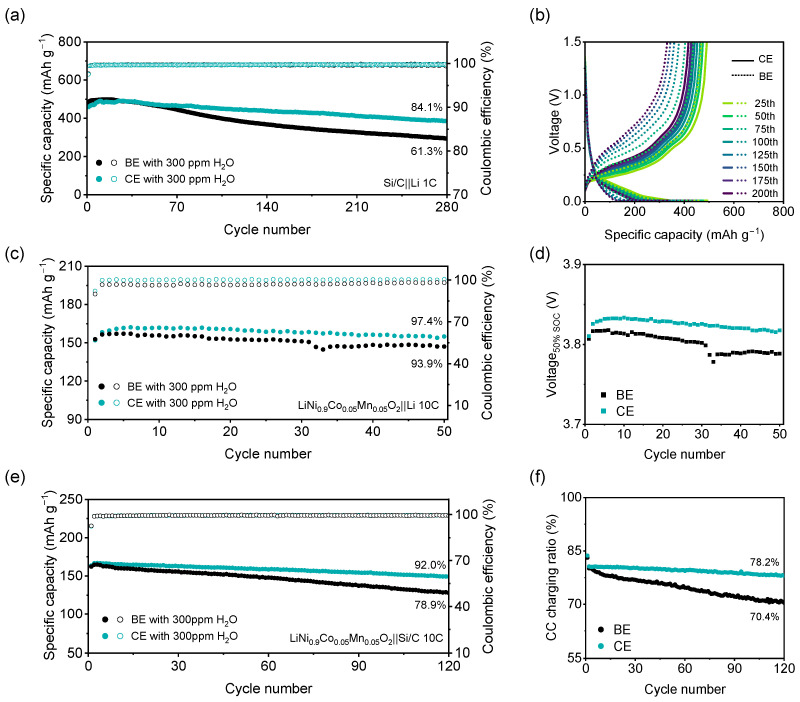 Figure 7
Peer Reviews
No public reviews on file for this paper yet. If you reviewed it on a platform where reviews are public (OpenReview, ICLR, NeurIPS, ICML), you can paste yours below so the community can read it here.
Videos
No videos yet. Explain this paper in a talk, walkthrough, or lecture? Add one.
Taxonomy
TopicsCovalent Organic Framework Applications · Advanced battery technologies research · Advanced Battery Materials and Technologies