The Changes of T-Wave Amplitude and Tp-Te Interval in the Supine and Standing Electrocardiograms of Pediatric Postural Orthostatic Tachycardia Syndrome and Their Predictive Value for the Intervention Effect of Metoprolol
Shuo Wang, Ting Zhao, Fang Li, Yuwen Wang, Hong Cai, Liqun Liu, Chuan Wen, Runmei Zou, Cheng Wang

TL;DR
This study examines how T-wave amplitude and Tp-Te interval changes in ECGs of children with POTS predict the effectiveness of metoprolol treatment.
Contribution
The study identifies specific ECG changes in pediatric POTS patients that predict metoprolol treatment response.
Findings
Standing posture in POTS patients is associated with decreased T-wave amplitude and shortened Tp-Te interval in multiple ECG leads.
ΔT-wave amplitude in leads III, aVF, V2, V3, V4, and V5, along with ΔTp-Te interval and ΔTp-Te/QT ratio in lead V3, predict metoprolol treatment response.
ΔHR and ΔT-wave amplitude in lead V5 are independent risk factors for pediatric POTS.
Abstract
Objective: To investigate the changes in T-wave amplitude and Tp-Te interval on supine and standing electrocardiograms (ECGs) in pediatric postural orthostatic tachycardia syndrome (POTS), and to explore their predictive value for the therapeutic effect of metoprolol. Methods: A total of 59 children diagnosed with POTS who presented with syncope or pre-syncopal symptoms were enrolled as the POTS group, and 52 healthy children served as the control group. Supine and standing ECGs were recorded for all subjects, and T-wave amplitude and Tp-Te interval were measured. Children with POTS were followed-up after metoprolol treatment and divided into a therapeutic response group and a non-response group. Results: (1) Comparison of supine vs. standing ECGs: In the POTS group, standing posture (compared with supine posture) was associated with increased heart rate (HR), decreased T-wave amplitude…
Genes, proteins, chemicals, diseases, species, mutations and cell lines named across the full text — each resolved to its canonical identifier and authoritative record.
Click any figure to enlarge with its caption.
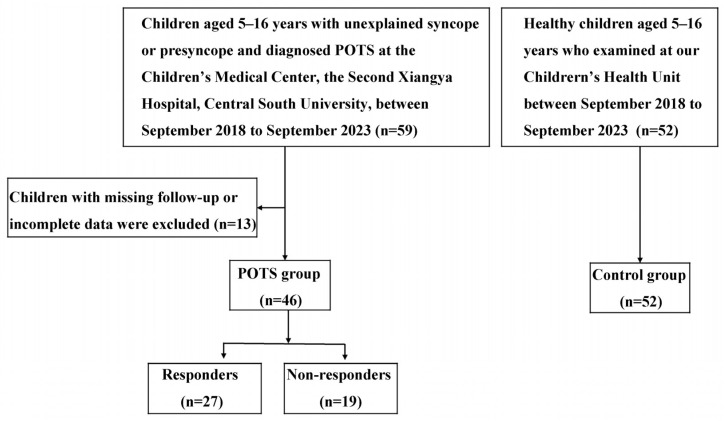 Figure 1
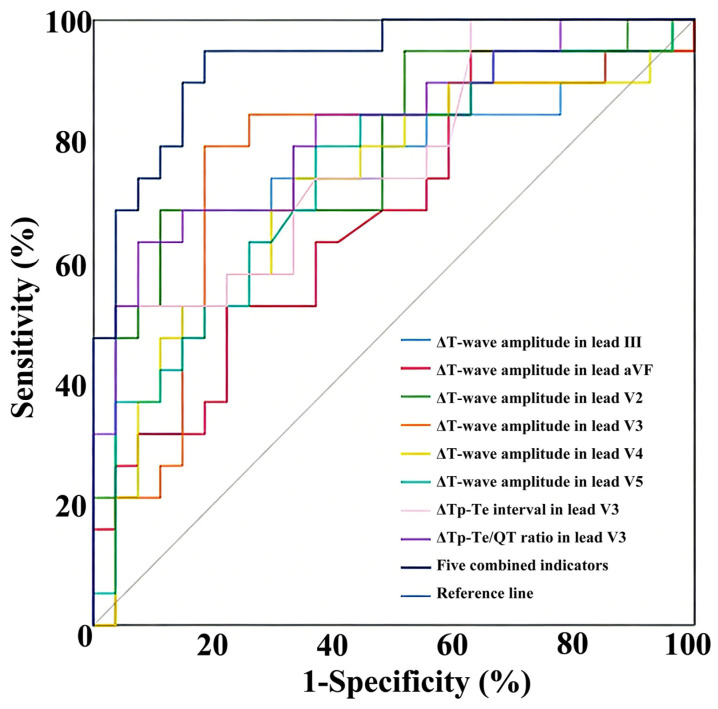 Figure 2
Peer Reviews
No public reviews on file for this paper yet. If you reviewed it on a platform where reviews are public (OpenReview, ICLR, NeurIPS, ICML), you can paste yours below so the community can read it here.
Videos
No videos yet. Explain this paper in a talk, walkthrough, or lecture? Add one.
Taxonomy
TopicsCardiovascular Syncope and Autonomic Disorders · Heart Rate Variability and Autonomic Control · Cardiac Arrhythmias and Treatments