Choroidal Thickening and Reduced Macular Blood Flow in Children with Hyperopic Anisometropic Amblyopia
Ryuya Hashimoto, Juri Kawamura, Naoki Fujioka, Kazufumi Tanaka, Moe Nunose, Sara Imai, Serika Moriyama, Ryo Yamazaki, Asato Hirota, Fumihiko Yagi

TL;DR
This study found that children with hyperopic anisometropic amblyopia have thicker choroids and reduced blood flow in the macular region of the affected eye.
Contribution
The study identifies localized macular hemodynamic dysregulation as a potential contributor to hyperopic anisometropic amblyopia.
Findings
Amblyopic eyes showed significantly greater central choroidal thickness compared to fellow eyes.
Macular blood flow and pulsatility were significantly reduced in amblyopic eyes.
No significant correlation was found between choroidal thickness and blood flow parameters in amblyopic eyes.
Abstract
Background/Objectives: This study aimed to evaluate macular choroidal blood flow dynamics and structural alterations in children with hyperopic anisometropic amblyopia and compare these findings with those of the fellow eyes. Methods: This retrospective observational study included 36 eyes from 18 children (mean age: 4.9 years) with unilateral hyperopic anisometropic amblyopia. Central choroidal thickness (CCT) was measured using enhanced depth imaging optical coherence tomography. Macular choroidal hemodynamics were assessed using laser speckle flowgraphy. Mean blur rate (MBR) was used as an index of blood flow, whereas beat strength (BS) was used as a measure of pulsatility. Ocular perfusion pressure (OPP) was also calculated. All parameters were compared between amblyopic and fellow eyes. Results: Amblyopic eyes demonstrated significantly greater CCT compared with fellow eyes (407.6…
Genes, proteins, chemicals, diseases, species, mutations and cell lines named across the full text — each resolved to its canonical identifier and authoritative record.
Click any figure to enlarge with its caption.
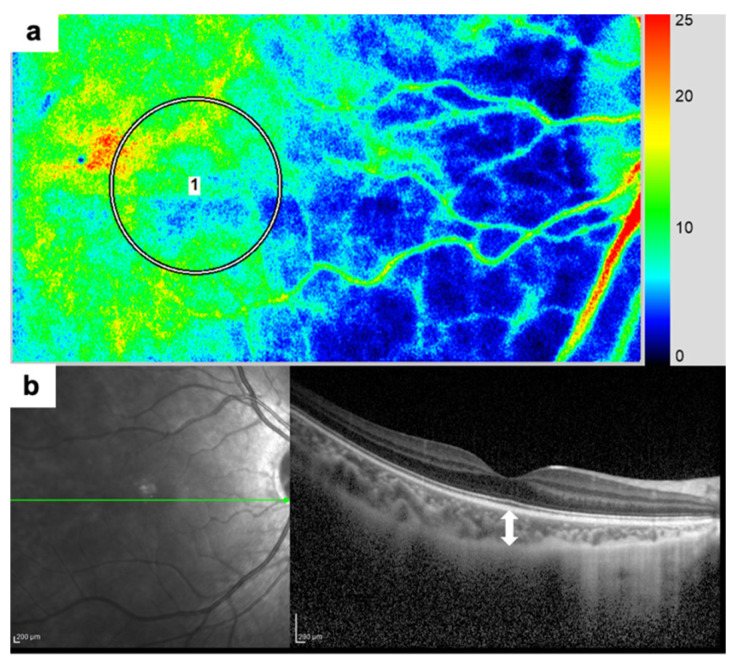 Figure 1
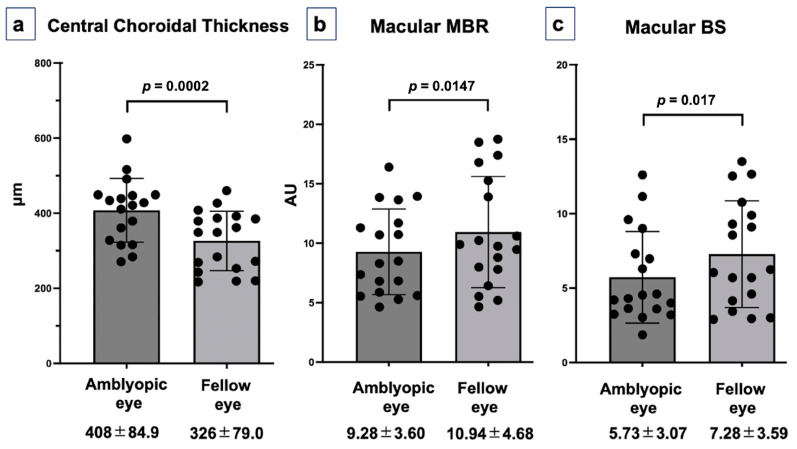 Figure 2
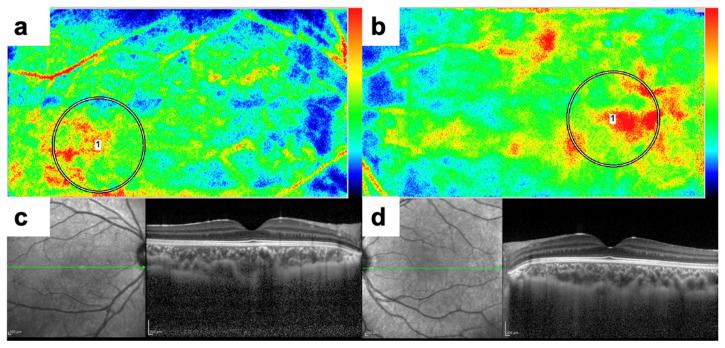 Figure 3
Peer Reviews
No public reviews on file for this paper yet. If you reviewed it on a platform where reviews are public (OpenReview, ICLR, NeurIPS, ICML), you can paste yours below so the community can read it here.
Videos
No videos yet. Explain this paper in a talk, walkthrough, or lecture? Add one.
Taxonomy
TopicsOphthalmology and Visual Impairment Studies · Visual perception and processing mechanisms · Glaucoma and retinal disorders