Targeting VEGF, PARP, and FRα Pathways in Ovarian Cancer: Clinical Advances with Bevacizumab, Rucaparib, and Mirvetuximab Soravtansine
Piotr Kawczak, Tomasz Bączek

TL;DR
This paper reviews how targeting specific molecular pathways in ovarian cancer with drugs like bevacizumab, rucaparib, and mirvetuximab soravtansine improves patient outcomes and treatment strategies.
Contribution
The paper synthesizes clinical evidence on VEGF, PARP, and FRα pathway inhibitors, highlighting their role in advancing precision oncology for ovarian cancer.
Findings
Bevacizumab improves progression-free survival when combined with chemotherapy and as maintenance therapy in advanced ovarian cancer.
PARP inhibitors like rucaparib are effective in BRCA-mutated and HRD-positive tumors through synthetic lethality.
Mirvetuximab soravtansine is a well-tolerated treatment for FRα-high, platinum-resistant ovarian cancer.
Abstract
Ovarian cancer remains a leading cause of gynecologic cancer–related mortality worldwide, and long-term outcomes with conventional cytotoxic chemotherapy remain limited. The integration of targeted therapies has substantially reshaped treatment paradigms by exploiting key molecular pathways involved in angiogenesis, DNA damage repair, and folate receptor signaling. This review synthesizes evidence from pivotal phase II and III clinical trials, translational studies, and meta-analyses evaluating inhibition of the VEGF, PARP, and folate receptor-alpha (FRα) pathways, with a focus on bevacizumab, rucaparib, and mirvetuximab soravtansine. Across disease settings, these agents have demonstrated clinically meaningful improvements in progression-free survival, durability of response, and tolerability when deployed in biomarker-selected populations. Bevacizumab has shown consistent benefit when…
Genes, proteins, chemicals, diseases, species, mutations and cell lines named across the full text — each resolved to its canonical identifier and authoritative record.
Click any figure to enlarge with its caption.
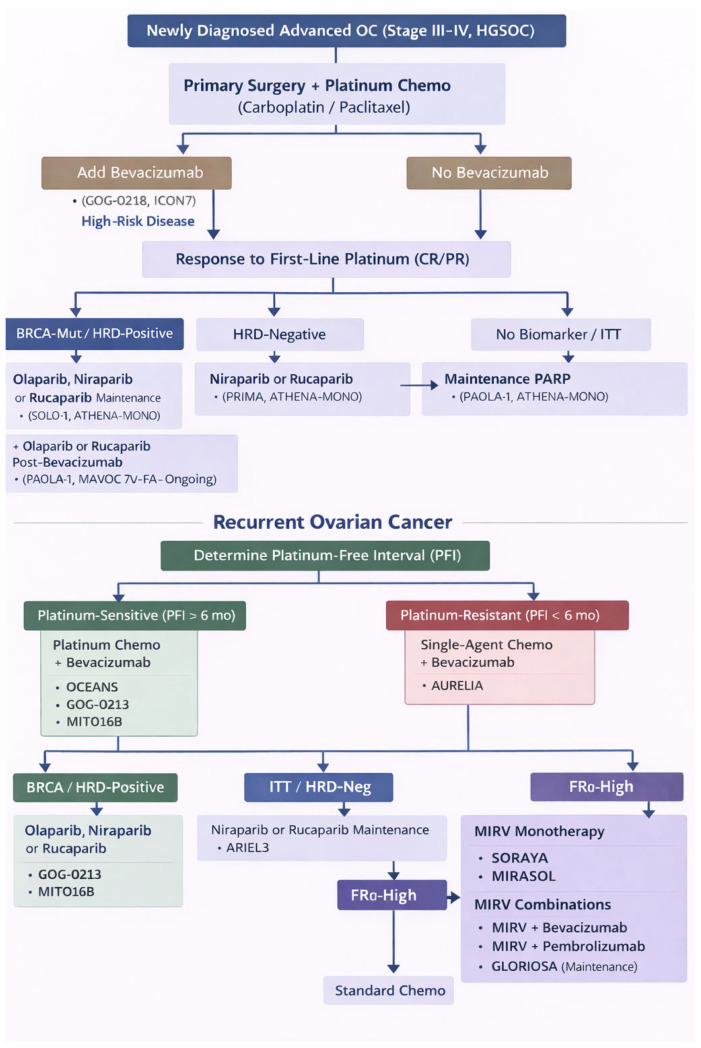 Figure 1
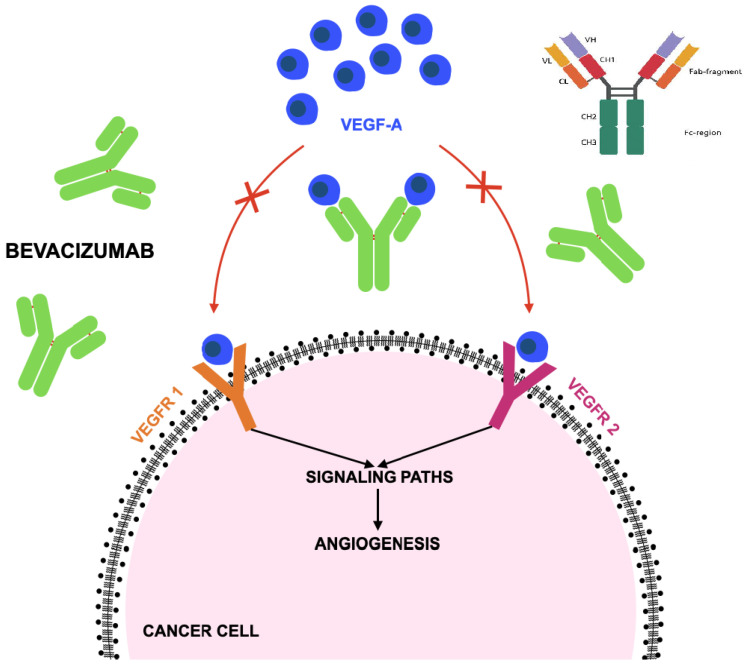 Figure 2
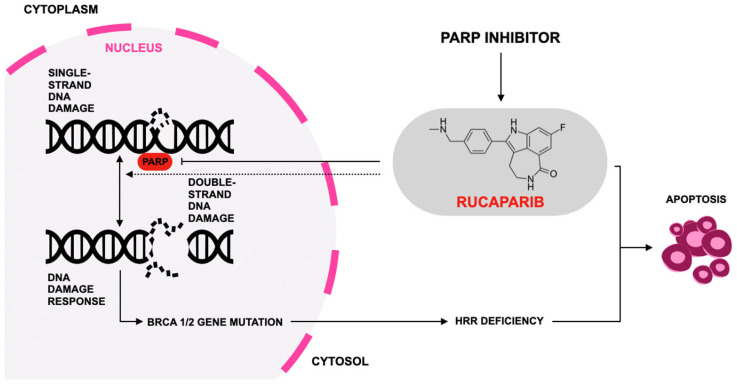 Figure 3
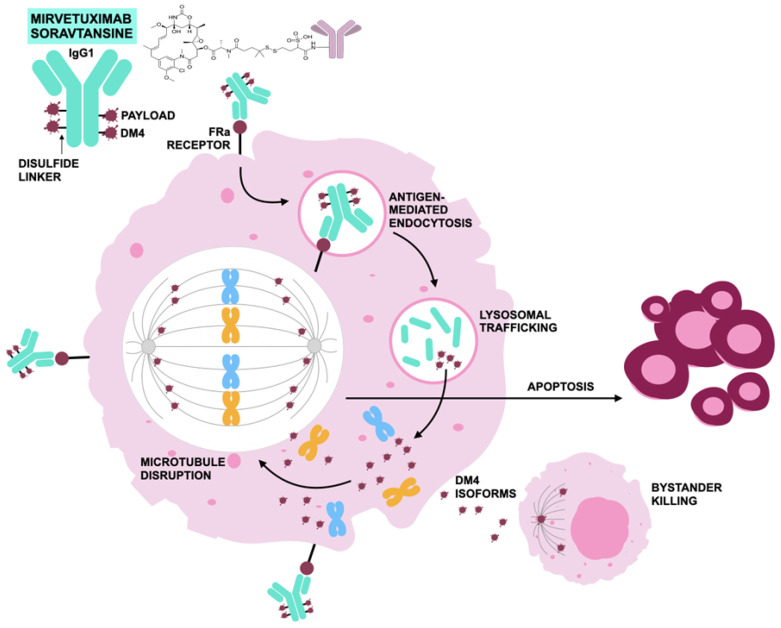 Figure 4
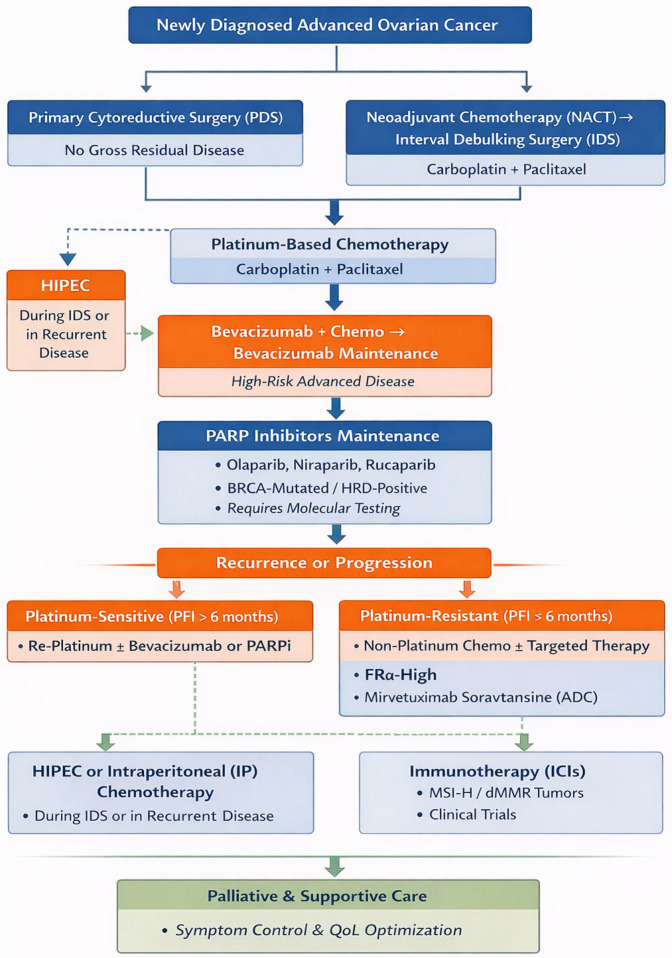 Figure 5
Peer Reviews
No public reviews on file for this paper yet. If you reviewed it on a platform where reviews are public (OpenReview, ICLR, NeurIPS, ICML), you can paste yours below so the community can read it here.
Videos
No videos yet. Explain this paper in a talk, walkthrough, or lecture? Add one.
Taxonomy
TopicsPARP inhibition in cancer therapy · Ovarian cancer diagnosis and treatment · Endoplasmic Reticulum Stress and Disease