Treatment Persistence in Migraine Prophylaxis Comparing CGRP Monoclonal Antibodies vs. High-/Low-Evidence Conventional Oral Preventives—A Comparative Real-World Evidence Study of Depersonalized Data of the German Pain e-Registry
Michael A. Überall, Philipp C. G. Müller-Schwefe, Michael A. Küster, Jan-Peter Jansen

TL;DR
This study compares how long patients stay on different migraine prevention treatments, finding that CGRP monoclonal antibodies are much more persistent than traditional oral medications.
Contribution
The study provides real-world evidence on treatment persistence and discontinuation reasons for CGRP mAB versus conventional oral migraine preventives.
Findings
CGRP monoclonal antibodies showed 89.4% persistence at six months, significantly higher than oral medications.
Oral preventives had high discontinuation rates due to adverse drug reactions and insufficient efficacy.
Tricyclic antidepressants had the steepest early attrition among high-evidence oral preventives.
Abstract
Background/Objectives: Real-world persistence of traditional oral migraine preventive medications is low in routine care. Prior large claims-based analyses demonstrated early discontinuation of oral prophylaxis, but such datasets neither included modern preventive options such as monoclonal antibodies (mAB) against calcitonin-gene-related peptide (CGRP), nor were able to capture clinically validated reasons for discontinuation. The primary aim was to compare real-world treatment persistence and discontinuation reasons due to adverse drug reactions (ADRs) or insufficient efficacy among three preventive therapy classes: subcutaneous CGRP mAB and oral high- (HEVP) and low-evidence preventive medications (LEVP). A secondary aim was to examine persistence patterns of individual substances within the HEVP cohort. Methods: This exploratory observational study used depersonalized real-world…
Genes, proteins, chemicals, diseases, species, mutations and cell lines named across the full text — each resolved to its canonical identifier and authoritative record.
Click any figure to enlarge with its caption.
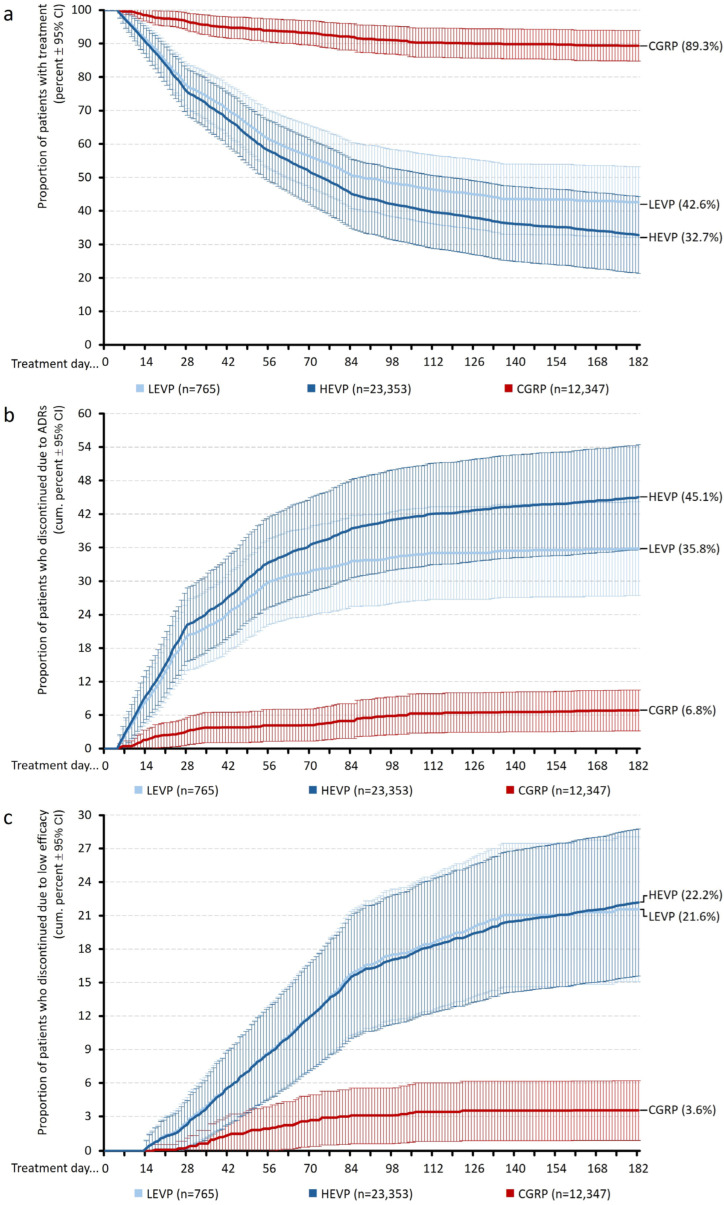 Figure 1
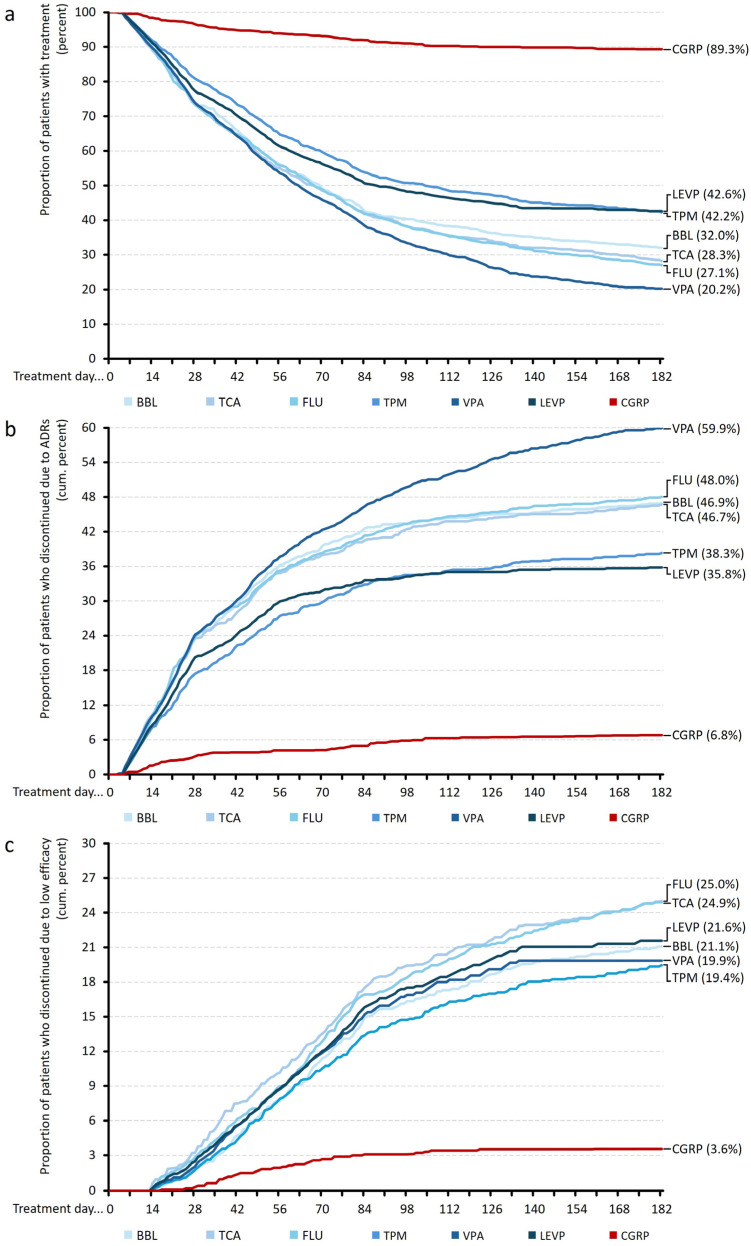 Figure 2
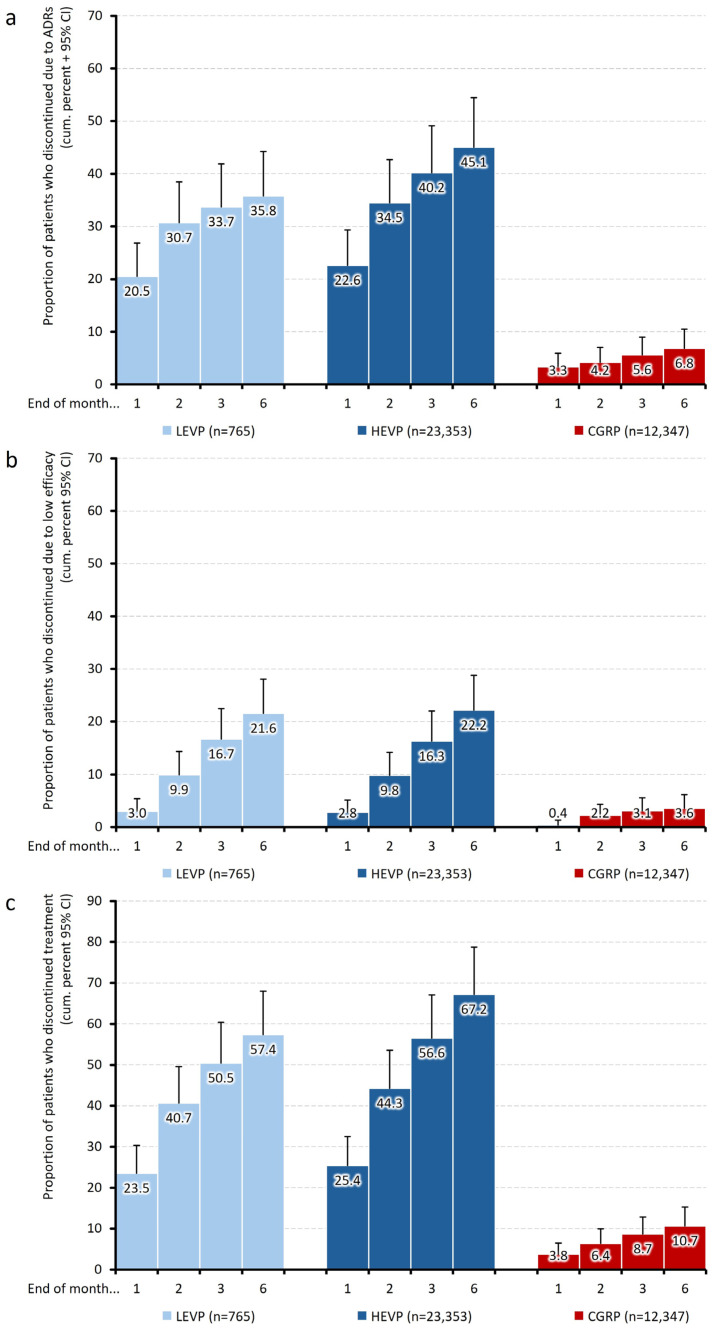 Figure 3
Peer Reviews
No public reviews on file for this paper yet. If you reviewed it on a platform where reviews are public (OpenReview, ICLR, NeurIPS, ICML), you can paste yours below so the community can read it here.
Videos
No videos yet. Explain this paper in a talk, walkthrough, or lecture? Add one.
Taxonomy
TopicsMigraine and Headache Studies · Fibromyalgia and Chronic Fatigue Syndrome Research · Autoimmune Neurological Disorders and Treatments