Emodin and the Anthraquinone Scaffold: Therapeutic Promise and Strategies to Overcome Translational Barriers
Rositsa Mihaylova, Viktoria Elincheva, Rumyana Simeonova, Georgi Momekov

TL;DR
Emodin, a plant-derived compound, shows promise for various health benefits but faces challenges in drug development due to absorption and toxicity issues.
Contribution
This review provides a comprehensive analysis of emodin and anthraquinone derivatives, focusing on strategies to overcome translational barriers.
Findings
Emodin and anthraquinone derivatives target multiple pathways like NF-κB and MAPKs with diverse biological effects.
Clinical development is hindered by poor ADME properties and variable systemic exposure.
Formulation strategies aim to separate bioactivity from pharmacokinetic limitations.
Abstract
Emodin, a trihydroxy-methyl anthraquinone abundant in rhubarb, Polygonum species, and other medicinal plants, exemplifies the therapeutic potential and translational complexity of the broader anthraquinone scaffold. Anthraquinone derivatives have demonstrated antiproliferative, anti-inflammatory, metabolic, cardiovascular, antifibrotic, and immunomodulatory effects, consistently reported across diverse preclinical models, targeting pathways such as NF-κB, PI3K/AKT, MAPKs, AMPK, PPARs, NLRP3, and ferroptosis-related axes. Despite strong preclinical efficacy, clinical development has been limited by unfavorable absorption, distribution, metabolism, and excretion (ADME) characteristics, including poor aqueous solubility, extensive first-pass glucuronidation, and active efflux via intestinal and hepatic transporters. These features result in low and variable systemic exposure, while high…
Genes, proteins, chemicals, diseases, species, mutations and cell lines named across the full text — each resolved to its canonical identifier and authoritative record.
Click any figure to enlarge with its caption.
 Figure 1
 Figure 2
 Figure 3
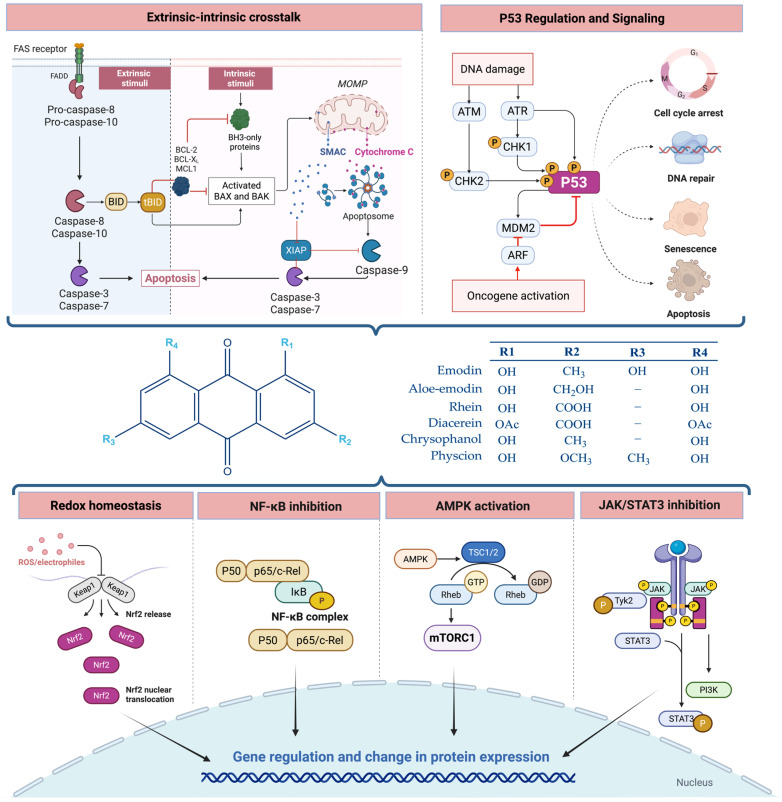 Figure 4
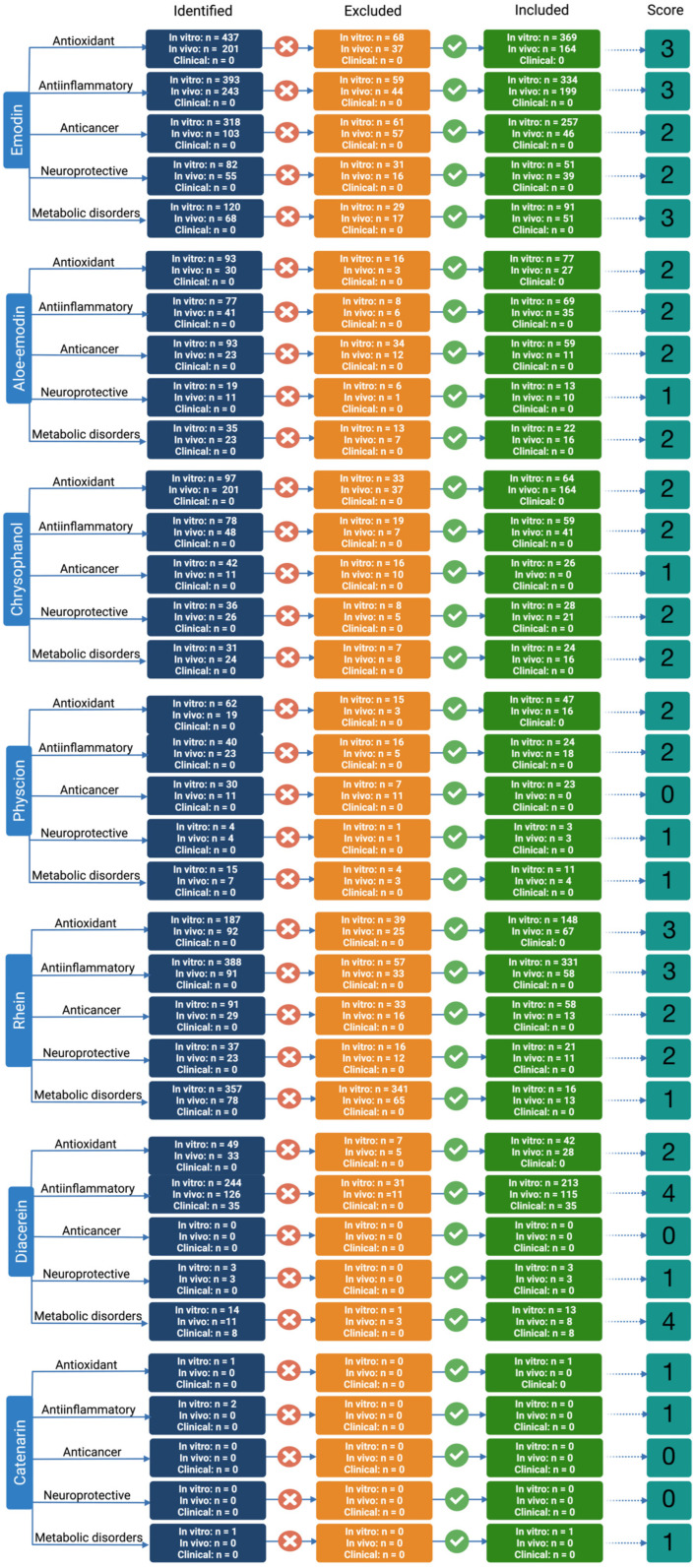 Figure 5
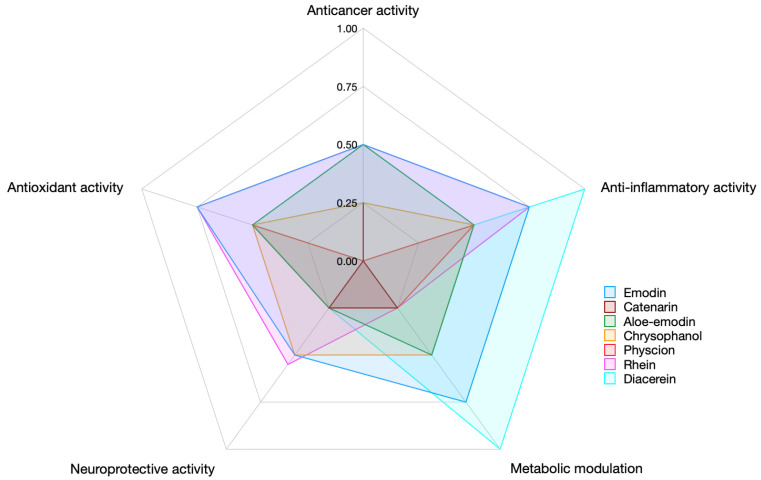 Figure 6
Peer Reviews
No public reviews on file for this paper yet. If you reviewed it on a platform where reviews are public (OpenReview, ICLR, NeurIPS, ICML), you can paste yours below so the community can read it here.
Videos
No videos yet. Explain this paper in a talk, walkthrough, or lecture? Add one.
Taxonomy
TopicsPhytochemistry and biological activity of medicinal plants · Morinda citrifolia extract uses · Pharmacological Effects of Natural Compounds