Tubular Damage Biomarkers Are a Useful Tool for Identifying Early Renal Injury in Long COVID
Caio V. B. Menário, Rodrigo P. Silva-Aguiar, Douglas E. Teixeira, Gabriela S. Nascimento, Nina R. G. R. Visconti, Luana S. Andrade, Fernanda C. Q. Mello, José R. Lapa-e-Silva, Nazareth N. Rocha, Camila M. Martins, Fernanda F. Cruz, Ana Acacia S. Pinheiro, Pedro L. Silva

TL;DR
This study shows that measuring tubular damage biomarkers can detect early kidney injury in long COVID patients, even when other kidney tests appear normal.
Contribution
The study introduces the use of tubular damage biomarkers to detect early kidney injury in long COVID, revealing higher prevalence than previously recognized.
Findings
49.3% of long COVID patients had normal eGFR but showed signs of early tubular injury.
Tubular damage biomarkers were abnormal in 29.7% of patients with normal eGFR.
Tubular injury was more common at 6 months post-infection, while glomerular dysfunction increased at 24 months.
Abstract
Patients without overt glomerular dysfunction may develop tubular injury, referred to as subclinical acute kidney injury. The burden of COVID-19-related renal damage may therefore be underestimated, as current KDIGO criteria do not include tubular damage biomarkers (TDBs). This study evaluated kidney injury in patients with long COVID by assessing TDBs alongside glomerular biomarkers, proteinuria (UPCr) and albuminuria (UACr). In this cross-sectional study, 75 patients without prior chronic kidney disease were recruited from a long COVID outpatient clinic and stratified according to the time since SARS-CoV-2 infection into 6-, 12-, and 24-month post-COVID-19 groups (referred to as 6-, 12-, and 24-MPC, respectively). Overall, 49.3% of patients had normal estimated glomerular filtration rate (eGFR >90 mL/min/1.73 m2), 34.7% showed mildly reduced eGFR (90–60), and 16% exhibited marked eGFR…
Genes, proteins, chemicals, diseases, species, mutations and cell lines named across the full text — each resolved to its canonical identifier and authoritative record.
Click any figure to enlarge with its caption.
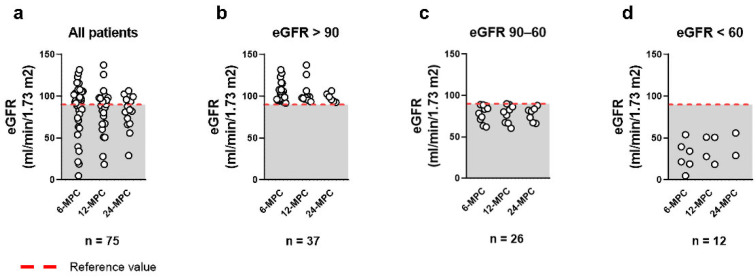 Figure 1
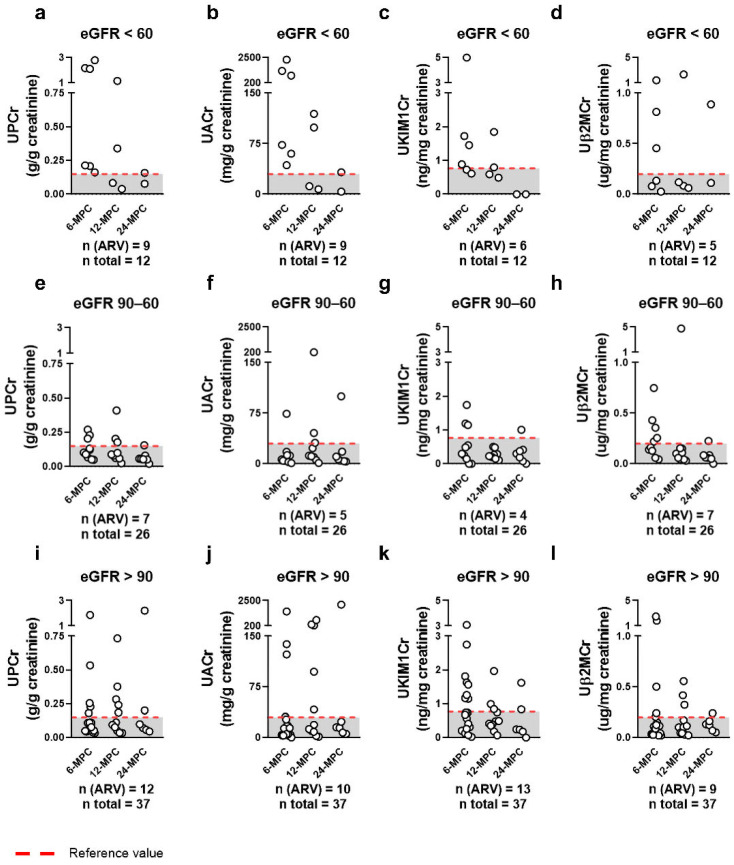 Figure 2
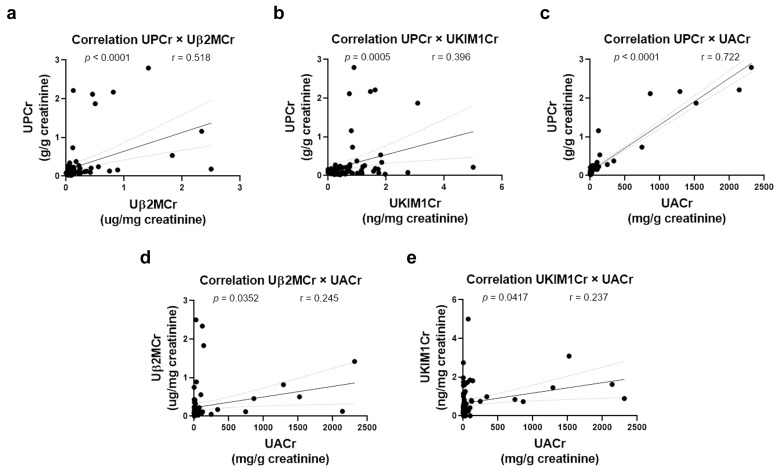 Figure 3
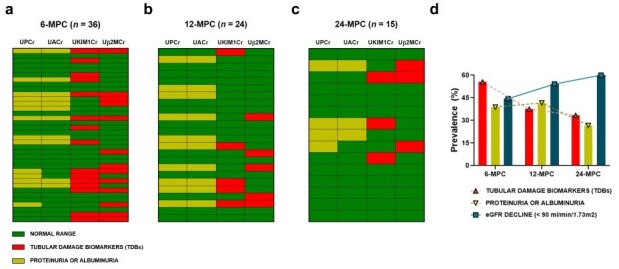 Figure 4
Peer Reviews
No public reviews on file for this paper yet. If you reviewed it on a platform where reviews are public (OpenReview, ICLR, NeurIPS, ICML), you can paste yours below so the community can read it here.
Videos
No videos yet. Explain this paper in a talk, walkthrough, or lecture? Add one.
Taxonomy
TopicsCOVID-19 Clinical Research Studies · Acute Kidney Injury Research · Long-Term Effects of COVID-19