Posterior Reversible Encephalopathy Syndrome in Peritoneal Dialysis Patients: A Four-Case Series
Nanda Shajan, Gabrielė Mikšytė, Diana Sukackienė, Giedrė Žulpaitė, Raminta Lukšaitė-Lukštė, Laurynas Rimševičius, Marius Miglinas

TL;DR
This study examines four cases of posterior reversible encephalopathy syndrome in patients on peritoneal dialysis, highlighting the importance of early diagnosis and treatment adjustments.
Contribution
The study provides new insights into the clinical presentation and management of PRES in peritoneal dialysis patients.
Findings
All patients presented with acute neurological symptoms like headache and seizures alongside hypertension and uremia.
Neuroimaging findings varied from normal to extensive vasogenic edema in PRES cases.
Transitioning to hemodialysis improved outcomes in patients with inadequate peritoneal dialysis control.
Abstract
Background/Objectives: Posterior reversible encephalopathy syndrome (PRES) is a neurological condition characterized by acute neurological symptoms and vasogenic edema, usually affecting the posterior circulation. It is described in end-stage renal disease (ESRD), but its presentation in peritoneal dialysis (PD) is not well defined. We aimed to describe the clinical, radiological, and dialysis-related features of PRES in PD patients and highlight factors relevant for diagnosis and management. Materials and Methods: We conducted a retrospective descriptive case series of four ESRD patients on PD or recently transitioned from PD to hemodialysis (HD) who developed PRES at a single center. Clinical data, laboratory results, dialysis characteristics, and neuroimaging findings were obtained from medical records. PRES was diagnosed based on acute neurological symptoms in the setting of severe…
Genes, proteins, chemicals, diseases, species, mutations and cell lines named across the full text — each resolved to its canonical identifier and authoritative record.
Click any figure to enlarge with its caption.
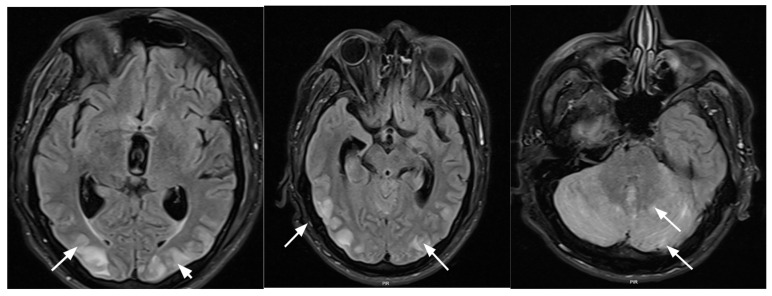 Figure 1
Peer Reviews
No public reviews on file for this paper yet. If you reviewed it on a platform where reviews are public (OpenReview, ICLR, NeurIPS, ICML), you can paste yours below so the community can read it here.
Videos
No videos yet. Explain this paper in a talk, walkthrough, or lecture? Add one.
Taxonomy
TopicsNeurological Complications and Syndromes · Moyamoya disease diagnosis and treatment · Electrolyte and hormonal disorders