Biological Activity of Stilbenoids Against Fungal, Parasitic, and Viral Pathogens
Aristodemos-Theodoros Periferakis, Argyrios Periferakis, Lamprini Troumpata, Konstantinos Periferakis, Andreea-Elena Scheau, Adrian Iftime, Ana Caruntu, Ioana Anca Badarau, Constantin Caruntu, Cristian Scheau

TL;DR
This paper reviews the antifungal, antiparasitic, and antiviral properties of stilbenoids, highlighting their potential as natural therapeutic agents.
Contribution
The study provides a comprehensive overview of the biological activity of various stilbenoids against multiple types of pathogens.
Findings
Stilbenoids show fungicidal and fungistatic effects against several fungal species.
They inhibit parasitic enzymatic activity and proliferation in various parasites.
Stilbenoids reduce viral replication and inhibit viral genome expression and cell attachment.
Abstract
Stilbenoids are plant-derived chemical compounds that are classified as phytoalexins; recent focus has been drawn, especially on astringin, piceid, piceatannol, pterostilbene, pinosylvin, and resveratrol. These substances have been extensively studied for a variety of beneficial properties, including their effects on pathogenic microorganisms, parasites, and viruses. In their antifungal capacity, they are effective against Aspergillus spp., Botrytis spp., Candida spp., Trichophyton spp., and other fungi; tested stilbenoids have exhibited fungicidal and fungistatic effects, and inhibition of biofilm formation. Against parasites, they are effective against Echinococcus spp., Leishmania spp., Schistosoma spp., Trypanosoma spp., Toxoplasma spp., among others. Relevant action mechanisms include a reduction in parasitic enzymatic activity and inhibition of proliferation. They are also…
Genes, proteins, chemicals, diseases, species, mutations and cell lines named across the full text — each resolved to its canonical identifier and authoritative record.
Click any figure to enlarge with its caption.
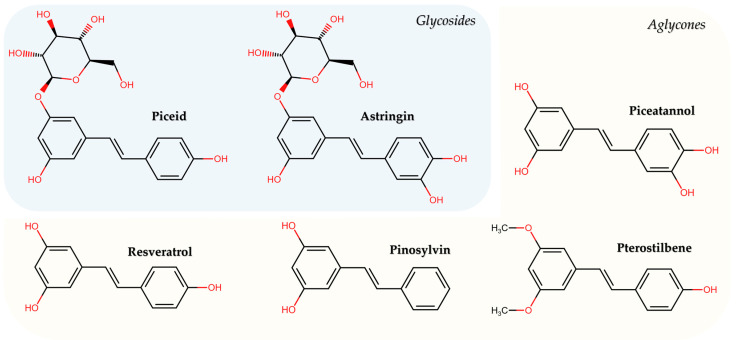 Figure 1
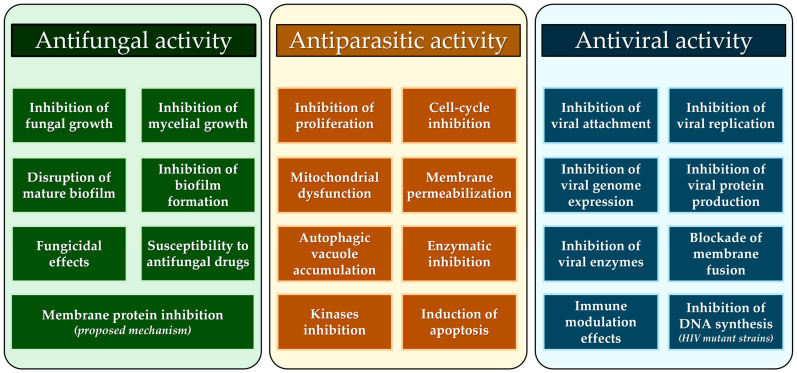 Figure 2
Peer Reviews
No public reviews on file for this paper yet. If you reviewed it on a platform where reviews are public (OpenReview, ICLR, NeurIPS, ICML), you can paste yours below so the community can read it here.
Videos
No videos yet. Explain this paper in a talk, walkthrough, or lecture? Add one.
Taxonomy
TopicsSirtuins and Resveratrol in Medicine · Advances in Cucurbitaceae Research · Genomics, phytochemicals, and oxidative stress