Alteration in Fetal Cardiac Function at Mid-Gestation Among Pregnancies Subsequently Complicated by Preeclampsia, Fetal Growth Restriction and Gestational Diabetes Mellitus: A Literature Review
Iulia Huluță, Livia-Mihaela Apostol, Nicoleta Gana, Radu Botezatu, Anca-Maria Panaitescu

TL;DR
This review explores how fetal heart function changes during mid-pregnancy in cases that later develop preeclampsia, fetal growth restriction, or gestational diabetes.
Contribution
The study systematically reviews mid-gestation fetal cardiac deformation data using 2D-STE to identify early cardiovascular programming signatures.
Findings
2D-STE detects subclinical myocardial deformation before conventional methods in pregnancies with later complications.
Mid-gestation (18–28 weeks) is a critical window for identifying early fetal cardiovascular changes.
Current data on mid-gestation fetal cardiac function in high-risk pregnancies remain limited.
Abstract
Preeclampsia (PE), fetal growth restriction (FGR), and gestational diabetes mellitus (GDM) complicate approximately 15–20% of pregnancies and represent major contributors to perinatal morbidity, mortality, and long-term cardiovascular risk in offspring. Increasing evidence from longitudinal cohort studies indicates that adult cardiovascular disease, including hypertension, coronary artery disease, and stroke, may be programmed in utero through early alterations in fetal cardiac structure and function. Two-dimensional speckle-tracking echocardiography (2D-STE) has emerged as the most sensitive non-invasive technique for detecting subclinical myocardial deformation, often preceding abnormalities detected by conventional Doppler or biometric parameters. While numerous third-trimester studies have demonstrated impaired global longitudinal strain (GLS), altered ventricular geometry, and…
Genes, proteins, chemicals, diseases, species, mutations and cell lines named across the full text — each resolved to its canonical identifier and authoritative record.
Click any figure to enlarge with its caption.
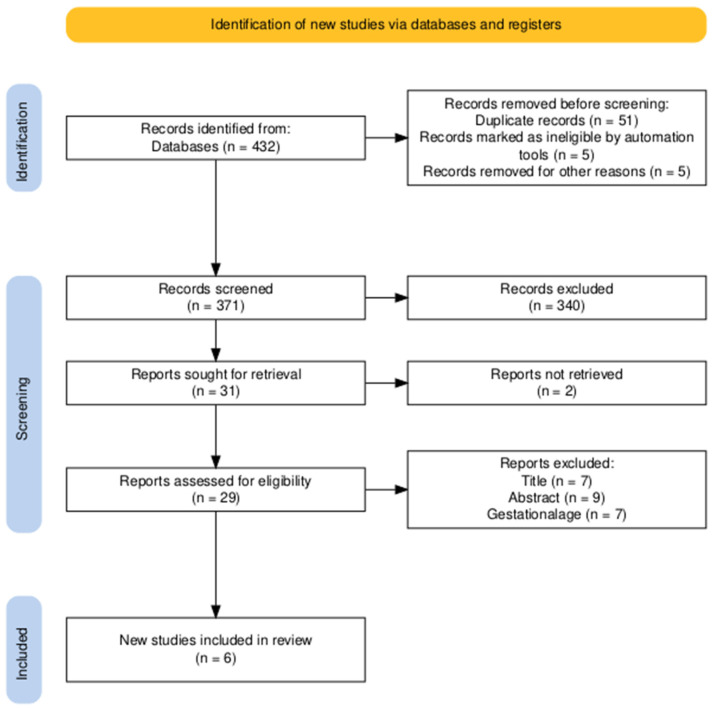 Figure 1
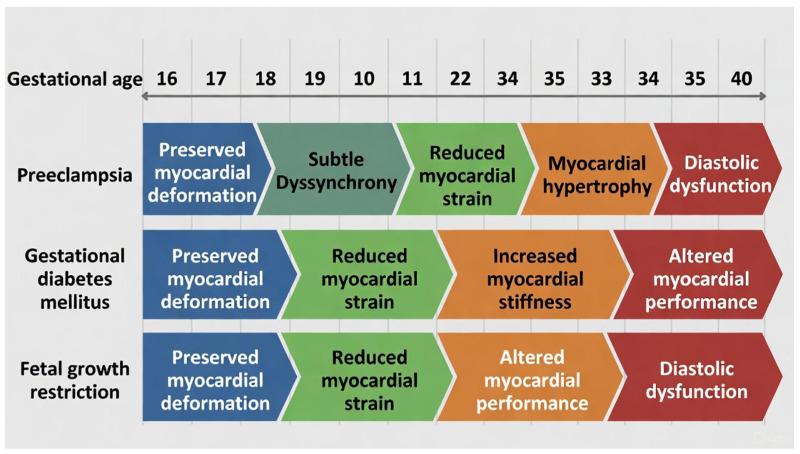 Figure 2
Peer Reviews
No public reviews on file for this paper yet. If you reviewed it on a platform where reviews are public (OpenReview, ICLR, NeurIPS, ICML), you can paste yours below so the community can read it here.
Videos
No videos yet. Explain this paper in a talk, walkthrough, or lecture? Add one.
Taxonomy
TopicsPregnancy and preeclampsia studies · Cardiovascular Function and Risk Factors · Gestational Diabetes Research and Management