A Two-Track Model of Huntington’s Disease Pathology: Striatal Atrophy Mediates Maladaptive Immune Dysregulation
H. Jeremy Bockholt, Jordan D. Clemsen, Bradley T. Baker, Vince D. Calhoun, Jane S. Paulsen

TL;DR
The study identifies two distinct biological pathways in Huntington’s disease: one linked to brain structure loss and another to immune system dysfunction.
Contribution
The novel contribution is the identification of a 'Two-Track' model linking striatal atrophy to immune dysregulation in HD.
Findings
Striatal atrophy correlates with elevated neurofilament light chain (NEFL), indicating structural neurodegeneration.
TNFRSF8 (CD30) levels increase with striatal volume, suggesting declining immune regulation as HD progresses.
Striatal atrophy mediates the relationship between genetic burden and immune dysregulation in HD.
Abstract
Huntington’s disease (HD) is characterized by progressive striatal atrophy and complex proteomic changes in the central nervous system. Using the ultrasensitive Next-Gen Ultra-Sensitive Immunoassay (NULISA) proteomic platform, we analyzed cerebrospinal fluid (CSF) from 88 persons with HD to dissect the biological correlates of gray matter loss. Our findings reveal a distinct “Two-Track” model of pathology. The first track, marked by the axonal damage protein neurofilament light chain (NEFL), showed a strong inverse correlation with putamen volume (Pearson r = −0.53, p < 0.001), reinforcing its utility as a proxy for structural neurodegeneration. The second track was defined by a positive association between the immune regulator TNFRSF8 (CD30) and putamen volume (Pearson r = 0.36, p < 0.001), reflecting a decline in active immune-regulatory signaling as striatal atrophy advances. Given…
Genes, proteins, chemicals, diseases, species, mutations and cell lines named across the full text — each resolved to its canonical identifier and authoritative record.
Click any figure to enlarge with its caption.
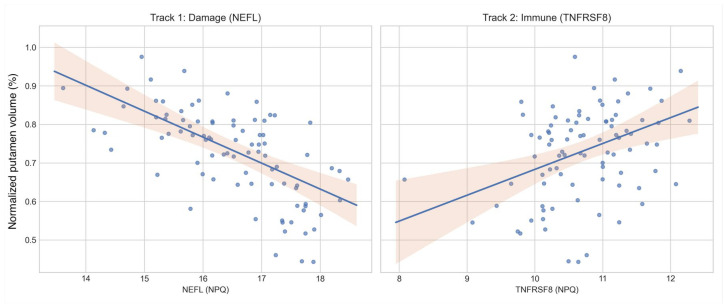 Figure 1
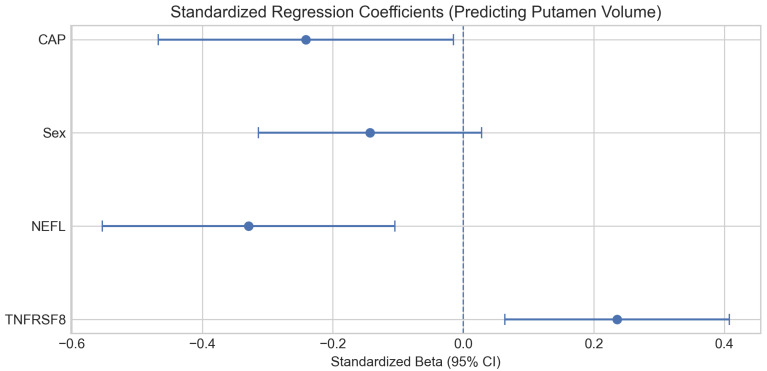 Figure 2
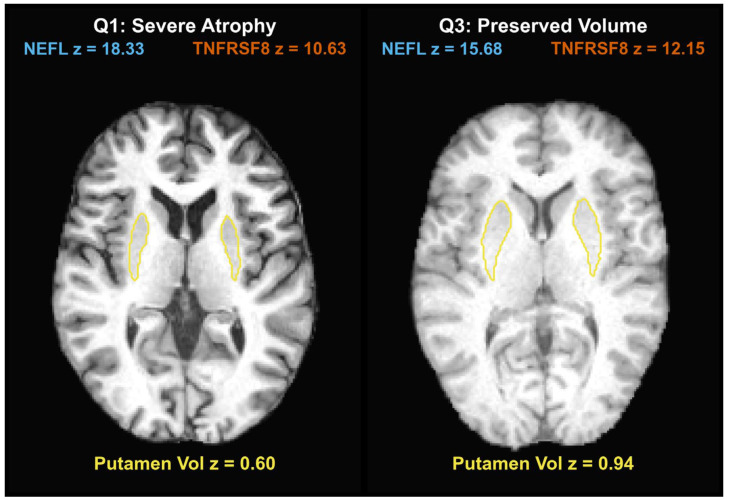 Figure 3
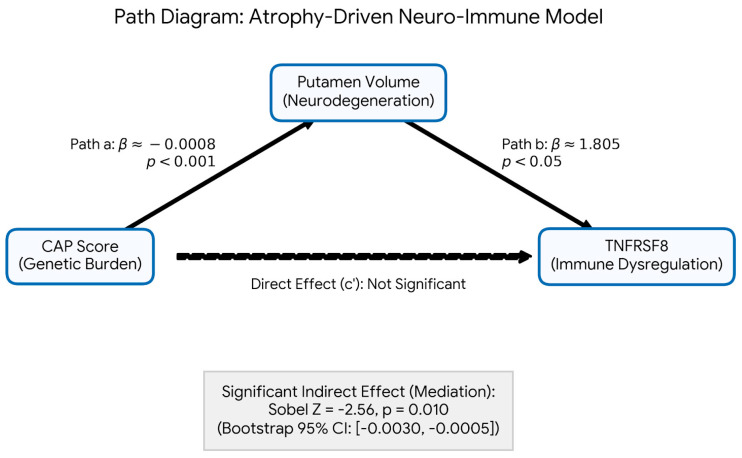 Figure 4
Peer Reviews
No public reviews on file for this paper yet. If you reviewed it on a platform where reviews are public (OpenReview, ICLR, NeurIPS, ICML), you can paste yours below so the community can read it here.
Videos
No videos yet. Explain this paper in a talk, walkthrough, or lecture? Add one.
Taxonomy
TopicsGenetic Neurodegenerative Diseases · Amyotrophic Lateral Sclerosis Research · Tryptophan and brain disorders