Understanding the Oxidation Electrochemistry of Adsorbed Eugenol on a Glassy Carbon Electrode Modified with Electrochemically Partially Reduced Graphene Oxide: A Theoretical and Experimental Approach
Gastón Darío Pierini, Edgardo Maximiliano Gavilán-Arriazu, Sergio Antonio Rodriguez, Sebastián Noel Robledo, Héctor Fernández, Adrian Marcelo Granero

TL;DR
This study explores how eugenol, a natural antioxidant, undergoes oxidation on a modified electrode, revealing a detailed multi-step electrochemical process.
Contribution
The paper provides a novel theoretical and experimental analysis of eugenol oxidation pathways using DFT and voltammetry.
Findings
Eugenol oxidation involves a radical intermediate followed by formation of cationic products.
Two oxidation pathways branch into methylenquinone and 4-allyl-1,2-diquinone.
4-allyl-1,2-diquinone is reversibly reduced to hydroquinone species.
Abstract
The electro-oxidation of eugenol (EUG) natural antioxidant was studied by cyclic voltammetry in phosphate buffer solutions (PBS) of different pH at electrochemically partially reduced graphene oxide (GCE/ePRGO). The voltammetric responses were mainly controlled by adsorption at this modified electrode. Current values were higher at pH 2.0 PBS, therefore, this pH was chosen to perform all experiments. DFT calculations of pKa’s and standard potentials defined the possible pathways of eugenol and its oxidation products. These pathways were evaluated through the comparison of voltammetric simulations of adsorbed species with experiments at pH 2.0, which also allowed for the estimation of the values of the kinetic parameters involved in electrochemistry. Our findings suggest a multi-step redox process in which Eugenol is first oxidized to the radical species and then to a cationic product.…
Genes, proteins, chemicals, diseases, species, mutations and cell lines named across the full text — each resolved to its canonical identifier and authoritative record.
Click any figure to enlarge with its caption.
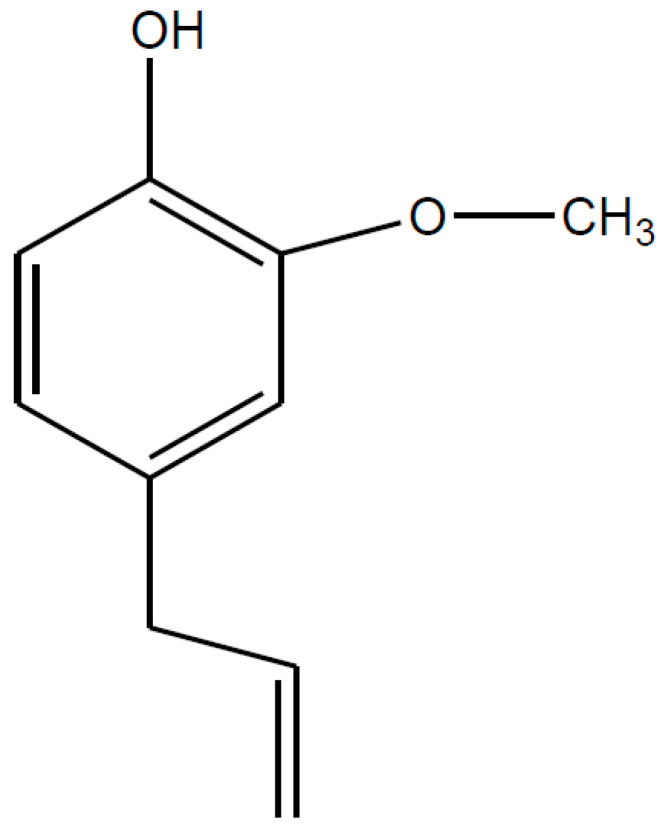 Figure 1
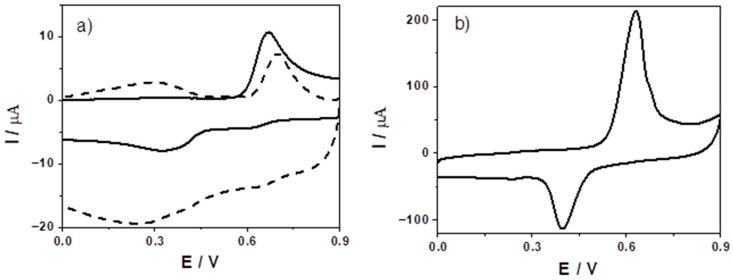 Figure 2
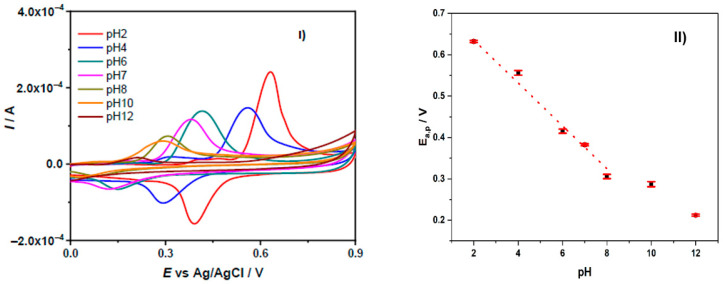 Figure 3
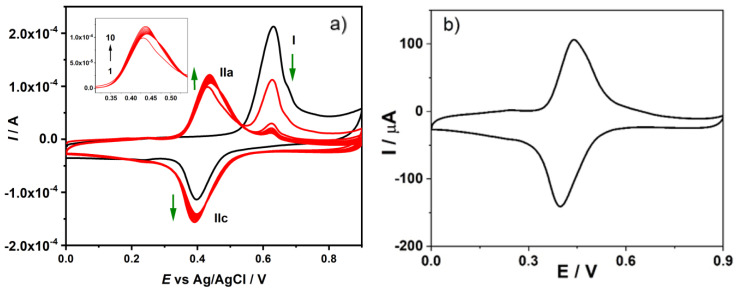 Figure 4
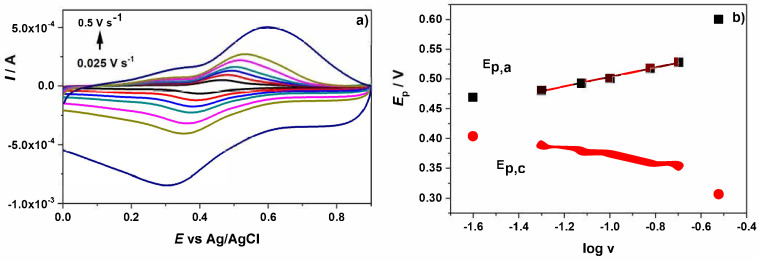 Figure 5
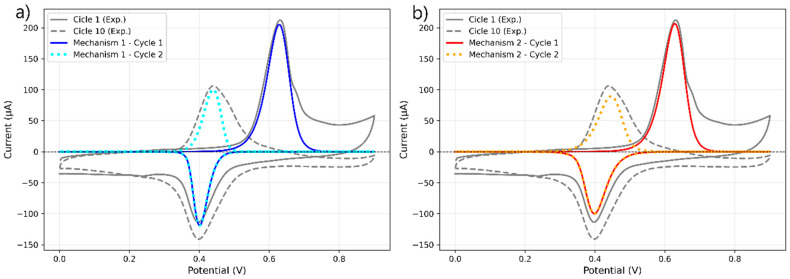 Figure 6
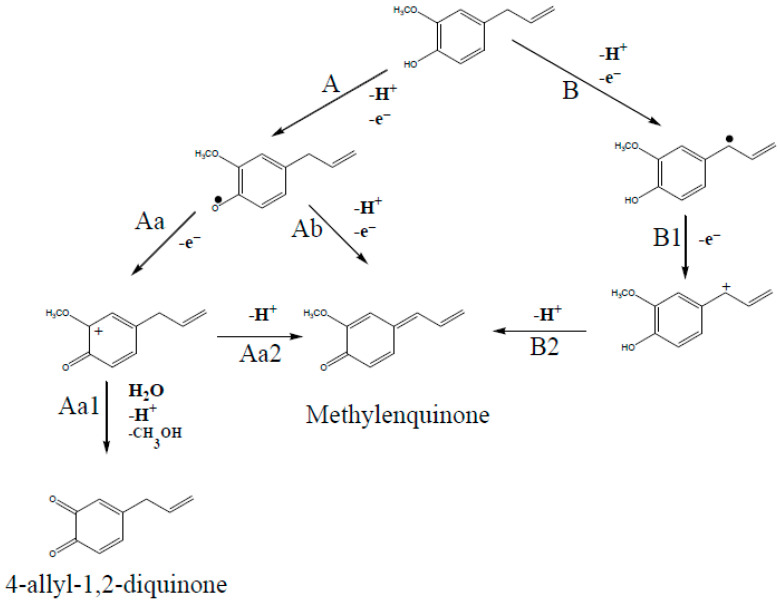 Figure 7
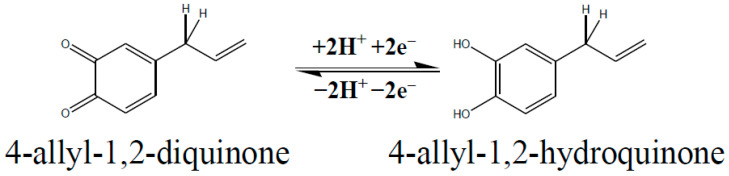 Figure 8
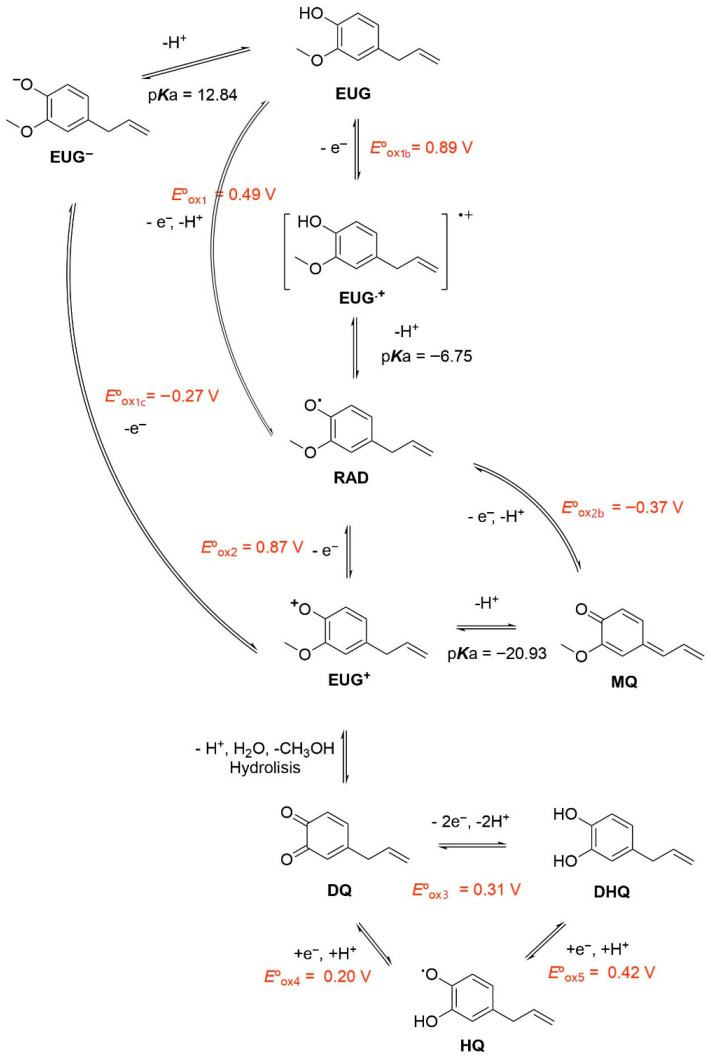 Figure 9
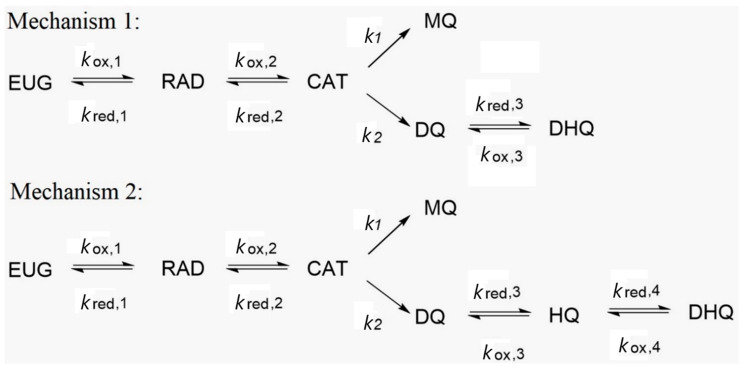 Figure 10
Peer Reviews
No public reviews on file for this paper yet. If you reviewed it on a platform where reviews are public (OpenReview, ICLR, NeurIPS, ICML), you can paste yours below so the community can read it here.
Videos
No videos yet. Explain this paper in a talk, walkthrough, or lecture? Add one.
Taxonomy
TopicsAdvanced oxidation water treatment · Electrochemical sensors and biosensors · Biochemical and biochemical processes