Human Immunodeficiency Virus–Associated Proteomic Signature of Myocardial Fibrosis and Incident Heart Failure
Tess E. Peterson, Virginia S. Hahn, Ruin Moaddel, Min Zhu, Jinshui Fan, Supriyo De, Sabina A. Haberlen, Frank J. Palella, Michael Plankey, Joel S. Bader, Joao A. C. Lima, Robert E. Gerszten, Jerome I. Rotter, Gregory D. Kirk, Damani A. Piggott, Luigi Ferrucci

TL;DR
People with HIV are more likely to develop heart issues like fibrosis and heart failure, and this study found a specific set of proteins linked to these risks.
Contribution
The study identifies a novel HIV-related proteomic signature associated with myocardial fibrosis and future heart failure.
Findings
39 proteins and a cluster of 42 proteins were higher in people with HIV and linked to heart fibrosis.
The protein cluster predicted future heart failure in a general population cohort.
The signature is enriched for immune-related processes like T-cell activation and tissue repair.
Abstract
People with human immunodeficiency virus (HIV) (PWH) are at higher risk of myocardial fibrosis and subsequent heart failure (HF) compared to people without HIV (PWOH). Mechanisms underlying this risk and its specificity to PWH are unclear. We measured 2594 proteins in plasma obtained concurrently with cardiovascular magnetic resonance imaging among 342 PWH and PWOH. We estimated associations with HIV serostatus and myocardial fibrosis (elevated extracellular volume fraction [ECV] ≥30% among women, ≥28% among men) using multivariable regression. Among an independent community-based cohort, we estimated associations between the identified signature and time to incident HF. Mean age of participants was 55 (standard deviation [SD], 6) years, 25% were female, 61% were PWH (88% on antiretroviral therapy, 74% with undetectable HIV RNA), and 52% had elevated ECV. We identified 39 proteins and…
Genes, proteins, chemicals, diseases, species, mutations and cell lines named across the full text — each resolved to its canonical identifier and authoritative record.
Click any figure to enlarge with its caption.
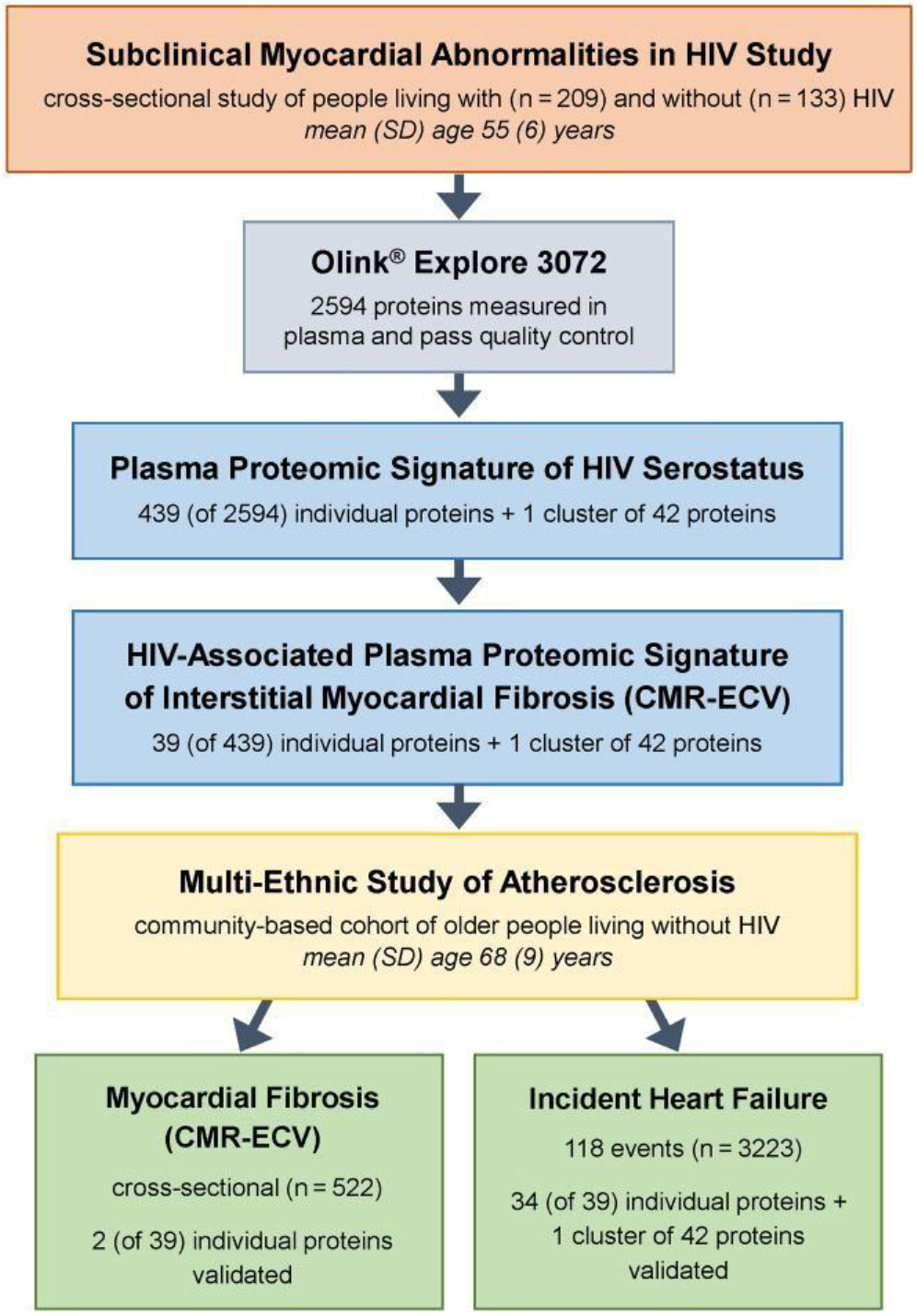 Figure 1
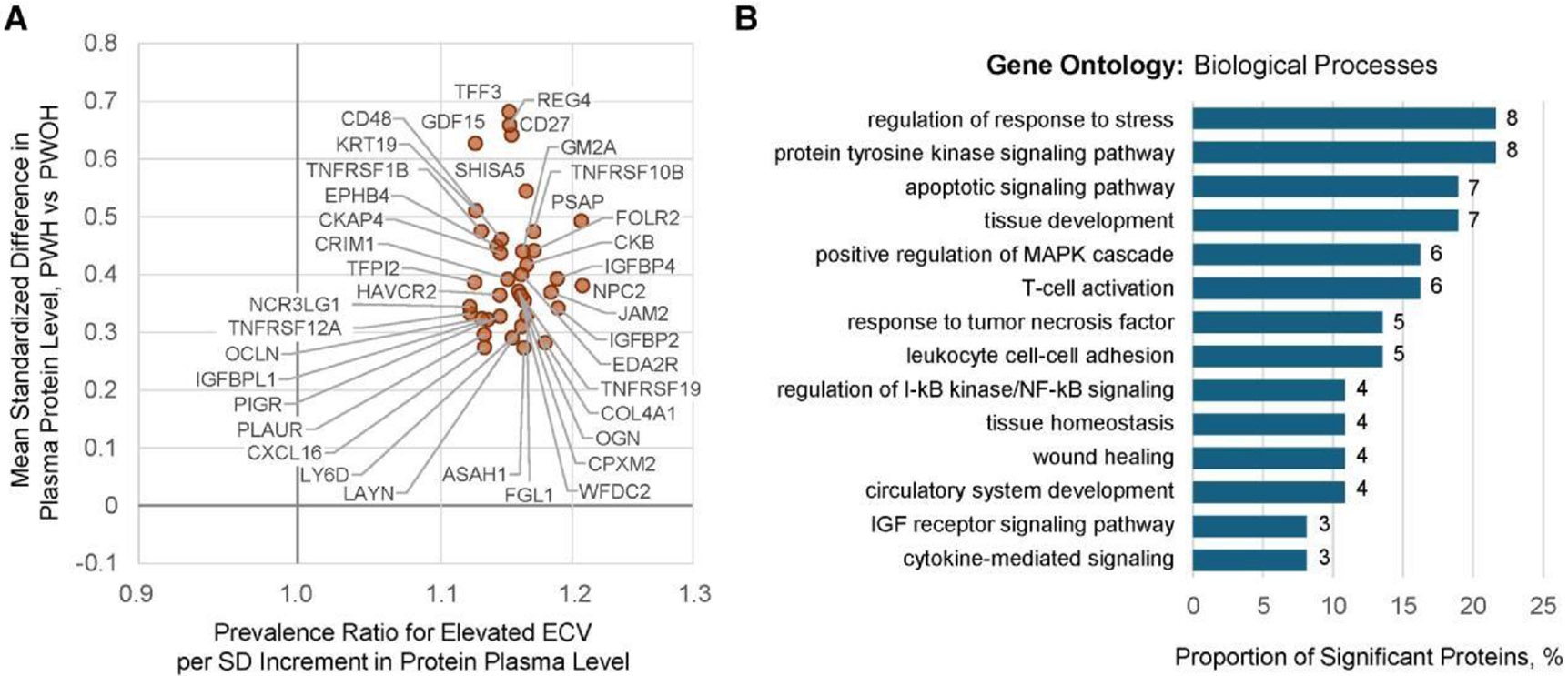 Figure 2
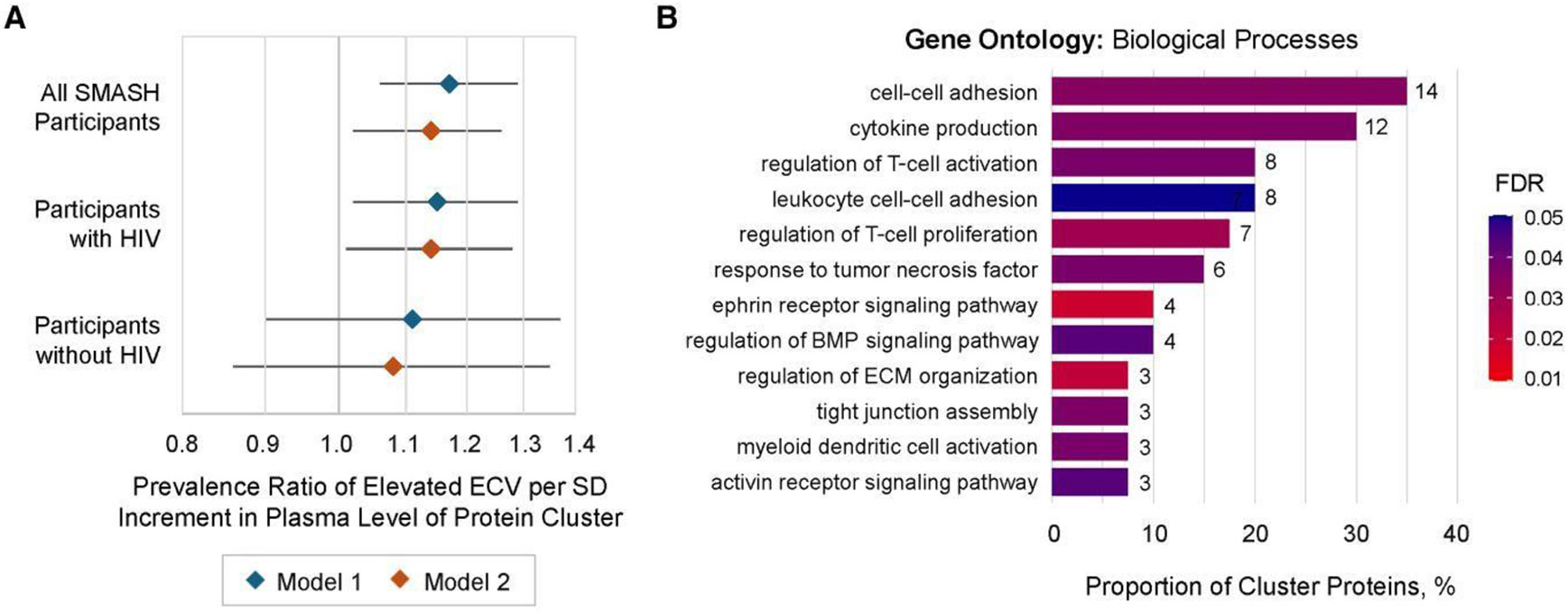 Figure 3
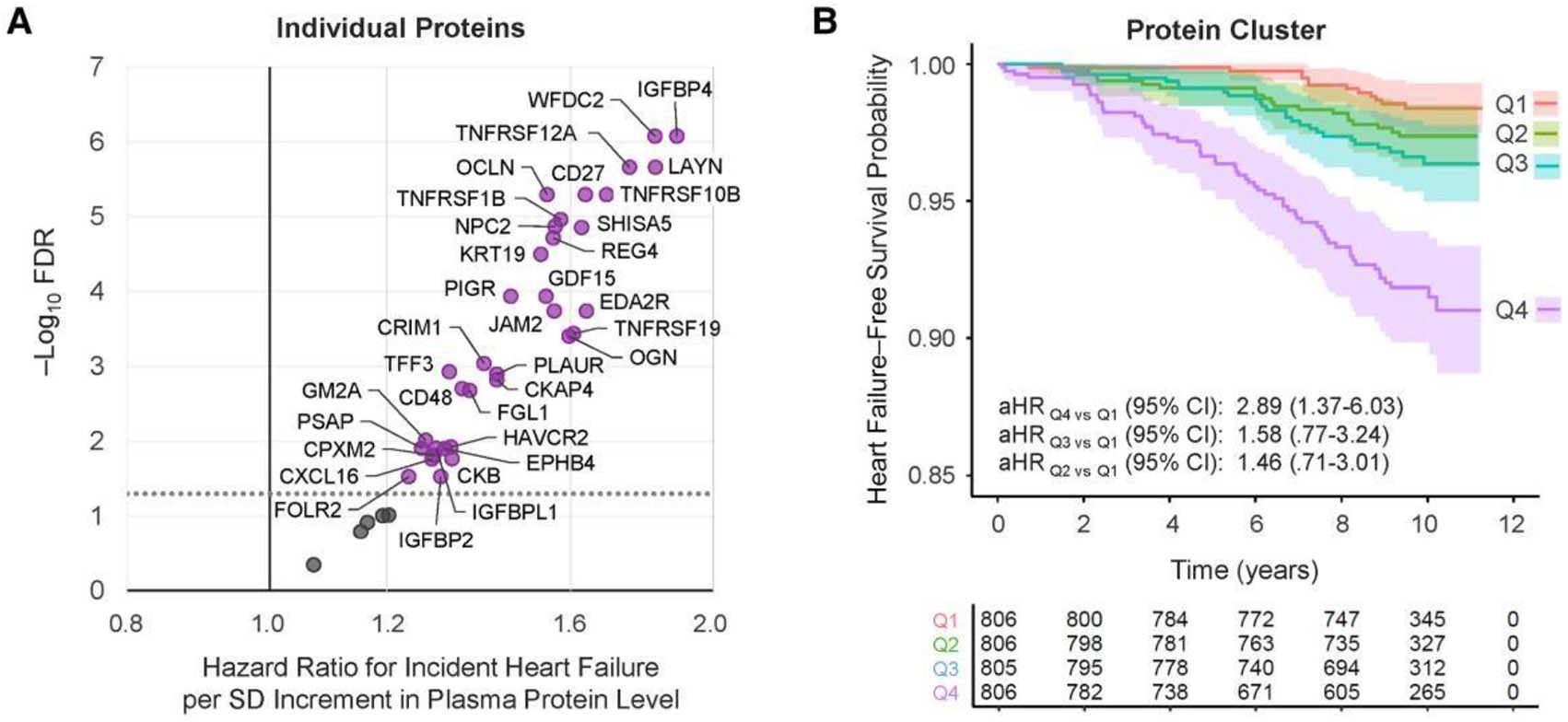 Figure 4
Peer Reviews
No public reviews on file for this paper yet. If you reviewed it on a platform where reviews are public (OpenReview, ICLR, NeurIPS, ICML), you can paste yours below so the community can read it here.
Videos
No videos yet. Explain this paper in a talk, walkthrough, or lecture? Add one.
Taxonomy
TopicsHIV-related health complications and treatments · Cardiac Valve Diseases and Treatments · Cardiovascular Function and Risk Factors