Synergistic Effects of Liquid Solute Concentration and Cooling Rate on Secondary α2-Al Formation in High-Solid-Fraction Rheo-Diecast Al-Si Alloys: An Integrated Experimental and Phase-Field Study
Song Chen, Wangwang Kuang, Jian Feng, Hongmiao Wang, Daquan Li

TL;DR
This study examines how solute concentration and cooling rate affect the formation of secondary α2-Al in Al-Si alloys during casting.
Contribution
The paper reveals how solute concentration and cooling rate synergistically influence α2-Al formation through experiments and simulations.
Findings
Higher cooling rates produce finer and more uniform secondary α2-Al in Al-1Si and Al-4Si.
Lower solute concentration amplifies cooling rate effects, as shown by differences in final liquid concentration.
Thermal undercooling becomes increasingly important as solidification progresses.
Abstract
The synergistic effects of solute concentration and cooling rate on the evolution of secondary α2-Al during high-solid-fraction rheo-diecasting of Al-xSi (x = 1, 4, 7 wt.%) alloys was studied. Combined gradient-cooling experiments (100 vs. 10 K/s) and phase-field simulations show that the population and morphology of secondary α2-Al are co-governed by initial Si content and cooling rate. Higher cooling rates promote finer, more uniform secondary α2-Al in Al-1Si and Al-4Si, while lower cooling rates cause coarsening and coalescence. In addition, the formation of α2-Al is severely suppressed in Al-7Si. Crucially, a lower initial solute concentration significantly amplifies cooling rate-induced solute enrichment, quantitatively evidenced by the final liquid concentration difference (Al-1Si: 0.83 wt.% > Al-4Si: 0.29 wt.% > Al-7Si: 0.13 wt.%). This enrichment governs the dynamic competition…
Genes, proteins, chemicals, diseases, species, mutations and cell lines named across the full text — each resolved to its canonical identifier and authoritative record.
Click any figure to enlarge with its caption.
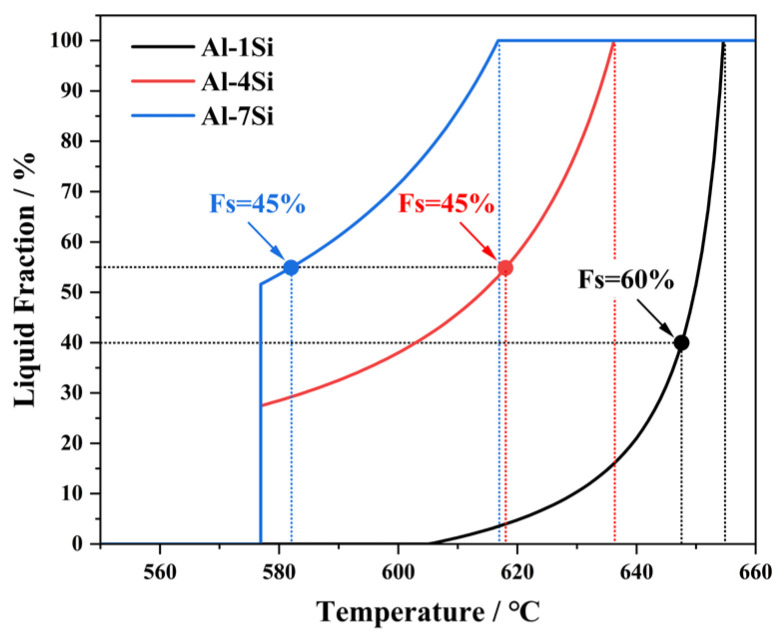 Figure 1
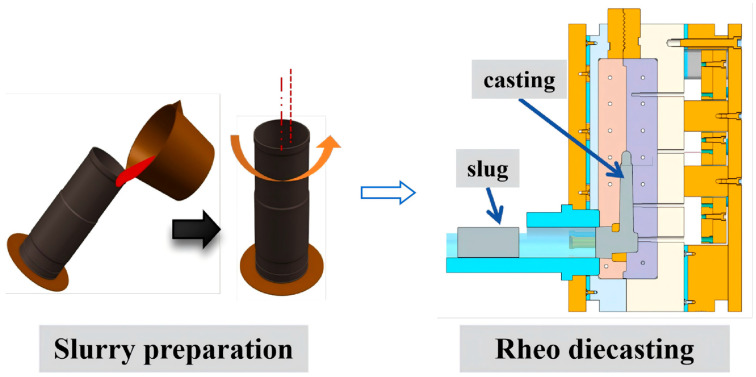 Figure 2
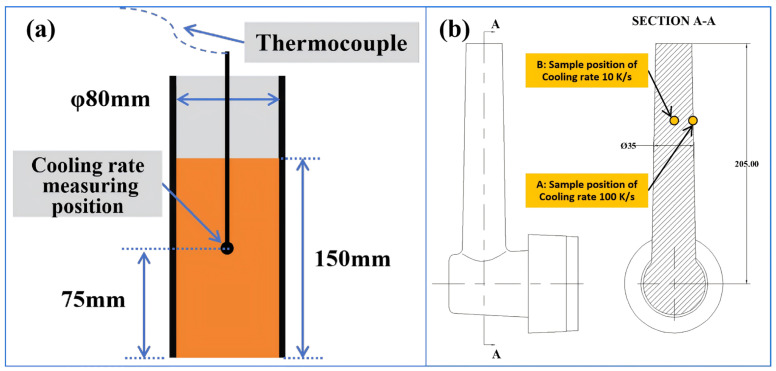 Figure 3
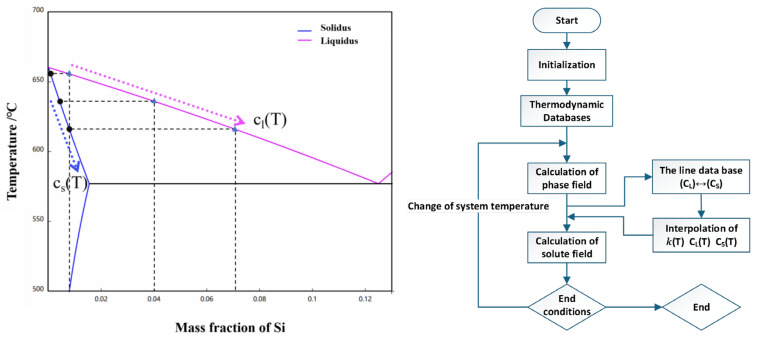 Figure 4
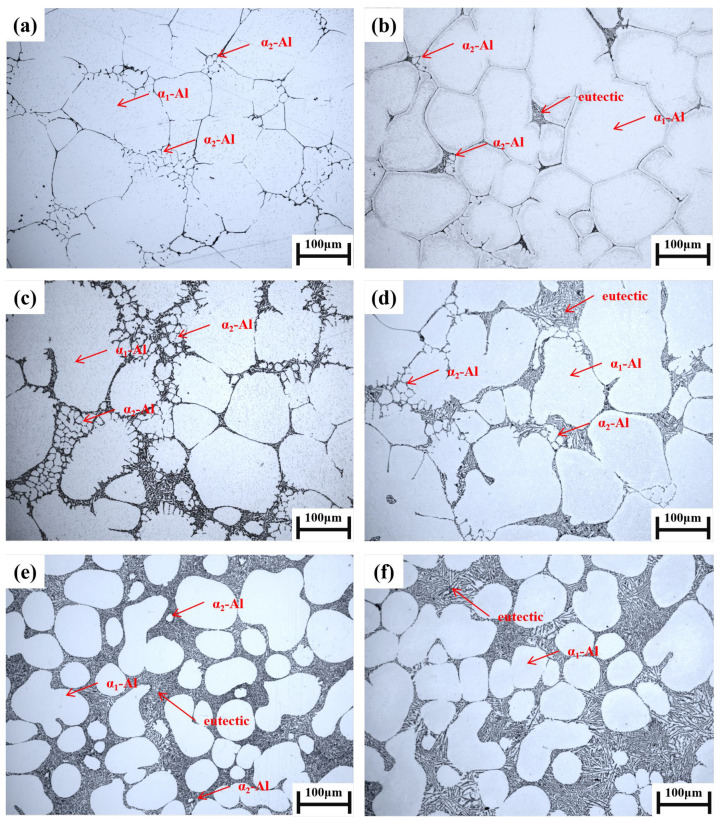 Figure 5
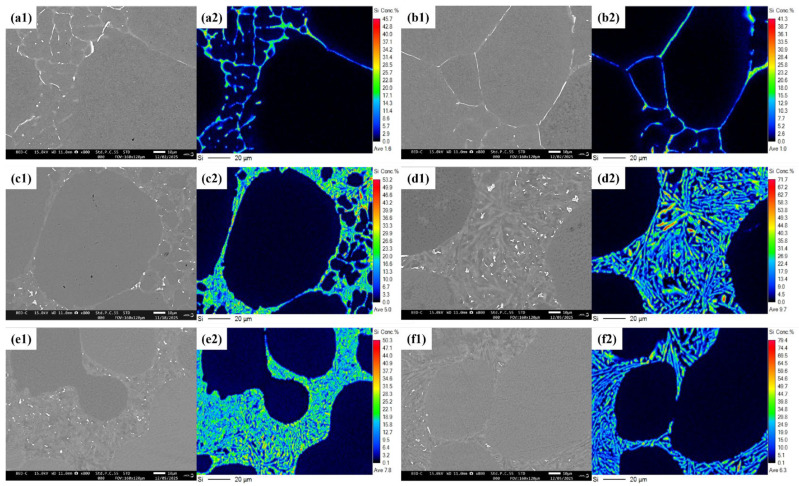 Figure 6
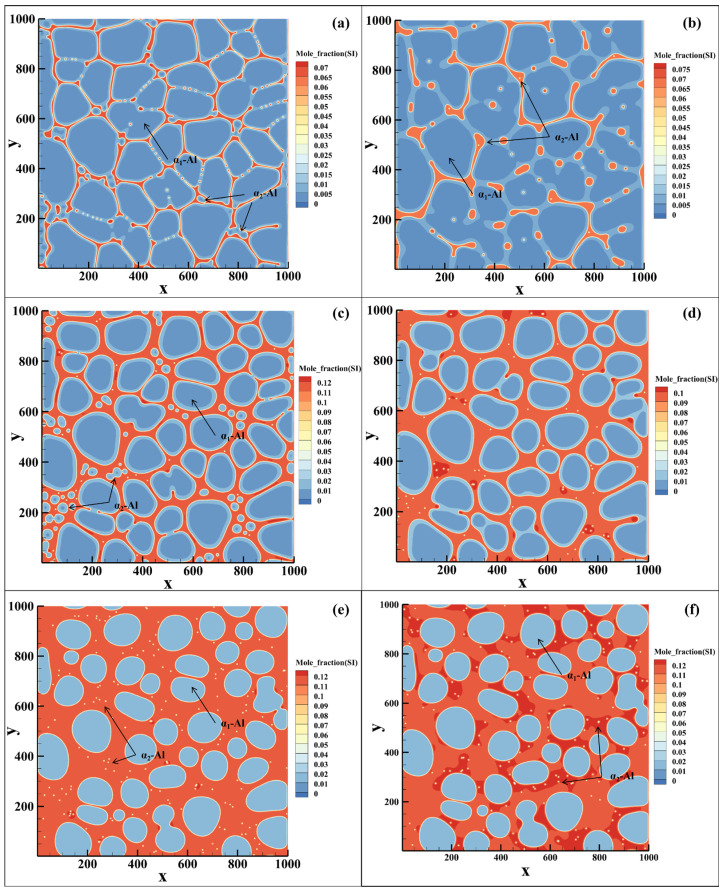 Figure 7
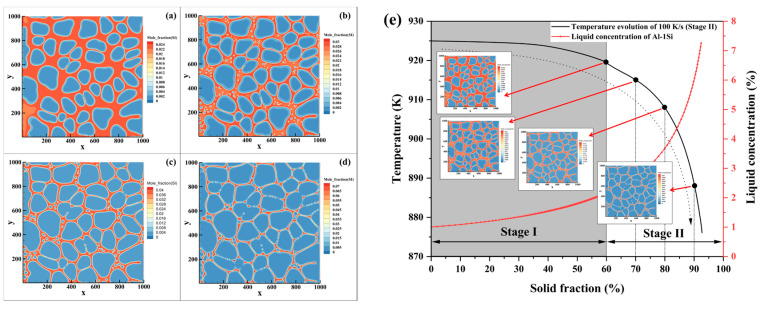 Figure 8
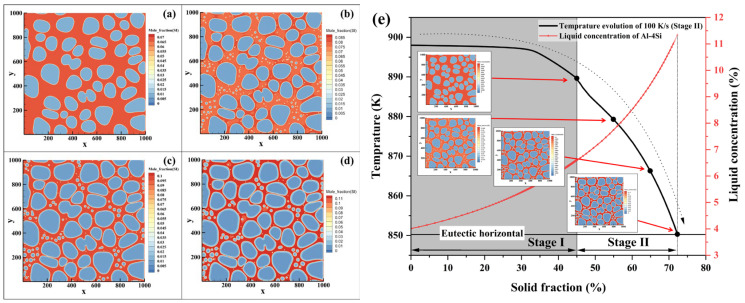 Figure 9
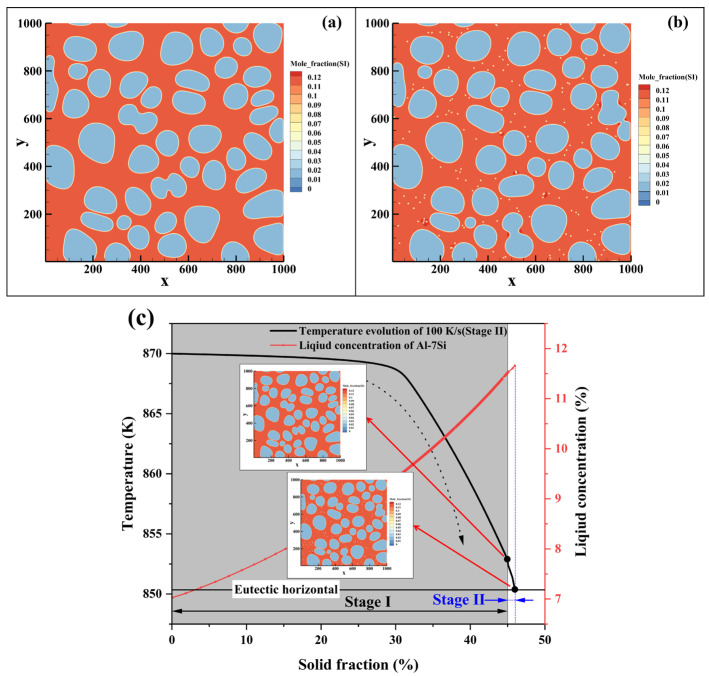 Figure 10
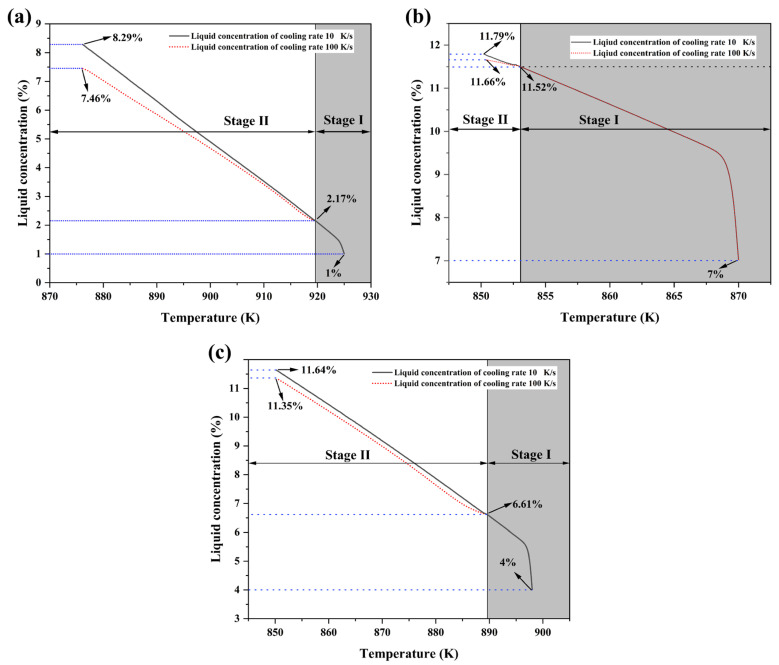 Figure 11
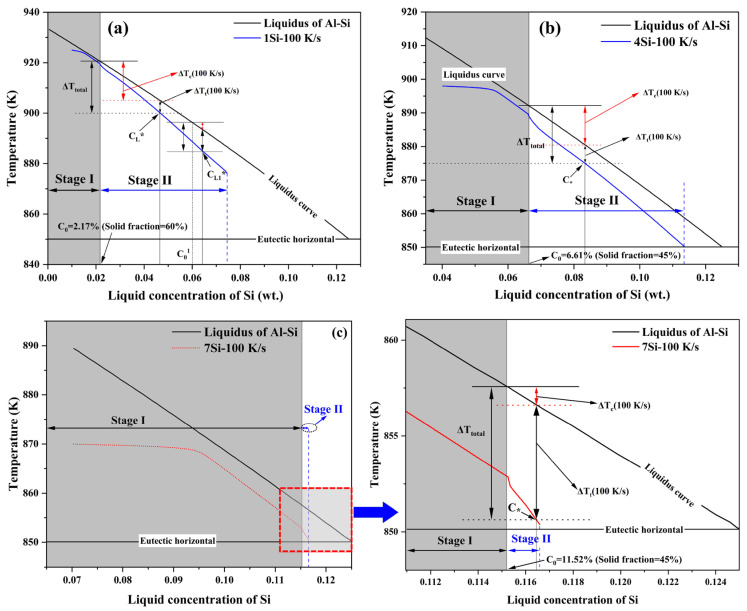 Figure 12
Peer Reviews
No public reviews on file for this paper yet. If you reviewed it on a platform where reviews are public (OpenReview, ICLR, NeurIPS, ICML), you can paste yours below so the community can read it here.
Videos
No videos yet. Explain this paper in a talk, walkthrough, or lecture? Add one.
Taxonomy
TopicsSolidification and crystal growth phenomena · Aluminum Alloy Microstructure Properties · Additive Manufacturing Materials and Processes